

Economy
Good News for Nigeria as Brent Trades Above $60 Tuesday

By Adedapo Adesanya
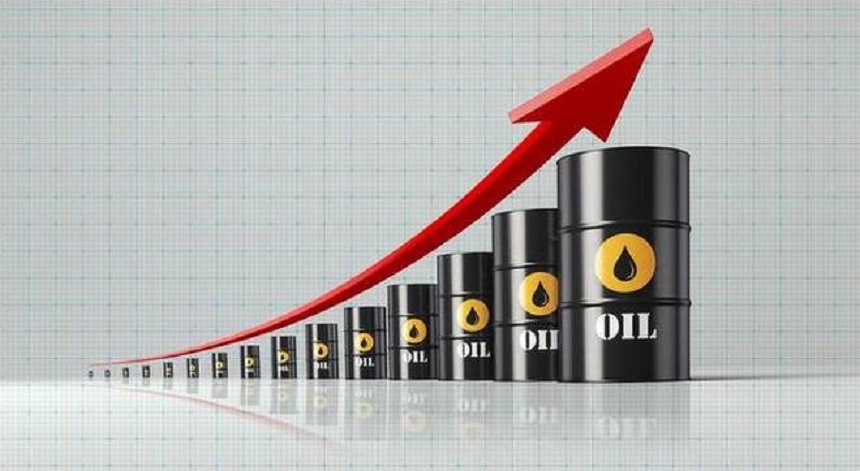
Things looked bright for Nigeria on Tuesday at the global oil market as the Brent Crude, which its oil is priced against, traded over the $60 benchmark, giving hopes that the Africa’s largest economy would be able to fully utilise its budget plans for this year.
Business Post reports that the Brent Crude traded at $61.28 per barrel as at 9 PM (Nigerian time) on Tuesday, indicating a $2.71 increase or by 4.63 percent rise to cross the threshold of $60.
Likewise, the West Texas Intermediate (WTI) Crude gained $2.13 or 3.88 percent yesterday night to trade at $57.
In addition, the Nigerian Bonny Light rose by 4.07 percent or $2.41 on Tuesday to sell at $61.56 per barrel on the international market, while the Nigerian Brass River rose by 1.29 percent or $0.76 to trade at $59.83 per barrel, with price of the Nigerian Qua Iboe also appreciating by 1.29 percent or $0.76 to go for $59.88 per barrel.
Reports that the United States has decided to delay the next round of tariffs that were to be imposed on Chinese goods was responsible for these increases, Business Post learned. The delay gives hope to a skittish market that the trade war really won’t go on forever.
Tuesday would be the fourth straight day of gains for the oil prices—the previous gain helped along by Saudi Arabia’s chat with other OPEC producers about what additional steps the group could take to stanch the price bleed that sought to undermine not only Saudi Arabia’s budget which relies heavily on oil, but its much-anticipated public listing of its crown jewel, Saudi Aramco.
Aramco’s valuation, which The Kingdom feels is $2 trillion, is dependent on oil prices. Analysts claim that this $2 trillion valuation is but a pipe dream, and that the real value of Aramco is at most $1.5 trillion.
In addition to the tariff delay, which will now go into force on December 15, the United States will also be taking some of the items on that tariff list off completely, according to its newest policy document released on Tuesday.
While the list hasn’t been made public, it will include items that will be removed “based on health, safety, national security, and other factors”.
The items that will be delayed until December include cellphones, laptops, toys, computer monitors, and some footwear and clothing items, according to reports.



By Modupe Gbadeyanka
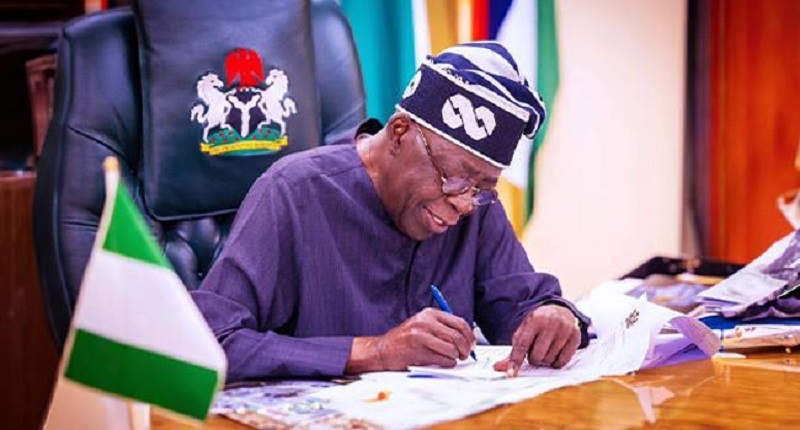
The federal government has been asked by the Nigerian Bar Association (NBA) to suspend the implementation of the controversial tax laws.
In a reaction to the tax reform acts, the president of the group, Mr Afam Osigwe (SAN), the suspension of the laws would allow for a proper investigation into allegations of alterations in the gazetted and harmonised copies.
A member of the House of Representatives, Mr Abdussamad Dasuki, alleged that some parts of the laws passed by the parliament were different from the gazetted copy.
To address the issues raised, the NBA said it is “imperative that a comprehensive, open, and transparent investigation be conducted to clarify the circumstances surrounding the enactment of the laws and to restore public confidence in the legislative process.”
“Until these issues are fully examined and resolved, all plans for the implementation of the Tax Reform Acts should be immediately suspended,” the association declared.
It noted that the controversies “raise grave concerns about the integrity, transparency, and credibility of Nigeria’s legislative process.”
“These developments strike at the very heart of constitutional governance and call into question the procedural sanctity that must attend lawmaking in a democratic society,” it noted.
“Legal and policy uncertainty of this magnitude has far-reaching consequences. It unsettles the business environment, erodes investor confidence, and creates unpredictability for individuals, businesses, and institutions required to comply with the law. Such uncertainty is inimical to economic stability and should have no place in a system governed by the rule of law.
“Nigeria’s constitutional democracy demands that laws, especially those with profound economic and social implications, emerge from processes that are transparent, accountable, and beyond reproach. Anything short of this undermines public trust and weakens the foundation upon which lawful governance rests.
“We therefore call on all relevant authorities to act swiftly and responsibly in addressing this controversy, in the overriding interest of constitutional order, economic stability, and the preservation of the rule of law,” the organisation stated.

By Adedapo Adesanya
Demand for hot stocks, including MRS Oil Plc, buoyed the NASD Over-the-Counter (OTC) Securities Exchange by 0.52 per cent on Tuesday, December 23.
The energy company was one of the three price gainers for the session as it chalked up N19.69 to sell at N216.59 per share versus the previous day’s value of N196.90 per share.
Further, FrieslandCampina Wamco Nigeria Plc gained N2.95 to close at N56.75 per unit versus N53.80 per unit and Golden Capital Plc appreciated by 84 Kobo to N9.29 per share from Monday’s N8.45 per share.
Consequently, the market capitalisation went up by N10.95 billion to N2.125 trillion from N2.125 trillion and the NASD Unlisted Security Index (NSI) rose by 18.31 points to 3,570.37 points from 3,552.06 points.
Yesterday, the NASD bourse recorded a price loser, the Central Securities Clearing System Plc (CSCS), which gave up 17 Kobo to close at N33.70 per unit against the previous trading value of N33.87 per unit.
The volume of securities traded at the session went down by 97.6 per cent to 297,902 units from the previous day’s 12.6 million units, the value of securities decreased by 98.5 per cent to N10.5 million from N713.6 million, and the number of deals remained flat at 32 deals.
By value, Infrastructure Credit Guarantee Company (InfraCredit) Plc ended as the most actively traded stock on a year-to-date basis with 5.8 billion units exchanged for N16.4 billion. This was followed by Okitipupa Plc, which traded 178.9 million units valued at N9.5 billion, and MRS Oil Plc with 36.1 million units worth N4.9 billion.
In terms of volume, also on a year-to-date basis, InfraCredit Plc led the chart with a turnover of 5.8 billion units traded for N16.4 billion. Industrial and General Insurance (IGI) Plc ranked second with 1.2 billion units sold for N420.7 million, while Impresit Bakolori Plc followed with the sale of 536.9 million units valued at N524.9 million.


By Dipo Olowookere
It was another bullish trading session for the Nigerian Exchange (NGX) Limited as it closed higher by 0.59 per cent on Tuesday.
The market further rallied due to continued interest in large and mid-cap stocks on the exchange by investors rebalancing their portfolios for the year-end.
Yesterday, Aluminium Extrusion sustained its upward trajectory after it further appreciated by 9.96 per cent to N14.90, as Austin Laz gained 9.81 per cent to close at N2.91, Custodian Investment improved by 9.69 per cent to N38.50, and First Holdco soared by 9.35 per cent to N50.30.
Conversely, Royal Exchange declined by 7.22 per cent to N1.80, Champion Breweries shrank by 6.57 per cent to N15.65, NASCON lost 5.36 per cent to trade at N105.05, Sovereign Trust Insurance depreciated by 5.28 per cent to N3.77, and Japaul went down by 4.51 per cent to N2.33.
At the close of business, 29 shares ended on the gainers’ table and 27 shares finished on the losers’ log, representing a positive market breadth index and bullish investor sentiment.
This raised the All-Share Index (ASI) by 895.06 points to 153,354.13 points from 152,459.07 points and lifted the market capitalisation by N579 billion to N97.772 trillion from the previous day’s N97.193 trillion.
VFD Group finished the day as the busiest stock after it recorded a turnover of 192.0 million units worth N2.1 billion, GTCO exchanged 63.5 million units valued at N5.6 billion, Access Holdings traded 49.8 million units for N1.0 billion, First Holdco sold 45.8 million units valued at N2.3 billion, and Secure Electronic Technology transacted 38.3 million units worth N28.4 million.
In all, market participants bought and sold 677.4 million units valued at N20.8 billion in 27,589 deals compared with the 451.5 million units worth N13.0 billion traded in 33,327 deals on Monday, showing an improvement in the trading volume and value by 50.03 per cent and 60.00 per cent apiece, and a shortfall in the number of deals by 17.22 per cent.








-
 Feature/OPED6 years ago
Davos was Different this year
-
Travel/Tourism9 years ago
Lagos Seals Western Lodge Hotel In Ikorodu
-

 Showbiz3 years ago
Estranged Lover Releases Videos of Empress Njamah Bathing
-
 Banking8 years ago
Sort Codes of GTBank Branches in Nigeria
-

 Economy3 years ago
Subsidy Removal: CNG at N130 Per Litre Cheaper Than Petrol—IPMAN
-

 Banking3 years ago
First Bank Announces Planned Downtime
-

 Banking3 years ago
Sort Codes of UBA Branches in Nigeria
-

 Sports3 years ago
Highest Paid Nigerian Footballer – How Much Do Nigerian Footballers Earn