

Economy
Loans: Firm Unveils Credit Rating Score for Nigerians

By Modupe Gbadeyanka
A Lagos-based company known as CRC Credit Bureau (CCB) has come up with a unique three-digit number credit rating system to assist financial institution make quick and informed credit decisions.
Some weeks ago, the Central Bank of Nigeria (CBN) mandated banks to increase their loan to deposit ratio to 60 percent by the end of September 2019. This policy is to spur the economy by making funds available to small business owners, who are the main driver of the economy.
Lenders have been very careful in giving out credit facilities to customers because issues with repayment and the absence of quality credit rating system to help them have an idea of which customer has the potential of paying by an approved loan.
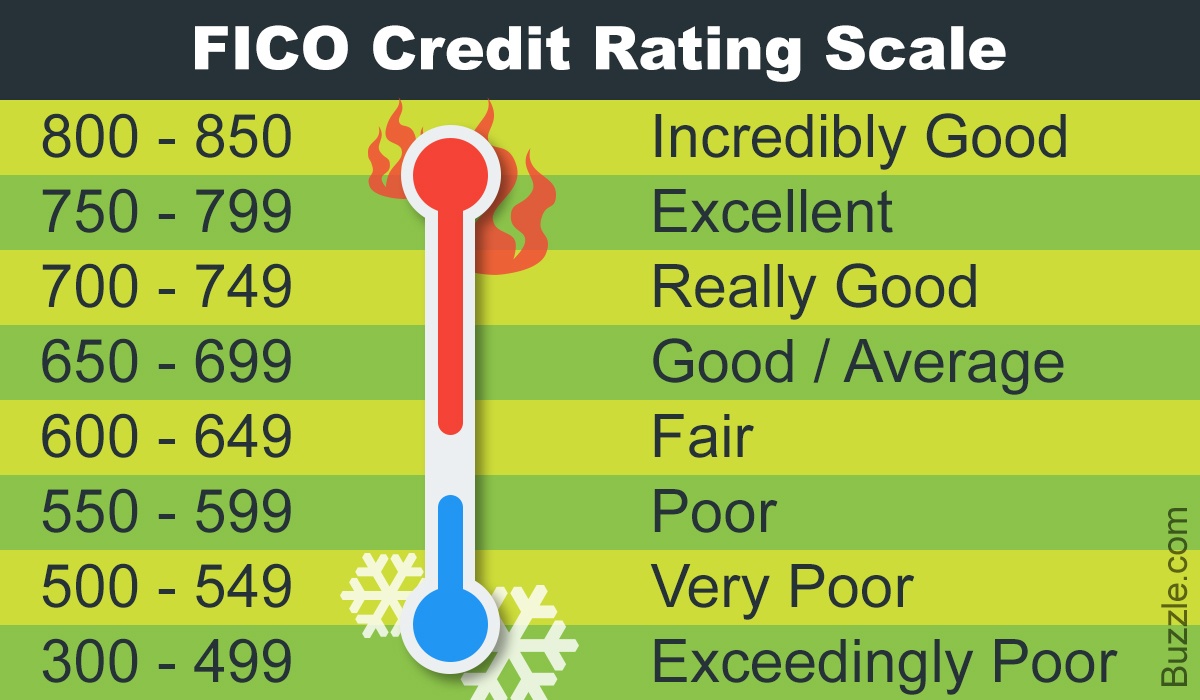
But CCB is coming at the right time to take away this and other fears with its system, which has numbers from 300-850 that summarizes customer’s history of borrowing and paying back loans or post-paid services. The allocated 3-digit number represents how risky it is to do business with holder.
At the unveiling of the credit rating system in Lagos some days ago, Managing Director and Chief Executive Officer of CRC Credit Bureau, Mr Tunde Popoola, informed newsmen that the system was done in collaboration with an America company known as Fair Isaac Corporation (FICO).
He explained that the initiative is a “credit grading system, with 300 being the lowest grade like an ‘F’ in a report card and 850 being the highest which would be an ‘A’ or distinction in your report card.
“It is also used amongst other criteria to determine the interest rate, you will be charged if a lender decides to approve the credit line or loan.
“It is a numerical expression based on a level of analysis of an individual’s Credit Report and is used to represent how risky it is for lenders or creditors to do business with said individual.”
According to him, “In developed economies, it is normal practice for creditors to consider credit scores and reports before advancing loans, goods or services to another party with the understanding that payments are to be made in the future.
“This practice is catching up in Nigeria, as there are more credit activities taking place in the financial and non-financial sectors.
“However, a lot of Nigerians do not know, that the credit scoring system does exist in Nigeria. It is until they need credit facilities like loans or post-paid products, that they are made to know about its existence and how important it is, to their financial lives and access to finance for both personal and business needs.
“The knowledge that both financial and non-financial institutions are using a number to determine if people living in Nigeria can access loans, credit facilities or post-paid services or not, is not common knowledge.”
He stated further that, “There is still a perception that loan granting is based on ‘Man know Man’ which is no longer the case at least for the average Nigerian.
“A poor credit score could mean paying sky-high interest rates on credit facilities or loans, if even approved at all. While a high credit score means borrowing money at a much lower rate because you appear more financially responsible.
“The CRC Score is powered by the Fair Isaac Corporation (FICO), an American company with over 50 years’ experience in data and analytics.
“CRC Credit Bureau in partnership with FICO developed a unique credit rating system for the Nigerian market that helps lenders make quick and informed credit decisions and for individuals’ knowledge of what their credit status is.
“The CRC Score powered by FICO is easily accessible to everyone and can be bought via the CRC Credit Bureau website for just Four Hundred Naira (N400.00) only.
“Knowing your CRC Score, makes you better prepared before applying for a loan and is the first step in taking control of your financial reputation.
“To request for your CRC score visit the CRC website page https://www.crccreditbureau.com/product/crc-score-individual to register and pay for Credit Score and have it delivered to your email address in a matter of minutes.”



By Modupe Gbadeyanka
The federal government has been asked by the Nigerian Bar Association (NBA) to suspend the implementation of the controversial tax laws.
In a reaction to the tax reform acts, the president of the group, Mr Afam Osigwe (SAN), the suspension of the laws would allow for a proper investigation into allegations of alterations in the gazetted and harmonised copies.
A member of the House of Representatives, Mr Abdussamad Dasuki, alleged that some parts of the laws passed by the parliament were different from the gazetted copy.
To address the issues raised, the NBA said it is “imperative that a comprehensive, open, and transparent investigation be conducted to clarify the circumstances surrounding the enactment of the laws and to restore public confidence in the legislative process.”
“Until these issues are fully examined and resolved, all plans for the implementation of the Tax Reform Acts should be immediately suspended,” the association declared.
It noted that the controversies “raise grave concerns about the integrity, transparency, and credibility of Nigeria’s legislative process.”
“These developments strike at the very heart of constitutional governance and call into question the procedural sanctity that must attend lawmaking in a democratic society,” it noted.
“Legal and policy uncertainty of this magnitude has far-reaching consequences. It unsettles the business environment, erodes investor confidence, and creates unpredictability for individuals, businesses, and institutions required to comply with the law. Such uncertainty is inimical to economic stability and should have no place in a system governed by the rule of law.
“Nigeria’s constitutional democracy demands that laws, especially those with profound economic and social implications, emerge from processes that are transparent, accountable, and beyond reproach. Anything short of this undermines public trust and weakens the foundation upon which lawful governance rests.
“We therefore call on all relevant authorities to act swiftly and responsibly in addressing this controversy, in the overriding interest of constitutional order, economic stability, and the preservation of the rule of law,” the organisation stated.


By Adedapo Adesanya
Demand for hot stocks, including MRS Oil Plc, buoyed the NASD Over-the-Counter (OTC) Securities Exchange by 0.52 per cent on Tuesday, December 23.
The energy company was one of the three price gainers for the session as it chalked up N19.69 to sell at N216.59 per share versus the previous day’s value of N196.90 per share.
Further, FrieslandCampina Wamco Nigeria Plc gained N2.95 to close at N56.75 per unit versus N53.80 per unit and Golden Capital Plc appreciated by 84 Kobo to N9.29 per share from Monday’s N8.45 per share.
Consequently, the market capitalisation went up by N10.95 billion to N2.125 trillion from N2.125 trillion and the NASD Unlisted Security Index (NSI) rose by 18.31 points to 3,570.37 points from 3,552.06 points.
Yesterday, the NASD bourse recorded a price loser, the Central Securities Clearing System Plc (CSCS), which gave up 17 Kobo to close at N33.70 per unit against the previous trading value of N33.87 per unit.
The volume of securities traded at the session went down by 97.6 per cent to 297,902 units from the previous day’s 12.6 million units, the value of securities decreased by 98.5 per cent to N10.5 million from N713.6 million, and the number of deals remained flat at 32 deals.
By value, Infrastructure Credit Guarantee Company (InfraCredit) Plc ended as the most actively traded stock on a year-to-date basis with 5.8 billion units exchanged for N16.4 billion. This was followed by Okitipupa Plc, which traded 178.9 million units valued at N9.5 billion, and MRS Oil Plc with 36.1 million units worth N4.9 billion.
In terms of volume, also on a year-to-date basis, InfraCredit Plc led the chart with a turnover of 5.8 billion units traded for N16.4 billion. Industrial and General Insurance (IGI) Plc ranked second with 1.2 billion units sold for N420.7 million, while Impresit Bakolori Plc followed with the sale of 536.9 million units valued at N524.9 million.


By Dipo Olowookere
It was another bullish trading session for the Nigerian Exchange (NGX) Limited as it closed higher by 0.59 per cent on Tuesday.
The market further rallied due to continued interest in large and mid-cap stocks on the exchange by investors rebalancing their portfolios for the year-end.
Yesterday, Aluminium Extrusion sustained its upward trajectory after it further appreciated by 9.96 per cent to N14.90, as Austin Laz gained 9.81 per cent to close at N2.91, Custodian Investment improved by 9.69 per cent to N38.50, and First Holdco soared by 9.35 per cent to N50.30.
Conversely, Royal Exchange declined by 7.22 per cent to N1.80, Champion Breweries shrank by 6.57 per cent to N15.65, NASCON lost 5.36 per cent to trade at N105.05, Sovereign Trust Insurance depreciated by 5.28 per cent to N3.77, and Japaul went down by 4.51 per cent to N2.33.
At the close of business, 29 shares ended on the gainers’ table and 27 shares finished on the losers’ log, representing a positive market breadth index and bullish investor sentiment.
This raised the All-Share Index (ASI) by 895.06 points to 153,354.13 points from 152,459.07 points and lifted the market capitalisation by N579 billion to N97.772 trillion from the previous day’s N97.193 trillion.
VFD Group finished the day as the busiest stock after it recorded a turnover of 192.0 million units worth N2.1 billion, GTCO exchanged 63.5 million units valued at N5.6 billion, Access Holdings traded 49.8 million units for N1.0 billion, First Holdco sold 45.8 million units valued at N2.3 billion, and Secure Electronic Technology transacted 38.3 million units worth N28.4 million.
In all, market participants bought and sold 677.4 million units valued at N20.8 billion in 27,589 deals compared with the 451.5 million units worth N13.0 billion traded in 33,327 deals on Monday, showing an improvement in the trading volume and value by 50.03 per cent and 60.00 per cent apiece, and a shortfall in the number of deals by 17.22 per cent.









-
 Feature/OPED6 years ago
Davos was Different this year
-
Travel/Tourism9 years ago
Lagos Seals Western Lodge Hotel In Ikorodu
-

 Showbiz3 years ago
Estranged Lover Releases Videos of Empress Njamah Bathing
-
 Banking8 years ago
Sort Codes of GTBank Branches in Nigeria
-

 Economy3 years ago
Subsidy Removal: CNG at N130 Per Litre Cheaper Than Petrol—IPMAN
-

 Banking3 years ago
First Bank Announces Planned Downtime
-

 Banking3 years ago
Sort Codes of UBA Branches in Nigeria
-

 Sports3 years ago
Highest Paid Nigerian Footballer – How Much Do Nigerian Footballers Earn