

Economy
Nigeria’s External Reserves Sink to Six-Month Low, Drops Below $43bn

By Dipo Olowookere
For the first time in six months, the foreign reserves of Africa’s largest economy, Nigeria, went down to a level last witnessed about six months ago, latest data harvested by Business Post has revealed.
According to the data from the Central Bank of Nigeria (CBN), the external reserves of the country stood at $42.957 billion as at Tuesday, September 10, 2019.
The last time is was around this region was Wednesday, March 13, 2019, when it closed at $42.928 billion and on Thursday, March 14, when it finished at $42.987 billion before moving to $43.051 billion on Friday, March 15, 2019.
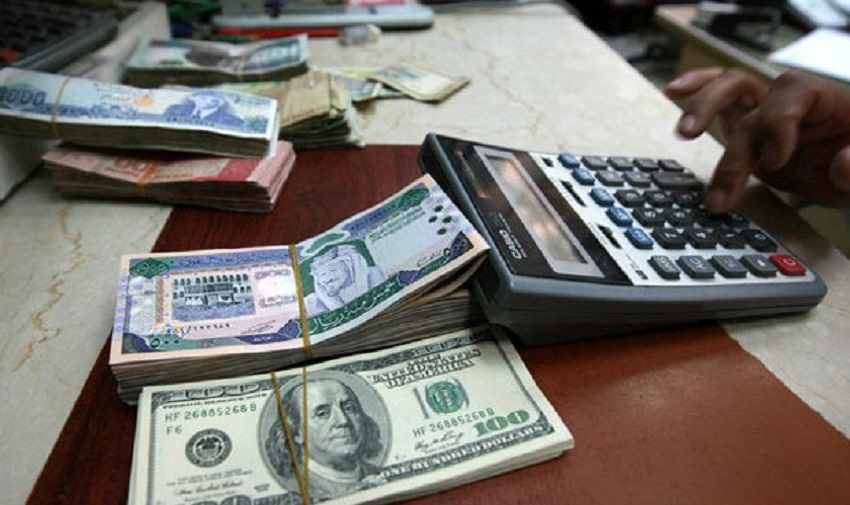
Business Post reports that the reserves have been depleting lately as a result of decline in the price of crude oil on the lobal market. The black liquid gold is the main source of foreign exchange for Nigeria and when prices go low, the economy suffers.
In the 2019 budget signed into law in May 2019 by President Muhammadu Buhari, the benchmark price for oil was set at $60 per barrel and in recent times, the commodity has sold below this.
On Wednesday, the Brent Crude, which Nigeria’s oil is priced, dropped from $62, losing $1.34 or 2.15 percent to trade at $61.04, while the West Texas Intermediate (WTI) Crude went down to $55.97 after losing $1.43 or 2.49 percent.
For the past months, the spat between the United States and Iran, US and China, the United Kingdom and Iran and others have had negative effects on the price of crude oil at the international market.
A further analysis of the movement in Nigeria’s external reserves showed that before falling below $43 billion on Tuesday, the reserves stood at $43.004 billion on Monday, September 9, 2019 and $43.102 billion on Friday, September 6, 2019.
There are strong indications that the foreign reserves would continue to decline as price of crude oil remain unstable at the market and the CBN continue to take from the purse to support the Naira at the foreign exchange market.
On Tuesday, another $210 million was made available to authorized forex traders to keep the local currency stable at N360/$ at the market. Tomorrow, Friday, September 12, 2019, the apex bank is expected to make another intervention in the market.




By Adedapo Adesanya
FrieslandCampina Wamco Nigeria Plc led two others to evict the bears from the NASD Over-the-Counter (OTC) Securities Exchange on Wednesday, July 8.
According to data, the unlisted securities exchange rebounded by 6.84 per cent during the session, thanks to the gains recorded by FrieslandCampina, Food Concepts Plc, and Geo-Fluids Plc.
During the trading day, FrieslandCampina recouped N12.57 to trade at N151.98 per unit versus Tuesday’s closing price of N139.41 per unit, Food Concepts Plc improved by 25 Kobo to N2.76 per share from N2.51 per share, and Geo-Fluids Plc expanded by 18 Kobo to N2.55 per unit from N2.37 per unit.
As a result of these accumulations, the market capitalisation added N163.34 billion to close at N2.551 trillion compared with the preceding session’s N2.387 trillion, and the NASD Security Index (NSI) increased by 272.13 points to 4,250.20 points from 3,978.07 points.
The midweek trading data showed that the volume of securities dipped by 50.9 per cent to 158,933 units from 323,780 units, and the value of securities slipped by 31.9 per cent to N10.9 million from the preceding session’s N15.9 million, while the number of deals increased by 6.9 per cent to 31 deals from the previous session’s 29 deals.
When trading activities on the platform ended for the day, Great Nigeria Insurance (GNI) Plc was the most active stock by value on a year-to-date basis, with 3.4 billion units traded for N8.4 billion, followed by Infrastructure Credit Guarantee (Infracredit) Plc with 2.3 billion units sold for N6.5 billion, and Central Securities Clearing System (CSCS) Plc with 70.7 million units transacted for N4.9 billion.
GNI Plc also closed the day as the most traded stock by volume on a year-to-date basis, with 3.4 billion units worth N8.4 billion, followed by Infracredit Plc with 2.3 billion units valued at N6.5 billion, and Resourcery Plc with 1.1 billion units exchanged for N415.7 million.
By Adedapo Adesanya
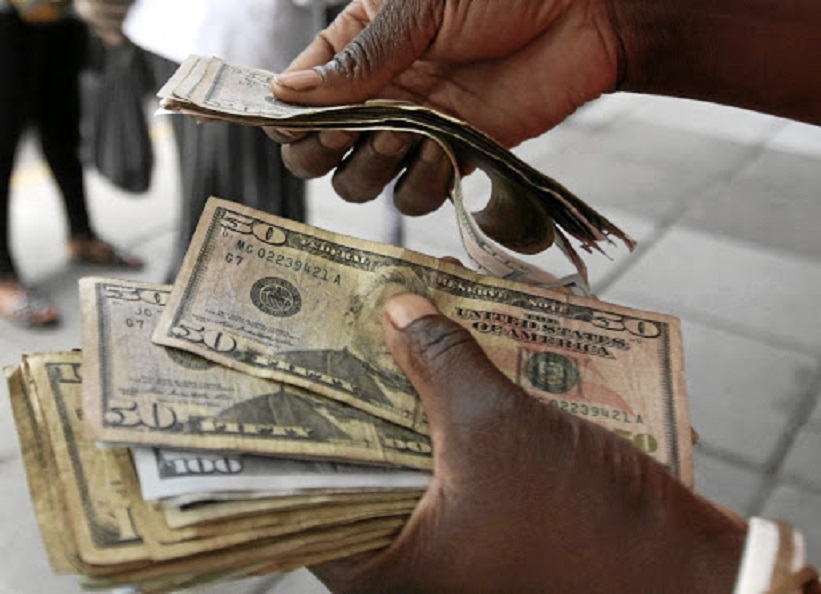
It was a bad day for the Nigerian Naira in the different segments of the foreign exchange (FX) market on Wednesday, July 8, as its value further slipped against the United States Dollar.
In the black market window, it lost N5 against the US Dollar during the session to trade at N1,400/$1 compared with Tuesday’s closing rate of N1,395/$1, but closed flat at the GTBank forex counter at N1,381/$1.
In the Nigerian Autonomous Foreign Exchange Market (NAFEX), the domestic currency depreciated against the greenback yesterday by N3.32 or 0.24 per cent to N1,379.07/$1, in contrast to the previous day’s N1,375.75/$1.
But the Naira appreciated against the Pound Sterling in the official market at midweek by 93 Kobo to 1,840.64/£1 from N1,841.57/£1, and gained N1.31 on the Euro to sell at N1,561.38/€1 compared with Tuesday’s N1,562.69/€1.
The market was liquidity-heavy, but increased demand for foreign payments dragged the exchange rate at the official window,
Traders reported that interbank FX turnover spiked by about 399 per cent on the day to $208.094 million, from $41.736 million the previous day. Also, the number of deals in the interbank market increased sharply to 150 from 47 deals.
FX analysts maintained positive expectations on the Naira outlook in the second half of 2026 despite the absence of interventions from the Central Bank of Nigeria (CBN) to support liquidity.
As for the cryptocurrency market, prices rose as Bitcoin (BTC) held above $62,000, chalking up 0.3 per cent to sell at $$62,754.96, after the US military completed another round of strikes against Iran and both sides raised the prospect of closing the Strait of Hormuz.
The escalation reignited inflation concerns and pulled forward rate expectations. Markets are increasingly treating war-related shocks as interest-rate events, with BTC now tracking front-end Treasury yields more closely than traditional hedges like crude or gold.
Dogecoin (DOGE) improved its value by 1.2 per cent to $0.0728, Binance Coin (BNB) soared by 1.1 per cent to $573.56, Ripple (XRP) appreciated by 0.9 per cent to $1.09, TRON (TRX) expanded by 0.6 per cent to $0.3309, Solana (SOL) grew by 0.2 per cent to $78.34 and Ethereum (ETH) jumped by 0.1 per cent to $1,751.22.
However, Cardano (ADA) decreased by 0.1 per cent to $0.1690, while the US Dollar Tether (USDT) and the US Dollar Coin (USDC) traded flat at $1.00 apiece.
By Dipo Olowookere
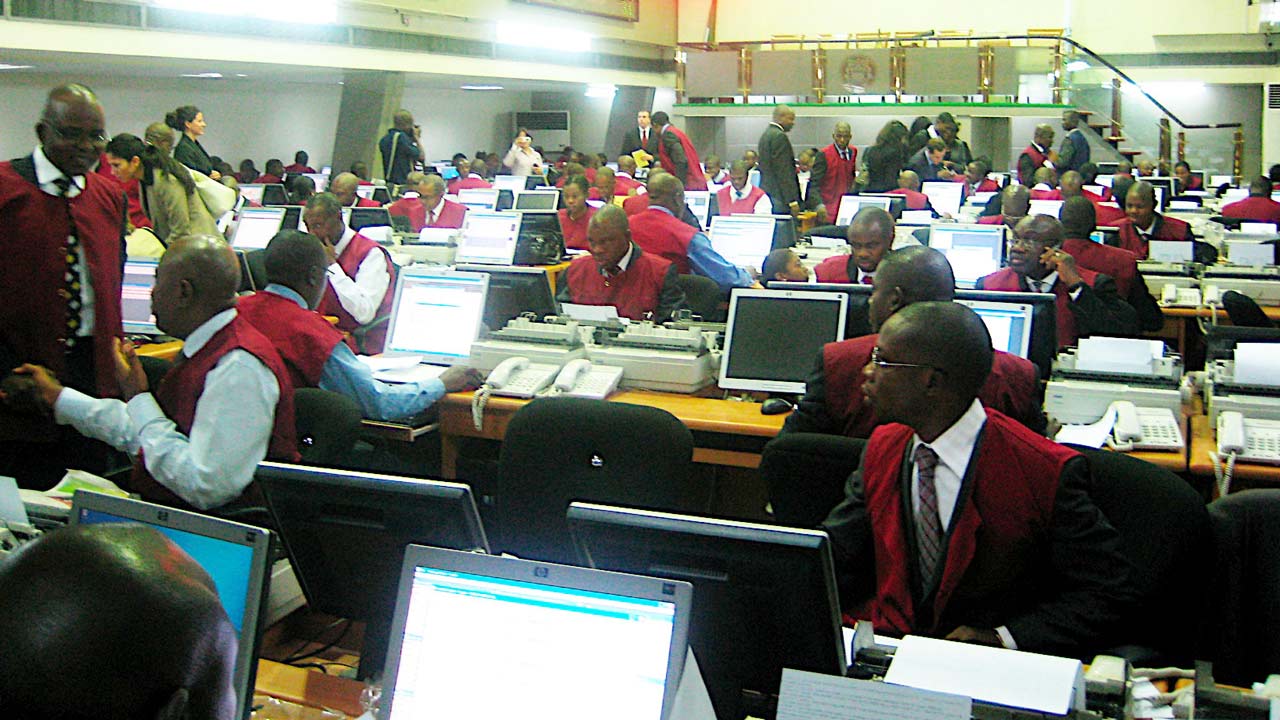
The bullish run seen lately in the Nigerian equities market continued on Wednesday after it closed the session with a 2.27 per cent growth.
This was influenced by renewed interest in domestic stocks by investors, who are locking funds in some shares with sound fundamentals like Airtel Africa, Aradel Holdings, Dangote Cement, and others.
Data showed that Airtel Africa and Trans-Nationwide Express gained 10.00 per cent to sell for N5,801.40 and N2.97, respectively. Fidelity Bank appreciated by 9.97 per cent to N19.85, Thomas Wyatt advanced by 9.89 per cent to N3.00, and UPDC REIT improved by 9.47 per cent to N10.40.
Conversely, Haldane McCall lost 9.95 per cent to trade at N3.53, McNichols declined by 8.89 per cent to N6.15, Transcorp slid by 5.65 per cent to N40.05, CWG went down by 5.24 per cent to N19.00, and VFD Group crashed by 5.19 per cent to N28.12.
The market breadth index remained positive after the Nigerian Exchange (NGX) Limited ended the day with 32 appreciating stocks and 24 depreciating stocks, indicating strong investor sentiment.
Business Post reports that the insurance sector was under pressure yesterday, resulting in a 0.20 per cent loss, which did not affect the outcome of the market.
The energy space gained 3.85 per cent, the industrial goods segment chalked up 1.89 per cent, the banking index rose by 1.07 per cent, and the consumer goods counter soared by 0.31 per cent.
As a result, the All-Share Index (ASI) added 5,378.70 points to finish at 242,459.98 points compared with the previous day’s 237,083.28 points, and the market capitalisation went up by N3.450 trillion to N155.586 trillion from N152.136 trillion.
The busiest equity during the trading session was Lasaco Assurance, with a turnover of 56.6 million units valued at N104.8 million. Fidelity Bank traded 47.5 million units worth N911.9 million, Linkage Assurance transacted 33.9 million units for N51.2 million, Zenith Bank sold 32.0 million units valued at N3.4 billion, and Sterling Holdings exchanged 30.5 million units worth N233.3 million.
At the close of transactions, 518.4 million shares worth N22.8 billion exchanged hands in 48,495 deals versus the 493.7 million shares valued at N28.0 billion traded in 49,969 deals a day earlier. This implied that the trading volume was up by 5.00 per cent, the trading value was down by 18.57 per cent, and the number of deals decreased by 2.95 per cent.
