

Economy
Nigeria’s GDP to Mutual Fund Assets Ratio Below 1%—Onyema


By Dipo Olowookere
Chief Executive Officer (CEO) of the Nigerian Stock Exchange (NSE), Mr Oscar Onyema, has decried the low mutual fund assets to Gross Domestic Product (GDP) ratio of the nation, attributing this to inadequate knowledge of investment products and the benefits for retail investors.
The NSE chief, while delivering his speech at the fourth NSE Market Data Workshop held in Lagos on Wednesday, said it was because of this gap that the exchange was looking to tap into the financial information market, which is believed to worth $50 billion, according to McKinsey estimates.
Mr Onyema informed participants of the event that, “The ratio of mutual fund assets to Nigeria’s GDP is also very low at less than one percent, despite the growth of mutual funds in the country in recent times.”
He further said despite the evolving needs of consumers demanding for financial information globally, Nigeria still has low inclination towards investments, according to a research by FSDH, which reported the savings ratio in Nigeria as one of the lowest among selected countries including China, India, Kenya, Malaysia, South Africa, United Kingdom, and USA.
According to him, “One major reason for this low retail investment appetite is the inadequate knowledge of investment products and the benefits for retail investors.”
He stressed that, “This underscores the importance of creating product offerings that promote diversity in investment, manage risk and make the information readily available to consumers.
“Exchanges and Data vendors are already responding to this increasing demand using new tools for market data products,” the stock market expert added at the workshop covered by Business Post.
At this year’s edition themed Partnerships, Products and the Customer, various speakers invited x-rayed the need for a more inclusive collaboration among capital market players and analyse information in market data and to inform the debate on the challenges of extracting this information from raw data to deliver a data product that is easily consumed to make an informed investment decisions.
As emphasized by Mr Onyema, “At the Nigerian Stock Exchange, we believe in customer centricity and we continue to foster partnerships with local stakeholders across the market, incorporating new technologies and expertise to drive market data by-products like derivatives and other structured products such as the Exchange Traded Funds (ETFs).”
“These structured products, which are based on the accuracy of the underlying stock prices, are being used by a broader set of professional users than those who participate on the stock exchange directly – to advise, monitor and/or validate transactions after they are executed.”
Continuing, he said, “As an organization known for best practices, we are also adding new practices to our culture. We are taking on bold new initiatives to change the Capital Market narrative in partnership with our peers within the wider financial industry, we can say with all certainty – the future is bright!”
Other speakers at the event were Dr Mary Akinyemi, a Lecturer in the Department of Mathematics, University of Lagos; Ifeyinwa Kojo, the Country Sales Lead at Hewlett Packard; Mr Ramon Alayande, the Team Lead/Manager, Asset Management Implementation Support at InfoWARE Limited; Ms Osadare Eniola, the Business Development Manager at InfoWARE Limited; Mr Olufemi, the Head of Market Services at the NSE; amongst others.




By Adedapo Adesanya
FrieslandCampina Wamco Nigeria Plc led two others to evict the bears from the NASD Over-the-Counter (OTC) Securities Exchange on Wednesday, July 8.
According to data, the unlisted securities exchange rebounded by 6.84 per cent during the session, thanks to the gains recorded by FrieslandCampina, Food Concepts Plc, and Geo-Fluids Plc.
During the trading day, FrieslandCampina recouped N12.57 to trade at N151.98 per unit versus Tuesday’s closing price of N139.41 per unit, Food Concepts Plc improved by 25 Kobo to N2.76 per share from N2.51 per share, and Geo-Fluids Plc expanded by 18 Kobo to N2.55 per unit from N2.37 per unit.
As a result of these accumulations, the market capitalisation added N163.34 billion to close at N2.551 trillion compared with the preceding session’s N2.387 trillion, and the NASD Security Index (NSI) increased by 272.13 points to 4,250.20 points from 3,978.07 points.
The midweek trading data showed that the volume of securities dipped by 50.9 per cent to 158,933 units from 323,780 units, and the value of securities slipped by 31.9 per cent to N10.9 million from the preceding session’s N15.9 million, while the number of deals increased by 6.9 per cent to 31 deals from the previous session’s 29 deals.
When trading activities on the platform ended for the day, Great Nigeria Insurance (GNI) Plc was the most active stock by value on a year-to-date basis, with 3.4 billion units traded for N8.4 billion, followed by Infrastructure Credit Guarantee (Infracredit) Plc with 2.3 billion units sold for N6.5 billion, and Central Securities Clearing System (CSCS) Plc with 70.7 million units transacted for N4.9 billion.
GNI Plc also closed the day as the most traded stock by volume on a year-to-date basis, with 3.4 billion units worth N8.4 billion, followed by Infracredit Plc with 2.3 billion units valued at N6.5 billion, and Resourcery Plc with 1.1 billion units exchanged for N415.7 million.
By Adedapo Adesanya
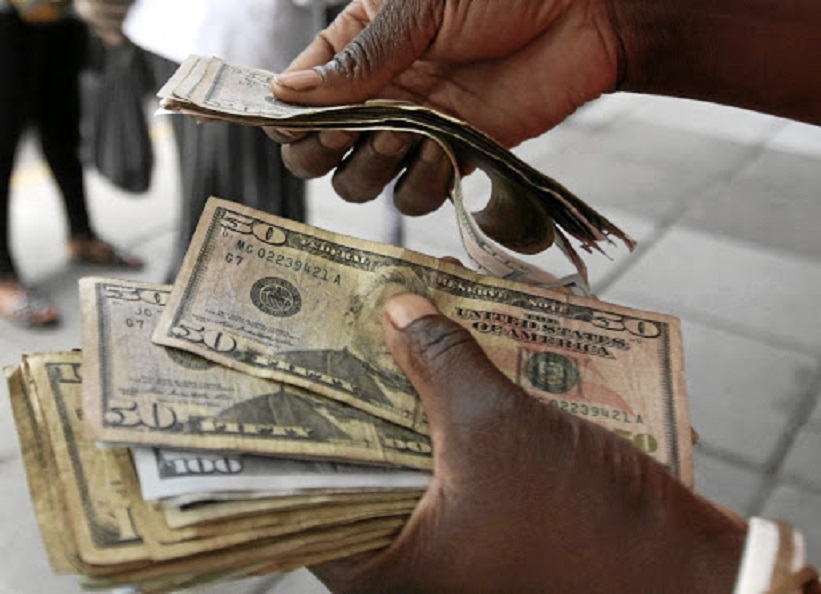
It was a bad day for the Nigerian Naira in the different segments of the foreign exchange (FX) market on Wednesday, July 8, as its value further slipped against the United States Dollar.
In the black market window, it lost N5 against the US Dollar during the session to trade at N1,400/$1 compared with Tuesday’s closing rate of N1,395/$1, but closed flat at the GTBank forex counter at N1,381/$1.
In the Nigerian Autonomous Foreign Exchange Market (NAFEX), the domestic currency depreciated against the greenback yesterday by N3.32 or 0.24 per cent to N1,379.07/$1, in contrast to the previous day’s N1,375.75/$1.
But the Naira appreciated against the Pound Sterling in the official market at midweek by 93 Kobo to 1,840.64/£1 from N1,841.57/£1, and gained N1.31 on the Euro to sell at N1,561.38/€1 compared with Tuesday’s N1,562.69/€1.
The market was liquidity-heavy, but increased demand for foreign payments dragged the exchange rate at the official window,
Traders reported that interbank FX turnover spiked by about 399 per cent on the day to $208.094 million, from $41.736 million the previous day. Also, the number of deals in the interbank market increased sharply to 150 from 47 deals.
FX analysts maintained positive expectations on the Naira outlook in the second half of 2026 despite the absence of interventions from the Central Bank of Nigeria (CBN) to support liquidity.
As for the cryptocurrency market, prices rose as Bitcoin (BTC) held above $62,000, chalking up 0.3 per cent to sell at $$62,754.96, after the US military completed another round of strikes against Iran and both sides raised the prospect of closing the Strait of Hormuz.
The escalation reignited inflation concerns and pulled forward rate expectations. Markets are increasingly treating war-related shocks as interest-rate events, with BTC now tracking front-end Treasury yields more closely than traditional hedges like crude or gold.
Dogecoin (DOGE) improved its value by 1.2 per cent to $0.0728, Binance Coin (BNB) soared by 1.1 per cent to $573.56, Ripple (XRP) appreciated by 0.9 per cent to $1.09, TRON (TRX) expanded by 0.6 per cent to $0.3309, Solana (SOL) grew by 0.2 per cent to $78.34 and Ethereum (ETH) jumped by 0.1 per cent to $1,751.22.
However, Cardano (ADA) decreased by 0.1 per cent to $0.1690, while the US Dollar Tether (USDT) and the US Dollar Coin (USDC) traded flat at $1.00 apiece.
By Dipo Olowookere
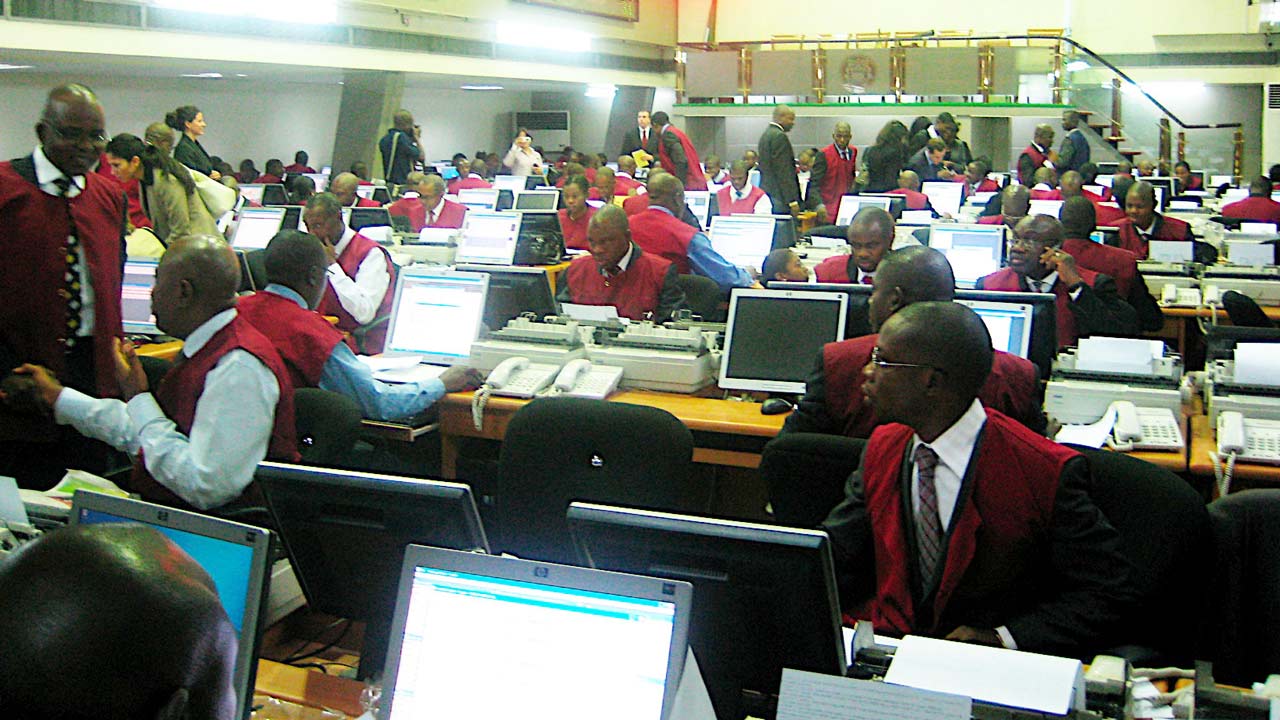
The bullish run seen lately in the Nigerian equities market continued on Wednesday after it closed the session with a 2.27 per cent growth.
This was influenced by renewed interest in domestic stocks by investors, who are locking funds in some shares with sound fundamentals like Airtel Africa, Aradel Holdings, Dangote Cement, and others.
Data showed that Airtel Africa and Trans-Nationwide Express gained 10.00 per cent to sell for N5,801.40 and N2.97, respectively. Fidelity Bank appreciated by 9.97 per cent to N19.85, Thomas Wyatt advanced by 9.89 per cent to N3.00, and UPDC REIT improved by 9.47 per cent to N10.40.
Conversely, Haldane McCall lost 9.95 per cent to trade at N3.53, McNichols declined by 8.89 per cent to N6.15, Transcorp slid by 5.65 per cent to N40.05, CWG went down by 5.24 per cent to N19.00, and VFD Group crashed by 5.19 per cent to N28.12.
The market breadth index remained positive after the Nigerian Exchange (NGX) Limited ended the day with 32 appreciating stocks and 24 depreciating stocks, indicating strong investor sentiment.
Business Post reports that the insurance sector was under pressure yesterday, resulting in a 0.20 per cent loss, which did not affect the outcome of the market.
The energy space gained 3.85 per cent, the industrial goods segment chalked up 1.89 per cent, the banking index rose by 1.07 per cent, and the consumer goods counter soared by 0.31 per cent.
As a result, the All-Share Index (ASI) added 5,378.70 points to finish at 242,459.98 points compared with the previous day’s 237,083.28 points, and the market capitalisation went up by N3.450 trillion to N155.586 trillion from N152.136 trillion.
The busiest equity during the trading session was Lasaco Assurance, with a turnover of 56.6 million units valued at N104.8 million. Fidelity Bank traded 47.5 million units worth N911.9 million, Linkage Assurance transacted 33.9 million units for N51.2 million, Zenith Bank sold 32.0 million units valued at N3.4 billion, and Sterling Holdings exchanged 30.5 million units worth N233.3 million.
At the close of transactions, 518.4 million shares worth N22.8 billion exchanged hands in 48,495 deals versus the 493.7 million shares valued at N28.0 billion traded in 49,969 deals a day earlier. This implied that the trading volume was up by 5.00 per cent, the trading value was down by 18.57 per cent, and the number of deals decreased by 2.95 per cent.
