

Economy
39 Stocks Depreciate NSE Index by 2.48% in Four Trading Days

Dipo Olowookere
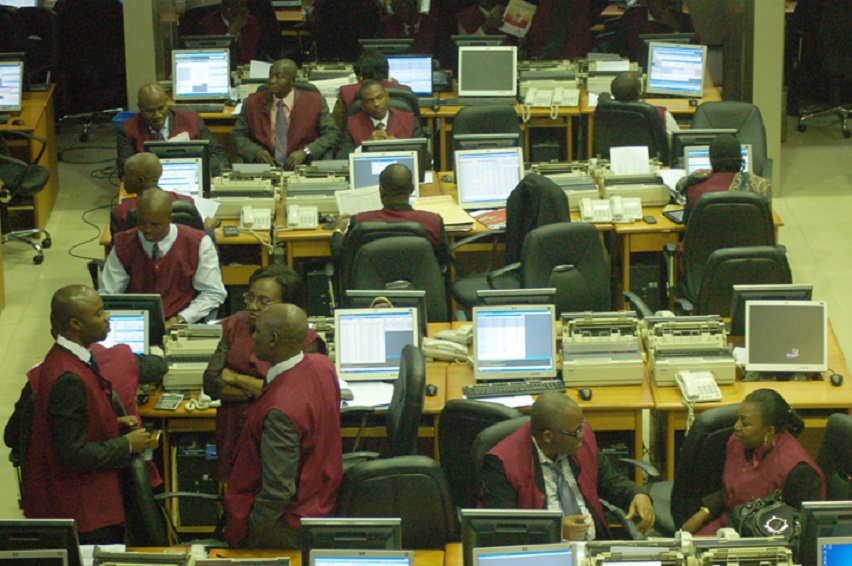
A total of 39 stocks trading on the Nigerian Stock Exchange (NSE) caused the All-Share Index (ASI) to depreciate by 2.48 percent to settle at 26,987.45 points in the four trading days last week.
The market opened for only four days in the week as a result of the public holiday declared by the federal government to celebrate the 59th anniversary of Nigeria’s independence from Britain in 1960.
The local stock market was mostly bearish for the week as investors stayed back to watch happenings from both the local and the global scenes, especially with the impeachment threat staring at President Donald Trump of the United States of America (USA) as well as activities on the global oil market, which is giving many investors serious concerns because of the price of the Brent crude, which fell below Nigeria’s benchmark of $60 per barrel in the week.
Shares in the oil and gas sector had a feel of this heat as they went down in the week at the domestic bourse by 2.25 percent.
CBN’s Fine Affects Banking Stocks
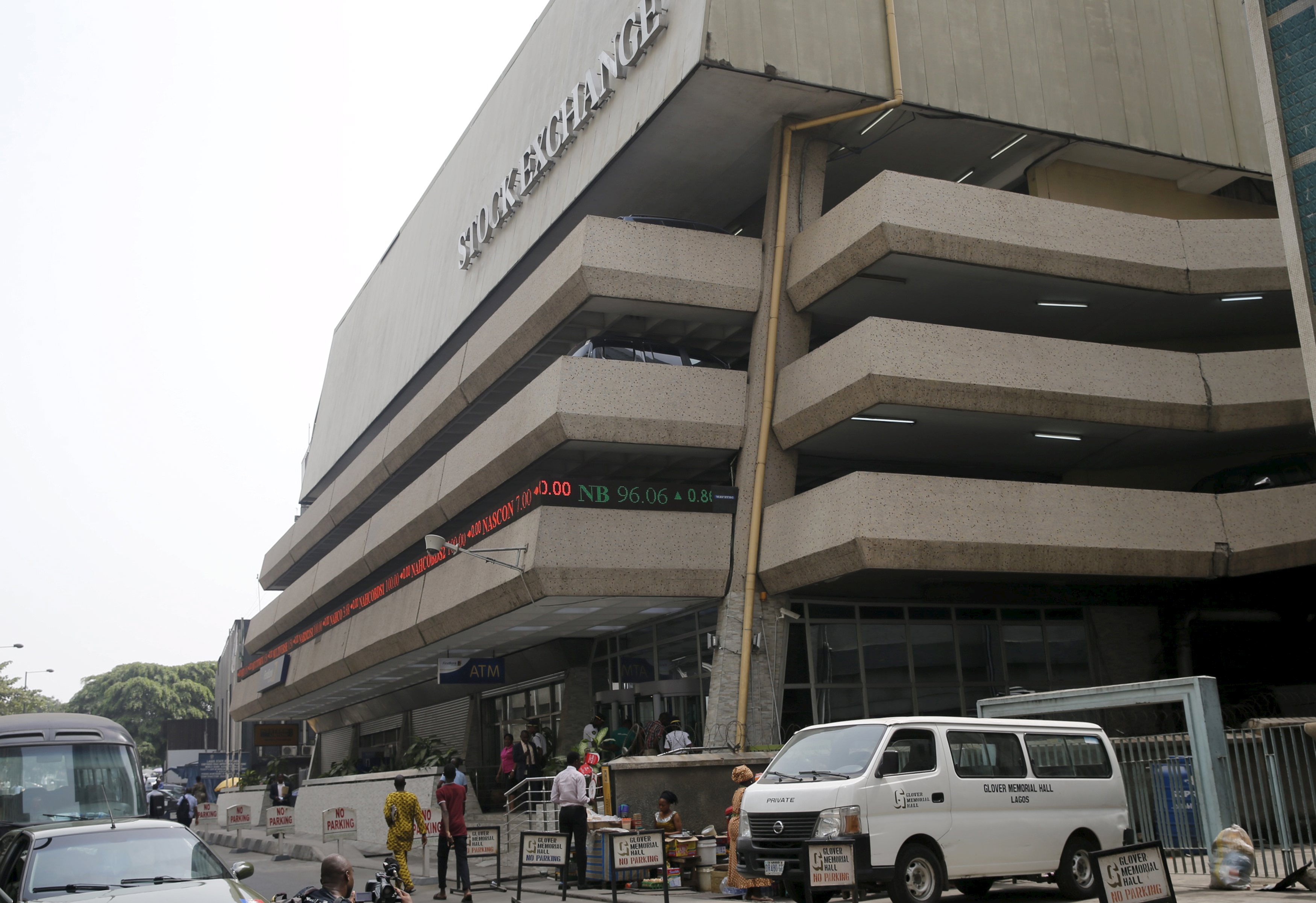
On the local scene, investors pondered on the action of the Central Bank of Nigeria (CBN) on 12 financial institutions, six of which are listed on the stock exchange. The dozen of banks were punished by the industry watchdog for failing to loan a certain amount of money in their custody to their customers as directed by the CBN.
In July 2019, the central bank had ordered lenders operating in the country to give 60 percent of their deposits to customers as loan so as to boost the economy.
The apex bank was hoping to use its loan policy to promote lending to the real sector of the economy so as to fast-track its recovery process after it slipped into recession over three year ago.
In the circular issued to the banks in July, the central bank had warned that failure do adhere to the 60 percent loan-to-deposit ratio would attract a sanction, which involves taking certain amount from their deposits to their cash reserves with the apex bank.
After the holiday, the CBN fined the 12 financial institutions the sum of N499.2 billion and this development caused selloffs in the banking space in the week, resulting into a 3.94 percent weekly loss.
Also, on the local scene, the persistent low purchasing power of Nigerians affected stocks in the consumer goods space at the market, leaving its barometer going down by 4.92 percent in the week.
Stock Performance In The Week

From the data harvested by Business Post on the NSE, Fidson Healthcare was the week’s heaviest loser as its stocks went down by 18.89 percent to close at N3.65 per share, while Ecobank followed with a loss of 14.61 percent to finish at N7.60 per unit.
UAC Nigeria fell by 14.38 percent to end at N6.55 per share, Africa Prudential depreciated by 9.97 percent to settle at N3.52 per unit, while Beta Glass declined by 9.96 percent to close at N53.80 per share.
At the other end, Continental Reinsurance shares went up by 20.11 percent to finish at N2.27 per unit, while Law Union and Rock Insurance followed with 12.82 percent appreciation to close at 44 kobo per unit.
Niger Insurance gained 10.00 percent to finish at 22 kobo per share, CAP improved by 9.89 percent to close at N25.55 per unit, while Caverton appreciated by 8.33 percent to settle at N2.60 per share.
In all, a total of 15 equities appreciated in price during the week, lower than 22 equities in the previous week, while 39 equities depreciated in price, lower than 42 equities in the previous week, with 112 equities remaining unchanged, higher than 102 equities recorded in the preceding week.
During the week, the market capitalisation also depreciated by 2.48 percent like the index to close and N13.137 trillion. Similarly, all other indices finished lower with the exception of NSE insurance and NSE industrial goods indices, which appreciated by 5.71 percent and 0.14 percent respectively, while the NSE ASeM index closed flat.

Activity Level In The Week
For the market turnover, a total of 660.7 million shares worth N9.2 billion were traded by investors in the week in 12,032 deals against the total of 1.1 billion shares valued at N16.7 billion that exchanged hands a week earlier in 14,717 deals.
A breakdown of the transactions showed that the financial services industry (measured by volume) led the activity chart with 458.2 million shares valued at N5.9 billion traded in 6,720 deals, contributing 69.35 percent and 64.27 percent to the total equity turnover volume and value respectively.
The conglomerates industry followed with 55.8 million shares worth N124.5 million in 545 deals, while the third place was occupied by construction/real estate sector with a turnover of 54.3 million shares worth N62.6 million in 135 deals.
Trading in GTBank Access Bank and FBN Holdings measured by volume accounted for 280.7 million shares worth N4.9 billion in 2,985 deals, contributing 42.49 percent and 53.43 percent to the total equity turnover volume and value respectively.
Other Transactions In The Week
Away from the stock market, investors traded a total of 3,015 units of Extended Traded Funds (ETFs) valued at N701,234.17 in the week in 16 deals compared with a total of 16,253 units valued at N1.103 million transacted the previous week in 13 deals.
For the bond market, a total of 4,250 units of Federal Government Bonds valued at N4.305 million were traded in the week in 6 deals compared with a total of 36,581 units valued at N37.504 million transacted a week earlier in 16 deals.

What to Expect This Week
Business Post returns that as investors prepare for the new week, they would be anticipating the return of bulls to the market, though happenings around don’t indicate this would occur.
At the moment, attention is focused on the decision of the United States Fed on whether it would lower interest rate, which is very much likely to happen. In addition, there would be huge expectations on the proposed talks between Washington DC and Beijing on the trade spat.
Further attention would be on oil, which rose slightly on Friday after enduring series of falls last week. Investors would hope to have things better in the week with news that Saudi’s Aramco has recovered from the attacks on its oil facilities few weeks ago by Yemen’s Iran-backed Houthi rebels.
On the local scene, there are more to worry about especially with the steady decline in the nation’s foreign reserves, which have fallen below $42 billion. This development is expected to put pressure on the Naira at the foreign exchange (forex) market this week.


Economy
Underrated National Currencies in Crypto Exchange: Why NGN and VND Are Emerging as Promising Markets

Crypto exchange is no longer limited to familiar pairs involving the U.S. dollar or the euro. When the goal is specific, e.g., buying USDT with a local currency, receiving an international transfer, or cashing out Bitcoin to a bank account, local fiat currencies take centre stage. The Nigerian naira, or NGN, and the Vietnamese dong, or VND, are excellent examples of this trend. Demand for these currencies is driven not by speculation, but by people solving everyday financial needs.
Why Local Currencies Are Becoming More Important in Crypto Exchange
Across developing markets, cryptocurrency adoption is accelerating where traditional financial infrastructure is slow, expensive, or limited. High international transfer fees, volatile exchange rates, and lack of access to foreign currencies have made digital assets an efficient bridge between local and global financial systems.
Between July 2024 and June 2025, the volume of on-chain cryptocurrency transactions in Sub-Saharan Africa exceeded $205 billion, representing approximately 52% year-over-year growth. Transactions below $10,000 accounted for 8% of total volume, compared with roughly 6% globally, indicating that demand extends well beyond stablecoins such as USDT and USDC. In Southeast Asia, meanwhile, crypto adoption is fueled primarily by the digital economy, cross-border commerce, e-commerce, and high retail participation.
NGN: Why Nigeria Has Become One of the World’s Leading Crypto Markets
Following Nigeria’s currency reforms in 2023–2024, the naira depreciated significantly. Access to U.S. dollars remained limited, while the gap between official and market exchange rates widened. As a result, Bitcoin and stablecoins evolved from investment assets into practical tools for payments and savings and drove a demand for USDT to naira exchanges, as well as Bitcoin to naira conversions.
The numbers illustrate the dynamic. In 2023, Nigeria ranked first globally in the peer-to-peer (P2P) cryptocurrency trading sub-index. In 2024, it climbed to second place in the Global Crypto Adoption Index. During the twelve months ending June 2025, Nigeria’s cryptocurrency transaction volume exceeded $92.1 billion—nearly three times that of South Africa.
Demand patterns are equally impressive. Approximately 89% of cryptocurrency transactions in Nigeria are naira to BTC conversions, excellent rates for which can be found on BestChange, on a dedicated page with NGN to Bitcoin exchange offers. Around 80% of surveyed Nigerians already own stablecoins, while 95% said they would prefer receiving payments in stablecoins rather than in naira. Since 2019, Nigeria has accounted for roughly 60% of all stablecoin inflows into Sub-Saharan Africa. On BestChange, users can also compare offers for exchanging NGN to USDT TRC20, including, as well as the reverse direction, i.e. purchasing naira with crypto—such as BTC to naira or, for example, offers with rates for converting TRX to naira.
International remittances add another major source of demand. In 2024, remittance inflows reached $20.93 billion. While bank transfers cost an average of 15% of the transferred amount, comparable transfers using stablecoins were approximately 60% cheaper.
The legal landscape is also evolving. In 2025, virtual assets were formally brought under Nigeria’s regulatory supervision, while pressure on unregulated platforms increased. Due to this, trusted exchange routes and reputable providers are becoming increasingly important for the crypto exchange market.
VND: Why Vietnam Remains Among the Global Leaders in Crypto Adoption
Vietnam paints a different picture. Unlike Nigeria, it faces no major currency instability, yet it has one of the world’s most active retail cryptocurrency markets. In 2025, the country ranked fourth in the Global Crypto Adoption Index, maintaining a top-five position for several consecutive years. Crypto transactions exceeded $200 billion in total during the twelve months ending June 2025.
Two factors consistently drive demand for crypto exchanges with dong: international remittances and Vietnam’s rapidly expanding digital economy. During 2024–2025, annual remittance inflows exceeded $16 billion, creating steady demand for converting foreign assets into Vietnamese dong.
Users looking to cash out can exchange USDT to VND (TRC20 network) or convert crypto from another network, e.g., USDT (ERC20) to Vietnamese dong. The flagship cryptocurrency exchanges are also available in the list of offers for Bitcoin to VND conversions. Those moving in the opposite direction can compare offers to convert VND to USDT (TRC20) or dong to USDT (ERC20) on BestChange.
Vietnam’s e-commerce market has also grown to approximately $32 billion, generating additional demand for fast and efficient payment solutions.
Additionally, crypto regulation is gradually becoming more structured. Beginning in January 2026, Vietnamese authorities started accepting license applications from cryptocurrency platform operators, followed by the launch of an accelerated regulatory pilot program later that spring.
How BestChange Helps Find NGN and VND Exchange Offers
In emerging markets, evaluating an exchange route means looking beyond the exchange rate alone. The cryptocurrency, blockchain network, payout method, available reserves, transaction limits, and service reputation all matter.
BestChange allows users to compare these factors before sending funds. For each exchange direction, you can instantly view offers from verified exchange services, including exchange rates, reserves, limits, payout methods, and—perhaps most importantly—reviews from other users.
Before sending cryptocurrency, it is also recommended to check the wallet addresses involved using an AML analyzer to reduce compliance risks.
NGN and VND are no longer niche markets. They support real-world financial needs, including international transfers, everyday payments, and holding part of one’s savings in stablecoins.


By Aduragbemi Omiyale
Leading manufacturer of personal healthcare products and consumer goods, PZ Cussons Plc, recorded a 22 per cent growth in its revenue in the 2026 fiscal year.
In its unaudited results recently submitted to the Nigerian Exchange (NGX) Limited, the company posted revenue of N260.46 billion in the period under review compared with the N212.63 billion achieved in the corresponding period in 2025.
This revenue growth was buoyed by market share gains for its major brands, increased household penetration and robust volume uplift, according to the chief executive of PZ Cussons, Mr Oghale Elueni.
It was observed that the cost of sales as a percentage of revenue was 72 per cent, 100bps lower than the prior year, driven by better mix and supply efficiencies.
Marketing and distribution expenses increased by 48.2 per cent to N26.51 billion from N17.89 billion, and administrative expenses also spiked by 43 per cent to N21.07 billion from N14.70 billion.
Also, the organisation recorded significant profitability for the year ended May 31, 2026, rising by 388 per cent to N49.10 billion from N10.07 billion.
Mr Elueni attributed this strong performance to the strength of the business, the equity of the brands, and the discipline of execution, noting that despite the complex and consistently challenging operating environment, the company pulled through to deliver growth in both revenue and profit.
He disclosed that the 22 per cent revenue growth recorded for the 2026 financial year was influenced by a healthy mix of volume and price initiatives.
“The balance sheet was further de-leveraged and strengthened through a cash-accretive P&L and efficient working capital management. The impact has been an improvement in the net asset position from N17.3 billion negative at the beginning of the year to N70.6 billion at year-end.
“The business grew volumes in both the electrical and consumer business, leveraging investment in our brands and sharpening our go-to-market capabilities. The result has been market share gains for our major brands, increased household penetration and robust volume uplift, contributing to overall revenue growth,” he stated.
Mr Elueni expressed profound appreciation to the shareholders for their unwavering support in navigating through the challenges in the last 12 months, noting that the board remains confident that, despite geopolitical uncertainties and their attendant economic shocks, the business is sufficiently resourced to deliver value to stakeholders.
“We have a business that has strong brands, an adaptive operating framework and a culture of disciplined execution that supports the consistent delivery of value to stakeholders,” he stated.


By Adedapo Adesanya
Nigeria’s crude oil production increased in May and June, according to data published by the Organisation of the Petroleum Exporting Countries (OPEC).
The country’s output increased by 42,000 barrels per day to 1,530 million barrels in May, from 1,489 million barrels in April.
According to Reuters, Nigeria, whose shipments were not affected by the Iran war, also pumped more in June, based on flow data from financial group LSEG, information from other companies that track flows, such as Kpler, and data provided by sources at oil companies, OPEC, and consultants.
Output from the OPEC rose by 2.34 million barrels a day to 18.75 million a day, with the gains driven by Kuwait, Saudi Arabia and Iran, the survey showed. The rebound still leaves production considerably below prewar levels.
Kuwait posted the biggest increase among OPEC’s 11 members last month, boosting output by 870,000 barrels a day to 1.36 million a day followed by Saudi Arabia, which raised output by 550,000 barrels a day to an average of 7.2 million a day. That was followed by Iran, which hiked by 510,000 a day to pump 2.85 million a day, and has accumulated a hoard of supply on tankers at sea as it struggles to find buyers.
In the wider alliance, Russia has bolstered crude exports to record levels following Ukrainian strikes on its refineries, potentially diverting volumes that can’t be processed at home.
Even before the peace deal, Persian Gulf producers had found ways to sneak cargoes out through the strait, which was largely shuttered in the early stages of the conflict.
The uptick in supply is creating a surplus in parts of the market, erasing crude’s wartime rally and raising the question of whether OPEC nations will need to compete for customers.
The group’s June production was still 7.3 million barrels a day, or 28 per cent, below February levels, when adjusted for exit by the United Arab Emirates (UAE).
The UAE quit OPEC in May, giving it the freedom to pump at will once the strait fully stabilises. Iraq also briefly threatened it could exit unless eventually given a higher output quota by the organisation.
On Sunday, a subgroup of seven OPEC+ nations announced a 188,000 barrels a day boost in August continuing the series of small and symbolic production hikes during the war to continue a process of restoring output halted a few years ago.

-
 Feature/OPED6 years ago
Davos was Different this year
-
Travel/Tourism10 years ago
Lagos Seals Western Lodge Hotel In Ikorodu
-

 Showbiz4 years ago
Estranged Lover Releases Videos of Empress Njamah Bathing
-
 Banking8 years ago
Sort Codes of GTBank Branches in Nigeria
-

 Economy3 years ago
Subsidy Removal: CNG at N130 Per Litre Cheaper Than Petrol—IPMAN
-

 Banking4 years ago
Sort Codes of UBA Branches in Nigeria
-

 Banking3 years ago
First Bank Announces Planned Downtime
-

 Sports3 years ago
Highest Paid Nigerian Footballer – How Much Do Nigerian Footballers Earn