Technology
Nokia Launches Three New Nokia C-Series Smartphones
By Adedapo Adesanya
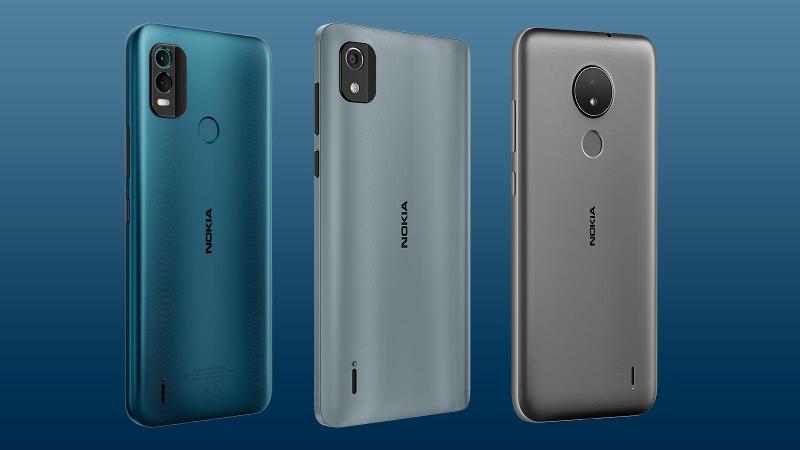
Hot on the heels of the recent launch of the G11 and G21, HMD Global, the home of Nokia phones, has announced three new Nokia C-series smartphones –the C21, C21 Plus and C2 2nd edition.
According to the company, this is in response to success for Nokia smartphones within the affordable smartphone market, which saw a 41 per cent smartphone revenue growth for HMD increase from 2020 to 2021 and the company reached its first full year of operational profitability in 2021.
Forecasting one million subscriptions to its Services Suite in the first half of this year, HMD is also announcing a new services-focused division to further continue this period of growth. This will allow the company to foster further growth, attract talent, and better support existing clients by streamlining processes internally.
Speaking on this, Mr Florian Seiche, Chief Executive Officer, HMD Global said, “2021 was a transformational year, resulting in solid revenue growth across the business and today, we are celebrating a profitable new chapter for HMD Global with the release of three new affordable Nokia devices which are not only safe, reliable and durable but ensure as many people as possible can access the latest innovative technology for less.
“I am excited to announce that our services portfolio includes a secure device financing solution for smartphones and other devices. At HMD, we are bringing together these two ingredients, a high-quality smartphone experience and a financing solution that builds upon our mission to make modern mobile technology accessible to everyone.
“Combined with the success of our enterprise services offering to scale to 1 million subscriptions in H1 and delivering the exceptional level of services clients expect from us, we are delivering an accessible and seamlessly connected experience for people and enterprises worldwide.”
Adding his input, Mr Janne Lehtosalo said, “Our range of enterprise IoT offerings has already made a significant impact on multiple industries including logistics, healthcare, and financial technology around the globe.
“Following the creation of the new division, we believe we will be better organised to further grow our offering to more industries, better serve our existing clients, and bring new services to the market. We’re excited to have hit a projection of over one million subscriptions in H1 and are proud that we are able to consistently offer them unparalleled services regardless of where they are on the globe.”
Review of Nokia C-Series
The three new devices epitomise the durability and long-lasting battery life qualities Nokia phones became famous all those years ago. This, combined with the best of Android™ software, and security updates cements HMD’s vision for 2022 and beyond – building Nokia phones that last for longer whilst maintaining excellent build quality.
Nokia phones have incorporated a beautiful Finnish aesthetic that is also functional. The company are bolstering their successful Nokia C-series range, which was introduced in 2020 and already makes up 16 per cent of total company smartphone sales in the last five years.
Nokia C21 Plus
The hero of the C-series family – Nokia C21 Plus – is the smartphone that keeps on giving. It’s designed for durability and is rigorously tested to achieve sleek style and strength, while also delivering on battery life and most importantly, remaining affordable. The device comes with two different battery sizes, 4000 mAh and 5050 mA which deliver up to two- and three-day battery lif] respectively – allowing people to stay connected for longer and recharge less.
Built around a robust inner metal chassis with an IP52 rating protecting against elements, with dirt, dust, and water droplet resistance thanks to a toughened cover glass that protects the dazzling 6.5” HD+ display – ensuring Nokia Hope can stand up to all of life’s hustle-and-bustle.
A 13MP dual camera with panorama and portrait modes allows you to capture life’s best bits in stunning detail. A clean OS with minimal preloads gives you more space for the apps and content you choose. Plus, 2 years of quarterly security updates, and fingerprint and AI face unlock technology ensures the Nokia C21 Plus stays secure, inside and out.
Nokia C21
The Nokia C21 maintains the excellent build quality, security promises and the all-day battery life signature to the popular C-series. The device brings an improved 8MP camera with autofocus technology that seamlessly reads QR codes – so whether people are scanning menus, making payments or simply looking up information – the Nokia C21 ensures scanning QR codes is a breeze.
Enhanced memory capabilities, thanks to a multi-core processor, bring efficiencies without sacrificing the all-day battery life, while AI-powered face unlock is now supported by a fingerprint sensor for extra security and convenience. Two years of regular security updates also come as standard for C-series devices so people can rest assured that the Nokia C21 works hard in the background to keep their smartphone phone safe.
Nokia C2 2nd edition
The Nokia C2 2nd edition comes with super-tough and reliable Nokia build-quality with even more ways to connect. Designed to withstand life’s knocks, thanks to a tough inner metal chassis, and premium Nordic craftsmanship, this C-Series device has been rigorously tested to ensure it meets high durability standards and delivers a thoughtful and purposeful design at an affordable price point.
Giving you greater freedom to connect, and a reliable, super-smooth smartphone experience, the all-day battery life from a single charge enables hours of talk time and days of standby. The generous 5.7” display lets people easily stream, share and scroll through their favourite content and apps in brilliant definition – and capture the best bits of life, day or night, thanks to front and rear flash cameras. 2 years of quarterly security updates also ensure that the Nokia C2 2nd edition stays secure on the inside. The up-to-date OS with minimal preloads helps data go further, freeing up more space for the content and apps you love.
Other C-Series Accessories
HMD’s growth story continues with their accessories range, doubling the accessories business in 2021 with ambitious plans for future growth. Nokia C21, C21 Plus and C2 2nd edition come with a range of accessories including over-ear wired and wireless headphones and truly wireless earbuds offering an easy, hands-free calling experience.
Nokia Go Earbuds 2 + A truly wireless, clear sound and comfortable fit at ultra-high value, whilst environmental noise cancellation (ENC), sweat and splash resistance, up to 24-hour playtime will see users through even the rainiest of days
Nokia Headphones (Available in Wired and Wireless) – a super lightweight design with soft over-ear cushioning and a foldable arm for extra comfort and convenience, make for a seamless experience whether working or listening to music.
HMD Enterprise division
The one million subscriptions are split between the three core products (Connect Pro, Enable Pro, and Softlock) currently sitting under HMD Global Services, and are made up of IoT connections, EMM licences, and device lock licences. The global growth of the existing HMD Global Services lines led to the subdivision, which will further enable the team to focus on improving existing product lines, as well as innovating and creating new product offerings to clients.
Pricing and availability
Local pricing, variants and availability will be shared in-market at a later stage.
Technology
Capillary Technologies Acquires SessionM from Mastercard
By Modupe Gbadeyanka
A software product company established in 2012, Capillary Technologies India Limited, has acquired the customer engagement and loyalty company, SessionM, from Mastercard.
This followed a definitive agreement signed by the global leader in AI-powered customer loyalty and engagement solutions with the renowned digital payments firm.
The acquisition of SessionM is the latest in a series of strategic moves by Capillary, following its successful listing on the Indian Stock Exchange in November 2025.
With SessionM in its portfolio, Capillary reinforces its position as a global leader in enterprise loyalty, offering a leading platform to the world’s most sophisticated enterprise brands.
Mastercard has identified Capillary Technologies—consistently recognised as a Leader in The Forrester Wave as the ideal partner to lead SessionM into its next era of growth.
As part of the agreement, a specialised team within SessionM will transition to Capillary, ensuring that the platform’s deep technical expertise is preserved.
SessionM’s esteemed global customer base—which includes Fortune 500 retailers, airlines, and CPG brands—will continue to receive the same high-calibre support and service they experienced before the acquisition.
“M&A has been a key growth strategy for Capillary over the years, and as a public company, we are delivering on that promise to our shareholders and the market.
“By bringing SessionM into our portfolio, we are not just expanding our footprint across the globe; we are further strengthening our loyalty capabilities to deliver one of the industry’s most comprehensive offerings.
“Our mission remains to provide enterprises across industries with specialised, AI-native loyalty technology solutions,” the chief executive of Capillary Technologies, Aneesh Reddy, commented.
Technology
Emergent Ventures, Others Invest $2.2m in Potpie
By Dipo Olowookere
About $2.2 million pre-seed round to help engineering teams unify context across their entire stack and make AI agents genuinely useful in complex software environments has been announced by Potpie.
Potpie was established by Aditi Kothari and Dhiren Mathur, who were determined to unify context across the entire engineering stack and enabling spec driven development.
As generative AI adoption accelerates, most tools focus on surface-level code generation while ignoring the deeper problem of context.
Large language models are powerful, but without access to system-level understanding, tooling history, and architectural intent, they struggle in real production environments.
Traditional approaches rely on senior engineers to manually hold this context together, a model that breaks down at scale and fails when AI agents are introduced.
The platform enables teams to automate high-impact and non-trivial use cases across the software development lifecycle, like debugging cross-service failures, maintaining and writing end-to-end tests, blast radius detection and system design.
It is designed for enterprise companies with large and complex codebases, starting at around one million lines of code and scaling to hundreds of millions.
Rather than acting as another coding assistant, Potpie builds a graphical representation of software systems, infers behaviour and patterns across modules, and creates structured artefacts that allow agents to operate consistently and safely.
A statement made available to Business Post on Monday revealed that the funding support came from Emergent Ventures, All In Capital, DeVC and Point One Capital.
The capital will be used to support early enterprise deployments, expand the engineering team, and continue building Potpie’s core context and agent infrastructure, it was disclosed.
“As AI makes code generation easier, the real challenge shifts to reasoning across massive, interconnected systems. Potpie is our answer to that shift, an ontology-first layer that helps enterprises truly understand and manage their software,” Kothari was quoted as saying in the disclosure.
A Managing Partner at Emergent Ventures, Anupam Rastogi, said, “In large enterprises, the real challenge is not generating code, it is understanding the system deeply enough to change it safely.
“Potpie’s ontology-first architecture, combined with rigorous context curation and spec-driven development, creates a structured model of the entire engineering ecosystem. This allows AI agents to reason across services, dependencies, tickets, and production signals with the clarity of a senior engineer. That is what makes Potpie uniquely capable of solving complex RCA, impact analysis, and high-risk feature work even in codebases exceeding 50 million lines.”
Technology
Expert Reveals Top Cyber Threats Organisations Will Encounter in 2026
By Adedapo Adesanya
Organisations in 2026 face a cybersecurity landscape markedly different from previous years, driven by rapid artificial intelligence adoption, entrenched remote work models, and increasingly interconnected digital systems, with experts warning that these shifts have expanded attack surfaces faster than many security teams can effectively monitor.
According to the World Economic Forum’s Global Cybersecurity Outlook 2026, AI-related vulnerabilities now rank among the most urgent concerns, with 87 per cent of cybersecurity professionals worldwide highlighting them as a top risk.
In a note shared with Business Post, Mr Danny Mitchell, Cybersecurity Writer at Heimdal, said artificial intelligence presents a “category shift” in cyber risk.
“Attackers are manipulating the logic systems that increasingly run critical business processes,” he explained, noting that AI models controlling loan decisions or infrastructure have become high-value targets. Machine learning systems can be poisoned with corrupted training data or manipulated through adversarial inputs, often without immediate detection.
Mr Mitchell also warned that AI-powered phishing and fraud are growing more sophisticated. Deepfake technology and advanced language models now produce convincing emails, voice calls and videos that evade traditional detection.
“The sophistication of modern phishing means organisations can no longer rely solely on employee awareness training,” he said, urging multi-channel verification for sensitive transactions.
Supply chain vulnerabilities remain another major threat. Modern software ecosystems rely on numerous vendors and open-source components, each representing a potential entry point.
“Most organisations lack complete visibility into their software supply chain,” Mr Mitchell said, adding that attackers frequently exploit trusted vendors or update mechanisms to bypass perimeter defences.
Meanwhile, unpatched software vulnerabilities continue to expose organisations to risk, as attackers use automated tools to scan for weaknesses within hours of public disclosure. Legacy systems and critical infrastructure are especially difficult to secure.
Ransomware operations have also evolved, with criminals spending weeks inside networks before launching attacks.
“Modern ransomware operations function like businesses,” Mitchell observed, employing double extortion tactics to maximise pressure on victims.
Mr Mitchell concluded that the common thread across 2026 threats is complexity, noting that organisations need to abandon the idea that they can defend against everything equally, as this approach spreads resources too thin and leaves critical assets exposed.
“You cannot protect what you don’t know exists,” he said, urging organisations to prioritise visibility, map dependencies, and focus resources on the most critical assets.
-
Feature/OPED6 years agoDavos was Different this year
-
Travel/Tourism10 years ago
Lagos Seals Western Lodge Hotel In Ikorodu
-
Showbiz3 years agoEstranged Lover Releases Videos of Empress Njamah Bathing
-
Banking8 years agoSort Codes of GTBank Branches in Nigeria
-
Economy3 years agoSubsidy Removal: CNG at N130 Per Litre Cheaper Than Petrol—IPMAN
-
Banking3 years agoSort Codes of UBA Branches in Nigeria
-
Banking3 years agoFirst Bank Announces Planned Downtime
-
Sports3 years agoHighest Paid Nigerian Footballer – How Much Do Nigerian Footballers Earn