General
NDLEA Recovers Tramadol Tablets, Arrest 41 Suspects
By Adedapo Adesanya
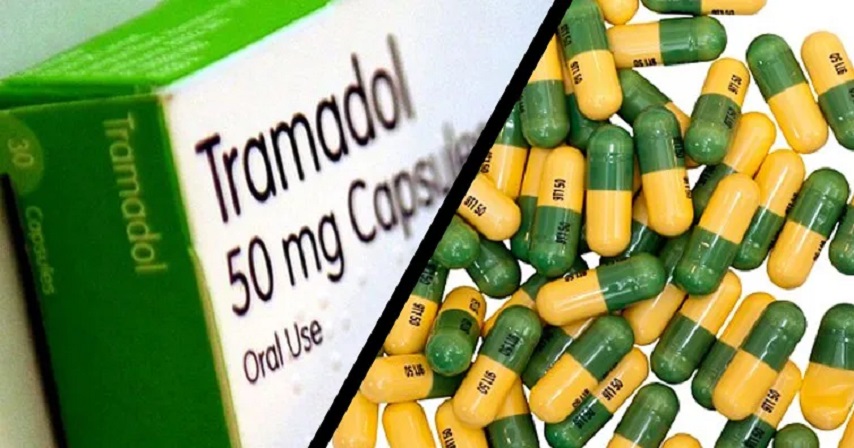
The National Drug Law Enforcement Agency (NDLEA) on Sunday said it has intercepted no fewer than 294,440 Tramadol tablets and other illicit drugs in major operations in Delta, Bauchi, and the Murtala Muhammed International Airport, Lagos, while a total of 41 suspects were arrested in raids in Abuja and Kaduna State.
The NDLEA spokesperson, Mr Femi Babafemi, said in a statement that in Delta State, one Mr Christian Onah was arrested at Isele-Azagba junction with 23,160 tablets of Swinol and 66,000 tablets of Rohypnol, both weighing 71.6kg while conveying the drugs from Benin, Edo to Onitsha, Anambra state.
In another arrest, a commercial vehicle from Onitsha going to Ibadan, Oyo state was intercepted at Abraka junction, Asaba on Wednesday, March 2 with 78,000 capsules of Tramadol; 5,000 tablets of Diazepam and 97,500 tablets of Exol-5, while a suspect, Mr Olaniyan Sunday, was arrested.
One female suspect, Miss Patricia Saduwa, was arrested with 233.7kg of cannabis during a raid in Orogun community close to Abbi town in Kwale LGA, Delta State on Friday, March 4, while 123.7kg of cannabis was also seized in another raid in the community on the same day.
The owner is said to be at large.
In Bauchi, operatives acting on credible intelligence raided a warehouse at Gadar- Maiwa, Ningi Local Government Area, where 542.5kg of cannabis; 6,800 tablets of Diazepam and 12,400 tablets of Exol-5 were recovered on Wednesday, March 2.
At least 30 suspects were arrested at the Malali area of Kaduna State during raids aimed at destroying drug joints across the state.
A suspect, Mr Usman Dahiru was arrested with 24kg of cannabis concealed in two sacks of used clothes on Thursday, March 3, along the Abuja-Kaduna expressway, where another suspect, Mr Abdulrazaq Rabi’u was also arrested with 100,000 counterfeit US Dollars.
On the same day, operatives in Anambra State recovered 38,862 red star cartridges along with 13 cartons of illicit drugs when they raided a warehouse in Onitsha.
In Abuja, 11 suspects were arrested and 81.2kg of drugs were seized in a major raid operation on Saturday, March 5 in ‘black spots’ like Torabora, Karu Abattoir, Jabi motor park and forest.
At the Lagos airport, one Mr Audu Muhammed was arrested at the SAHCO export shed on Saturday, March 5, with 1.550kg cannabis concealed in golden morn cereal packs meant for Dubai, UAE.
Days earlier, a suspect, Mr Olalekan Wasiu Ayinde was also arrested at the export shed with 4,980 capsules of Tramadol; 600 capsules of Rohypnol and some designer drugs concealed inside locust beans and hidden among food items for export to South Africa.
Meanwhile, Mr Nwoku Princewill Uche, a principal suspect in the importation of 451,807 Captagon tablets weighing 79.119kg at Apapa Seaport Lagos, has been taken into custody after six months on the run.
Known as Jihadist drug, the consignment was the first-ever recorded seizure of Captagon in the West and Central African Sub-Region.
In his statement, Mr Uche claimed to have met the person who gave him the job on LinkedIn while he was paid N5m to clear the container.
He then used a third-party bank account to process the Form M for the clearing of the illicit consignments.
General
Nigerian Shippers’ Council Transitions into Nigeria Ports Economic Regulatory Agency
By Adedapo Adesanya
The Nigerian Shippers’ Council (NSC) has formally transitioned into the Nigeria Ports Economic Regulatory Agency (NPERA) following President Bola Tinubu’s assent to the Nigerian Ports Economic Regulatory Agency Act, 2026.
The Act establishes NPERA as the statutory authority responsible for the economic regulation of ports in the country.
Speaking at a press briefing in Lagos, Mr Ibrahim Shema, chairman of the NPERA governing board, described the development as a major institutional reform aimed at creating a more transparent, predictable, and competitive port environment.
Mr Shema said NPERA would be responsible for the economic regulation of port services and related activities, including tariffs and charges, licensing, service standards, fair competition, commercial dispute resolution, trade facilitation, and protection of port users.
He said the new framework is expected to provide greater regulatory certainty for shipping lines and terminal operators, while offering importers, exporters, freight forwarders, and clearing agents more predictable procedures, fairer charges, and improved mechanisms for resolving disputes.
The chairman clarified that the establishment of NPERA does not create a competing authority with the Nigerian Ports Authority (NPA).
“While the Nigerian Ports Authority will retain responsibility for port infrastructure and its landlord functions, NPERA will provide independent economic oversight within its statutory mandate,” Mr Shema said.
He said NPERA’s regulatory approach will be anchored on five principles: transparency, fairness, predictability, efficiency, and accountability.
The board’s chairman said the new agency would deploy technology and data to strengthen licensing, tariff administration, monitoring, compliance, reporting, and stakeholder engagement.
“The agency also plans to work with key maritime institutions, including the Nigerian Ports Authority, NIMASA and the Nigeria Customs Service, as well as terminal operators, shipping lines, freight forwarders, manufacturers, investors and other industry stakeholders,” he said.
Mr Shema said the immediate priority is to ensure an orderly transition from the NSC to NPERA, while maintaining continuity in essential regulatory functions and preserving institutional knowledge.
The chairman stressed that the success of the new agency would ultimately be measured by its impact on port users and the wider economy.
“Effective implementation of the Act should translate into better services, greater efficiency, lower uncertainty, fair competition, and stronger trade facilitation,” Shema added.
On his part, Mr Pius Akutah, executive secretary and chief executive of NPERA, expressed optimism that the new law would significantly clarify the regulatory environment governing Nigeria’s ports within the next one to two years.
Mr Akutah said the NPERA Act would give the agency stronger powers to improve commercial dispute resolution and protect the interests and welfare of port users and other stakeholders, adding that the new regulatory framework would enable the agency to deliver a more efficient, transparent, and competitive Nigerian port system.
General
Nigeria’s New Alphanumeric Postcode System to Launch October 1
By Adedapo Adesanya
The Minister of Communications, Innovation and Digital Economy, Mr Bosun Tijani, has announced that Nigeria will launch a new alphanumeric postcode system on October 1, 2026, with every home expected to have a unique postcode.
Mr Tijani disclosed the development in a video post on X, describing the new system as a more precise and digitally oriented approach to addressing locations across the country.
He said the initiative would mark a significant shift in Nigeria’s postal addressing system by assigning unique postcodes to individual homes.
The initiative marks a major step in Nigeria’s digital transformation agenda. By replacing the outdated numeric-only system, the alphanumeric codes provide a more flexible and scalable framework that can accommodate the country’s rapid urban growth and diverse settlement patterns.
For emphasis, an alphanumeric postcode system is a postal indexing system that uses a combination of both letters (alpha) and numbers (numeric), along with spaces or punctuation, to identify specific geographic locations, streets, or individual buildings for mail delivery.
Unlike purely numeric postcode systems (such as the 5-digit US ZIP Code or 5-digit codes used in some European countries), alphanumeric codes offer a much higher number of unique combinations using fewer total characters. This flexibility allows postal authorities to pinpoint locations with incredible precision, often down to a single side of a street or a specific large building.
“On October 1st 2026 Nigeria’s new Alphanumeric Postcode System goes live,” Mr Tijani said.
“For the first time, every home will be assigned a unique postcode that’s simple, precise and built for a digital future,” he added.
The minister urged Nigerians to prepare to generate their individual postcodes ahead of the launch.
The new system is expected to strengthen Nigeria’s digital addressing infrastructure and improve the identification and location of homes and properties for postal and other location-based services.
The initiative is being implemented in collaboration with the Nigerian Postal Service (NIPOST) as part of broader efforts to modernise the country’s addressing and digital infrastructure.
General
Tinubu Directs Finance Minister to Give Reforms Scorecard to Nigerians
By Modupe Gbadeyanka
The Minister of Finance and Coordinating Minister of the Economy, Mr Taiwo Oyedele, has been directed to give an account to Nigerians on how the current government has fared since its inception on May 29, 2023.
This directive was given by President Bola Tinubu in a message posted on his verified social media handles on Wednesday.
This coincides with the commencement of campaigns for the 2027 presidential election scheduled for January 16.
According to the timetable of the Independent National Electoral Commission (INEC), candidates seeking to become the country’s president are eligible to kick off their campaigns from today, Wednesday, August 19, 2026.
In his message today, Mr Tinubu said, “When we began this journey of reform in 2023, I promised that the difficult decisions we were making would serve the purpose of building an economy that works better for you and a country that is stronger for our children.
“Today, your government presents The Reforms Scorecard. It sets out what our reforms have achieved, what they have cost us, and the greater costs and harms we have prevented by acting when we did.
“I have therefore directed the Minister of Finance and Coordinating Minister of the Economy, Taiwo Oyedele, to give an account to Nigerians, to explain the numbers, the choices we have made, the progress recorded, and the work that remains.
“You deserve to see the numbers. You deserve to know what has changed and what these reforms mean for you, your family, your business and our country.
“This is your government. This is your country. This is our account to you.”
Shortly after he took the oath of office over three years ago, President Tinubu declared that subsidies on petroleum products were gone. He later approved foreign exchange (FX) reforms, which devalued the Nigerian Naira, shooting from about N800 per Dollar to nearly N2,000 per Dollar. However, it is currently slightly above N1,340 per Dollar in the official market.