Connect with us

Economy

Rice Now N8,000 In Ebonyi, Export Starts 2017—CBN

Published

on

rice-export

By Modupe Gbadeyanka

Central Bank of Nigeria (CBN) has disclosed that farmers in the country will start to export rice from next year.

Speaking at a sensitisation workshop for farmers in Yenagoa, Bayelsa State, the Acting Director of Corporate Communications of CBN, Mr Isaac Okorafor, noted that the bank’s Anchor Borrowers Programme for the promotion of agriculture in the country was already yielding expected results.

Mr Okorafor pointed out that the programme has brought about massive rice cultivation by farmers in Cross River, Ebonyi, Jigawa, Kebbi, and Sokoto States.

He said Kebbi State had already harvested one million tons of rice, while Ebonyi State had outstripped the earmarked production for 2016.

“The development is encouraging and by the end of 2017, we will not only meet our national demand which is between six and seven million tons but have surplus to export.

“We must rid ourselves of eating foreign rice that has been stored for over nine years in Thailand, Vietnam and India. Nigerian rice is fresh and healthier.

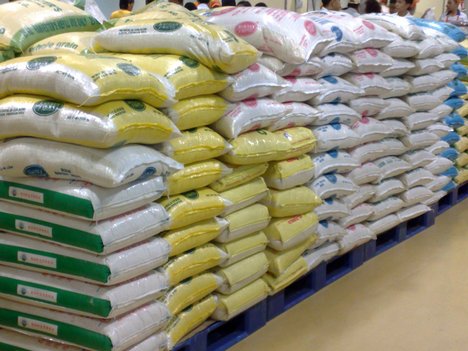
“We should eat Nigerian rice provided for by the CBN Anchor Programme; 50 Kg of local rice is now N8,000 in Ebonyi. Already, the Abia Government has ordered rice from Ebonyi for Christmas,” Mr Okorafor said at the event themed ‘Promoting Stability and Economic Development.

The CBN spokesman urged farmers to take pride in farming, adding that the Anchor Borrowers Programme was an intervention to reduce their burden.

He also charged Nigerian youth to “wake up, dust themselves up and join this worthy campaign.”

Mr Okorafor explained that, “What we have done with this programme so far is to create jobs through farming, especially for the unemployed youths.

“Remember that the status of our farmers is now better due to the support they are receiving as a result of government’s policy.

“Our currency is weak because we engaged in needless importation of all kinds of food stuffs, including tooth picks; the government is determined to stop this.”


Modupe Gbadeyanka is a fast-rising journalist with Business Post Nigeria. Her passion for journalism is amazing. She is willing to learn more with a view to becoming one of the best pen-pushers in Nigeria. Her role models are the duo of CNN's Richard Quest and Christiane Amanpour.

Economy

Petrol Supply up 55.4% as Daily Consumption Reaches 52.1 million Litres

Published

on

sufficient supply petrol

By Adedapo Adesanya

The supply of Premium Motor Spirit (PMS), also known as petrol, increased by 55.4 per cent on a month-on-month basis to 71.5 million litres per day in November 2025 from 46 million litres per day in October.

This was contained in the November 2025 fact sheet of the Nigerian Midstream and Downstream Petroleum Regulatory Authority (NMDPRA) on Monday.

The data showed that the nation’s consumption also increased by 44.5 per cent or 37.4 million litres to 52.1 million litres per day in November 2025, against 28.9 million litres in October.

The significant increase in petrol supply last month was on account of the imports by the Nigerian National Petroleum Company (NNPC) Limited into the Nigerian market from both the domestic and the international market.

Domestic refineries supplied in the period stood at 17.1 million litres per day, while the average daily consumption of PMS for the month was 52.9 million litres per day.

The NMDPRA noted that no production activities were recorded in all the state-owned refineries, which included Port Harcourt, Warri, and Kaduna refineries, in the period, as the refineries remained shut down.

According to the report, the imports were aimed at building inventory and further guaranteeing supply during the peak demand period.

Other reasons for the increase, according to the NMDPRA, were due to “low supply recorded in September and October 2025, below the national demand threshold; the need for boosting national stock level to meet the peak demand period of end of year festivities, and twelve vessels programmed to discharge into October, which spilled into November.”

On gas, the average daily gas supply climbed to 4.684 billion standard cubic feet per day in November 2025, from the 3.94 bscf/d average processing level recorded in October.

The Nigeria LNG Trains 1-6 also maintained a stable processing output of 3.5 bscf/d in November 2025, but utilisation improved slightly to 73.7 per cent compared with 71.68 per cent in October.

The increase, according to the report, was driven by higher plant utilisation across processing hubs and steady export volumes from the Nigeria LNG plant in Bonny.

“As of November 2025, Nigeria’s major gas processing facilities recorded improved output and utilisation levels, with the Nigeria LNG Trains 1-6 processing 3.50 billion standard cubic feet per day at a utilisation rate of 73.70 per cent.

“Gbaran Ubie Gas Plant processed 1.250 bscf per day, operating at 71.21 per cent utilisation, while the MPNU Bonny River Terminal recorded a throughput of 0.690 bscf per day during the period. Processing activities at the Escravos Gas Plant stood at 0.680 bscf per day, representing a 62 per cent utilisation rate, whereas the Soku Gas Plant emerged as the top performer, processing 0.600 bscf per day at 96.84 per cent utilisation,” it stated.

Continue Reading

Economy

Secure Electronic Technology Suspends Share Reconstruction as Investors Pull Out

Published

on

Secure Electronic Technology

By Aduragbemi Omiyale

The proposed share reconstruction of a local gaming firm, Secure Electronic Technology (SET), has been suspended.

The Lagos-based company decided to shelve the exercise after negotiations with potential investors crumbled like a house of cards.

Secure Electronic Technology was earlier in talks with some foreign investors interested in the organisation.

Plans were underway to restructure the shares of the company, which are listed on the Nigerian Exchange (NGX) Limited.

However, things did not go as planned as the potential investors pulled out, leaving the board to consider others ways to move the firm forward.

Confirming this development, the company secretary, Ms Irene Attoe, in a statement, said the board would explore other means to keep the company running to deliver value to shareholders.

“This is to notify the NGX and the investing public that a meeting of the board of SET held on Tuesday, December 16, 2025, as scheduled, to consider the status of the proposed share reconstruction and recapitalisation as approved by the members at the Extraordinary General Meeting (EGM) held on April 16, 2025.

“After due deliberations, the board wishes to announce that the proposed share reconstruction will not take place as anticipated due to the inability of the parties to reach a convergence on the best and mutually viable terms.

“Thus, following an impasse in the negotiations, and the investors’ withdrawal from the transaction, the board has, in the interest of all members, decided to accept these outcomes and move ahead in the overall interest of the business.

“The board is committed to driving the strategic objectives of SEC and to seeking viable opportunities for sustainable growth of the company,” the disclosure stated.

Business Post reports that the share price of SET crashed by 3.85 per cent on Tuesday on Customs Street on Tuesday to 75 Kobo. Its 52-week high remains N1.33 and its one-year low is 45 Kobo. Today, investors transacted 39,331,958 units.

Continue Reading

Economy

Clea to Streamline Cross-Border Payments for African Importers

Published

on

Clea Payment platform

By Adedapo Adesanya

Clea, a blockchain-powered platform that allows African importers to pay international suppliers in USD while settling locally, has officially launched.

During its pilot phase, Clea processed more than $4 million in cross-border transactions, demonstrating strong early demand from businesses navigating the complexities of global trade.

Clea addresses persistent challenges that African importers have long struggled with, including limited FX access, unpredictable exchange rates, high bank charges, fraudulent intermediaries, and payment delays that slow or halt shipments. The continent also faces a trade-finance gap estimated at over $120 billion annually, limiting importers’ ability to access the FX and financial infrastructure needed for timely international payments by offering fast, transparent, and direct USD settlements, completed without intermediaries or banking bottlenecks.

Founded by Mr Sheriff Adedokun, Mr Iyiola Osuagwu, and Mr Sidney Egwuatu, Clea was created from the team’s own experiences dealing with unreliable international payments. The platform currently serves Nigerian importers trading with suppliers in the United States, China, and the UAE, with plans to expand into additional trade corridors.

The platform will allow local payments in Naira with instant access to Dollars as well as instant, same-day, or next-day settlement options and transparent, traceable transactions that reduce fraud risk.

Speaking on the launch, Mr Adedokun said, “Importers face unnecessary stress when payments are delayed or rejected. Clea eliminates that uncertainty by offering reliable, secure, and traceable payments completed in the importer’s own name, strengthening supplier confidence from day one.”

Mr Osuagwu, co-founder & CTO, added, “Our goal is to make global trade feel as seamless as a local transfer. By connecting local currencies to global transactions through blockchain technology, we are removing long-standing barriers that have limited African importers for years.”

According to a statement shared with Business Post, Clea is already working with shipping operators who refer merchants to the platform and is also engaging trade associations and logistics networks in key import hubs. The company remains fully bootstrapped but is open to strategic investors aligned with its mission to build a trusted global payment network for African businesses.

Continue Reading

Trending