

Feature/OPED
Who Will Negotiate For The North?

By Sani Abdulrazak, PhD
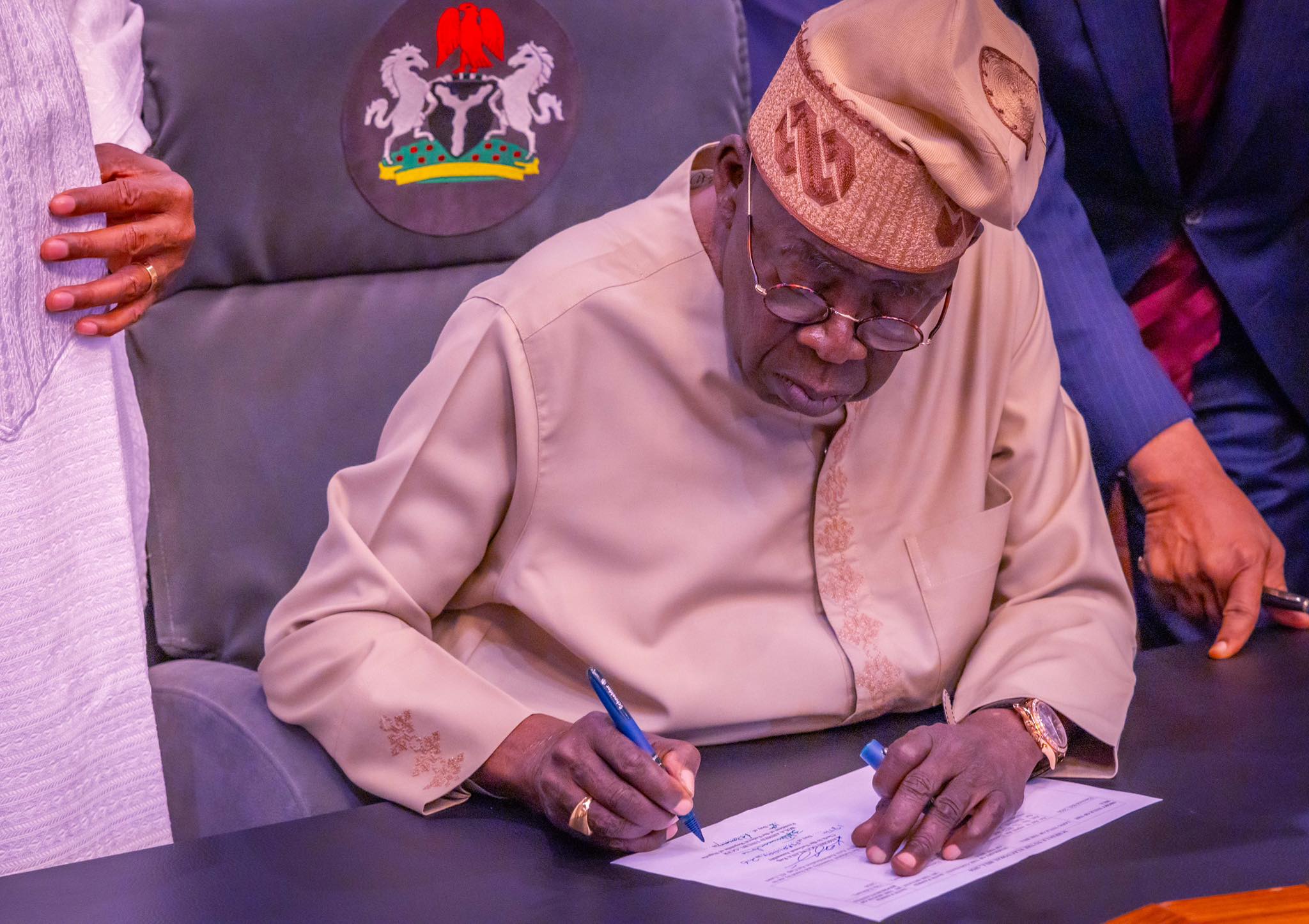
It ticks all the boxes of tragedy when you are close enough to whisper into the king’s ear but too timid to tell him that his subjects are hungry. It is indeed the tragedy of proximity and access without purpose. As Nigeria’s political brainbox, President Bola Tinubu converges on the nation’s seat of political power, Kaduna, on Saturday, 24th October 2026 for his campaign flag-off, the North must ask itself a question more consequential than who will shake the President’s hand or dance to the rhythm of partisan solidarity: who will place before him the North’s bill of demands for 2027–2031? Who will present a written compact, complete with timelines, measurable targets and a mechanism for accountability? Who will remind the President that beneath the arithmetic of votes lies the anguish of a people battered by insecurity, impoverishment, educational backwardness and the unrelenting indignities of want? Who will tell him, without genuflection, that the North needs more? Or shall we, once again, mistake the choreography of political allegiance for the substance of governance?
The North has never been short of political merchants. What remains in doubt is whether it has enough disinterested negotiators. Our governors, legislators, former officeholders, traditional institutions and religious leaders cannot continue to invoke the North as a geographical abstraction whenever votes are required, only to retreat into the comfortable silos of personal ambition when its collective fortunes must be bargained for. A region is not represented because its sons occupy high offices. Representation must leave fingerprints on the lives of the represented. This is where the Northern elite must answer an uncomfortable roll call. Where are the men and women who profess to carry the region’s conscience? Where is their common agenda? Where is the document that translates the North’s litany of afflictions into a timetable for redress? Who has assembled its demands into a coherent covenant with the federal government, one that can be revisited when today’s political courtesies have dissolved into tomorrow’s recriminations? Will the northern elites just for once give up negotiating appointments and contracts for the collective progress of the region?
We cannot keep invoking the Northern elite as though it were a mythical cavalry destined to arrive whenever the region’s fortunes are imperilled. If such an elite exists, let its influence be measured not by the number of presidential doors it can open, but by what passes through those doors in the people’s interest. The same question must reach the pulpits. Those who deploy their moral authority to persuade Northerners to support political leaders must not regard mobilisation as the terminus of their responsibility. If they can summon the faithful to the ballot box, can they not summon the political class to the bar of accountability? If they can endorse a candidate, can they not insist on a covenant that binds his administration to the welfare of those whose votes they solicit? The pulpit must not become a megaphone for political allegiance while the cries of the afflicted remain an inconvenient footnote.
Some may argue that demanding more from the President risks alienating him, or that a region should demonstrate loyalty before presenting its grievances. But what manner of loyalty requires a people to sheath their legitimate demands? Must the North choose between maintaining a working relationship with the President and insisting that its children deserve schools, its farmers deserve security, its young people deserve livelihoods and its communities deserve the elementary infrastructure of civilisation? That is a false dichotomy. A mature political relationship accommodates both cooperation and candour. Indeed, the friend who cannot tell the king an uncomfortable truth is often no more than a courtier with an eye on the royal purse. Nor should opposition be mistaken for political strategy. A region that spends its energy in perpetual antagonism may squander opportunities for negotiation; one that offers unqualified allegiance may surrender the very leverage that makes negotiation worthwhile. The North must escape both cul-de-sacs. Its interest lies neither in reflexive hostility nor in sycophantic acquiescence, but in calculated, principled engagement. The President must be approached with a roadmap and deliverables, not a retinue.
Let the agenda be unambiguous. Security must cease to be a recurring funeral oration. Education must move beyond enrolment figures to learning, skills and opportunity. Agriculture must graduate from subsistence to productivity and value addition. Infrastructure must connect neglected communities to markets and public services. The region’s young people must find in their homeland a future worth staying for, rather than a desperate reason to flee it. These are not supplications for presidential benevolence. They are legitimate demands in a federation whose stability depends on the welfare of its constituent communities, and they must be accompanied by deadlines, responsible institutions and publicly verifiable indicators. Otherwise, the proposed agenda will become another ornamental document, admired at its unveiling and abandoned before its ink dries.
The danger is not that the North might fail to secure everything it wants. No negotiation guarantees total victory. The greater peril is that it may fail to negotiate at all, then spend the ensuing four years excavating excuses for an opportunity it voluntarily buried. When that day comes, who will we blame? The President? The opposition? The federation? Or the men and women who possessed the access, commanded the influence and had the opportunity to speak, but chose instead to exchange pleasantries while the people’s burdens waited outside? It is germane to etch in our minds that history is not always cruel because opportunities are denied. Sometimes, it is cruel because they are offered and squandered.
The North must therefore ask its governors, political heavyweights, traditional rulers and religious leaders a question that admits no evasive answer: what, precisely, are you negotiating for the people? Not who will receive an appointment. Not whose photograph will dominate the newspapers. Not how many votes can be promised or which political rival can be humiliated. What binding commitments will emerge? What measurable improvements should the ordinary Northerner expect? Who will monitor implementation, and who will answer when the milestones are missed? The region needs a compact that survives the departure of its delegation, the dissolution of its alliances and the inevitable turnover of political fortunes. Without such a mechanism, every presidential encounter risks becoming an elaborate exercise in political theatre, with the elite occupying the front row and the people paying for the tickets.
Four years are a long time to nurse grievances that could have been tabled today. They are even longer for a child out of school, a farmer driven from his land, a family impoverished by violence or a graduate whose qualifications have become an epitaph for unfulfilled promise. If the North cannot speak with purpose when the President’s ear is within reach, it must be wary of discovering, after the doors have closed, that its loudest complaints are no substitute for demands never made. The North must not just deliver the votes that sustain power. It must negotiate the results that justify those votes. Otherwise, when the music fades and the courtiers disperse, the people will once again inherit the silence and still ask; who will save the North, and who will negotiate for the North?
Sani Abdulrazak, PhD, is an Analytical Chemist, Writer and Public Commentator based in Zaria. He writes on governance, public affairs, society and the environment