Connect with us

Education

Excitement As School Meals Resume in Sudan

Published

on

school-meals-resume

By Modupe Gbadeyanka

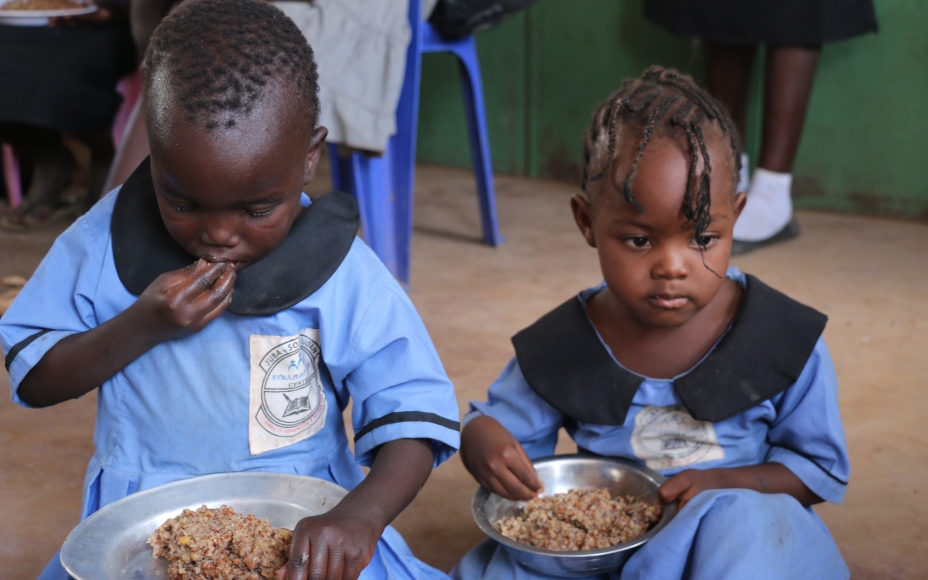
Following a more than five-year hiatus, the United Nations World Food Programme (WFP) resumed its school meals programme in Sudan’s Blue Nile State this week for more than 7,000 students in 21 schools.

Insecurity and lack of access had forced WFP to suspend the programme in September 2011. Prior to this interruption, WFP had provided school meals to around 70,000 students throughout Blue Nile State.

“I remember there were times when my sisters and I used to go home for breakfast in the middle of the school day,” said 15-year-old Ibrahim Ahmed, a student in Blue Nile State. “It is almost a one-hour walk from school to home, and we either ended up missing out on a lot by the time we got back to school, or we never went back because we were too tired to walk again.” Ibrahim was in second grade when WFP suspended the programme. Now in the seventh grade, he looks forward to eating meals again with his friends in school and not having to miss school.

Providing school meals is WFP’s longest-running programme in Sudan. Since 1969, WFP has been assisting millions of schoolchildren through its school meals programme. The programme currently provides school meals to almost one million children in Sudan, more than half of whom come from displaced and other vulnerable families in the Darfur region.

“I share the joy of children in Blue Nile who will now be having healthy meals, which we will provide in their schools. School meals not only prevent hunger among children during the school day, but they can also enhance nutrition and help improve school performance,” said WFP Sudan Representative and Country Director Matthew Hollingworth. “I am grateful to the Ministry of Education, parents, teachers, communities and the staff of our partner Mubadiroon who worked with us tirelessly in bringing this programme back to schools in Blue Nile.”

School meals provide an emergency safety net to schoolchildren and help to ensure that children, particularly girls, receive the education to which they are entitled. In the eastern states of Kassala and Red Sea, WFP has been providing take-home rations to 5,000 schoolgirls in selected schools where girls’ enrolment is extremely low. As a result, the number of girls attending school is now close to that of boys.

WFP, the Ministry of Education and the World Bank recently organised a workshop on Systems Approach for Better Education Results (SABER) for School Meals. SABER is a useful tool for assessing school meals programmes with the government and other stakeholders. The introduction of SABER is one of the key steps to the development of a national school meals policy and programme.

Sudan is one of WFP’s most complex emergencies, with recurring conflict, new and protracted displacements, insecurity, and crisis levels of malnutrition and food insecurity. In 2016, WFP plans to assist 4.6 million vulnerable people in Sudan through a mix of activities, including emergency food and cash-based transfers, nutritional support and resilience-building activities to support communities to become self-reliant.


Modupe Gbadeyanka is a fast-rising journalist with Business Post Nigeria. Her passion for journalism is amazing. She is willing to learn more with a view to becoming one of the best pen-pushers in Nigeria. Her role models are the duo of CNN's Richard Quest and Christiane Amanpour.

Click to comment

Leave a Reply

Your email address will not be published. Required fields are marked *

Education

WAEC Releases 2026 WASSCE Results, 61.54% Candidates Pass

Published

on

WAEC

By Adedapo Adesanya

The West African Examinations Council (WAEC) has released the results of the 2026 West African Senior School Certificate Examination (WASSCE) for school candidates, with 61.54 per cent of candidates obtaining credits in at least five subjects, including English Language and Mathematics.

The Head of WAEC’s Nigeria National Office, Mr Amos Dangut, announced the results at a press briefing in Lagos on Wednesday.

Mr Dangut said 1,200,514 candidates met the benchmark for admission to higher institutions, out of the 1,950,726 candidates who sat the examination nationwide, held between April 24 and June 19.

He said 102,708 examiners were engaged in the marking exercise held at 88 marking venues across the country between 2 July and 20 July.

“Today, I am happy to inform you that all the processes leading to the release of results have been completed. It is now my pleasure to announce the release of the results of candidates who sat the WASSCE for School Candidates, 2026 in Nigeria,” he said, directing candidates to the agency’s portal to access their results.

“UPDATE: 2026 WASSCE (SC) results have been released. Generate your PIN at waec.org and check your results now on waecdirect.org,” the examination body said, noting that candidates must obtain their Serial Number and PIN before they can check their results.

To generate the required credentials, candidates are expected to visit WAEC’s official website and select the “Serial Number and PIN” option at the top of the page.

They are then required to select the appropriate examination year and diet, enter their examination number and National Identification Number (NIN), and ensure that the NIN provided is the same one used during registration for the examination.

Candidates must also provide their email address and phone number to receive a One-Time Password (OTP).

After entering the OTP, candidates can recover their Serial Number and PIN, which they can subsequently use to check their results through WAEC Direct.

Continue Reading

Education

Groups Tutor Female Students About Risks Associated With Shisha, Vaping

Published

on

Breathe of Life Cleggs Girls High School students

By Aduragbemi Omiyale

Over 200 senior students of Cleggs Girls High School, Surulere, Lagos, were on July 23, 2026, engaged in practical knowledge about the risks associated with smoking, vaping, and shisha.

This engagement was made possible through a collaboration between Breathe Life Foundation and Teach Nigeria Fellow.

Participants were students aged 15–19 years. They were also informed about the misconception that shisha is a safer alternative to cigarettes or other substances.

Through an engaging and interactive discussion, students explored the influence of peer pressure and learned practical strategies for making healthier, more informed lifestyle choices.

They also gained a better understanding of common environmental triggers of asthma and other respiratory conditions, including cigarette smoke, generator fumes, bush burning, mosquito coil smoke, candles, charcoal, and firewood.

The session highlighted an important reality: young people may not always recognise how seemingly routine lifestyle choices and environmental exposures can gradually affect their respiratory health, quality of life, and long-term wellbeing.

For Breathe Life Foundation, this reinforces the importance of shifting the conversation from treatment to prevention through awareness and education.

By equipping young people with the knowledge to identify risks and make healthier choices early, the foundation is helping to build a generation that is more conscious of – and better prepared to protect – its respiratory health.

The organisation said it is dedicated to advancing respiratory health, an often-neglected public health priority. Healthy lungs are essential to life, yet respiratory diseases remain among the world’s leading causes of death and disability, even though many are preventable and treatable.

Continue Reading

Education

Dangote Cement Distributes Essential Learning Aids to Kogi Pupils

Published

on

Dangote cement kogi pupils

By Aduragbemi Omiyale

As part of its Corporate Social Responsibility (CSR) schemes, the Obajana Plant of Dangote Cement Plc has distributed some educational materials to some pupils in Kogi State.

The items shared to the beneficiaries included school bags, exercise books, writing materials, water bottles, and other essential learning aids aimed at enhancing the learning experience of the pupils and preparing them for the next academic session.

The General Manager for the Social Performance Department of Dangote Cement at Obajana Plant, Mr Ademola Adeyemi, said the materials were donated days after Dangote Cement distributed similar education materials to pupils in public schools in its catchment communities of Oyo, Iwaa, Obajana and Apata; and commissioned a multi-million-naira hospital in Obajana, which added to the growing list of social investments that includes an earlier hospital project in Iwaa and Oyo Communities.

He noted that, over the years, the company has invested billions of naira in a wide range of social programmes for host communities, including empowerment programmes, road construction, and potable water projects, and it remains resolute in its commitment to sustaining and expanding its interventions.

He noted that the company’s corporate social responsibility programmes are aligned with government development priorities and are implemented through sustained, mutually beneficial partnerships.

“The intervention was informed by findings from a needs assessment conducted by Dangote Cement. During the assessment, it was observed that several pupils attended school without school bags, while others carried their books by hand. It was also discovered that many students lacked essential learning materials such as exercise books, pens, pencils, and other basic learning materials,” the cement firm said.

The Head Teacher of UBE LGEA School, St. Luke Model II, Adankolo, Lokoja Local Government Area, Mr Abubakar Sanni, expressed profound appreciation to the management of Dangote Cement for the gesture.

The Head Teacher expressed gratitude to the Group President of the conglomerate, Aliko Dangote, for extending the company’s educational support programme beyond its host and impacted communities to schools located at the state headquarters.

The beneficiaries, school management, parents, and community stakeholders expressed gratitude to Dangote Cement for the timely intervention and prayed for the continued growth and success of the company in its efforts to improve lives and support sustainable community development.

Continue Reading