Connect with us

Economy

Nigeria’s Current Sources of FX Inflows Unreliable—Emefiele

Published

on

sources of FX inflows

By Aduragbemi Omiyale

Governor of the Central Bank of Nigeria (CBN), Mr Godwin Emefiele, has expressed worry over the sources of foreign exchange (FX) inflows in Nigeria, describing them as unreliable as they are prone to external forces, which hurt the nation’s economy.

Nigeria, the largest economy in Africa, has struggled to strengthen its legal tender, the Naira, in the forex market due to a shortage of foreign currencies to meet the demand of end-users.

Despite the prices of crude oil rising on the global market, the country’s external reserves have continued to deplete because the apex bank dips its hands into the purse to defend the local currency in the FX market.

Nigeria relies on crude oil sales to earn forex but it has not been able to take advantage of the recent rise in the price of the commodity as well as the war in Ukraine instigated by Russia.

A few months ago, the CBN, in an effort to change the narrative, launched an initiative called CBN RT 200 aimed at generating $200 billion from non-oil exports in the coming years.

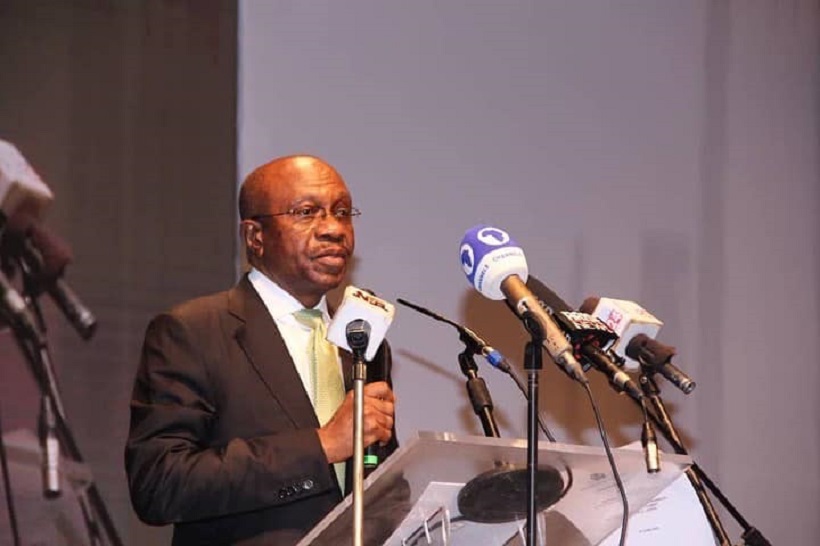
The central bank was in Lagos on Thursday for a Non-Oil Export Summit and the CBN chief stated that country’s foreign exchange challenges were beyond the powers of monetary policy, noting that efforts are being made to manage both the demand and supply side to meet forex obligations.

Attributing the current challenges of the Nigerian economy to a combination of local and global factors such as the COVID-19 pandemic, delays in global logistic value chains and local security challenges, he expressed concern that most of Nigeria’s current sources of FX inflows were unreliable and prone to fluctuations of global economic developments.

Mr Emefiele noted that the global economic challenges had impacted food production among others and had exerted undue pressure on the economy, thereby exposing the fragility of the Nigerian economy and making macroeconomic management very difficult.

“These problems call for urgent design and steadfast implementation of other supportive, structural, and complementary policies that are broad-based, coordinated and focused on complementing the work of the monetary authority,” he noted.

Reiterating the need for a more diversified economy, Mr Emefiele said Nigeria could be great without crude oil, the global price of which the country had no control over.

He, therefore, urged all stakeholders to regroup by working together to reposition Nigeria on a growth trajectory by taking diversification of the economy much more seriously, emphasising that Nigeria had very little choice left but to look inwards and find innovative solutions to its challenges.

In order to avoid sudden adjustments to Nigeria’s economic life, he said there was the need to focus on strategies that can help the country earn more stable and sustainable inflows of foreign exchange.

“We would need to follow the best practices of other countries and ensure that we protect ourselves a little bit from factors that are beyond our immediate control. This is the time to start working in synergy for the good of our nation.

“This is the time for us as a Banking Community to do more and support exporters who have been flying the flag of Nigeria in the international market space,” Mr Emefiele declared.

Although he admitted the enormity of the ultimate goal of $200 billion in non-oil exports over the medium term, Mr Emefiele expressed confidence that the goal was attainable, given the fact that many countries less endowed than Nigeria had achieved much in the field of agriculture.

To underscore his point, he said within a short period of implementing the Non-Oil FX Rebate Scheme, the country had recorded a significant increase in non-oil export repatriation, adding that eligible exporters had been paid over N3.5 billion in rebates.

In his remarks, the Governor of Lagos State, Mr Babajide Sanwo-Olu, lauded the CBN and other actors in the banking sector for supporting the efforts by the Federal Government and states, especially Lagos, to boost growth in the economy.

Mr Sanwo-Olu expressed optimism that the Lekki Deep Seaport, which he described as the largest in West Africa, will be handed over for use at the end of 2022, thereby providing enormous opportunities to exporters to ply their trade and by extension improve the export earnings of the country.

As part of efforts to decongest the Apapa and Tin Can Island Ports in Lagos, the Governor said the state government was awaiting approval for work to begin on the Badagry Ports in the Western part of Lagos.


Advertisement
1 Comment

Leave a Reply

Your email address will not be published. Required fields are marked *

Economy

Presco, GTCO List Additional Shares on Stock Exchange

Published

on

Nigeria's stock exchange

By Aduragbemi Omiyale

The duo of Presco Plc and Guaranty Trust Holding Company (GTCO) Plc has listed additional shares on the Nigerian Exchange (NGX) Limited.

The extra equities of these two publicly-listed organisations were admitted to the local stock exchange last Friday, increasing their respective total issued and fully paid-up shares.

For Presco, it listed fresh 166,666,667 ordinary shares of 50 Kobo each on the daily official list of the NGX on Friday, January 30, 2026, increasing its total issued and fully paid-up stocks from 1,000,000,000 units to 1,166,666,667 units.

The additional equities were from the rights issue of the firm allotted to shareholders on the basis of one new share for every existing six ordinary shares held as at close of business on Monday, October 13, 2025.

In a circular issued over the weekend, the NGX said, “Trading licence holders are hereby notified that additional 166,666,667 ordinary shares of 50 Kobo each of Presco Plc were on Friday, January 30, 2026, listed on the daily official list of Nigerian Exchange (NGX) Limited (NGX).

“The additional shares arose from the company’s rights issue of 166,666,667 ordinary shares of 50 Kobo each at N1,420.00 per share on the basis of one new share for every existing six ordinary shares held as at close of business on Monday, October 13, 2025.

“With the listing of the additional 166,666,667 ordinary shares, the total issued and fully paid-up shares of Presco Plc has now increased from 1,000,000,000 to 1,166,666,667 ordinary shares of 50 Kobo each.”

As for GTCO, it listed additional125,000,000 ordinary shares of 50 Kobo each at N80.00 per unit offered through private placement.

The fresh equities taken to Customs Street have raised the total issued and fully paid-up shares of GTCO from 36,425,229,514 to 36,550,229,514 ordinary shares of 50 Kobo each.

Continue Reading

Economy

FG, States, Local Councils Share N1.969trn FAAC Allocation

Published

on

faac allocation

By Adedapo Adesanya

A total of N1.969 trillion was shared to the federal government, the 36 state governments and the 774 local government councils from the gross revenue of N2.585 trillion generated by the nation in December 2025.

The money was disbursed to the three tiers of government at the January 2026 Federation Account Allocation Committee (FAAC) meeting held in Abuja.

In a statement issued on Monday by the Director of Press and Public Relations in the Office of the Accountant-General of the Federation (OAGF), Mr Bawa Mokwa, it was stated that the FAAC allocation comprised statutory revenue of N1.084 trillion, distributable Value Added Tax (VAT) revenue of N846.507 billion, and Electronic Money Transfer Levy (EMTL) revenue of N38.110 billion.

“Total deduction for cost of collection was N104.697 billion, while total transfers, refunds, and savings were N511.585 billion,” the statement partly read.

It was also revealed that from the N1.969 trillion total distributable revenue, the federal Government received the sum of N653.500 billion, and the state governments received N706.469 billion, the local government councils received N513.272 billion, and the sum of N96.083 billion was shared with the benefiting state as 13 per cent derivation revenue.

He said of the N1.084 trillion distributable statutory revenue, the central government received N520.807 billion, the state governments got N264.160 billion, the local councils were given N203.656 billion, and N96.083 billion was shared to the benefiting states as 13 per cent derivation revenue.

FAAC noted that from the N846.507 billion distributable VAT earnings, the federal government got N126.976 billion, the state governments received N423.254 billion, and the local government councils got N296.277 billion.

From the revenue from EMTL, Mr Mokwa explained that the national government was given N5.717 billion, the state governments got N19.055 billion, and the councils collected N13.338 billion.

He added that the companies’ Income Tax (CIT)/CGT and STD, Import Duty and Value Added Tax (VAT) increased significantly in December, while oil and gas royalty, CET levies and fees increase marginally, with excise duty, Petroleum Profit Tax (PPT)/Hydrocarbon Tax (HT), and EMTL considerably down.

Continue Reading

Economy

Oil Exports to Drop as Shell Commences Maintenance on Bonga FPSO

Published

on

Bonga FPSO

By Adedapo Adesanya

Nigeria’s oil exports will drop in February following the shutdown of the Bonga Floating Production Storage and Offloading (FPSO) vessel scheduled for turnaround maintenance.

Shell Nigeria Exploration and Production Company (SNEPCo) Limited confirmed the development in a statement issued, adding that gas output will also decline during the maintenance period.

This comes as SNEPCo begun turnaround maintenance on the Bonga FPSO, the statement signed by its Communications Manager, Mrs Gladys Afam-Anadu, said, describing the exercise as a statutory integrity assurance programme designed to extend the facility’s operational lifespan.

SNEPCo Managing Director, Mr Ronald Adams, said the maintenance would ensure safe, efficient operations for another 15 years.

“The scheduled maintenance is designed to reduce unplanned deferments and strengthen the asset’s overall resilience.

“We expect to resume operations in March following completion of the turnaround,” he said.

Mr Adams said the scope included inspections, certification, regulatory checks, integrity upgrades, engineering modifications and subsea assurance activities.

“The FPSO, about 120 kilometres offshore in over 1,000 metres of water, can produce 225,000 barrels of oil daily.

“It also produces 150 million standard cubic feet of gas per day,” he said.

He said maintaining the facility was critical to Nigeria’s production stability, energy security and revenue objectives.

Mr Adams noted that the 2024 Final Investment Decision on Bonga North increased the importance of the FPSO’s reliability. He said the turnaround would prepare the facility for additional volumes from the Bonga North subsea tie-back project.

According to him, the last turnaround maintenance was conducted in October 2022.

“On February 1, 2023, the asset produced its one billionth barrel since operations began in 2005,” Mr Adams said.

SNEPCo operates the Bonga field in partnership with Esso Exploration and Production Nigeria (Deepwater) Limited and Nigerian Agip Exploration Limited, under a Production Sharing Contract with the Nigerian National Petroleum Company (NNPC) Limited.

The last turnaround maintenance activity on the FPSO took place in October 2022. On February 1, the following year, the asset delivered its 1 billionth barrel of oil since production commenced in 2005.

Continue Reading

Trending