

Connect with us

Education

Significance of Establishing Stronger Relationship Between Corporate Business and Career Development in Higher Education System in Russia

Published

on

higher education system

By Kestér Kenn Klomegâh

Far ahead of the special session that thoroughly reviewed and discussed Russia’s education and the employment market at the 25th St. Petersburg International Economic Forum (SPIEF), Russian legislators have, on May 25, launched a Telegram survey on the future of higher education and the Bologna system in Russia.

Russia’s State Duma speaker Vyacheslav Volodin wrote on his Telegram channel calling for a new higher education system in the country based on the best contemporary and Soviet practices.

“We would be right to create an effective national higher education system based on today’s and Soviet practices,” Vyacheslav Volodin wrote on his Telegram channel. “The existing higher education system needs change, as per 90% of the respondents,” Volodin reported, saying that more than 413,000 people had been surveyed.

The Duma speaker said this and other issues would be discussed at a parliamentary session on June 27, with Science and Higher Education Minister Valery Falkov, as well as representatives from the country’s universities and education experts expected to attend.

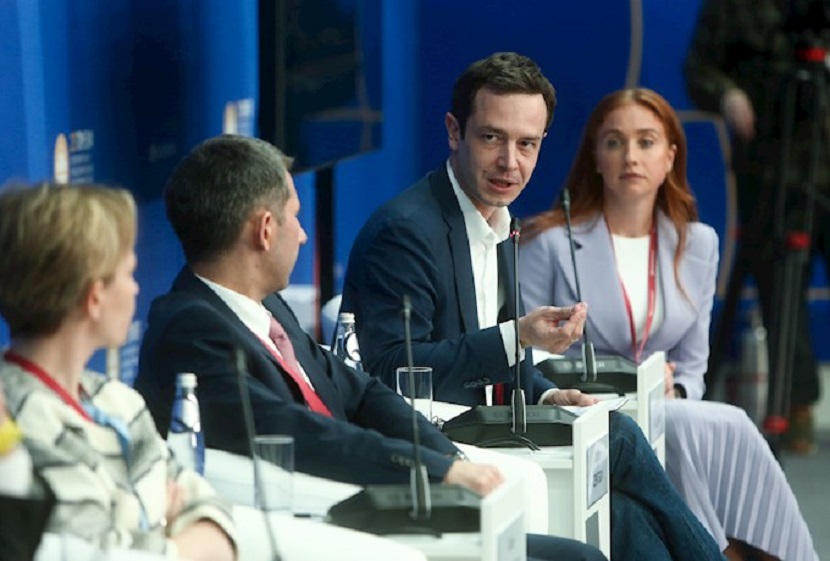
At the St. Petersburg forum, its traditional face-to-face format for the first time in two years after the coronavirus pandemic, during a special discussion entitled How to Provide the Russian Economy with the Qualified Personnel?’ and looked at the question of the ‘qualification pit’ – the mismatch of skills and competencies of employees with the needs of employers is becoming more acute by the year. At the same time, according to the Ministry of Education, today more than 60% of schoolchildren choose secondary vocational education. Is it not enough? And what measures should be taken by the state and businesses to solve the current problem?

There were more questions on aspects of education. How to attract employers to active, meaningful cooperation with educational organizations? How can business contribute to a better quality of personnel training? How can we increase employers’ satisfaction with the level of secondary vocational graduate training? How can the right conditions for mastering fundamentally new professional skills and competencies be created? How can we reduce the time necessary for the adaptation of new personnel in production and increase the efficiency of the process?

Some experts have argued that the integration of creative industries into the educational process is becoming an important trend and necessity of the 21st century. Thus, getting involved in educating and training future professionals should be viewed as an integral part of any sector of the economy from the nuclear industry to agriculture and construction.

Deputy CEO of the Roscongress Foundation and Director of the social platform of the Roscongress Foundation – the Innosocium Foundation Yelena Marinina explained at the session at the St. Petersburg forum that the future and the trajectory of its development depend on the values, knowledge, and aspirations of today’s young people.

There are new opportunities and the new horizons that are opening up in all areas are in high demand. It makes it imperative effectively utilise the potential of graduates to accelerate economic growth. This explains the need to understand the relationship between employers and employees, and to stimulate cooperation, especially in a rapidly changing world, between business and educational institutions, Marinina asserted in her presentation.

Speaking at the SPIEF plenary session, Russia’s President Vladimir Putin strongly urges big business representatives to link their families’ future with Russia. “Recent events have only confirmed what I kept saying earlier: it’s safer at home. Those who didn’t want to hear this obvious message lost hundreds of millions, if not billions of dollars in the West. This is how the supposedly safe haven for capital turned out,” the Russian leader stressed.

“Today I would also like to address our leaders, large companies owners, our major entrepreneurs and managers. Dear colleagues, friends, real, lasting success, a sense of dignity and self-respect come only when you connect your future, your children’s future with your Motherland,” Putin reiterated.

Putin carefully noted that he has been in contact with many CEOs and company owners for a long time and knows their sentiments. It is, indeed, important to understand that business is much more than making a profit. It involves changing the life around, and contributing to the development of your hometown, region, and the country as a whole is an extremely important thing for self-realization. Nothing can replace service to people and society. This is the meaning of life, the genuine meaning of work.

On several occasions of award ceremonies for young talented entrepreneurs in the Kremlin, Putin has, long ago, supported the implementation of the strategic socio-economic initiative entitled Professionalism. The initiative is aimed at a complex reset of the whole system of secondary vocational education.

The key task is to ensure the training of specialists in professions that are truly in demand in a shorter period of time. This will provide a possibility to build a new sectoral model of personnel training, synchronized with the demands of the labour market. It will help stipulate employment for graduates and, as a consequence, give a new impetus to the development of regional economies.

As of September 1, 2022, 150,000 students will be involved in training at educational production centres. The primary focus is on key working professions and specializations in areas such as metallurgy, pharmaceuticals, petrochemicals, and transportation. The new approach that lies at the heart of the project will help solve the issue of targeted training for the priority sectors of the economy under the conditions of import substitution.

New documents were signed by Alexander Stuglev, Chairman and CEO of the Roscongress Foundation, Elena Chernova, First Vice-Rector of St. Petersburg State University, Ivan Lobanov, Rector of Plekhanov Russian University of Economics, and Marina Buntova, CEO of TALENTI. These documents stipulate joining forces in implementing state policy aimed at improving the socio-economic sector, creating conditions meant to assist students and young professionals in professional orientation and successful employment.

Under the agreement, the Roscongress Foundation will be involved in forming a database of the main beneficiaries of the projects, and organizing classes and events held as part of these joint projects. In addition, the agreements provide for cooperation between the parties in conducting joint internships, theoretical classes and training seminars for young people, including using the ‘Country’s Potential’ digital platform.

According to the organizers’ website information, about 2,700 business representatives from 90 countries were expected to attend – far below the 13,500 participants from 140 countries pre-coronavirus years. Some business leaders had concerns about attending the forum due to the sanctions against Russia. Under the chosen theme ‘New Opportunities in a New World’ that reflects the changing global situations, the conference runs from June 15 to June 18 and it is the 25th St. Petersburg International Economic Forum (SPIEF) since its establishment.


Advertisement
Click to comment

Leave a Reply

Your email address will not be published. Required fields are marked *

Education

Saint Riman of Adedokun International Schools Ota Wins InterswitchSPAK 7.0

Published

on

Saint Riman of Adedokun International Schools Ota InterswitchSPAK

By Modupe Gbadeyanka

A student of Adedokun International Schools, Ota, Ogun State, Saint Riman, has emerged as the overall winner of the InterswitchSPAK National Science Competition.

The 16-year-old student was crowned Nigeria’s Best STEM Student, receiving a N15 million scholarship in the InterswitchSPAK 7.0 grand finale.

InterswitchSPAK is the flagship Corporate Social Responsibility initiative of Interswitch, one of Africa’s leading integrated payments and digital commerce companies.

The programme is Nigeria’s largest STEM competition for senior secondary school students. It concluded on a high note after months of nationwide assessments, problem-solving challenges, and competitive stages involving over 18,000 registered participants.

Business Post reports that David Okorie of Caleb International College, Magodo, Lagos State, was the first runner-up, getting N10 million in scholarship, while David Solomonezemma of Deeper Life High School, Enugu State, was the second runner-up, bagging a N5 million scholarship. All winners also received brand-new laptops in addition to other exciting prizes.

While presenting the awards, the Group Marketing and Communications for Interswitch, Ms Cherry Eromosele, commended the students for their discipline, resilience, and exceptional intellectual performance.

“InterswitchSPAK was created to inspire and reward excellence in STEM education while equipping young Africans with the skills to tackle real-world challenges.

“These winners have demonstrated remarkable promise, and by supporting their education, we are reaffirming our belief in the power of young people to shape Africa’s future through innovation and science,” Ms Eromosele said.

Beyond the top three winners, other finalists received brand new laptops and exciting cash rewards for outstanding performance, alongside their teachers who were also celebrated and rewarded for their critical role in nurturing talent. This holistic approach reinforces Interswitch’s commitment to sustainable educational development through collaboration between students, educators, and institutions.

Now in its seventh year, InterswitchSPAK has become a highly respected platform, serving as a pipeline for discovering, developing, and empowering the next generation of scientists, engineers, technologists, and innovators. Through this initiative, Interswitch continues to highlight how strategic private sector investment in education can drive innovation, reward merit, and contribute meaningfully to national development.

The successful conclusion of InterswitchSPAK 7.0 underscores Interswitch’s leadership in advancing STEM education as a catalyst for socio-economic growth, preparing Nigerian students to compete confidently on the global stage while shaping Africa’s innovation-driven future.

Continue Reading

Education

Zurich-based Sparkli Raises $5m for Generative Learning Platform

Published

on

Sparkli $5m

By Dipo Olowookere

A Zurich-based anti-chatbot edtech firm, Sparkli, has secured about $5 million pre-seed round for its generative learning engine designed to turn screen time into active learning expeditions that foster agency, curiosity, and future-ready skills.

The pre-seed round will allow Sparkli to scale its generative learning engine and prepare for a private beta launch in January 2026. The company is currently validating its platform through a strategic pilot with one of the world’s largest private school groups.

This partnership provides Sparkli with a powerful testing ground across a network of more than 100 schools and over 100,000 students.

Sparkli transforms the curiosities of children into multi-disciplinary, real-life journeys that foster future-ready skills, including technology, design thinking, sustainability, financial literacy, entrepreneurship, emotional intelligence, and global awareness.

The company is already positioning itself to disrupt the $7 trillion global education market, a sector widely predicted to be one of the most significant use cases for artificial intelligence.

Its approach is shaped by three shifts essential for modern childhood education, a strategy designed to solve the ‘Agency and Curiosity Gap’. First, it forces a Velocity Shift by moving away from static curriculums to real-time relevance where children explore new topics the moment they emerge.

Second, it drives an Engagement Shift by replacing the dry ‘AI chatbot wall of text’ and passive screen time (watching videos, playing video games) with a multimodal playground of visuals, voice, and playable simulations. This turns consumption into active, gamified inquiry rooted in educational value.

Finally, Sparkli prioritizes a Skills Shift that focuses on capabilities such as creativity and complex problem solving rather than memorization.

“Our goal is to build agency in the next generation. Children learn by exploring, making choices, asking questions, and discovering what inspires them. Sparkli turns screen time into a place where curiosity grows rather than fades,” the chief executive of Sparkli, Mr Lax Poojary, said.

One of the funders, Lukas Weder of Founderful, said, “Sparkli represents a step change in how children can interact with knowledge.

“The team is applying high caliber engineering and thoughtful pedagogy to a space that desperately needs innovation. Their traction with schools shows a real appetite for tools that foster curiosity and agency rather than passive consumption.”

Continue Reading

Education

NELFUND Disburses N161.97bn to 864,798 Students in 500 Days

Published

on

NELFUND

By Adedapo Adesanya

The Nigerian Education Loan Fund (NELFUND) has disbursed N161.97 billion to 864,798 students nationwide since the inauguration of its student loan portal on July 17, 2024, as part of efforts to expand access to tertiary education.

The Managing Director of NELFUND, Mr Akintunde Sawyerr, while briefing journalists on the progress, impact and challenges of the scheme under the President Bola Tinubu’s Renewed Hope Agenda, said it was established to ensure that no Nigerian student was denied education because of financial constraints.

According to him, the fund has so far received 1,361,011 loan applications from students across the country.

He explained that out of the N161.97 billion disbursed, N89.94 billion was paid directly to 263 tertiary institutions to cover tuition and institutional charges, while N72.03 billion was paid to students as upkeep allowances.

“As at today, 1,361,011 applications have been received, 864,798 students have so far benefited from the loan scheme, and total disbursement stands at N161.97 billion.

“These includes N89.94 billion paid directly to 263 tertiary institutions for tuition and institutional fees, and N72.03 billion paid directly to students as upkeep allowances,” he said.

He noted that the figures represented tangible impact on students and families, describing them as evidence of barriers being removed and opportunities being created.

The NELFUND boss said the agency, had over the last year, embarked on extensive sensitisation across tertiary institutions to improve awareness and access to the scheme.

He added that the focus would now expand to parents, guardians, traditional rulers and faith-based institutions.

He said this new approach was to deepen public understanding and trust in the scheme.

“Over the last year, NELFUND has undertaken extensive sensitisation and engagement across tertiary institutions nationwide.

“We have worked directly with students, school authorities, and stakeholders to drive awareness, understanding, and access to the scheme.

“However, as we move into this new phase, we recognise that deepening impact requires broader engagement.

“So this year, our focus will expand to another very important group within the NELFUND ecosystem,” he said.

On upkeep payments, the managing director disclosed that a reconciliation exercise carried out after the 2024/2025 academic session revealed that 11,685 students had outstanding upkeep payments amounting to N927.98 million.

He clarified that the outstanding payments were not due to withheld funds or policy failure, but resulted from technical and operational issues.

He said such issues include network downtime, failed transactions and unvalidated bank account details.

He also said that the NELFUND management had approved a one-time reconciliation process to resolve the cases, including direct engagement with affected students.

He further said that a grace period for updating bank details, multi-layer validation and prompt payment upon verification had also been approved.

Responding to questions on sustainability, Mr Sawyerr said that the amended student loan law removal of guarantor requirements, inclusion of upkeep allowances and the ability to raise and invest funds were key elements supporting long-term sustainability.

He added that NELFUND was also exploring partnerships with philanthropists, corporate organisations and government agencies, citing a N20 billion collaboration with the Ministry of Education on Technical and Vocational Education and Training (TVET) as an example.

Also speaking, the Executive Director of Operations, NELFUND, Mr Mustapha Iyal, said that outstanding upkeep represented about 11,000 out of more than 400,000 beneficiaries in the 2024/2025 session.

Mr Iyal said NELFUND had contacted institutions to validate student data, noting that many of the issues arose from incorrect information supplied by applicants.

According to him, feedback has been received from over 100 institutions, and payment of the outstanding upkeep allowances is expected to commence shortly.

He also disclosed that applications for the 2025/2026 academic session began in November, 2025, with over 200 institutions submitting updated data.

He said about 280,000 applications had been received from those institutions, out of which loans had already been disbursed to more than 150,000 students.

He added that upkeep payments for the new session would begin in January, explaining that upkeep allowances were tied to active academic sessions and required fresh applications each session.

On loan repayment, Mr Iyal said repayment had already commenced, with some beneficiaries who had graduated and secured employment beginning to repay their loans.

Continue Reading

Trending
