

Connect with us

Education

Significance of Establishing Stronger Relationship Between Corporate Business and Career Development in Higher Education System in Russia

Published

on

higher education system

By Kestér Kenn Klomegâh

Far ahead of the special session that thoroughly reviewed and discussed Russia’s education and the employment market at the 25th St. Petersburg International Economic Forum (SPIEF), Russian legislators have, on May 25, launched a Telegram survey on the future of higher education and the Bologna system in Russia.

Russia’s State Duma speaker Vyacheslav Volodin wrote on his Telegram channel calling for a new higher education system in the country based on the best contemporary and Soviet practices.

“We would be right to create an effective national higher education system based on today’s and Soviet practices,” Vyacheslav Volodin wrote on his Telegram channel. “The existing higher education system needs change, as per 90% of the respondents,” Volodin reported, saying that more than 413,000 people had been surveyed.

The Duma speaker said this and other issues would be discussed at a parliamentary session on June 27, with Science and Higher Education Minister Valery Falkov, as well as representatives from the country’s universities and education experts expected to attend.

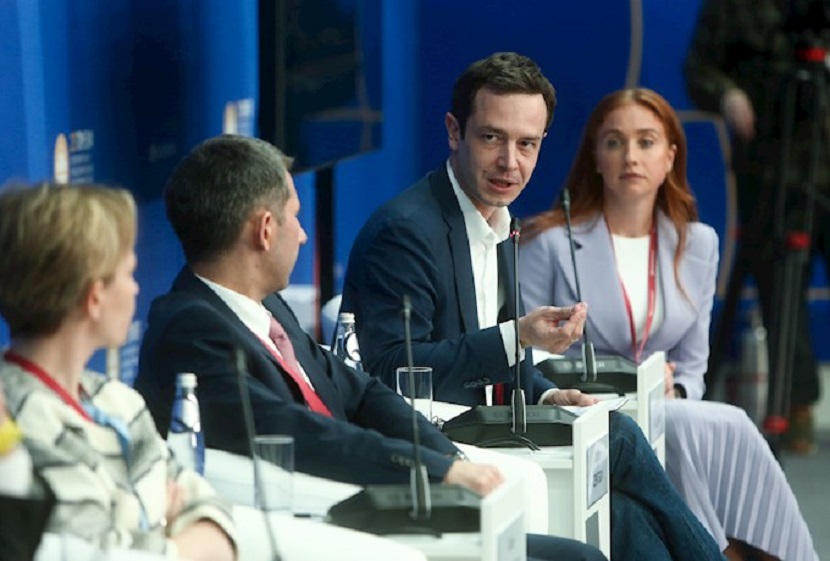
At the St. Petersburg forum, its traditional face-to-face format for the first time in two years after the coronavirus pandemic, during a special discussion entitled How to Provide the Russian Economy with the Qualified Personnel?’ and looked at the question of the ‘qualification pit’ – the mismatch of skills and competencies of employees with the needs of employers is becoming more acute by the year. At the same time, according to the Ministry of Education, today more than 60% of schoolchildren choose secondary vocational education. Is it not enough? And what measures should be taken by the state and businesses to solve the current problem?

There were more questions on aspects of education. How to attract employers to active, meaningful cooperation with educational organizations? How can business contribute to a better quality of personnel training? How can we increase employers’ satisfaction with the level of secondary vocational graduate training? How can the right conditions for mastering fundamentally new professional skills and competencies be created? How can we reduce the time necessary for the adaptation of new personnel in production and increase the efficiency of the process?

Some experts have argued that the integration of creative industries into the educational process is becoming an important trend and necessity of the 21st century. Thus, getting involved in educating and training future professionals should be viewed as an integral part of any sector of the economy from the nuclear industry to agriculture and construction.

Deputy CEO of the Roscongress Foundation and Director of the social platform of the Roscongress Foundation – the Innosocium Foundation Yelena Marinina explained at the session at the St. Petersburg forum that the future and the trajectory of its development depend on the values, knowledge, and aspirations of today’s young people.

There are new opportunities and the new horizons that are opening up in all areas are in high demand. It makes it imperative effectively utilise the potential of graduates to accelerate economic growth. This explains the need to understand the relationship between employers and employees, and to stimulate cooperation, especially in a rapidly changing world, between business and educational institutions, Marinina asserted in her presentation.

Speaking at the SPIEF plenary session, Russia’s President Vladimir Putin strongly urges big business representatives to link their families’ future with Russia. “Recent events have only confirmed what I kept saying earlier: it’s safer at home. Those who didn’t want to hear this obvious message lost hundreds of millions, if not billions of dollars in the West. This is how the supposedly safe haven for capital turned out,” the Russian leader stressed.

“Today I would also like to address our leaders, large companies owners, our major entrepreneurs and managers. Dear colleagues, friends, real, lasting success, a sense of dignity and self-respect come only when you connect your future, your children’s future with your Motherland,” Putin reiterated.

Putin carefully noted that he has been in contact with many CEOs and company owners for a long time and knows their sentiments. It is, indeed, important to understand that business is much more than making a profit. It involves changing the life around, and contributing to the development of your hometown, region, and the country as a whole is an extremely important thing for self-realization. Nothing can replace service to people and society. This is the meaning of life, the genuine meaning of work.

On several occasions of award ceremonies for young talented entrepreneurs in the Kremlin, Putin has, long ago, supported the implementation of the strategic socio-economic initiative entitled Professionalism. The initiative is aimed at a complex reset of the whole system of secondary vocational education.

The key task is to ensure the training of specialists in professions that are truly in demand in a shorter period of time. This will provide a possibility to build a new sectoral model of personnel training, synchronized with the demands of the labour market. It will help stipulate employment for graduates and, as a consequence, give a new impetus to the development of regional economies.

As of September 1, 2022, 150,000 students will be involved in training at educational production centres. The primary focus is on key working professions and specializations in areas such as metallurgy, pharmaceuticals, petrochemicals, and transportation. The new approach that lies at the heart of the project will help solve the issue of targeted training for the priority sectors of the economy under the conditions of import substitution.

New documents were signed by Alexander Stuglev, Chairman and CEO of the Roscongress Foundation, Elena Chernova, First Vice-Rector of St. Petersburg State University, Ivan Lobanov, Rector of Plekhanov Russian University of Economics, and Marina Buntova, CEO of TALENTI. These documents stipulate joining forces in implementing state policy aimed at improving the socio-economic sector, creating conditions meant to assist students and young professionals in professional orientation and successful employment.

Under the agreement, the Roscongress Foundation will be involved in forming a database of the main beneficiaries of the projects, and organizing classes and events held as part of these joint projects. In addition, the agreements provide for cooperation between the parties in conducting joint internships, theoretical classes and training seminars for young people, including using the ‘Country’s Potential’ digital platform.

According to the organizers’ website information, about 2,700 business representatives from 90 countries were expected to attend – far below the 13,500 participants from 140 countries pre-coronavirus years. Some business leaders had concerns about attending the forum due to the sanctions against Russia. Under the chosen theme ‘New Opportunities in a New World’ that reflects the changing global situations, the conference runs from June 15 to June 18 and it is the 25th St. Petersburg International Economic Forum (SPIEF) since its establishment.


Click to comment

Leave a Reply

Your email address will not be published. Required fields are marked *

Education

Tinubu Renames PTDF College After Shehu Musa Yar’Adua

Published

on

ptdf college kaduna

By Adedapo Adesanya

President Bola Tinubu has approved the renaming of the Petroleum Technology Development Fund (PTDF) College of Petroleum and Energy Studies, Kaduna, in honour of the late statesman, General Shehu Musa Yar’Adua, in a move aimed at preserving his legacy while strengthening Nigeria’s specialised energy education framework.

The PTDF announced that, following a presidential directive, the institution will now be known as the General Shehu Musa Yar’Adua University of Geological Sciences and Engineering Technology.

In a statement, the Fund said the renaming reflects the federal government’s recognition of Yar’Adua’s contributions to national unity and Nigeria’s democratic evolution.

The late statesman, who died in 1997, was a prominent Nigerian soldier, politician, and businessman. He served as the Chief of Staff, Supreme Headquarters, under General Olusegun Obasanjo’s military administration from 1977 to 1979. He was the elder brother of former Nigerian President Umaru Musa Yar’Adua.

“This historic renaming honours the enduring legacy of the late statesman, General Shehu Musa Yar’Adua, celebrating his profound contributions to national unity and the democratic journey of Nigeria,” the PTDF stated.

The institution, established to develop high-level manpower and technical expertise for Nigeria’s petroleum and energy industries, is expected to continue its academic and research activities without disruption despite the name change.

According to the PTDF, the university will maintain its focus on delivering advanced education, research and technology-driven solutions for the country’s oil, gas and emerging renewable energy sectors.

“The institution remains firmly committed to its mandate of delivering world-class research, specialised training, and cutting-edge engineering technology solutions to power Nigeria’s oil, gas, and renewable energy sectors,” the statement added.

The Fund further assured students, academic partners, industry stakeholders and development institutions that all existing programmes, collaborations and operational activities would continue seamlessly under the university’s new identity.

“All ongoing academic programs, partnerships, and operations continue uninterrupted under this new institutional identity,” PTDF said.

The renaming comes as Nigeria intensifies efforts to build local capacity and technical expertise to support energy transition goals, deepen indigenous participation in the petroleum industry and strengthen research-driven innovation across the energy value chain.

Continue Reading

Education

Airtel Green Schools Initiative Births to Promote Sustainability Education in Nigeria

Published

on

airtel africa foundation

By Modupe Gbadeyanka

A sustainability-focused programme known as Airtel Green Schools has been launched by Airtel Africa Foundation, as part of activities to commemorate the 2026 World Environment Day, themed Climate Action.

The initiative will create environmental learning spaces in primary and secondary schools, with the spaces to be branded Airtel Garden.

Already, the company’s 10 adopted schools, located in nine states across the country’s six geopolitical zones, have been onboarded as Green Schools.

Each of the schools now features an Airtel Garden, with dedicated sections for edible crops, fruit trees and shade trees, enabling pupils to learn firsthand about food cultivation, biodiversity and the importance of increasing green cover to help mitigate the effects of climate change.

The gardens also incorporate composting stations where organic waste generated within the school environment can be converted into nutrient-rich compost. To boost circular economy practices, plastic recycling segments have also been built into repurpose common wastes such as plastic bottles and tyres.

The beneficiary schools of the programme include St. George’s Nursery and Primary School, Ipaja, Lagos; Yahaya Primary School, Zaria; Iyeru-Okin Primary School, Iyeru-Okin, Kwara; St. John Primary School, Ijebu Igbo, Ogun State, and Community Primary School, Amumara, Imo State.

Others are Presbyterian Primary School, Ediba, Cross-River; Migrant Farmers Community Primary School, Umuahia, Abia State; Gwange III Primary School, Maiduguri, Borno State; Mayflower Secondary School, Ikenne, Ogun State; and Government Day Primary School, Gombe State.

“We are excited to inaugurate Airtel Green Schools, which are designed to go beyond awareness and create real behavioural change within Nigeria’s school communities.

“Through the Restore, Reduce and Educate pillars, we are equipping young people with practical tools such as gardens, recycling awareness, and environmental learning resources.

“Our goal is to create a replicable Green School model that can be scaled and sustained over time, ensuring that environmental education becomes part of everyday learning for the children in our adopted schools,” the chairman of the foundation, Mr Segun Ogunsanya, stated.

Also speaking, the chief executive of Airtel Nigeria, Mr Dinesh Balsingh, said, “Climate action becomes meaningful when awareness is translated into action. Through the Airtel Garden, we are creating living classrooms where pupils can learn practical lessons about environmental stewardship, sustainable agriculture, waste management and the importance of protecting our planet.

“We believe that empowering young people with these experiences today will help shape a more environmentally responsible generation tomorrow.”

Continue Reading

Education

Ex-UNILAG VC Prof Ogundipe Chairs NUC

Published

on

Professor Oluwatoyin Ogundipe

By Modupe Gbadeyanka

A former Vice-Chancellor of the University of Lagos (UNILAG), Prof Oluwatoyin Temitayo Ogundipe, has been appointed as the chairman of the governing board of the National Universities Commission (NUC).

He was chosen for the role by President Bola Tinubu, according to a statement on Monday by the president’s Special Adviser on Information and Strategy, Mr Bayo Onanuga.

Prof Ogundipe succeeds Professor Olufemi Raphael Aina, who resigned his appointment after less than one year in office.

President Tinubu appointed Professor Aina in July last year, and the board members were inaugurated in November 2025.

As NUC Chairman, Prof Ogundipe will oversee the regulatory body of the Nigerian university system, focusing on funding, global competitiveness and academic stability.

He is expected to provide visionary leadership at the NUC and sustain the credibility of the Nigerian university system by advancing quality, access, and integrity in the education sector.

Prof Ogundipe headed the University of Lagos between 2017 and 2022. He is a professor of Botany with expertise in molecular plant taxonomy, biosystematics, ethnobotany, cytogenetics, forensic botany, and ecological conservation.

He holds a PhD in Botany from Obafemi Awolowo University and an MBA from the University of Lagos.

Currently, Prof Ogundipe, 66, serves as Pro-Chancellor of Redeemer’s University, Ede, Osun State.

He is a fellow of several professional bodies, including the Nigerian Academy of Science, the Linnaean Society of London, and the Royal Society of Biology, London. He has also served as President of the Botanical Society of Nigeria and Chairman of the Lagos State Science, Research and Innovation Council (LASRIC).

Continue Reading

Trending
