Connect with us

General

NMDPRA Denies Restricting Gas Supply to Gencos

Published

on

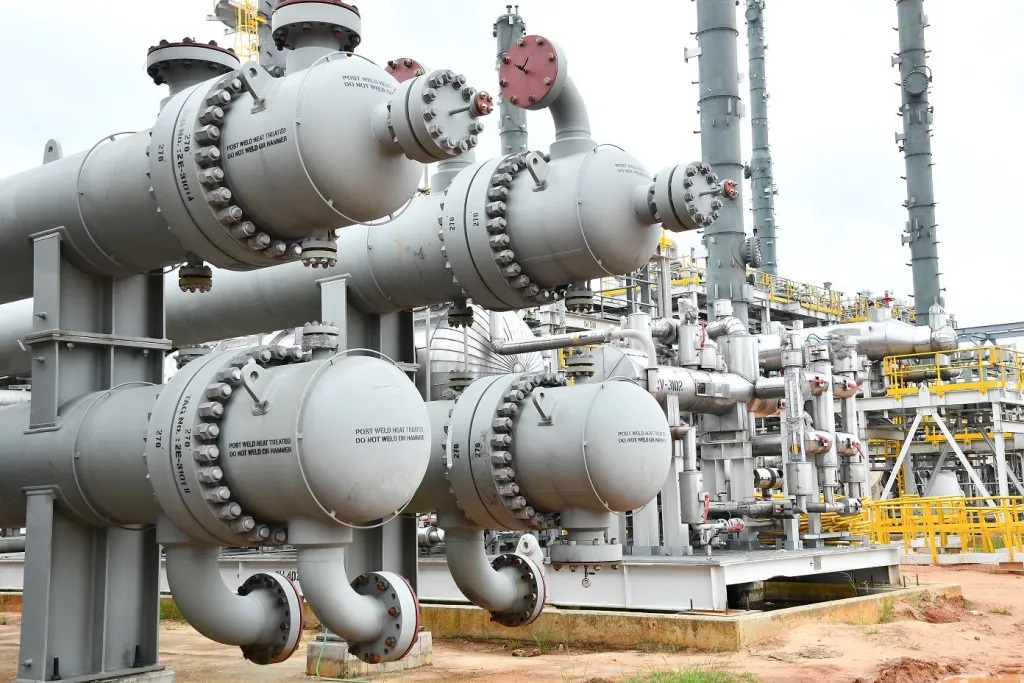
ANOH Gas Plant

By Adedapo Adesanya

The Nigerian Midstream and Downstream Petroleum Regulatory Authority (NMDPRA) has denied issuing a directive that gas supply to power generating companies (GenCos) be halted.

In a statement on Wednesday, the authority also denied instructing wholesale gas suppliers to stop further supply of gas to companies due to failure in payment obligations.

The NMDPRA described reports stating that it has directed the stoppage of gas supply to GenCos over N2 trillion debt as “false and completely unfounded”.

“It has absolutely no bearing on the information shared at a recent stakeholders’ engagement held in Lagos between the Authority, the OPTS, IPPG and other stakeholders in the oil and gas industry,” the NMDPRA said.

“The purpose of the engagement was to sensitise stakeholders on the requirements, opportunities and benefits associated with the implementation of the wholesale supply license as provided by sections 142 and 197 of the Petroleum Industry Act (PIA) 2021.

“It was a follow-up to an earlier stakeholder engagement held at the NMDPRA corporate headquarters in Abuja on November 27, 2024.

“The Authority wishes to reassure all our stakeholders and indeed the general public that at no time was the false statement made at that event and anywhere else, and are advised to completely disregard the publication as every effort is being made to ensure that the supply and distribution of natural gas and petroleum products to end users is seamless and unabated as we head into the festive season and indeed all through the coming year 2025.”

Recall that Nigeria’s national grid experienced another collapse on Wednesday, the 11th time in 2024 as Gencos couldn’t generate enough power, compounding issues facing the Nigerian power sector.

This was the first time in over a month as the last time the nation witnessed a nationwide shutdown in electricity supply was on November 7, 2024.

Before then, the country was experiencing an incessant collapse of the grid, which prompted the federal government to set up a team to address the issue.


Adedapo Adesanya is a journalist, polymath, and connoisseur of everything art. When he is not writing, he has his nose buried in one of the many books or articles he has bookmarked or simply listening to good music with a bottle of beer or wine. He supports the greatest club in the world, Manchester United F.C.

Click to comment

Leave a Reply

Your email address will not be published. Required fields are marked *

General

TCN Confirms Destruction of Six Transmission Towers in Nasarawa

Published

on

Transmission Towers

By Adedapo Adesanya

The Transmission Company of Nigeria (TCN) has confirmed the destruction of six transmission towers along the Apir–Lafia 330kV line in Nasarawa State, causing significant disruption to electricity supply in parts of the country.

In a statement issued on Wednesday, TCN spokesperson, Mrs Ndidi Mbah, said the incident occurred on May 30 at about 1:15 a.m. during a heavy downpour.

She explained that the transmission line initially tripped, prompting operators to attempt a trial reclosure of Line II at about 2:08 a.m., but the effort failed.

A subsequent inspection of the transmission corridor, however, revealed extensive damage to key components of towers T125 to T130, confirming that the infrastructure had been vandalised.

“The tripping of the lines prompted a physical line trace to determine the fault, which revealed damage to critical components of towers T125 to T130, confirming vandalism on the affected sections of the transmission corridor,” Mbah said.

The incident has forced both Apir–Lafia 330kV Transmission Lines I and II out of service pending the reconstruction of the damaged towers.

TCN said its engineers have been deployed to the site to assess the extent of the damage and determine the materials required to restore normal transmission along the corridor.

As an interim measure, the Lafia 330kV Transmission Station is being supplied through an alternative line to minimise the impact on electricity consumers within the franchise areas of Abuja Electricity Distribution Company (AEDC) and Jos Electricity Distribution Company (JEDC).

The company condemned the persistent vandalism of power infrastructure, warning that such acts undermine investments in the electricity sector and threaten the stability of the national grid.

It also urged residents and host communities to remain vigilant and report suspicious activities around transmission installations to security agencies or the nearest TCN office.

TCN stressed that safeguarding critical national infrastructure requires collective responsibility to ensure a reliable and uninterrupted electricity supply nationwide.

Continue Reading

General

IFC, NGX Group, LCCI Unveil Nigeria Gender Country Programme

Published

on

Gender and Equal Opportunities Commission

By Aduragbemi Omiyale

A Nigeria Gender Country Programme (NGCP) to advance private sector action on gender equality and inclusive economic growth has been unveiled at a high-level virtual CEO Roundtable convened by the International Finance Corporation (IFC), Nigerian Exchange (NGX) Group Plc, and the Lagos Chamber of Commerce and Industry (LCCI).

The NGCP builds on the momentum of Nigeria2Equal and other initiatives that have advanced workplace inclusion, women’s leadership, entrepreneurship, and sustainable finance across Nigeria’s private sector.

Designed as a more integrated and collaborative platform, the programme seeks to scale impact through coordinated action among development institutions, business leaders, regulators, and the organised private sector.

Anchored on three strategic priorities, the programme aims to increase women’s representation in leadership, improve access to quality employment, and expand access to productive assets—including finance, technology, and markets—for women and women-led businesses.

The partners are expected to formally launch the Nigeria Gender Country Program at a physical event scheduled for July 9, 2026, where stakeholders will further advance implementation of the programme’s strategic priorities.

At the virtual event, the Director General of the Securities and Exchange Commission (SEC), Mr Emomotimi Agama, said, “Gender inclusion is fundamentally an economic growth imperative. Closing gender gaps can unlock billions of dollars in value for Nigeria while strengthening business performance and national competitiveness. We must therefore move beyond viewing inclusion as a corporate social responsibility initiative or compliance exercise, and instead recognise it as a strategic driver of productivity, innovation, and sustainable economic growth.”

Commenting on the initiative, the chief executive of NGX Group, Mr Temi Popoola, said the initiative “presents a significant opportunity to deepen impact and accelerate progress across corporate Nigeria. By expanding women’s access to leadership opportunities, quality employment, finance, technology, and markets, we can unlock substantial economic value while building a more competitive, inclusive, and resilient private sector. At NGX Group, we believe the capital market has a critical role to play in advancing these outcomes through stronger governance, transparency, and stakeholder engagement.”

On his part, the IFC Head of Office in Lagos, Mr Christian Mulamula, said, “Closing the gender gap is one of the most significant opportunities to strengthen competitiveness and productivity. Across Africa, gender inequality is estimated to cost up to $2.5 trillion. Through the Nigeria Gender Country Program, IFC is working with the private sector to expand women’s leadership, improve access to better jobs, and increase opportunities for women-led businesses. Building on Nigeria2Equal, this initiative focuses on practical, measurable solutions that help businesses grow while advancing inclusive growth.”

In her remarks, the DG of LCCI, Ms Chinyere Almona, noted that the programme’s success would depend on leadership accountability and sustained commitment from business leaders, particularly in embedding gender inclusion into organisational strategy and execution.

Continue Reading

General

VDR, ECDIS Data Retrieved as NSIB Probes Maersk Vessel Collision at Bonny Anchorage

Published

on

Maersk Vessel Collision

By Adedapo Adesanya

The Nigerian Safety Investigation Bureau (NSIB) has commenced a forensic investigation into the collision between the container vessel MV Maersk Valparaiso and the oil tanker MT Lady Martina at Bonny Anchorage in Rivers State, following the download of Voyage Data Recorder (VDR) and Electronic Chart Display and Information System (ECDIS) data from the vessel for navigational analysis.

The bureau’s Director of Public Affairs and Family Assistance, Mrs Funke Adebayo Arowojobe, explained that in line with the International Maritime Organisation (IMO) Casualty Investigation Code and international obligations, NSIB had formally notified the Transport Safety Investigation Bureau (TSIB) of Singapore as a substantially interested State.

The incident, which occurred on May 20, 2026, has been classified by the bureau as a Very Serious Marine Casualty (VSMC).

She also said that NSIB activated its marine occurrence response protocols immediately after receiving notification of the incident, noting that the investigation Go-Team was deployed to Onne and Bonny on May 22 to commence evidence preservation and preliminary investigative activities.

The bureau disclosed that investigators boarded both vessels and conducted interviews with their masters and key crew members, while operational records and navigational data linked to the incident were secured.

Also, the director stressed that the bureau had commenced collaborative engagement with relevant local and international stakeholders as part of the investigation process, assuring the public and maritime stakeholders that the investigation would be conducted with professionalism, independence and thoroughness, stressing that the objective was to determine the causal and contributory factors of the occurrence and enhance maritime safety.

Continue Reading

Trending