Connect with us

Education

Global Food Crisis Threatens Future of School Children—WFP

Published

on

global food crisis

By Adedapo Adesanya

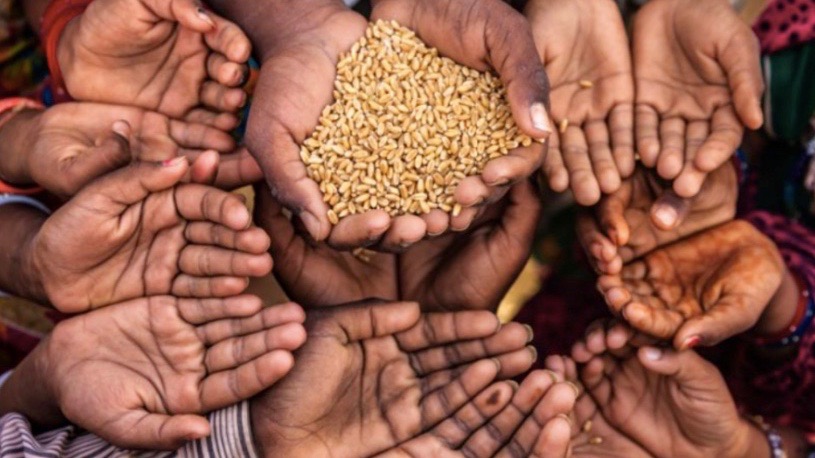
School-aged children are bearing the brunt of today’s global food crisis with devastating consequences for their education and their ability to catch up on learning lost during COVID-19 closures.

This is a warning from the United Nations World Food Programme (WFP), the African Union Development Agency (NEPAD), and other organisations working on education, including the Education Commission chaired by Mr Gordon Brown, former British Prime Minister and UN Special Envoy for Global Education.

WFP estimates that the global food crisis has pushed an additional 23 million under-18s into acute food insecurity since the start of the year, taking the total of children now affected to 153 million. This represents nearly half of the 345 million people facing acute hunger, according to WFP data from 82 countries.

The global food crisis is threatening the futures of millions of school-aged children who have only just returned to classrooms following the Covid-19 pandemic. Emerging evidence points to unprecedented learning losses during the pandemic, which risks being further compounded by this current food crisis.

The World Bank estimates that the share of 10-year-olds in poorer developing countries unable to read or write has increased from 53 per cent to 75 per cent.

Speaking on the worrying development, Mr Brown said, “As every parent and teacher understands, hunger is one of the biggest barriers to effective learning – and the surge in hunger among school-age children now poses a real and present danger to a learning recovery. For children who are going hungry in their classrooms, we have a ready-made, cost-effective antidote – school meal programme. Let’s use it.”

Ahead of the forthcoming United Nations General Assembly (UNGA) and the Transforming Education Summit in New York, WFP and partners are calling for an ambitious plan of action to restore school meal programmes disrupted by the pandemic and expand their reach to an additional 73 million children. Detailed costing estimates for the plan suggest around $5.8 billion annually would be required.

The plan would supplement wider measures to combat child hunger, including an expansion of child and maternal health programmes, support for out-of-school children, and increased investment in safety nets. Hunger levels among the 250 million children now out of school are almost certainly higher than for those in school, the WFP warns.

On her part, Ms Carmen Burbano, Director of WFP’s School-based Programmes Division echoed that millions of children are living with the consequences of the mutually reinforcing food and learning crises.

“Yet the link between hunger and lost opportunities for learning needs to be more prominent on the international agenda – and school meal programs can help break that link. Not investing in school meals programs is perhaps one of the worst possible economic decisions governments and donors can make, especially now,” she noted.

School meal programmes have been touted among the largest and most effective social safety nets for school-aged children. They not only keep children, particularly girls, in school but help improve learning outcomes by providing better and more nutritious diets.

In addition, they also support local economies, create jobs and livelihoods in communities, and ultimately help break the links between hunger, an unsustainable food system, and the learning crisis.


Adedapo Adesanya is a journalist, polymath, and connoisseur of everything art. When he is not writing, he has his nose buried in one of the many books or articles he has bookmarked or simply listening to good music with a bottle of beer or wine. He supports the greatest club in the world, Manchester United F.C.

Advertisement
Click to comment

Leave a Reply

Your email address will not be published. Required fields are marked *

Education

Hallos Launches Learning247 Summit

Published

on

Hallos

By Adedapo Adesanya

Live-learning and creator-economy platform, Hallos, as part of its expansion drive, has unveiled plans to equip millions of youths and women with digital skills and monetisation opportunities through the Learning247 Hallos Summit, aimed at integrating Nigeria’s South-East into the rapidly expanding global creator economy.

At a sensitisation and stakeholder engagement forum in Enugu, the organisation also called for stronger strategic partnerships with government agencies, educational institutions, development organisations, media houses and private-sector stakeholders to advance the creator economy as a credible engine for mass employment, youth prosperity and inclusive economic growth.

The chief executive of Hallos, Mr Alexander Oseji Uzoma, renewed the call for increased investment in internet penetration, reliable power supply, digital infrastructure, creative studios and youth-focused innovation hubs across Nigeria, especially the South-East.

Describing the creator economy as one of the most accessible and scalable employment frontiers globally, he noted that with basic tools such as a smartphone, internet access and creative skills, young people can build audiences, monetise knowledge and generate sustainable income without heavy capital investment or long career pathways.

According to Mr Uzoma, the creator economy offers low-barrier entry into diverse professions, including content creation, social media influencing, live tutoring and digital coaching, video production, podcasting, graphic design, music and performance arts, digital marketing, merchandise design, e-commerce and community management. These activities support a broader value chain spanning production, distribution, technology and management.

The Hallos co-founder also explained that global projections place the creator economy in the hundreds of billions of dollars, with millions of creators worldwide earning sustainable incomes, stressing that Hallos is focused on localising these opportunities to ensure African youths can participate meaningfully and compete globally.

He further noted that Hallos operates a live-learning and creator-focused platform that integrates education, gamified quizzes, merchandising and voluntary fan donations into a single ecosystem. Through the platform, creators can host live learning sessions and masterclasses, earn from quizzes and challenges, sell branded merchandise, receive voluntary donations, build communities around their expertise and organise monetisable podcasts.

Mr Uzoma said the creator economy, driven by social media platforms, streaming services, digital commerce and content monetisation tools, has evolved into a major global industry capable of generating wealth, creating jobs and expanding export earnings.

He stressed that social media should no longer be viewed as a recreational space but as a viable business environment for wealth creation.

“The focus should not just be on content creation alone but on building businesses around content. It is about value creation and structured digital entrepreneurship,” he said.

He disclosed that Hallos intends to reach about 10 million youths nationwide, with over 5,000 already engaged across its programmes, while placing strong emphasis on bridging the gender gap by empowering women and girls through targeted digital training, mentorship and access to monetisation platforms.

As the digital economy continues to expand, Hallos said the creator economy stands out as a practical and scalable solution to youth unemployment, offering low entry barriers and global earning potential.

The company reaffirmed its commitment to bridging the gap between talent and income, enabling young Africans to earn well above minimum wage through creativity, knowledge and structured participation in the global digital economy.

Continue Reading

Education

Bayero University PG Students to Enjoy Dangote’s N1.5bn Scholarship

Published

on

Dangote Foundation Bayero University

By Modupe Gbadeyanka

Post-graduate students of Bayero University Kano (BUK) will benefit from a scholarship worth about N1.5 billion from the Aliko Dangote Foundation (ADF).

The businessman put down the funds to support eligible MBA, entrepreneurship, and management postgraduate students of the institution under an initiative known as MHF Dangote Graduate Business Scholarship.

At a ceremony on Tuesday, the foundation and the school signed a Memorandum of Understanding (MoU) at the auditorium of the Dangote Business School, Kano.

The deal is to provide N300 million annually over five years as scholarship awards to the beneficiaries, who will receive N150,000 each per session, beginning with the 2024/25 academic session. This is equivalent to 50 per cent of the current N300,000 fee paid by the post-graduate students. There are 1,225 students in the Business School (696 fresh and 529 returning students).

One of the beneficiaries, Mr Khalid Bababubu, who is into manufacturing and specialises in MBA, Finance and Investment, thanked the organisation for the gesture.

“We are happy to be beneficiaries of this initiative. Education is the bedrock of national development, and we will not take this scholarship for granted,” he said.

A representative of ADF, Ms Mariya Aliko Dangote, said, “Our vision at the Foundation is to build human capital that translates into economic opportunity.

“Strengthening business and entrepreneurship education is critical to turning knowledge into enterprise, innovation, and jobs. This scholarship deepens our commitment to Dangote Business School by investing directly in the next generation of business leaders and change-makers.”

On his part, the Vice Chancellor of Bayero University Kano, Prof. Haruna Musa, said, “This support comes at a critical time for many families. Beyond financial relief, it strengthens the Business School’s role as a centre for developing entrepreneurial and management talent, particularly for women who are increasingly taking leadership roles in enterprise.”

It was explained that newly admitted students will receive automatic tuition reductions during registration, and returning students who have already paid in full will receive rebates. The N300 million allocation is structured to cover all eligible postgraduate students based on current enrolment capacity.

Any unutilised balance in the first year will be retained within the Dangote Business School development envelope to strengthen learning infrastructure and digital academic capacity, ensuring continued enhancement of the academic environment.

The MHF Dangote Graduate Business Scholarship is distinct from ADF’s recently announced nationwide STEM education interventions.

Continue Reading

Education

Entries for InterswitchSPAK 8.0 Begin, Over N40m up for Grabs

Published

on

Entries for InterswitchSPAK 8.0

By Aduragbemi Omiyale

Senior secondary school students across Nigeria have been invited to apply and demonstrate their academic excellence on a national stage in the eighth edition of the prestigious national science competition known as InterswitchSPAK.

The contest is organised by Interswitch, Africa’s leading technology company focused on creating solutions that enable individuals and communities prosper.

Registration for InterswitchSPAK 8.0 via www.interswitchspak.com has opened and will close on Friday, May 24, 2026. For the first time, in addition to group registrations through schools, parents can also register their individual children for the competition.

This year’s edition features a scholarship pool exceeding N40 million, with Interswitch expanding the prize structure to ensure broader impact.

The overall winner will receive a N15 million tertiary scholarship, including monthly stipends. The first runner-up will be awarded a N10 million scholarship, including monthly stipends; while the second runner-up will receive a N5 million scholarship, also including monthly stipends. All scholarships are payable over 5 years. Also, the top 9 finalists will all receive brand new laptops and other exciting prizes.

In addition to the top prizes, Season 8 introduces enhanced rewards for student finalists ranked 4th to 9th, as well as increased recognition for teachers supporting qualifying students from 1st to 9th place. This expanded structure reinforces Interswitch’s commitment to rewarding academic excellence and recognising the critical role educators play in shaping student success.

“At Interswitch, we strongly believe that Nigeria’s future will be shaped by how well we nurture today’s young minds. InterswitchSPAK goes beyond competition; it is a long-term commitment to empowering students and supporting teachers who are laying the foundation for innovation, problem-solving, and national development.

“As we launch Season 8, we remain focused on creating opportunity, rewarding merit, and inspiring excellence across Nigeria,” the Executive Vice President for Group Marketing and Communications at Interswitch, Ms Cherry Eromosele, said.

Designed to empower young minds in the Science, Technology, Engineering, and Mathematics (STEM) areas, InterswitchSPAK identifies, nurtures, and rewards students while equipping them with the skills and knowledge required to excel in STEM fields and drive innovation.

Over the past seven seasons, InterswitchSPAK has positively impacted thousands of students across the country, offering full university scholarships, mentorship opportunities, and national recognition for outstanding academic performance.

Beyond these rewards, the programme has consistently reinforced the importance of STEM education as a critical driver of innovation, problem-solving, and sustainable national development.

Through a transparent, technology-enabled selection process, InterswitchSPAK has also promoted educational equity by providing students from diverse socio-economic backgrounds with equal access to opportunity, ensuring that performance and merit remain central to success.

Continue Reading

Trending