Economy
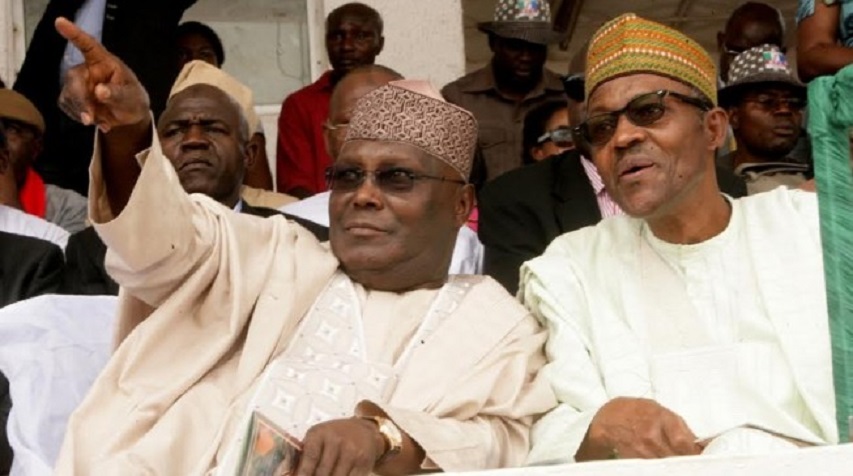
Atiku’s Economic Blueprint Poor Version of Buhari’s Model—FG
By Modupe Gbadeyanka
The federal government has described the economic blueprint of the candidate of the opposition Peoples Democratic Party (PDP) in the 2023 presidential election, Mr Atiku Abubakar, as a “poor version” of the model of President Muhammadu Buhari.
Last week, Mr Atiku, a former Vice President of Nigeria, was in Lagos at an event to explain how he intends to handle the country’s economy if elected as President next year.
The event was organised by the Lagos Chamber of Commerce and Industry (LCCI) to provide a platform for candidates of the three major political parties in the race to explain their plans for the economy.
The former VP was the first to use the platform, followed by the former Governor of Anambra State and candidate of the Labour Party, Mr Peter Obi.
The candidate of the ruling All Progressives Congress (APC) and former Governor of Lagos State, Mr Bola Tinubu, is the next to honour the invitation extended to him to reel out his economic plans.
While addressing a news conference in Abuja on Thursday, the Minister of Information and Culture, Mr Lai Mohammed, said the current administration is implementing the content of Mr Atiku’s economic blueprint.
“Let me say, straight away, that the so-called blueprint is a crude attempt at copying all that the administration of President Muhammadu Buhari has done, especially in the areas of job creation, infrastructure financing, relationship with the private sector, rejuvenation of the power sector, poverty reduction, debt management and the overall management of the economy,” Mr Mohammed told reporters today.
“It is more shocking that an opposition that has condemned all that this administration has done would turn around to weave its so-called Economic Blueprint around the same things that are currently being done by the same administration,” he said.
According to the Minister, the plan by the former Vice President to rebuild infrastructure and reduce infrastructure deficit to boost the economy and wealth creation is what Mr Buhari has been doing since he was elected in 2015.
“Even our worst critics will agree that our record on infrastructure development is next to none in the history of this country. Across the country, we have constructed 8,352.94 kilometres of roads, rehabilitated 7,936.05 kilometres of roads, constructed 299 bridges, maintained 312 bridges and created 302,039 jobs in the process,” the Minister said.
According to him, before 2015, the road budget was N18.132 billion but increased to N260.082 billion in 2016; N274.252 billion in 2017, N356.773 billion in 2018, N223.255 billion in 2019, N227.963 billion in 2020 and N241.864 billion in 2021.
He further said the administration of Mr Buhari has given room for investors to thrive, giving rise to “an unprecedented number of projects, including the 650,000bpd Dangote Refinery, Dangote Fertilizer plant, Lekki Deep Sea Port, BUA Cement, the 5,000bpd Waltersmith Modular Refinery in Imo State; the 2,500bpd Duport Modular Refinery/Energy Park in Edo State; the 2,000bpd Atlantic Modular Refinery in Bayelsa State; the 12,000bpd Azikel Modular Refinery also in Bayelsa; and more.
He said in the area of power, the federal government under the Presidential Power Initiative, partnered with Siemens to deliver 7,000MW in the first phase, 11,000MW in the second phase and 25,000MW in the third phase.
“This will positively impact job creation, boost investor confidence, accelerate economic growth and reduce the cost of doing business. For those who may be in doubt, let me say that this project is a game changer. As you may have read, electricity equipment ordered under the project has started arriving in the country. When they are installed, there will be a major improvement in the supply of electricity across the country,” Mr Mohammed said.
Economy
Insurance Firms Must Submit 2025 Assessment Returns by May 31—NAICOM
By Adedapo Adesanya
The National Insurance Commission has issued new guidelines for the collection, management, and administration of the Insurance Policyholders’ Protection Fund.
In a circular issued to all insurance institutions on Tuesday, the regulator also set May 31, 2026, as the deadline for insurers to submit their assessment returns for the 2025 financial year.
Recall that on August 5, 2025, President Bola Tinubu signed into law the Nigerian Insurance Industry Reform Act ( NIIRA 2025).
This landmark legislation repeals the Insurance Act 2003, and consolidates related provisions, ushering in a modern regulatory framework. It lays a strong foundation for sustainable growth and increased investment in the country’s insurance sector.
The commission said the guidelines were issued in exercise of its powers under the 2025 Act and other existing insurance laws and regulations to provide regulatory clarity, improve guidance, and ensure ease of compliance across the industry.
According to NAICOM, the guidelines establish a comprehensive structure for the operation of the IPPF, which serves as a statutory safety net to protect insurance policyholders in the event of distress or insolvency of a licensed insurer or reinsurer. The framework also provides direction on the reimbursement of loans by insurers and reinsurers.
NAICOM stated, “The guidelines ensure regulatory clarity, guidance and ease of compliance, as it provides a comprehensive regulatory framework for the collection, management, and administration of the Fund, which serves as a statutory safety net designed to protect insurance policyholders against distress and insolvency of a licensed insurer or reinsurer, including guidance for the reimbursement of loans by an insurer or reinsurer.
“Please be informed that the IPPF Assessment Returns in respect of the year 2025 shall be submitted to the Commission not later than 31st May 2026, while subsequent submissions shall be in line with Section 4.3 of the Guideline on Insurance Policyholders Protection Fund.”
Economy
Dangote Refinery Sells Petrol at N1,200/L as Global Oil Prices Slump
By Adedapo Adesanya
The Dangote Refinery on Wednesday returned the petrol price to N1,200 per litre, less than 24 hours after it increased it by 5 per cent.
The private refinery had raised the ex-depot price by N75 on Tuesday, citing pressure from volatile global oil markets, but quickly brought it back to N1,200 per litre from N1,275 per litre.
The swift downward review is directly linked to a sharp drop in international crude prices. Brent crude has plunged to $95.05 per barrel, after a 13 per cent decline, while the US West Texas Intermediate (WTI) crude closed at $97.18, recording nearly a 14 per cent drop.
This development comes after US President Donald Trump announced a conditional two-week ceasefire with Iran, which eased fears of immediate supply disruptions in the global oil market.
“This will be a double-sided CEASEFIRE!” Trump said on social media, marking a sharp reversal from his earlier warning that “a whole civilisation will die tonight” if Iran failed to comply with US demands.
Iran’s Foreign Minister, Mr Abbas Araqchi, confirmed that the country would halt attacks provided strikes against Iran cease and transit through the Strait of Hormuz is coordinated by Iranian forces.
Despite the breakthrough, tensions remain elevated across the region, with several Gulf states reporting missile launches, drone activity, or issuing civil defence warnings.
While oil prices have fallen back below $100, they remain significantly elevated after surging by a record amount in March. Market analysts noted that regardless of how successful the ceasefire is, geopolitical risk related to the Strait of Hormuz is likely to remain elevated for the foreseeable future under the control of Iran.
Economy
Crude Deliveries Double to Dangote Refinery in Mix of Naira, Dollar Supply
By Adedapo Adesanya
Crude oil deliveries from the Nigerian National Petroleum Company (NNPC) Limited to the Dangote Petroleum Refinery doubled in March, boosting prospects for improved fuel availability.
This was revealed by the chief executive of Dangote Industries Limited, Mr Aliko Dangote, on Tuesday, when he received the Deputy Secretary-General of the United Nations, Mrs Amina Mohammed, at the industrial complex in Ibeju-Lekki, Lagos.
While speaking on feedstock supply, Mr Dangote commended the NNPC for increasing crude deliveries to the refinery in March, noting that volumes rose to 10 cargoes—six supplied in Naira and four in Dollars—to support domestic fuel availability, according to a statement by the Refinery.
“Last month, they gave us six cargoes for Naira and four cargoes for Dollars,” he said.
Despite the improvement, Mr Dangote noted that the supply remains below the 19 cargoes required for optimal operations, with the refinery continuing to bridge the gap through imports from the United States and other African producers.
He also expressed concern over the unwillingness of international oil companies operating in Nigeria to sell to the refinery, stating that their preference for selling crude to traders forces it to repurchase at higher costs, with broader implications for the economy.
Mr Dangote added that the refinery is seeking increased access to domestically priced crude under local currency arrangements as part of efforts to moderate fuel costs and enhance long-term energy and food security across the continent.
On her part, Mrs Mohammed underscored the strategic importance of Dangote Industries Limited -particularly Dangote Fertiliser Limited—in addressing Africa’s mounting food security challenges, while calling for stronger global partnerships to scale its impact.
Mrs Mohammed said the United Nations would prioritise amplifying scalable solutions capable of mitigating the continent’s food crisis, describing Dangote’s integrated industrial model as a critical pathway.
“I think the UN’s job here is to amplify and to put visibility on the possibilities of mitigating a food security crisis, and this is one of them,” she said. “I hope that when we go back, we can continue to engage partners and countries that should collaborate with Dangote Industries.”
-
Feature/OPED6 years agoDavos was Different this year
-
Travel/Tourism10 years ago
Lagos Seals Western Lodge Hotel In Ikorodu
-
Showbiz3 years agoEstranged Lover Releases Videos of Empress Njamah Bathing
-
Banking8 years agoSort Codes of GTBank Branches in Nigeria
-
Economy3 years agoSubsidy Removal: CNG at N130 Per Litre Cheaper Than Petrol—IPMAN
-
Banking3 years agoSort Codes of UBA Branches in Nigeria
-
Banking3 years agoFirst Bank Announces Planned Downtime
-
Sports3 years agoHighest Paid Nigerian Footballer – How Much Do Nigerian Footballers Earn