Economy
How Keeping A Small Farm Can Prove To Be A Sustainable Business
In the world today, it is more important than ever to find sustainable ways of living. One way to achieve this is by keeping a small farm. Small farms can provide a variety of sustainable products and services while also preserving the environment. We will explore some of the benefits of keeping a small farm and how it can be a viable business model. So, let’s get started!
Setting Up A Small Farm
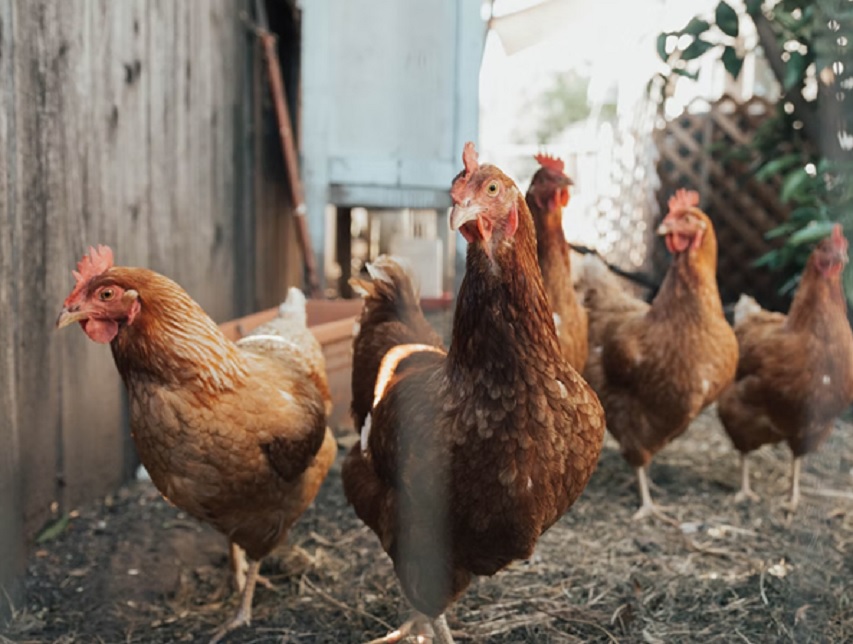
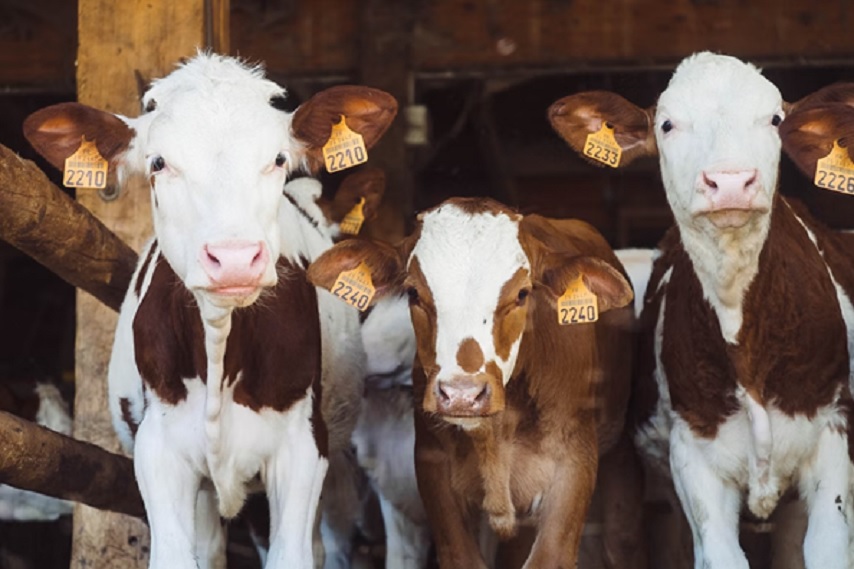
Before we dive into the benefits of keeping a small farm, it is important to understand what exactly a small farm is. A small farm is defined as an agricultural enterprise that employs fewer than ten workers (excluding family members). Small farms can be operated as sole proprietorships, partnerships, or corporations. The majority of small farms are family-owned and -operated. On a small farm, you can keep anything from chickens to cows, and some vegetables. Supplies you’ll need on such a farm include chicken feed, coops, fencing, and other basic equipment. Additionally, you will need to obtain the proper permits and licenses before setting up your small farm.
1. Local Production Of Food
One of the main benefits of keeping a small farm is that it allows for the local production of food. As the world population continues to grow, the demand for food will only increase. Small farms can meet this demand by producing food locally. This is important because it cuts down on transportation costs and helps to reduce the carbon footprint of the food that is consumed. Additionally, locally-grown food is typically fresher and tastier than food that has been transported long distances.
2. Preservation Of The Environment
Another benefit of keeping a small farm is that it helps to preserve the environment. Small farms tend to use fewer pesticides and chemical fertilizers than large commercial farms. They also require less land, which means that there is less deforestation. Small farms also tend to have a more diversified crop rotation, which helps to improve soil health. All of these factors help to create a more sustainable and eco-friendly agricultural system.
3. Improved Mental And Physical Health
Keeping a small farm can also have a positive impact on your mental and physical health. Studies have shown that working in nature can reduce stress levels and improve overall well-being. Additionally, working on a small farm can provide you with a moderate amount of exercise, which is beneficial for your physical health. Studies have also shown that people who work on farms have a lower risk of developing dementia.
4. Economic Stimulation
Small farms can also have a positive impact on the economy. When you buy products from a small farm, you are supporting local businesses and farmers. This helps to stimulate the local economy and keep money within the community. Additionally, small farms typically use less energy than large commercial farms. This means that there is less of a demand for fossil fuels, which helps to reduce greenhouse gas emissions.
5. Community Engagement
Finally, keeping a small farm can help to engage the community. Small farms provide an opportunity for people to learn about where their food comes from and how it is produced. They also offer a space for people to come together and connect with nature. On a small farm, you are more likely to develop relationships with your neighbours and other members of the community. Additionally, small farms can be used as a venue for events such as farm-to-table dinners, weddings, and other gatherings.
How To Keep Your Farm Sustainable
Most small farms start as sustainable but soon become unsustainable when they expand and try to produce more. The key to keeping your small farm sustainable is to focus on quality, not quantity. Here are some tips for how to do this:
1. Use Natural Farming Methods
One of the best ways to keep your small farm sustainable is to use natural farming methods. This means avoiding the use of pesticides, chemical fertilizers, and other harmful chemicals. Instead, focus on using organic methods to grow your crops and raise your animals. This will help to preserve the environment and improve the quality of your products.
2. Diversify Your Crop Rotation
Another way to keep your small farm sustainable is to diversify your crop rotation. This means growing a variety of different crops to improve soil health. When you diversify your crop rotation, you will also reduce the risk of crop failure. This will help to ensure that you always have a reliable source of income.
3. Keep Your Animals Healthy
Another important aspect of keeping your small farm sustainable is to keep your animals healthy. This means providing them with a clean and safe environment. It also means feeding them a healthy diet and ensuring that they get enough exercise. By keeping your animals healthy, you will be able to produce high-quality products that are in demand.
4. Invest In Renewable Energy
Finally, one of the best ways to keep your small farm sustainable is to invest in renewable energy. This includes solar panels, wind turbines, and other green energy technologies. By investing in renewable energy, you will be able to reduce your reliance on fossil fuels. This will help to protect the environment and save money in the long run.
Financing Your Farm
Starting a small farm can be a costly endeavour. However, there are several ways to finance your farm. One option is to take out a loan from the government or a private lender. Another option is to seek out grants and other forms of financial assistance. Additionally, you can also crowdfund your farm or sell products to raise money. Also, be sure to look into tax breaks and other incentives that may be available to farmers.
Small farms offer several benefits, both for the environment and for the people who work on them. They are typically more sustainable than large commercial farms and can provide several economic, social, and health benefits. If you are thinking about starting a small farm, be sure to keep these tips in mind to make sure that it is sustainable. And also check out this guide on how to start a successful small farm.
Economy
Customs Street Chalks up 1.08% on Renewed Buying Pressure
By Dipo Olowookere
A 1.08 per cent growth was further printed by the Nigerian Exchange (NGX) Limited on Friday on improved appetite for Nigerian stocks.
Data showed that the insurance sector lost 0.61 per cent yesterday due to profit-taking as the energy space gave up 0.08 per cent, while the commodity counter closed flat.
However, the industrial goods landscape appreciated by 2.06 per cent, the banking index improved by 1.31 per cent, and the consumer goods sector expanded by 0.83 per cent.
At the close of business on Customs Street, the All-Share Index (ASI) increased by 1,563.92 points to 147,040.07 points from 145,476.15 points and the market capitalisation went up by N996 billion to N93.722 trillion from N92.726 trillion.
UAC Nigeria led the advancers’ log yesterday after it grew by 10.00 per cent to N96.80, Transcorp Hotels jumped by 9.71 per cent to N172.80, Royal Exchange appreciated by 8.89 per cent to N1.96, Ikeja Hotel soared by 8.74 per cent to N31.10, and Veritas Kapital leapt by 8.07 per cent to N1.74.
On the flip side, Union Dicon declined by 10.00 per cent to N6.30, ABC Transport slipped by 9.88 per cent to N3.10, AXA Mansard depreciated by 7.19 per cent to N12.90, FTN Cocoa lost 4.62 per cent to trade at N4.75, and Guinea Insurance dropped 3.36 per cent to finish at N1.15.
A total of 38 stocks ended on the gainers’ table and 17 stocks finished on the losers’ table, representing a positive market breadth index and strong investor sentiment.
Traders transacted 361.6 million equities for N14.8 billion in 21,051 deals yesterday versus the 1.9 billion equities worth N19.2 billion traded in 23,369 deals a day earlier, showing a decline in the trading volume, value, and number of deals by 80.97 per cent, 22.92 per cent, and 14.20 per cent, respectively.
The busiest stock for the session was Zenith Bank with 59.5 million units worth N3.6 billion, Access Holdings traded 46.1 million units valued at N973.0 million, Fidelity Bank exchanged 29.4 million units for N560.4 million, FCMB transacted 27.9 million units worth N293.9 million, and Tantalizers sold 13.0 million units valued at N29.8 million.
Economy
Nipco, 11 Plc Crash OTC Securities Exchange by 4.76%
By Adedapo Adesanya
Energy stocks influenced the 4.76 per cent loss recorded by the NASD Over-the-Counter (OTC) Securities Exchange on Friday, December 5.
The culprits were the duo of 11 Plc and Nipco Plc,with the former shedding N32.17 to end at N291.83 per share compared with the previous day’s N324.00 per share, and the latter down by N21.00 to sell at N195.00 per unit versus the previous session’s N216.00 per unit.
Consequently, the NASD Unlisted Security Index (NSI) slumped by 170.16 points to 3,401.37 points from 3,571.53 points and the market capitalisation lost N101.81 billion to close at N2.035 billion from the N2.136 trillion quoted in the preceding session.
The OTC securities exchange suffered the decline yesterday despite the share prices of three companies closing green.
Central Securities Clearing System (CSCS) Plc was up by N1.80 to close at N39.80 per share compared with Thursday’s price of N38.00 per share, Air Liquide Plc appreciated by N1.09 to N11.99 per unit from N10.90 per unit, and FrieslandCampina Wamco Nigeria Plc grew by 78 Kobo to N56.57 per share from N55.79 per share.
During the session, the volume of transactions rose by 6,885.3 per cent to 18.2 million units from 4.3 million units, the value of transactions ballooned by 10,301.7 per cent to N389.7 million from N347.2 million, but the number of deals declined by 29.7 per cent to 26 deals from 37 deals.
Infrastructure Credit Guarantee Company (InfraCredit) Plc ended the day as the most traded stock by value on a year-to-date basis with 5.8 billion units worth N16.4 billion, followed by Okitipupa Plc with 170.4 million units valued at N8.0 billion, and Air Liquide Plc with 507.5 million units worth N4.2 billion.
InfraCredit Plc also finished the day as the most traded stock by volume on a year-to-date basis with 5.8 billion units transacted for N16.4 billion, followed by Industrial and General Insurance (IGI) Plc with 1.2 billion units sold for N420.2 million, and Impresit Bakolori Plc with 536.9 million units worth N524.9 million.
Economy
Naira Depreciates to N1,450/$1 at Official Forex Market
By Adedapo Adesanya
The Naira depreciated further against the US Dollar in the Nigerian Autonomous Foreign Exchange Market (NAFEX) on Friday, December 5, as FX demand pressure mounts.
The Nigerian currency lost N2.60 or 0.18 per cent against the greenback to close at N1,450.43/$1 compared with the previous day’s N1,447.83/$1.
Equally, the domestic currency declined against the Pound Sterling in the official forex market during the session by N4.48 to trade at N1,935.45/£1, in contrast to Thursday’s closing price of N1,930.97/£1 and shrank against the Euro by 43 Kobo to end at N1,689.17/€1 versus the preceding session’s rate of N1,688.74/€1.
Similarly, the local currency performed badly against the US Dollar at the GTBank FX counter by N2 to close at N1,455/$1 versus Thursday’s N1,453/$1 but traded flat at the parallel market at N14.65/$1.
As the country gets into the festive period, pressure mounted on the local currency reflecting higher foreign payments and lower FX inflows.
However, there are expectations that the Nigerian currency will be stable, supported by interventions by to the Central Bank of Nigeria (CBN) in the face of steady dollar Demand and inflows from Detty December festivities that will give the Naira a boost after it depreciated mildly last month.
Traders cited by Reuters expect that the Naira will trade within a band of N1,443-N1,450/$1 next week, buoyed by improved FX interventions by the apex bank.
As for the crypto market, it was down yesterday due to profit-taking associated with year-end trading. However, the December 1-Year Consumer Inflation Expectation by the University of Michigan fell to 4.1 per cent from 4.5 per cent previously and 4.5 per cent expected. The 5-Year Consumer Inflation Expectation fell to 3.2 per cent from 3.4 per cent previously and 3.4 per cent expected.
With the dearth of official economic data of late, these private surveys have taken on a new level of significance and the market banks of them to make decisions.
Cardano (ADA) depreciated by 5.7 per cent to $0.4142, Dogecoin (DOGE) slid by 5.1 per cent to $0.1394, Ethereum (ETH) dropped by 3.9 per cent to $3,039.75, Solana (SOL) declined by 3.8 per cent to $133.24, and Litecoin (LTC) fell by 3.7 per cent to $80.59.
Further, Bitcoin (BTC) went down by 2.6 per cent to sell at $89,683.72, Binance Coin (BNB) slumped by 2.2 per cent to $883.59, and Ripple (XRP) shrank by 2.1 per cent to $2.04, while the US Dollar Tether (USDT) and the US Dollar Coin (USDC) remained unchanged at $1.00 each.
-
Feature/OPED6 years agoDavos was Different this year
-
Travel/Tourism9 years ago
Lagos Seals Western Lodge Hotel In Ikorodu
-
Showbiz3 years agoEstranged Lover Releases Videos of Empress Njamah Bathing
-
Banking7 years agoSort Codes of GTBank Branches in Nigeria
-
Economy3 years agoSubsidy Removal: CNG at N130 Per Litre Cheaper Than Petrol—IPMAN
-
Banking3 years agoFirst Bank Announces Planned Downtime
-
Banking3 years agoSort Codes of UBA Branches in Nigeria
-
Sports3 years agoHighest Paid Nigerian Footballer – How Much Do Nigerian Footballers Earn