Connect with us

Economy

Again, Nigeria’s Crude Oil Production Falls in September

Published

on

Crude Oil Production

By Adedapo Adesanya

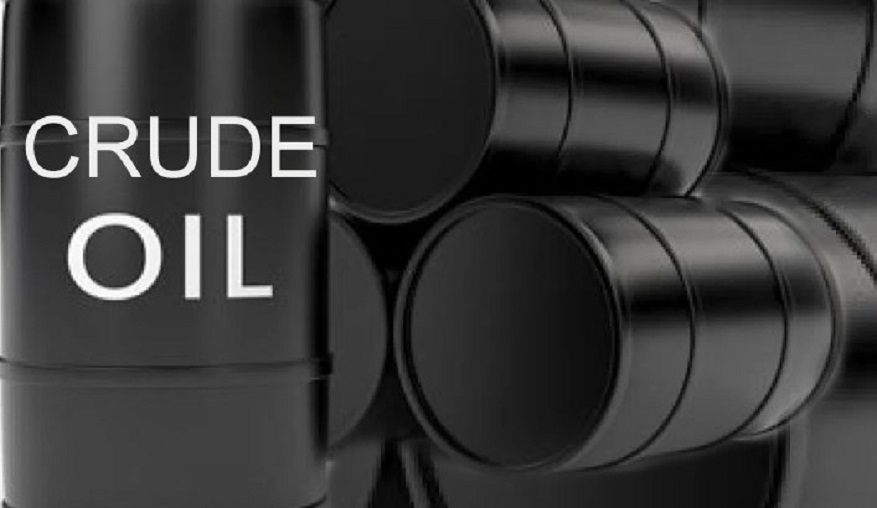
Nigeria saw its crude oil production falter in a tough year marred by theft as September production averaged 937,766 barrels per day.

This is a 3.6 per cent drop compared to 972,394 barrels per day for the month of August, which was below Angola’s average daily output of 1.17 million barrels.

This was disclosed in the September Crude Oil production report by the Nigerian Upstream Petroleum Regulatory Commission (NUPRC).

The agency said Nigeria’s monthly average was 937,766 barrels per day compared to 972,394 barrels per day in August and 1,03,899 barrels per day in July.

The Nigerian government has blamed crude oil theft for the inability of the country to meet its OPEC quota of nearly 2 million barrels per day. Nigeria has not been able to take advantage of the rise in the prices of the commodity in the global market because of low production, with  the  Nigerian National Petroleum Company (NNPC)  Limited promising to intensify its effort to fight rising crude oil theft.

The Chief Executive Officer of NNPC Limited, Mr Mele Kyari, stated in an interview this week that oil production dropped to less than 1.2 million barrels per day, adding that local importers have been asked to accept payment delays of at least 90 days.

He also stated that he was confident that a rebound in Nigeria’s crude production would allow the company to cover its deferred payment obligations and expect Nigeria to add 500,000 barrels a day to its output by the end of November, mainly by restarting activities on the Forcados export terminal and Trans-Niger pipeline.

The NNPC has so far shut down the operations of 395 illegal refineries, including discoveries of an illegal connection of four kilometres route into the sea running from its major Forcados line, which he estimates has been around for nine years.

Over the last seven years of President Muhammadu Buhari’s administration, Nigeria’s crude production has been rocky. In 2015 when the administration came in, the daily oil production stood at 1.748 million barrels per day, in 2016, it fell to 1.4 million barrels per day. By 2017, it rose to 1.53 million barrels per day, by 2018, this shot higher to 1.601 million barrels per day, it further climbed to 2019 1.73 million barrels per day, but in 2020, it slid to 1.49 million barrels per day, by 2021, it has fallen to 1.2 million barrels per day.


Adedapo Adesanya is a journalist, polymath, and connoisseur of everything art. When he is not writing, he has his nose buried in one of the many books or articles he has bookmarked or simply listening to good music with a bottle of beer or wine. He supports the greatest club in the world, Manchester United F.C.

1 Comment

Leave a Reply

Your email address will not be published. Required fields are marked *

Economy

United Capital Acquires 5% Stake in Nigerian Exchange Group

Published

on

United Capital revenue

By Adedapo Adesanya

United Capital Plc has acquired a 5 per cent equity stake in the Nigerian Exchange (NGX) Group Plc for an undisclosed fee, deepening its involvement in Nigeria’s capital market.

The pan-African investment banking and financial services group announced this in a statement on Monday, noting that the transaction had been successfully completed and describing the investment as a key milestone in its long-term growth strategy.

NGX Plc, which serves as the holding company for Nigeria’s premier securities exchange and related market infrastructure businesses, plays a central role in Nigeria’s capital formation, market development, and economic growth.

United Capital said the acquisition reflects its confidence in the future of Nigeria’s capital markets and positions the Group to contribute more actively to the development of the nation’s financial system.

Commenting on the development, the chief executive of United Capital, Mr Peter Ashade, said the investment aligns with the company’s vision of creating sustainable value while supporting institutions critical to economic development.

“This acquisition reflects our confidence in Nigeria’s capital markets and our responsibility to contribute to their growth actively,” Mr Ashade said.

“We have always said that United Capital is not just a participant in Nigeria’s capital markets; we are also builders. This strategic investment in NGX Plc is exactly that: we are building for impact. It is our vote of confidence in the leadership and strategic direction of the NGX and where the capital market is headed,” he added.

According to him, the acquisition underscores the firm’s commitment to supporting the continued evolution of Nigeria’s capital market infrastructure while delivering long-term value to shareholders.

United Capital, which operates across 12 countries in West, East and Central Africa, provides a range of services spanning investment banking, asset management, securities trading and wealth management.

The company said the stake in NGX Plc would enable it to leverage its regional footprint and market expertise to support the Exchange’s next phase of growth and transformation.

The acquisition comes amid a series of strategic milestones for the financial services group, including the successful recapitalisation of all its subsidiaries ahead of regulatory deadlines and the recent acquisition of operational licences in Ethiopia and Rwanda.

Continue Reading

Economy

Nigerians Resist IMF Proposal for Higher VAT, Telecom Tax

Published

on

excise tax on telecom

By Adedapo Adesanya

Nigerians have kicked against suggestions by the International Monetary Fund (IMF) to the federal government to consider increasing the Value Added Tax (VAT) rate and introducing excise duties on telecommunications services as part of efforts to boost revenue generation and create fiscal space for development spending.

IMF, in its 2026 Article IV Consultation Report on Nigeria, warned that despite recent tax reforms, additional revenue measures would likely be required over the medium term to support critical social and infrastructure spending.

According to the IMF, Nigeria’s revenue mobilisation efforts must go beyond administrative improvements to address the country’s persistently low revenue-to-GDP ratio and rising expenditure pressures.

The Fund stated that, “Further tax policy changes will likely be needed, such as increasing the VAT rate, extending VAT to fuel products, rationalising tax expenditures in particular VAT exemptions on extractive industries and some customs duties, and introducing telecom excises, to complement administrative gains.”

It noted that while the recently enacted tax reforms are expected to improve revenue collection over time, some of the measures are revenue-reducing in the short term and may take time to yield significant gains.

On X (formerly Twitter), user @RealCeecee wrote – “You want to impose more suffering on people living on empty pockets. Where exactly does all this revenue go to? IMF would never give this kind of advice to any country that has good leaders, when the masses are already going through extreme suffering.”

“To be honest Nigerian need to stand its feet against the IMF, no be anything them go detect for us. The revenue they are talking about has anyone seen where it goes, let alone imposing another way to generate that will actually cause discomfort for Nigerians,” another handle, @KingMasy, wrote.

The IMF had stressed that continued revenue mobilisation is essential if the government is to sustain higher capital spending and expand social intervention programmes aimed at cushioning the impact of economic reforms on vulnerable Nigerians.

“Over the medium term, continued revenue mobilisation is essential to creating fiscal space for development and social spending,” the Fund said, adding that there was limited room to maintain the projected increase in capital expenditure without additional revenue sources.

The Bretton Woods institution, however, cautioned that the timing of any new tax measures should take into account the worsening poverty and food insecurity situation in the country.

It emphasised that any tax increases should be accompanied by a fully funded and effective cash transfer programme to shield vulnerable households from additional economic hardship.

“The timing of reforms must consider the poverty and food insecurity situation and ensure that the cash transfer system is in place and funded,” the report stated.

The IMF’s recommendation comes as Nigeria continues to grapple with weak revenue generation despite recent reforms, including the removal of fuel subsidies and efforts to improve tax administration.

The Fund projected that poverty and food insecurity could worsen amid higher global fuel and food prices, noting that poverty had already reached 63 per cent of the population while about 27 million Nigerians faced food insecurity in 2025.

It also reiterated its call for a neutral fiscal stance in 2026, warning that spending pressures linked to poverty, food insecurity and preparations for the 2027 general elections could widen fiscal deficits and increase financing needs if not carefully managed.

Continue Reading

Economy

Nigeria’s Inflation Rises to 15.93% in May as Prices Remain Elevated

Published

on

Nigeria’s Headline Inflation

By Adedapo Adesanya 

The National Bureau of Statistics (NBS) has revealed that Nigeria’s headline inflation rate in May 2026 rose to 15.93 per cent from 15.69 per cent in April, as the pressure from the Iran war continued to affect the global economy.

In the report on Monday, the statistical office showed that the headline inflation rate for May on a month-on-month basis was 1.75 per cent. 0.39 per cent lower than the 2.13 per cent recorded in April 2026.

On an annualised basis, the print was down from 26.06 per cent in the same month of the preceding year (May 2025). This was due to the rebasing of the calculation year from 2009 to 2024.

The rise in prices, which stemmed from the continued conflict in the Middle East, continued to stoke food prices and energy costs, which account for a huge chunk of average spending.

According to the NBS, “this can be attributed to the rate of change in the average prices of the following products: Millet whole grain, yam flour, ginger (Fresh), beef, garri, tam tuber, pepper (Fresh), cray fish, cassava tuber, Beans, Irish Potatoes, tomatoes (fresh), wheat grain (Sold loose), soya beans, guinea corn, plantain, carrots (Fresh) etc.”

The Food inflation rate in May 2026 on a month-on-month basis was 2.98 per cent, down by 0.65 percentage points from April 2026 (3.63 per cent), while on a year-on-year basis, it was 16.96 per cent and stood at 24.55 per cent in the same month of the preceding year (May 2025).

In its recent assessment of Nigeria, the International Monetary Fund (IMF) acknowledged the country’s ongoing macroeconomic reform efforts while warning that rising inflation, deepening poverty, and external shocks linked to geopolitical tensions could undermine recent gains.

The IMF projected a reversal in the disinflation trend, with headline inflation rising from 15.1 per cent in February 2026 to 15.4 per cent in March, driven largely by food price increases. It projected year-end inflation of 17.0 per cent, citing global commodity shocks and domestic pass-through effects.

The lender also recommended that the Central Bank of Nigeria maintain a cautious, data-dependent monetary policy stance following its recent steadying of interest rates at 26.5 per cent.

Continue Reading

Trending