Technology
Nigeria Generates $932m From Spectrum Sales, Taxes—Pantami
By Adedapo Adesanya
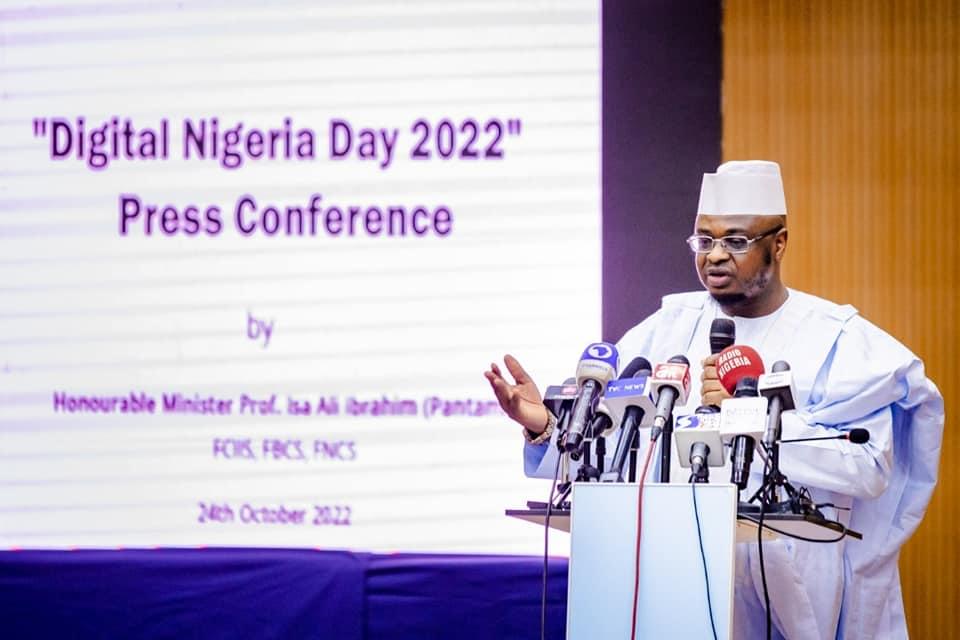
The Minister of Communications and Digital Economy, Mr Isa Pantami, has revealed that the quarterly revenues generated for the federal government from the ICT sector increased from $1.1 million to $932 million (approximately N419.4 billion) through spectrum sales and taxes.
The Minister disclosed this in a speech delivered at the third edition of Digital Nigeria Day, emphasising some of the significant milestones which the sector has achieved.
According to Mr Pantami, the ICT sector provided 3 distinctive contributions to the country’s Gross Domestic Product (GDP) in the last 3 years. He noted that these were 14.07 per cent in Q1 2020, 17.92 per cent in Q2 2021, and 18.44 per cent in Q2 2022.
Mr Pantami said, “ICT sector grew by 14.70 per cent in Q4 2020, making it the fastest-growing sector of the Nigerian economy in the last quarter of 2020 and the only industry to have grown by double digits. This played a critical role in allowing Nigeria to exit the recession.”
When the Minister assumed office on August 21, 2019, the official broadband penetration figures stood at 33.72 per cent, and today, it is 44.65 per cent, representing close to 13 million new broadband users.
Mr Pantami noted that there were 13,823 4G base stations and now 36,751, representing a 165.86 per cent increase. As a result, the percentage of 4G coverage across the country rose from 23 per cent to 77.52 per cent.
Furthermore, the average cost of data has crashed from $2.74 per GB (N1,200) to about $0.80 (N300), making it easier for Nigerians to connect to the Internet.
This echoed an opinion he shared recently that the growing contribution of the sector to the GDP was a result of the commitment of the current administration to the development of the digital economy.
He said that the unprecedented contribution of ICT to Nigeria’s GDP could also be attributed to the dynamic and results-oriented leadership of the sector.
He, however, said that the GDP report had shown how critical the ICT sector was to the growth of the country’s digital economy and, by extension, the general economy.
“The diligent implementation of the National Digital Economy Policy and Strategy (NDEPS) for a Digital Nigeria, stakeholder engagement, and creation of an enabling environment have all played an important role in this achievement.
“The support of President Muhammadu Buhari has contributed immensely to the impressive developments in the sector.
“The unprecedented contribution of ICT to Nigeria’s GDP can also be attributed to the dynamic and results-oriented leadership of the sector,” he said.
Technology
Nigeria to Buy Two New Communication Satellites to Drive Digital Growth
By Adedapo Adesanya
Nigeria will purchase to new communication satellites to boost Nigeria’s digital infrastructure as part of efforts to achieve President Bola Tinubu’s plan to grow the economy to $1 trillion.
The Minister of Communications and Digital Economy, Mr Bosun Tijani, disclosed this on Wednesday in Abuja at a press conference to mark Global Privacy Day 2026, organised by the Nigerian Data Protection Commission (NPDC).
Mr Tijani said the approval marked a significant shift in Nigeria’s digital strategy, noting that the country currently stands out in West Africa for lacking active communication satellites, a gap the new assets are expected to address.
“As you know, Mr President has been very clear about his ambition to build a $1 trillion economy, and digital technology is central to achieving that vision,” adding that, “The President has now approved that we should procure two new satellites. Nigeria today is the only country in West Africa with non-communication satellites. And we have been given the go-ahead to procure two new ones, ensuring that we can use that satellite to connect.”
He also said progress had been made on the Federal Government’s flagship 90,000-kilometre fibre optic backbone project, which is aimed at expanding broadband access across the country. According to the minister, about 60 per cent of the fibre project has been completed, while funding for the remaining work has already been secured.
“The 90,000 kilometres fibre optic project is not a dream. About 60 per cent of the work has already been completed, and the funding for the project is secure. As we bring more Nigerians online, connectivity without protection is incomplete. Privacy is the foundation of trust, safety, and sustainability in the digital world.”
“The success of Nigeria’s digital economy will depend not just on infrastructure and talent, but on trust, and the NDPC remains central to building that trust,” the minister said.
Mr Tijani said the Tinubu administration was positioning digital technology as a key driver of inclusive growth, improved public service delivery, and long-term economic expansion, adding that investments were also being channelled into digital skills, rural connectivity, and institutional reforms.
He stressed that the expansion of connectivity must be matched with stronger data protection, especially as Nigeria’s young and digitally active population continues to grow.
Recall that Nigerian Communications Commission (NCC) recently granted licenses to three global internet service providers – Amazon’s Project Kuiper, BeetleSat-1, and and Germany-based Satelio IoT Services – as part of efforts to strengthen internet connectivity via satellite and to boost competition among existing internet service providers in the country.
Technology
DataPro Predicts Surge in Individual Claims, Constitutional Privacy Actions
By Dipo Olowookere
In 2026, there should be a surge in individual claims and constitutional privacy actions, a leading Data Protection Compliance Organisation (DPCO) in Nigeria, DataPro, has projected.
In a statement signed by its Head of Emerging Services, Ademikun Adeseyoju, the company noted that this means organisations must remain “litigation ready” by preserving processing records and strengthening internal controls.
In the disclosure to prepare for this year’s Privacy Week themed Privacy in the Age of Emerging Technologies: Trust, Ethics, and Innovation, it noted that 2026 would also be defined by board and executive ownership, as privacy will no longer be an IT-only concern but a standing governance issue requiring regular risk reports and dedicated budgets.
“DataPro anticipates intensity on sector-specific enforcement, with the NDPC (Nigeria Data Protection Commission) focusing on high-risk industries like fintech, healthcare, etc,” a part of the statement made available to Business Post on Wednesday said.
Giving a review of key milestones from the 2025 ecosystem, DataPro said the NDPC moved decisively into active enforcement, publicly naming non-compliant entities, particularly in the financial services sector.
It also said the year witnessed landmark court rulings, affirming that transparency in personal data handling is a constitutionally protected right, as courts awarded significant damages to data subjects for privacy breaches, signalling that organisational size no longer shields against accountability.
The firm noted that regulatory settlements with multinational technology firms have set a high bar for behavioural advertising and data processing standards in Nigeria.
In the cybersecurity landscape, the year under review experienced an unprecedented surge in cyber threats, as attackers shifted their focus from technical exploits to identity-driven campaigns, targeting valid credentials with high precision.
“This identity-centric threat environment has made robust access management a non-negotiable requirement for corporate resilience,” it stressed.
As for the 2026 Privacy Week, DataPro has lined up activities, with launch of the Privacy Pulse A year-in-review of Nigeria’s Data Protection Ecosystem on Thursday, January 29.
The next day, a webinar tagged Privacy Pulse to train attendees on the new mandatory bi-annual in-house audits and DPO certification requirements will hold and next Monday, there is an interactive quiz designed to test organizational response to identity-driven cyber campaigns.
A social media session answering complex privacy questions via concise 30-second videos is slated for Tuesday, February 3, and the next day, it is for a social media showcase where winners will be selected for their insights on building Trust, maintaining Ethics in AI, and fostering Innovation under the NDPA.
Technology
MTN Nigeria Suffers 9,218 Fibre Cuts in 2025
By Adedapo Adesanya
MTN Nigeria has revealed that it experienced 9,218 fibre cuts in 2025, causing widespread network disruptions across the country.
The telecommunications giant also reported that 211 sites were affected by theft and vandalism as of November 30, 2025, impacting essential services relied upon by customers daily.
The company recorded a total of 1,624,263 customer complaints, all of which were resolved across various service channels during the year. Despite these challenges, MTN reached 85 million subscribers by September 2025.
The chief executive of the telco, Mr Karl Toriola, made these revelations in his latest post on LinkedIn, acknowledging the company’s responsibility for network performance and its efforts to improve the customer experience.
He stated that the services fell short of customers’ expectations and clarified that some of these gaps were shaped by real operational challenges such as fibre cuts, theft, and vandalism.
“Their impact is felt directly by customers and reflected in what they tell us. We take responsibility for the signals we receive and for how we respond to the realities that shape the customer experience on our network,” he said.
Regardless, Mr Toriola added that, “There is progress to be proud of. And we clearly still have work to do.”
“We are not where we want to be yet, but our commitment to putting the customer at the centre of everything we do remains constant.”
As MTN prepares to celebrate its 25th anniversary in 2026, Mr Toriola reaffirmed the company’s dedication to listening to customers, responding quickly to issues, and driving consistent service improvements.
Some other milestones announced include addressing 1,624,263 customer complaints across all communication channels as well as receiving best network recognition from Ookla, getting back to profitability, and declaring interim dividends to shareholders.
The report comes in the wake of a February 2025 initiative by the Federal Ministry of Works and the Federal Ministry of Communications, Innovation, and Digital Economy, which established a joint standing committee on the protection of fibre optic cables in Nigeria.
-
Feature/OPED6 years agoDavos was Different this year
-
Travel/Tourism9 years ago
Lagos Seals Western Lodge Hotel In Ikorodu
-
Showbiz3 years agoEstranged Lover Releases Videos of Empress Njamah Bathing
-
Banking8 years agoSort Codes of GTBank Branches in Nigeria
-
Economy3 years agoSubsidy Removal: CNG at N130 Per Litre Cheaper Than Petrol—IPMAN
-
Banking3 years agoSort Codes of UBA Branches in Nigeria
-
Banking3 years agoFirst Bank Announces Planned Downtime
-
Sports3 years agoHighest Paid Nigerian Footballer – How Much Do Nigerian Footballers Earn