Connect with us

Economy

SEC Plans to Boost Value of Shariah-Compliant Products to N5trn by 2025

Published

on

non-interest capital market Shariah-compliant products

By Aduragbemi Omiyale

The Securities and Exchange Commission (SEC) has said it plans to expand the size of the Shariah-compliant products in the non-interest capital market in Nigeria to at least N5 trillion by 2025.

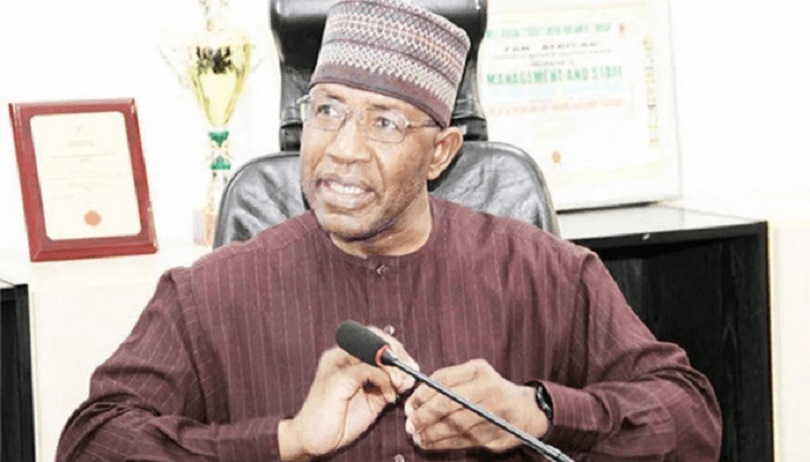
The Director-General of SEC, Mr Lamido Yuguda, said the revised edition of the Capital Market Master Plan (2021 – 2025), which was launched recently, has mapped out ways to achieve this goal.

Speaking at the opening of a three-day capacity-building workshop for local Shariah talent for non-interest capital market held at the SEC head office in Abuja on Wednesday, Mr Yuguda said this could be achieved through the listing of at least 50 Shariah-compliant products.

The DG, who was represented by the SEC’s Executive Commissioner Operations, Mr Dayo Obisan, said that the Non-Interest Capital Market (NICM) also plans to ensure 100 retail Shariah-compliant products and attract about 1 million direct investors in the ecosystem.

Mr Yuguda noted that with these new responsibilities, promoting capacity-building programmes, such as the workshop, on Shariah-compliant processes and products (Regulators and Operators) has become necessary for the NCIM.

He said the commission, in recognising the potential of the non-interest capital market for economic growth, dedicated a component in its 10-year policy to the speedy development of the market in the financial system.

Specifically, Mr Yuguda said the plan provides clear strategic objectives for the development of the market, one of which is the “encouragement of the development of stakeholders for the market” and today’s workshop is evidence of the realization of this particular objective.

The stride and significant achievements recorded by the policy, he said, are evidenced by the last ranking of Nigerian Islamic Finance in 13th place on the global Islamic Finance Development Indicator 2021, with the assets under management valued at N2.30 billion, which is higher than countries like Bangladesh and Turkey.

“As you may be aware, the major difference between conventional finance and non-interest finance is the application of Shariah principles. This simply means that a non-interest financial market cannot exist without experts in Islamic commercial jurisprudence (FiqhulMu’amalat Al-Maliyya).

“Therefore, this Workshop will help in fast-tracking the development of experts for the Market. We believe that it would be a magic lamp for developing our local Sharia talent, not only for the Nigerian capital market but for the Nigerian financial system in general.

“The level of activities in the non-interest capital market that we are currently experiencing in Nigeria affirms the overwhelming acceptance of NICM products by the country’s populace. This shows a strong appetite for other alternative forms of investments.

“Recently, the market witnessed the entrance of institutions offering non-interest capital market services/products and the oversubscription of the FGN and corporate Sukuk, further buttresses the need for this workshop to encourage the development of Shariah experts for the market.”

The DG said the workshop is aimed at exposing participants who have the potential to provide Shariah advisory services for the Islamic finance industry, particularly the non-interest capital market’s operations as it relates to Shariah principles and rulings. It is also planned to be in two levels, Level 1 and 2.

He stated that Level 1, is focused on the basic areas of financial market structure and operations of the capital market, Shariah principles and contracts relating to non-interest capital markets, as well as Shariah issues relating to the operations and businesses of the market, among others while level-2 which will address the operation of the Sukuk and equity markets.

The SEC boss said NICM has so much potential in the country by attracting an untapped investor base who appears indifferent to conventional instruments to participate in the capital market as well as the existing investors to diversify to ethical and socially responsible investments.

“We believe that developing Shariah talent through a Workshop like this is another opportunity of creating awareness for the non-interest capital market products and services, which in turn will facilitate the financial inclusion drive in the Nigerian Financial System.

“I am happy to note that the commission recently exposed registration rules to set a minimum standard for corporate or individuals seeking to provide Shariah advisory services for non-interest capital market activities. This is to encourage further and attract the attention of qualified persons and entities to engage in the Shariah advisory function for the non-interest capital market.”

Mr Yuguda expressed the confidence that the participants will benefit from the vast knowledge and experience of the facilitators, which will bring about a much-needed impact on the participants and the market in general.


Aduragbemi Omiyale is a journalist with Business Post Nigeria, who has passion for news writing. In her leisure time, she loves to read.

Advertisement
Click to comment

Leave a Reply

Your email address will not be published. Required fields are marked *

Economy

FG, States, Local Councils Share N1.969trn FAAC Allocation

Published

on

faac allocation

By Adedapo Adesanya

A total of N1.969 trillion was shared to the federal government, the 36 state governments and the 774 local government councils from the gross revenue of N2.585 trillion generated by the nation in December 2025.

The money was disbursed to the three tiers of government at the January 2026 Federation Account Allocation Committee (FAAC) meeting held in Abuja.

In a statement issued on Monday by the Director of Press and Public Relations in the Office of the Accountant-General of the Federation (OAGF), Mr Bawa Mokwa, it was stated that the FAAC allocation comprised statutory revenue of N1.084 trillion, distributable Value Added Tax (VAT) revenue of N846.507 billion, and Electronic Money Transfer Levy (EMTL) revenue of N38.110 billion.

“Total deduction for cost of collection was N104.697 billion, while total transfers, refunds, and savings were N511.585 billion,” the statement partly read.

It was also revealed that from the N1.969 trillion total distributable revenue, the federal Government received the sum of N653.500 billion, and the state governments received N706.469 billion, the local government councils received N513.272 billion, and the sum of N96.083 billion was shared with the benefiting state as 13 per cent derivation revenue.

He said of the N1.084 trillion distributable statutory revenue, the central government received N520.807 billion, the state governments got N264.160 billion, the local councils were given N203.656 billion, and N96.083 billion was shared to the benefiting states as 13 per cent derivation revenue.

FAAC noted that from the N846.507 billion distributable VAT earnings, the federal government got N126.976 billion, the state governments received N423.254 billion, and the local government councils got N296.277 billion.

From the revenue from EMTL, Mr Mokwa explained that the national government was given N5.717 billion, the state governments got N19.055 billion, and the councils collected N13.338 billion.

He added that the companies’ Income Tax (CIT)/CGT and STD, Import Duty and Value Added Tax (VAT) increased significantly in December, while oil and gas royalty, CET levies and fees increase marginally, with excise duty, Petroleum Profit Tax (PPT)/Hydrocarbon Tax (HT), and EMTL considerably down.

Continue Reading

Economy

Oil Exports to Drop as Shell Commences Maintenance on Bonga FPSO

Published

on

Bonga FPSO

By Adedapo Adesanya

Nigeria’s oil exports will drop in February following the shutdown of the Bonga Floating Production Storage and Offloading (FPSO) vessel scheduled for turnaround maintenance.

Shell Nigeria Exploration and Production Company (SNEPCo) Limited confirmed the development in a statement issued, adding that gas output will also decline during the maintenance period.

This comes as SNEPCo begun turnaround maintenance on the Bonga FPSO, the statement signed by its Communications Manager, Mrs Gladys Afam-Anadu, said, describing the exercise as a statutory integrity assurance programme designed to extend the facility’s operational lifespan.

SNEPCo Managing Director, Mr Ronald Adams, said the maintenance would ensure safe, efficient operations for another 15 years.

“The scheduled maintenance is designed to reduce unplanned deferments and strengthen the asset’s overall resilience.

“We expect to resume operations in March following completion of the turnaround,” he said.

Mr Adams said the scope included inspections, certification, regulatory checks, integrity upgrades, engineering modifications and subsea assurance activities.

“The FPSO, about 120 kilometres offshore in over 1,000 metres of water, can produce 225,000 barrels of oil daily.

“It also produces 150 million standard cubic feet of gas per day,” he said.

He said maintaining the facility was critical to Nigeria’s production stability, energy security and revenue objectives.

Mr Adams noted that the 2024 Final Investment Decision on Bonga North increased the importance of the FPSO’s reliability. He said the turnaround would prepare the facility for additional volumes from the Bonga North subsea tie-back project.

According to him, the last turnaround maintenance was conducted in October 2022.

“On February 1, 2023, the asset produced its one billionth barrel since operations began in 2005,” Mr Adams said.

SNEPCo operates the Bonga field in partnership with Esso Exploration and Production Nigeria (Deepwater) Limited and Nigerian Agip Exploration Limited, under a Production Sharing Contract with the Nigerian National Petroleum Company (NNPC) Limited.

The last turnaround maintenance activity on the FPSO took place in October 2022. On February 1, the following year, the asset delivered its 1 billionth barrel of oil since production commenced in 2005.

Continue Reading

Economy

Nigeria Earns N1.17trn from Petroleum Sector in November 2025

Published

on

Petroleum Sector

By Adedapo Adesanya

Nigeria earned N1.17 trillion from the oil and gas industry in November 2025, lower than the N1.396 trillion generated in October 2025 by 16.2 per cent, according to data presented to the Federation Account Allocation Committee (FAAC) by the Central Bank of Nigeria (CBN).

The CBN, in the latest data available, noted that the N1.17 trillion earnings from the petroleum industry in November 2025 represented 96.4 per cent of the N1.214 trillion revenue budgeted for the sector for the month under review.

In comparison, revenue from the petroleum industry in October 2025 represented 94.71 per cent of the N1.474 trillion budgeted for the sector in the month.

In its breakdown of revenue from the oil and gas industry in November 2025, the central bank stated that the country earned N37.134 billion from crude oil sales, climbing by 395.58 per cent from N7.493 trillion recorded in the previous month; while revenue from gas sales appreciated by 25.22 per cent to N7.265 billion in November, compared with N5.802 billion recorded in October 2025.

Furthermore, the CBN noted that revenue from crude oil royalties dipped by 25.6 per cent, from N790.086 billion in October 2025 to N587.865 billion in November; while miscellaneous oil revenue more than doubled to N1.356 billion, from N447.279 million in October 2025.

Also, it stated that royalties from gas dipped by 38.1 per cent to N9.405 billion in November, from N15.195 billion in October, while the country earned N51.842 billion from gas flare penalties in November 2025, down from N61.898 billion recorded in the previous month.

The apex bank added that revenue from companies’ income tax (CIT) from upstream oil industry operations stood at N106.106 billion in the month under review, as against N73.025 billion in October 2025.

It also stated that revenue from Petroleum Profit Tax (PPT) stood at N301.471 billion; rentals – N775.162 million; while taxes stood at N67.242 billion in November 2025; as against N242.621 billion, N3.197 billion, and N196.277 billion in October 2025.

In addition, the apex bank reported that from the country’s oil earnings in November 2025, N18.163 billion was deducted for 13 per cent refund on subsidy, priority projects and Police Trust Fund from 1999 to 2021; while N2.872 billion was deducted by the Nigerian National Petroleum Company (NNPC) Limited in respect of its 13 per cent management fee and frontier exploration fund.

It added that N26.401 billion was deducted and collected by the Nigerian Upstream Petroleum Regulatory Commission (NUPRC) in October 2025, being four per cent cost of collection; while N49.768 billion was transferred to the Midstream and Downstream Gas Infrastructure Fund from gas flare penalties in the same month.

Continue Reading

Trending