Connect with us

Economy

House of Reps Tells CBN to Suspend New Cash Withdrawal Limits

Published

on

By Modupe Gbadeyanka

The Governor of the Central Bank of Nigeria (CBN), Mr Godwin Emefiele, has been told to immediately suspend the new limits placed on the withdrawal of cash from over-the-counter (OTC), Automated Teller Machines (ATMs) and Point of Sales (POS).

On Tuesday, the central bank said from January 9, 2023, any cash withdrawal above N100,000 for individuals would attract a 5 per cent processing fee and a 10 per cent processing fee for withdrawals of more than N500,000 for corporate organisations.

This policy is already generating mixed reactions, with POS operators saying it would push them into the unemployment market because of the loss of jobs and the Nigeria Employers’ Consultative Association (NECA) saying stakeholders were not “extensively consulted” by the CBN before its announcement.

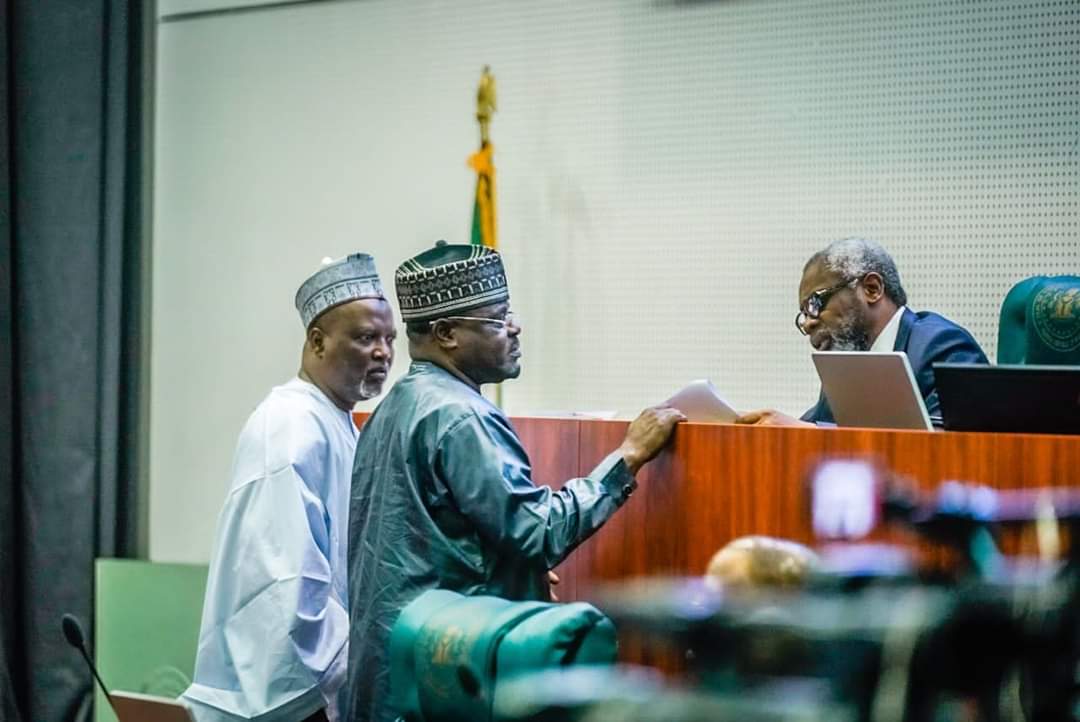
At the plenary on Thursday, a lawmaker, Mr Aliyu Magaji, who moved a motion of urgent public importance, warned that the new policy could spell doom for the economy as several people would lose their jobs, while traders, artisans and rural dwellers would suffer because of the cash limits.

His colleagues agreed with him and criticised the apex bank for the policy.

Though the Minority Leader, Mr Ndudi Elumelu, pointed out that the new cash withdrawal limits would check crimes as funds would now be tracked through the banking system, he emphasised that the timing was wrong.

The other legislators echoed this opinion and added that it would have serious consequences and adverse effects on businesses and Nigerians who have no access to the banking system.

As a result, they asked Mr Emefiele to roll back the policy, summoning him to appear before them on Thursday, December 15, 2022, to explain the policy and why it should not be rejected.

Incidentally, the day he is to appear next week is the same day the CBN plans to officially introduce the newly redesigned N200, N500, and N1,000 banknotes into circulation.

The Naira was redesigned by the apex bank to control the volume of cash in the financial system after it was discovered that more than 80 per cent of cash in circulation was not in the banks’ vaults.


Modupe Gbadeyanka is a fast-rising journalist with Business Post Nigeria. Her passion for journalism is amazing. She is willing to learn more with a view to becoming one of the best pen-pushers in Nigeria. Her role models are the duo of CNN's Richard Quest and Christiane Amanpour.

Economy

CPPE Warns Against Rising Push for Petrol Importation

Published

on

CPPE Muda Yusuf Customs Duty Exchange Rate

By Adedapo Adesanya

The Centre for the Promotion of Private Enterprise (CPPE) has warned that Nigeria must not forgo its commitment to boosting domestic refining capacity amid growing advocacy for the importation of petroleum products.

In a statement, the centre explained that Nigeria must, therefore, avoid drifting into a policy regime that undermines domestic production in the name of competition or liberalisation.

The Chief Executive Officer (CEO) of the think tank, Mr Muda Yusuf, in a press release, warned that Nigeria is signalling to investors what happens if a multi-billion-dollar Dangote refinery investment of continental significance is confronted with regulatory uncertainty and policy headwinds.

The development comes as the management of the refinery has approached the court to battle against regulators, including the Nigerian National Petroleum Company (NNPC) and the Nigerian Midstream and Downstream Petroleum Regulatory Authority (NMDPRA), over their decision to allow importation.

The dispute stems from a lawsuit filed by Dangote Refinery against the Attorney-General of the Federation, Mr Lateef Fagbemi, over fuel import licences granted to six marketers and the state oil company. The case has since widened the debate around local refining, market competition and the future direction of Nigeria’s downstream petroleum industry.

According to the centre, the increased call speaks to the very architecture of Nigeria’s economic philosophy, the future of industrialisation, the resilience of the macroeconomy and, ultimately, the preservation of the country’s economic sovereignty.

“No nation has ever imported its way to industrial greatness. Prosperous economies are built on production, refining, manufacturing, value addition and the strengthening of domestic productive capacity.

“Countries that become excessively dependent on imports inevitably export jobs, weaken domestic industries, erode local investments and mortgage their economic sovereignty.

“Nigeria must therefore avoid drifting into a policy regime that undermines domestic production in the name of competition or liberalisation,“ Mr Yusuf noted.

Continue Reading

Economy

Airtel Africa Moves to Return Cash to Shareholders With $110m Buyback

Published

on

airtel africa

By Adedapo Adesanya

Airtel Africa has launched a share buyback programme worth up to $110 million, signalling confidence in its strong balance sheet and financial flexibility as the telco seeks to return value to shareholders.

The company disclosed in a notice filed on the portal of the Nigerian Exchange (NGX) Limited that the programme would involve the repurchase of up to 1 per cent of its issued share capital as part of its capital allocation policy.

The telco further stated that all shares repurchased under the programme would be cancelled as the sole purpose of the exercise is to reduce the company’s capital base.

“The sole purpose of the buyback programme is to reduce the capital of the company. As such, all shares purchased under the buyback programme will be cancelled,” the notice stated.

According to the organisation, the initiative reflects the board’s confidence in the group’s financial position and its ability to continue investing across its African operations while rewarding shareholders.

“The board’s decision reflects the continued strength of the Group’s balance sheet and its ability to preserve financial flexibility while supporting ongoing investment to capitalise on the compelling growth outlook across the Group’s footprint,” the notice stated.

Airtel Africa said it had entered into an agreement with Barclays Capital Securities Limited to execute the programme through on-market purchases of its ordinary shares, which would subsequently be acquired by the company. The agreement, according to the notice, consists of two parallel elements.

Under the non-discretionary arrangement, Barclays will independently purchase between $50 million and $60 million worth of ordinary shares without influence from the company.

The second component is a discretionary arrangement under which Airtel Africa may instruct Barclays to purchase up to an additional $50 million worth of shares, subject to the provisions of the Market Abuse Regulation.

The programme commenced on May 22, 2026, and is expected to run until no later than November 27, 2026, unless terminated earlier in line with the terms of the agreement.

Airtel Africa said further tranches of the programme could be announced later to enable it fulfil its objective of repurchasing up to one per cent of its issued share capital as at the date of the announcement.

The telecommunications company also explained that the purchases would be carried out in line with shareholder approvals, UK listing regulations and market abuse rules. It noted that shareholders had earlier granted the company authority at its annual general meeting held on July 9, 2025, to repurchase a maximum of 366.07 million ordinary shares.

Following the completion of an earlier buyback programme, Airtel Africa said the remaining authority available for repurchases currently stands at 357.04 million ordinary shares.

The company further disclosed that Barclays may continue executing the discretionary portion of the buyback autonomously during closed periods under irrevocable and non-discretionary instructions permitted by regulation.

The new buyback announcement comes weeks after Airtel Africa reported strong financial and operational performance for the year ended March 31, 2026 (Q1), supported by growth in data usage, mobile money services and improved profitability across its markets.

According to its audited financial statement, the group recorded a 29.5 per cent increase in revenue to $6.42 billion from $4.96 billion in the previous year, while profit after tax (PAT) rose by 147.4 per cent to $813 million from $328 million.

Continue Reading

Economy

Court Battle: Tension Brews as NNPC Accuses Dangote of Monopoly

Published

on

Dangote NNPC Bayo Ojulari

By Adedapo Adesanya

* NNPC rejects Dangote’s argument, cites risks

* NMDPRA joins suit

The Nigerian National Petroleum Company (NNPC) has accused Dangote Petroleum Refinery of seeking to restrict competition and expose the country’s fuel market to monopoly control.

This came after the management of the 650,00/ barrels per day refinery challenged import licences issued to rival marketers in court by suing the federal government.

In a proposed defence filed at the Federal High Court in Lagos, NNPC said granting Dangote’s request to void or restrict import permits would expose ⁠Africa’s largest oil producer to supply disruptions, price instability and risks to national energy security.

The regulator, the Nigerian Midstream and Downstream Petroleum Regulatory Authority (NMDPRA), has applied to join the case, widening a legal battle over import policy and Dangote refinery’s market position.

Dangote said in the filing that the licences issued to marketers, including NIPCO, AA Rano, Matrix, Shafa, Pinnacle, and Bono, undermined its operations and contravene the provisions of Nigeria’s Petroleum Industry Act, which it argues allows imports only when domestic supply falls short.

Named in the suit against the country is the Attorney General and Minister of Justice, Mr Lateef Fagbemi. The federal government can only be sued via his office.

The state-owned oil company rejected the argument, saying the law allows import licences to companies with local refining licences or proven records in international crude and petroleum-product trading.

It said regulators had ⁠discretion to manage imports under Nigeria’s backwards-integration policy and that there was no mandatory ban on imports except in cases of domestic shortfall.

NNPC also said Dangote had not provided “credible, independent or verifiable evidence” that the refinery ⁠could meet Nigeria’s total fuel demand or guarantee uninterrupted nationwide supply, the court documents show.

The company denied allegations that it had sabotaged Dangote’s refinery ⁠or deliberately withheld crude, saying crude allocations depended on operational, commercial, security and logistical factors.

The court has scheduled a hearing in the coming weeks.

Fuel marketers under Depot and Petroleum Products Marketers Association of Nigeria (DAPPMAN) have also opposed Dangote’s suit, warning it could hurt competition and supply security.

The dispute comes months before Dangote’s planned September IPO of its refinery business, adding uncertainty over market rules, import competition and the revenue outlook investors may assign to the 650,000-barrel-per-day plant.

Continue Reading

Trending