Connect with us

Economy

Nigeria Improves Crude Oil Production to 1.186mbpd

Published

on

crude oil production

By Adedapo Adesanya

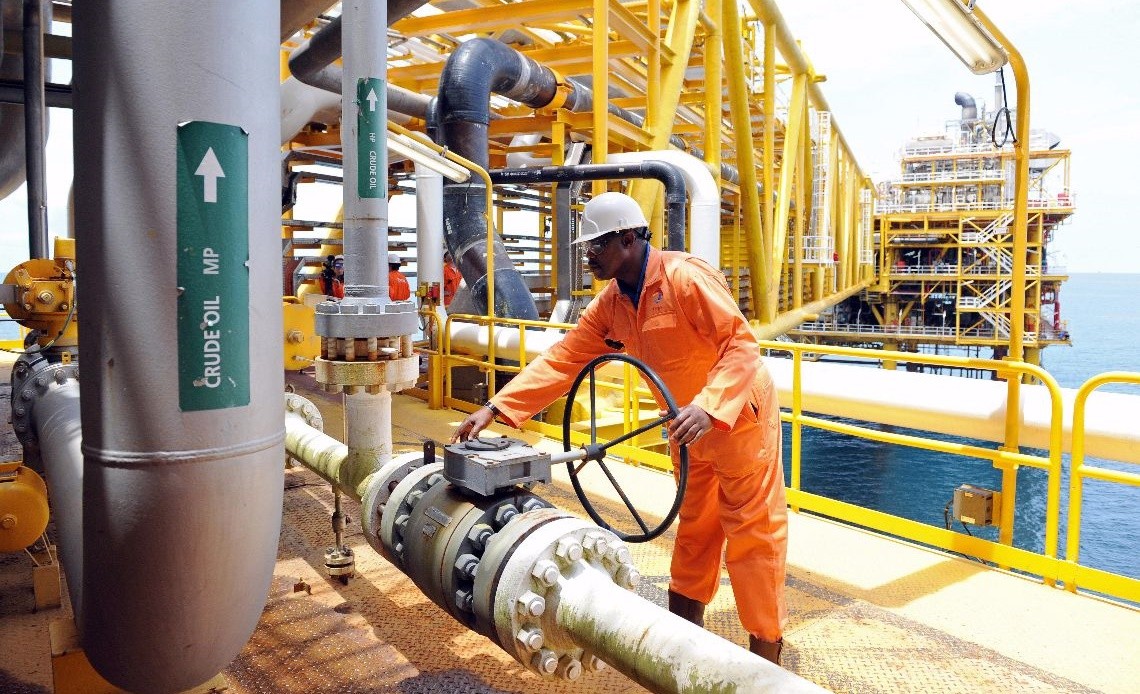
The Organisation of Petroleum Exporting Countries (OPEC) has confirmed that Nigeria increased its crude oil production by 171,000 barrels per day in November to 1.186mbpd, though about 700,000 barrels per day less than its quota for the month.

The oil cartel disclosed this in its Monthly Oil Market Report (MOMR) for December, noting that considering direct oil production report from the country, Nigeria’s output increased by about 171,000 barrels per day last month to hit 1.186 million barrels per day.

The figure, the OPEC report indicated, was far less than Nigeria’s given 1.8 million barrels per day. This means that Nigeria is still producing below the 1.493 million barrels per day in 2020 and 2021 when it averaged 1.323 million barrels per day.

Nigeria’s production began to slump heavily in the first quarter of 2022, the report stated, when Nigeria drilled 1.3 million barrels per day on average. It further reduced to 1.133 million barrels in the second quarter and fell substantially to 999,000 barrels per day in quarter three of this year.

Nigeria has blamed oil theft and pipeline vandalism for its inability to meet its production allocation for about a year.

In terms of the general outlook, OPEC stated that Nigeria’s economy expanded by 2.3 per cent year-on-year in the third quarter of 2022, decelerating from the growth of 3.5 per cent year-on-year in Q2 2022.

The report explained that this marked the eighth consecutive quarter of growth, yet the slowest rate since the first quarter of 2021.

Moreover, it noted that economic conditions were challenged by the factors such as natural disasters that have hampered productivity in the country. Nigeria recently experienced massive flooding in at least one-third of its states.

Stating that the non-oil sector has been the key growth engine, OPEC stressed that this expanded at a slower pace of 4.3 per cent year-on-year in the third quarter compared with 4.8 per cent in 2Q22.

“The inflation rate accelerated to its highest level in 17 years in October as localised food and fuel shortages increased the headline inflation rate to 21.1 per cent y-o-y from 20.8 per cent y-o-y in September,” it added.

According to the report, OPEC oil production in November decreased by 744,000 barrels per day compared to October, which was 28.83 million barrels per day, with the members of the organisation fulfilling the oil agreement by 174 per cent.

“According to secondary sources, total OPEC-13 crude oil production averaged 28.83 million bpd in November 2022, lower by 744 bpd m-o-m.

“Crude oil output increased mainly in Nigeria and Angola, while production in Saudi Arabia, the UAE, Kuwait and Iraq declined,” the report said.

In the same vein, out of 13 OPEC countries which have obligations to limit production under the OPEC+ deal and were supposed to reduce oil production by 1.273 million barrels per day from the level of August, the total production reduction in November was 2.211 million barrels per day.


Adedapo Adesanya is a journalist, polymath, and connoisseur of everything art. When he is not writing, he has his nose buried in one of the many books or articles he has bookmarked or simply listening to good music with a bottle of beer or wine. He supports the greatest club in the world, Manchester United F.C.

Economy

Brent, WTI Slump 4% as US-Iran Tensions Cool

Published

on

Brent Price

By Adedapo Adesanya

The two major crude oil grades in the global market fell by more than 4 per cent per barrel on Monday after the most recent tensions between the United States and Iran appeared to have eased.

Brent crude futures went down by $3.02 or 4.4 per cent to settle at $66.30 per barrel, while the US West Texas Intermediate (WTI) crude futures declined by $3.07 or 4.7 per cent to $62.14 per barrel.

Last week, markets reacted to the renewed tension in the world’s most important oil-producing and exporting region, and oil prices soared.

However, this weekend, US President Donald Trump said that he believes Iran is “seriously” talking with the US, adding he hopes that negotiations could lead to an “acceptable” deal with the member of the Organisation of the Petroleum Exporting Countries (OPEC).

Market analysts noted that with the US President facing weak poll numbers, a military escalation that risks pushing petrol prices sharply higher appears unlikely ahead of the November midterm elections.

Prices were also pressured by a stronger US Dollar and milder weather forecasts. The American currency strengthened as currency traders cheered President Trump’s nomination of Kevin Warsh as the next Federal Reserve chair. A stronger Dollar makes oil more expensive for investors using other currencies.

US futures prices for diesel, used in heating and power generation, fell more than 6 per cent triggered by forecasts of milder weather in the US, the world’s largest oil consumer.

OPEC+ agreed to keep its oil output unchanged for March at a meeting, the producer group said on Sunday. The brief meeting reaffirmed that decision for March, after earlier gatherings did the same for January and February.

The eight producers – Saudi Arabia, Russia, the United Arab Emirates, Kazakhstan, Kuwait, Iraq, Algeria and Oman – raised production quotas by about 2.9 million barrels per day from April through December 2025, roughly 3 per cent of global demand.

In November, the group froze further planned increases for January through March 2026 because of seasonally weaker consumption.

Four OPEC+ producers that have been pumping crude above their respective quotas have filed with the OPEC Secretariat updated compensation plans through June 2026, OPEC said on Monday.

The countries: Iraq, the UAE, Kazakhstan, and Oman filed updated plans to compensate for pumping above OPEC+ quotas through June 2026.

Continue Reading

Economy

Presco, GTCO List Additional Shares on Stock Exchange

Published

on

Nigeria's stock exchange

By Aduragbemi Omiyale

The duo of Presco Plc and Guaranty Trust Holding Company (GTCO) Plc has listed additional shares on the Nigerian Exchange (NGX) Limited.

The extra equities of these two publicly-listed organisations were admitted to the local stock exchange last Friday, increasing their respective total issued and fully paid-up shares.

For Presco, it listed fresh 166,666,667 ordinary shares of 50 Kobo each on the daily official list of the NGX on Friday, January 30, 2026, increasing its total issued and fully paid-up stocks from 1,000,000,000 units to 1,166,666,667 units.

The additional equities were from the rights issue of the firm allotted to shareholders on the basis of one new share for every existing six ordinary shares held as at close of business on Monday, October 13, 2025.

In a circular issued over the weekend, the NGX said, “Trading licence holders are hereby notified that additional 166,666,667 ordinary shares of 50 Kobo each of Presco Plc were on Friday, January 30, 2026, listed on the daily official list of Nigerian Exchange (NGX) Limited (NGX).

“The additional shares arose from the company’s rights issue of 166,666,667 ordinary shares of 50 Kobo each at N1,420.00 per share on the basis of one new share for every existing six ordinary shares held as at close of business on Monday, October 13, 2025.

“With the listing of the additional 166,666,667 ordinary shares, the total issued and fully paid-up shares of Presco Plc has now increased from 1,000,000,000 to 1,166,666,667 ordinary shares of 50 Kobo each.”

As for GTCO, it listed additional125,000,000 ordinary shares of 50 Kobo each at N80.00 per unit offered through private placement.

The fresh equities taken to Customs Street have raised the total issued and fully paid-up shares of GTCO from 36,425,229,514 to 36,550,229,514 ordinary shares of 50 Kobo each.

Continue Reading

Economy

FG, States, Local Councils Share N1.969trn FAAC Allocation

Published

on

faac allocation

By Adedapo Adesanya

A total of N1.969 trillion was shared to the federal government, the 36 state governments and the 774 local government councils from the gross revenue of N2.585 trillion generated by the nation in December 2025.

The money was disbursed to the three tiers of government at the January 2026 Federation Account Allocation Committee (FAAC) meeting held in Abuja.

In a statement issued on Monday by the Director of Press and Public Relations in the Office of the Accountant-General of the Federation (OAGF), Mr Bawa Mokwa, it was stated that the FAAC allocation comprised statutory revenue of N1.084 trillion, distributable Value Added Tax (VAT) revenue of N846.507 billion, and Electronic Money Transfer Levy (EMTL) revenue of N38.110 billion.

“Total deduction for cost of collection was N104.697 billion, while total transfers, refunds, and savings were N511.585 billion,” the statement partly read.

It was also revealed that from the N1.969 trillion total distributable revenue, the federal Government received the sum of N653.500 billion, and the state governments received N706.469 billion, the local government councils received N513.272 billion, and the sum of N96.083 billion was shared with the benefiting state as 13 per cent derivation revenue.

He said of the N1.084 trillion distributable statutory revenue, the central government received N520.807 billion, the state governments got N264.160 billion, the local councils were given N203.656 billion, and N96.083 billion was shared to the benefiting states as 13 per cent derivation revenue.

FAAC noted that from the N846.507 billion distributable VAT earnings, the federal government got N126.976 billion, the state governments received N423.254 billion, and the local government councils got N296.277 billion.

From the revenue from EMTL, Mr Mokwa explained that the national government was given N5.717 billion, the state governments got N19.055 billion, and the councils collected N13.338 billion.

He added that the companies’ Income Tax (CIT)/CGT and STD, Import Duty and Value Added Tax (VAT) increased significantly in December, while oil and gas royalty, CET levies and fees increase marginally, with excise duty, Petroleum Profit Tax (PPT)/Hydrocarbon Tax (HT), and EMTL considerably down.

Continue Reading

Trending