

Feature/OPED
2023, Nigeria’s year of Ghen-Ghen

By Prince Charles Dickson PhD
Someone who has sold an old woman before knows the price of an old man
Yes, like Prophet Jeroboam, of Wole Soyinka’s famed Jero Plays, I danced with eyes closed and spoke in tongues not known to me and asked the higher powers what was in store for Nigeria; the clouds I saw were misty; it was moving like this and like that and ghen-ghen.
I saw that Nigeria would not break; Nigeria will not fail or fall because it already has. We are not united, but we are one in corruption, one in greed, one in maladministration and misgovernance. And very well united in our religious and ethnic brinksmanship.
The year 2022 was a long year, a year that a lot of us want to forget for so many reasons, and others would not forget for obvious reasons. But either way, what more can we do than be happy that we were finally able to navigate it somehow? There are a lot of reasons to be optimistic this year as well as a lot to be pessimistic about; a lot of us will be watching with an eagle eye as events unfold towards the general elections; on the international scene, the drama will certainly continue from where it stopped last year.
This essay would be a thrust of all I expect would be confronting us this year as a nation and as a people; it would be a confabulation of issues that, if tackled, can take us closer to the promised land and, if neglected, as usual, will only be ingredients for disaster and a continued slide towards doom. And the signs show that the latter is inevitable!
From the beginning of this year, we will be battling against poverty, of the mind, of pocket and sensibilities; despite seven years of reforms by the outgoing Buhari administration, we will still remain one of the poorest in the globe, despite our natural and human resources, due to human mismanagement we would be battling to sustain meaningful development, and growth that is equal to the expectations of our people.
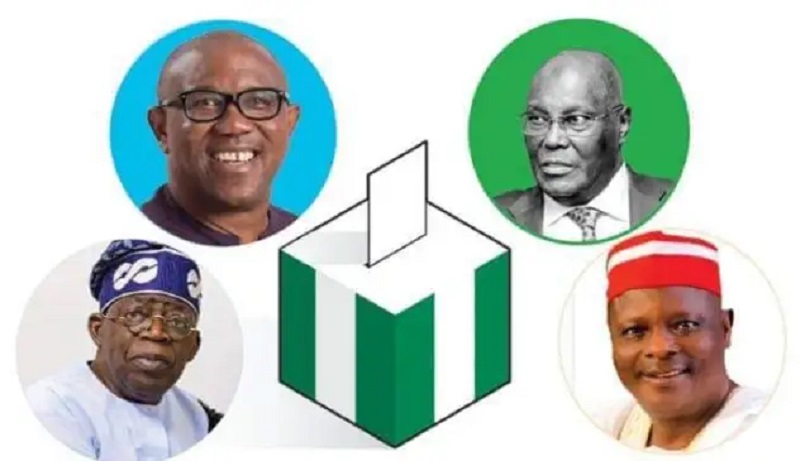
With the emergence of the Obis, Tinubus, Atikus and co., again though subtly, we will still be concerned about tribal sentiments, ethnicity, and religion and thus, to a large extent, none of or few of us are thinking nor discussing meritocracy. Around these three evils and many more, we are likely to be subjected to more political irresponsibility, rascality and political arithmetic that further alienates the rulers from the ruled.
We shall again be fighting against negative statistics of reality; we still are likely to remain one of the poorest; the statistics would be against us, whether corruption or malaria, but we will still remain and continue to feature amongst nations with the worst badly run economies, a lot of ghen-ghen (events of crazy proportion) would occur.
We are insecure as a people, we are once more going to be constantly dependent on others after 63 years of paper independence; despite all that really and imagined rice pyramid, the rice we eat would still come from Thailand, any land but not our land, our drugs both fake and original, we have India, Germany and co. to thank for them.
This year, will we be able to make sense of our economic policies, both micro and macro, with currencies that bleach when washed mistakenly in a jean, while we say alhamdulillah for Innoson Motors, our cars, computers, clothing, ballpoint pens, all from obodo oyinbo. Will we shed off the skin of a nation that is full of contradictions, a nation of millions of school leavers without jobs, a nation of millions sick with curable diseases and ailments, a nation yet blessed with fertile land, with intelligent men and women in abundance? But being punished by a handful of crooks called leaders, being ruled by mediocres. A nation where amidst this poverty, a man would steal billions.
The issues that stop us from attaining nationhood again would include the fact that we are all hypocrites, constantly waiting for any opportunity to better Judas Iscariot in the act of betrayal, go ask Wike, Atiku and Co. Topmost is, we shall again see leaders who grew up in Oshodi, schooled in Oshodi, lived there all their lives and get elected to serve Oshodi, and the first thing on their card would be a familiarization tour of Oshodi. Our Leaders would still be exploring all means and any means necessary to steal from us.
With looting, corruption and insincerity, the ball again would be played on the pitch of underdevelopment and to think otherwise would be deceitful. In a world experiencing a time and season of global recession, our cry would still be trying to catch the Asian Tigers, even West African puppies have gone too far for comfort. Our life expectancy would likely drop further, even as more roads are likely to be unmotorable. We shall lose more kids at birth due to a lack of infrastructure while leaders and the affluent treat their stomach disorders in Paris.
More children would fail their qualifying exams, especially with all the strikes of the preceding year. With less than 50 cents a day, only the Almighty and our perseverance can keep us going.
We shall suffer the rule of idiots because sages are kept in the dustbin, maybe we will have exceptions here and there, Insha Allah, but again, it is going to be like it was; while Tafawa Balewa wanted to be a broadcaster, the powers that be thought otherwise, Yakubu Gowon was not intellectually, psychologically, temperamentally, ready but the oligarchy said it must be him. Then we had an all-knowing OBJ in his first coming who was forced on us by Danjuma, Shehu Yaradua and co.
In Shagari, it was no different, as the man that wanted just to be a Senator, a man that was not even at the Row Park venue of the NPN primaries, emerged as the winner without his consent; he was not even aware that his name was on the ballot. In 1998 fresh from prison, the Baba of Aso Rock had asked, “how many Presidents did Nigeria want to make of him” but we did not listen. We witnessed a crying Mr Buhari, who says he cannot wait to leave; he has done his best whether it is good enough will be debated because, after all, the shoeless one before him from Otueke is revered now.
The Emilokans, Unifiers, and Obidients, men who crave it, with the exception of one. These are the specs that we have to navigate this new year. INEC would be in the eye of the storm, as well as the Police, the ruling APC, PDP, the G5, EFCC, and many ruffians that the government has created.
Things could be better; Nigeria can be great if only these institutions, if men and women of goodwill, can take the bull; if only you and I can make a concerted effort at being right in our own little way and fight in our own small corner.
The nation must emerge, or else we are wasting time again, we must fight for liberation from tribal loyalties, ethnic jingoism, religious parapoism, monetary godfatherism and many more. We will have to move a ladder up from hope and expectation to reality.
In this New Year, we have to move towards Nigeria, with Nigerians, we either continue the self-deceit and watch the nation crumble like cookies. As I welcome us into this new year, let me say that this is our nation, we are the only ones that can stop the drift; people that claim to love us are few, and many nations are watching and waiting. Let us remember that we cannot continue to massage the ringworm and leave the sore. Almighty Allah, we as a people thank You for a New Year and ask for the best, but are we working towards it—Time will tell.


Feature/OPED
What Does Nigeria’s $51bn Reserves Milestone Mean if Most New Foreign Money Can Leave Quickly?
Nigeria’s foreign reserves have climbed to about $51 billion, a decade-plus high, according to the Central Bank of Nigeria (CBN). EBC Financial Group (EBC) notes that this reflects stronger investor confidence, but the second half may show whether it holds, as the build rests on three cyclical drivers: oil earnings, short-term foreign money and a narrowing official-to-street naira gap.
Reserves rose from about $32 billion in April 2024, during a dollar shortage, to about $51 billion now, near the CBN’s target. Much came from two cyclical sources, strong oil earnings and money chasing high-yielding naira assets, so EBC expects the pace to slow or reverse. Fitch Ratings, a major international credit rating agency, expects a marginal decline to about $47 billion by the end of 2026, citing higher spending and external pressures.
David Precious, Senior Market Analyst at EBC Financial Group, said, “Nigeria’s reserve build is real but may not be durable yet, because nearly all of the new money is the kind that can leave quickly. Of the $10.37 billion that came in over the first quarter, the overwhelming majority was short-term portfolio funds rather than long-term investment, so a shift in oil prices, global interest rates or confidence in the naira might pull a large part of it straight back out.”
Most New Money Can Still Leave Quickly
The composition of the foreign inflows explains the caution over how long the build can last. The country attracted $10.37 billion in foreign investment in the first quarter of 2026, up 83.83 per cent year-on-year, according to the National Bureau of Statistics (NBS). Of that, $9.86 billion or 95.09 per cent, was portfolio money, largely short-term naira debt such as Treasury bills that investors can sell at the next auction, while foreign direct investment, the long-term kind that builds factories and jobs, was $135.08 million, or 1.30 per cent. Put simply, of each dollar coming in, about 95 cents can leave quickly, and barely one cent stays.
That money supports reserves while it stays. Dollars brought in to buy naira assets add to market supply, letting the CBN hold more reserves and steady the naira. It leaves when conditions change. Nigeria earns most of its export dollars from oil and gas, so lower oil prices mean fewer dollars, and as a member of the Organisation of the Petroleum Exporting Countries (OPEC), it cannot simply produce more, output capped by quota and reduced by theft and ageing fields. Higher global interest rates draw money toward safer returns abroad, and a weakening naira prompts investors to sell early. When oil fell in 2016 and 2020, foreign investors withdrew and could not convert naira to dollars as supply dried up, leaving the CBN to clear more than $7 billion in trapped obligations into 2024.
The Oil Boost is No Longer Certain
Oil looked like a dependable source of the dollars behind the reserves only months ago. Earlier in 2026, concern over disruption around the Strait of Hormuz lifted crude prices, and stronger receipts flowed in, with crude oil export earnings of $8.11 billion in the first quarter in the CBN’s balance-of-payments data. That support is now easing. The tension has subsided, and Brent traded near $72 on June 29, down about 24 per cent over the month, back to pre-conflict levels. With the price boost gone and output constrained, reserves are more exposed, leaning on non-oil earnings and investor patience rather than oil.
The Naira Still Trades at Two Prices
The naira has traded at two prices, an official rate and a higher parallel-market rate, and closing that gap into one trusted price is what many investors might watch most. Before committing funds, they may want assurance they can convert naira to dollars at a fair rate when they exit, and a wide gap revives the fear of being trapped that lingers from earlier shortages. The gap has narrowed to roughly N20 to N30, with the CBN’s official rate near N1,380 per dollar on June 26 against parallel-market quotes around N1,400. The International Monetary Fund (IMF) 2026 Article IV review urged Nigeria to depend less on this fast-moving portfolio money and to keep phasing out its multiple exchange-rate practices. The CBN’s Foreign Exchange Manual, in force from 1 June, is intended to make the market clearer, though such rules build confidence only once investors can freely trade dollars at the posted rate.
What could Make the Build Durable
A few signs that may show the build turning durable include a smaller gap between the official and street naira rates, more long-term foreign investment, and steadier oil earnings. A gap that stays small, now roughly N20 to N30, may mean investors trust the official rate and no longer need the street market. A clear rise in foreign direct investment, only $135 million last quarter against $9.86 billion of short-term money, might mean lasting capital is replacing funds that can leave at the next auction. Oil earnings that hold up, rather than sliding from the low $70s, should help keep reserves steady, since oil and gas bring in most of Nigeria’s export dollars.
“Reserves built on money chasing high yields can fall as fast as they rose, as they did after the last two oil shocks, when investors left, and the CBN spent years clearing a foreign-exchange backlog,” Precious added. “What holds through a downturn is slower money, direct investment, steady oil and non-oil export earnings and one credible naira rate, and that is the shift Nigeria has yet to make.”

By Olajumoke Bello
Across Nigeria, small and medium enterprises remain the backbone of economic activity. They drive trade, create jobs, and sustain millions of livelihoods. Yet, despite their importance, many SMEs continue to operate below their full potential due to persistent structural challenges.
Access to finance remains one of the most cited constraints. However, the issue today goes beyond the availability of capital. Many businesses struggle with financial readiness, weak documentation, and limited understanding of what lenders require. This often leads to missed opportunities, even when funding options exist.
At the same time, SMEs face gaps in market access and visibility. Business owners operate in highly localised environments, with limited exposure to broader networks that can unlock partnerships, new markets, and growth opportunities. This isolation can constrain scalability and reduce long-term competitiveness.
Equally important is the capability gap. Many entrepreneurs grow through resilience and experience but lack structured knowledge on critical areas such as financial management, export readiness, and digital adoption. Without this, even well-capitalised businesses can struggle to sustain growth.
These challenges point to a clear need for a more practical and integrated approach to SME support. It is no longer sufficient to offer standalone solutions. SMEs require ecosystems that combine knowledge, access, and direct engagement in ways that reflect how they actually operate.
A key shift is the move from centralised interventions to localised engagement. SMEs are deeply influenced by their immediate environments, whether markets, industrial clusters, or trade corridors. Solutions must therefore be brought closer to where these businesses function, allowing for more relevant support and stronger relationships.
Another important shift is from awareness to action. Business owners do not only need information; they need insights that they can apply immediately. This includes understanding how to structure their finances, how to access trade opportunities, and how to connect with the right partners to scale their operations.
There is also a growing need for continuity. Many SME-focused initiatives deliver strong initial impact but lack follow-through. For support to be effective, it must extend beyond one-off engagements into sustained relationships, with clear pathways for onboarding, advisory, and growth.
For financial institutions, this presents both responsibility and an opportunity. Supporting SMEs now requires moving beyond transactional banking to deeper partnership models. It requires understanding businesses at a granular level and co-creating solutions that evolve with their needs.
At Stanbic IBTC, this perspective continues to shape our approach to SME development. Our focus is on delivering practical support that translates into real business outcomes, helping enterprises grow, compete, and contribute more meaningfully to the economy.
As part of this commitment, we are extending our SME engagement to the regions through the Nigeria Business Summit Regional Tour. The tour will take structured, on-ground activations into key commercial hubs, where SMEs can access funding guidance, trade insights, advisory support, and direct engagement with financial experts.
The regional tour will take place across five strategic locations, bringing these solutions closer to business owners in Aba, Onitsha, Ibadan and Kano.
This approach reflects an important principle. When support moves closer to businesses and when solutions are delivered in ways that are practical and continuous, SMEs are better positioned to grow sustainably. In turn, this strengthens not only individual enterprises but the broader economy.
Olajumoke Bello is the Head of Enterprise Banking at Stanbic IBTC Bank
By Winston Osuchukwu
The average Nigerian borrower is widely considered high-risk – a claim repeated in credit committees, priced into retail loans, and largely treated as settled fact. Every credit market accepts that an individual loan may not be repaid; this is ordinary, priced risk. The high-risk claim, however, is applied to whole segments – the informal trader, the gig economy earner whose income is steady but split across several accounts, the remote worker paid by an overseas client into a fintech FX wallet. What the assessment establishes is not whether they are likely to repay, but how they fit into an arbitrary segment. Having spent years building decisioning systems for this market, my thesis is a specific one: “high-risk” does not mean “no credit” – it simply requires that the lender embrace alternative datasets to price the risk appropriately.
This is not a criticism of the institutions that built their frameworks around collateral and documentation; those were rational responses to the tools available at the time. When data is scarce, prudence means defaulting to the status quo. The limitation is not that this approach is wrong, but that it leaves a blind spot – excluding fundamentally sound borrowers whose economic lives simply are not captured on the bank’s ledger. A market trader who has moved consistent, growing volumes of cash through mobile money for three years is not, in any meaningful sense, unknowable. Their financial behaviour is observable and patterned; it simply occurs outside the traditional banking system, rendering it invisible to conventional underwriting.
This is the gap technology is now positioned to close – not by replacing institutional judgment, but by augmenting it. When AI-driven analysis is applied rigorously to the financial behaviour these borrowers generate, a far more complete picture of their repayment ability emerges – and a meaningful share presents a risk profile that compares favourably with segments the traditional system has long considered safe. The “high-risk” label, applied broadly to an entire category of borrower, was never a risk pricing tool so much as the limit of what the available tools could see.
For banks, this is the opportunity to extend capital with confidence beyond the borrowers who fit their stringent criteria. Nigerian banks are highly liquid; the constraint on credit growth has rarely been capital, but the ability to assess and price the borrowers who sit outside the traditional file. Close that gap, and the whole ecosystem strengthens: banks grow their loan books into segments they have long wanted to serve, and the real economy gets the capital it needs to expand.
This is precisely what we focus on at Mathesis Analytics: building AI-powered credit decisioning that gives lenders a fuller, more defensible picture of the individuals long excluded as high-risk when they were simply misjudged. The Nigerian credit gap has never been a non-lendable population problem, but one of incomplete visibility. By unifying varied data sources and partnering with the institutions that hold the capital and scale to move the market, we translate out-of-ecosystem behaviour into reliable, bank-grade risk scores. Closing this gap is one of the clearest, highest-leverage opportunities in Nigerian financial services today.
Winston Osuchukwu is the founder & CEO of Mathesis Analytics
