

World
Russia Plans New Trade, Investment Cooperation With Africa

By Kestér Kenn Klomegâh
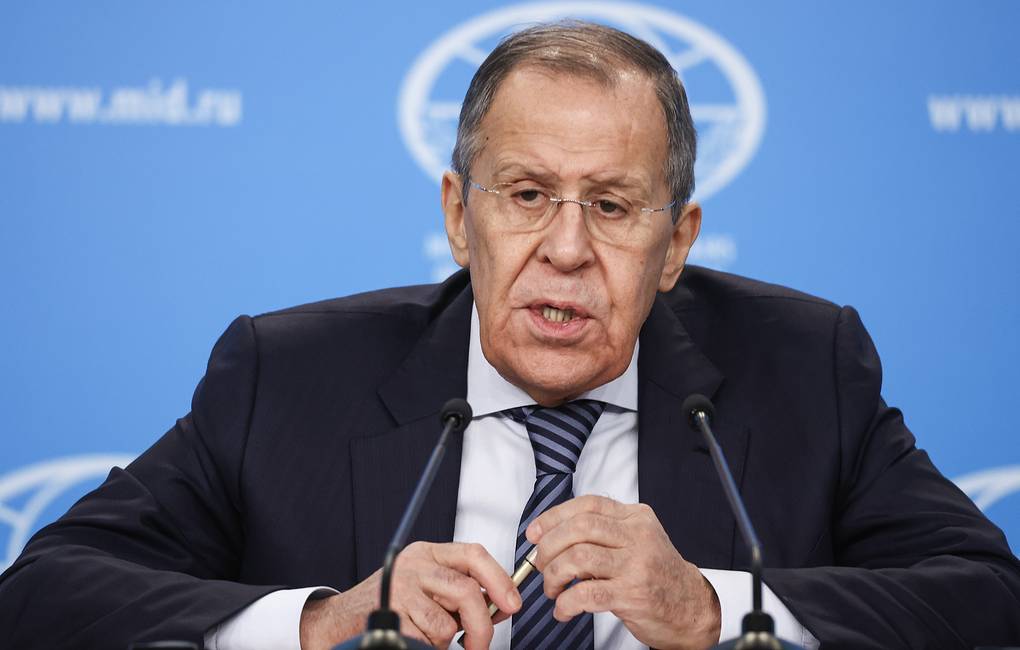
Russian Foreign Minister, Mr Sergey Lavrov, said at his annual press conference on January 18 that Russia and Africa would hold a summit in July this year and a number of documents, including new instruments of trade and investment cooperation, were being prepared to readjust methods of interaction amid the environment of sanctions, and in the context of geopolitical changes.
“As you know, we are planning the second summit in St. Petersburg, and we are preparing a whole series of activities for it. Documents are being prepared on the readjustment of interaction mechanisms in conditions and sanctions and threats, new instruments of trade and investment cooperation, supply chain systems and payments. The transition to payments in national currencies is underway. This is not a quick process, but it is progressing and gaining momentum,” the Foreign Minister said.
Ahead of the forthcoming African leaders gathering, the South African Institute of International Affairs has put into circulation its latest policy report on Russia-African relations.
In the introductory chapter, Steven Gruzd, Samuel Ramani and Cayley Clifford – have summarized various aspects of the developments between Russia and Africa over the past few years and finally questioned the impact of Russia’s policy on Africa.
According to Steven Gruzd, Samuel Ramani and Cayley Clifford, this special far-reaching policy report includes academic research from leading Russian, African and international scholars. It addresses the dimensions of Russian power projection in Africa and new frontiers of Russian influence and provides a roadmap towards understanding how Russia is perceived in Africa.
The report highlights narratives about anti-colonialism and describes how these sources of solidarity are transmitted by Russian elites to their African public. For seeking long-term influence, Russian elites have oftentimes used elements of anti-colonialism as part of the current policy to control the perceptions of Africans and primarily as new tactics for power projection in Africa.
While it has made thousands of investment promises and signed several bilateral agreements, Russia is largely invisible in economic sectors and keeps a remote distance from participating in building critical infrastructures, investing in industrial spheres and in the newly created single market. Moscow simply builds relations on illusions and lacks the capacity and overwhelming power to realize its policy goals in Africa.
That report says Russia’s expanding influence in Africa is compelling, but a closer examination further reveals a murkier picture. Despite Putin’s lofty trade targets, Russia’s trade with Africa stands at just $20 billion, which is lower than that of India or Turkey.
Over the previous years, similar observations on the stagnation in Russia-Africa economic and trade relations were also noted by politicians and academic researchers. A publication headlined “Russian Business in Africa: Missed Opportunities and Prospects” appeared in the foreign policy journal Russia in Global Affairs, where Professor Alexei Vasilyev, former Special Representative of the Russian Federation to African Countries, wrote in that article that Russian companies are pursuing their diverse interests in Africa.
The main reason is that Africa remains an enormous and large market for technology and manufacturing of consumer goods due to the increasing population and the growing middle class. Until recently, Russians have been looking at the mining industry, and economic cooperation is steadily expanding. But, Africa still accounts for just 1.5% of Russia’s investment which is a drop in the ocean. It must be admitted that Russia’s economic policy grossly lacks dynamism in Africa.
“In fact, African countries have been waiting for us for far too long; we lost our positions in post-apartheid Africa and have largely missed new opportunities. Currently, Russia lags behind leading foreign countries in most economic parameters in this region,” he pointed out in the article.
In another Russian media headlined: “West seeks to dissuade African states from participating in Russia-Africa summit” that was published last December, Federation Council Deputy Speaker Konstantin Kosachev explicitly noted that the first Russia-Africa summit held three years ago was successful, “but, in many respects, its results remained within the dimension of politics” and were not translated into additional projects in trade, economic, scientific or humanitarian cooperation.
Russia’s increasing political dialogues have not been transformed into economic capabilities. Returning as a strategic player, Russia’s business initiatives have inconsistently been followed across Africa. Senator Kosachev,, quoting trade figures to illustrate his argument, said that “the trade turnover speaks for itself. Roughly, the European Union’s trade with Africa stands at around $300 billion, China’s – at around $150 billion, and the United States – at approximately $50-60 billion. Despite the tendency to grow, our current turnover is around $20 billion.”
Back in 2019, Foreign Affairs Minister Sergey Lavrov said that trade between Russia and Africa would grow as more and more African partners continued to show interest in having Russians in the economic sectors of Africa.
“Our African partners are interested in Russian business working more actively there. This provides greater competition between companies from Western countries, China, and Russia. With competition for developing mineral resources in Africa, it is easier and cheaper for our African colleagues to choose partners,” he said at the Moscow State Institute of International Affairs in early September.
“Overall, we are, of course, far from the absolute figures characterizing trade and investment cooperation between the African countries which stood at $20 billion,” he informed the fully-packed auditorium.
In May 2014, Lavrov said in a speech posted to the official website: “We attach special significance to deepening our trade and investment cooperation with the African States. Russia provides African countries with extensive preferences in trade. At the same time, it is evident that the significant potential of the economic cooperation is far from being exhausted, and much remains to be done so that Russian and African partners know more about each other’s capacities and needs.”
As far back in October 2007, the Russian Foreign Affairs Ministry posted an official report on its website that traditional products from least-developed countries (including Africa) would be exempted from import tariffs. The legislation stipulates that traditional goods are eligible for preferential customs and tariff treatment.
While Russia announced this preferential tariff regime for developing countries, which also granted duty-free access to African products, potential African exporters either failed to take advantage of it or were unaware of the advantageous terms for boosting trade.
Analyzing the present market landscape of Africa, Russia can export its technology and compete on equal terms with China, India and other prominent players. On the other hand, Russia lacks the competitive advantage in terms of finished industrial (manufactured) products that African consumers obtain from Asian countries such as China, India, Japan and South Korea.
Charles Robertson, Global Chief Economist at Renaissance Capital, thinks that the major problem is incentives. China has two major incentives to invest in Africa. First, China needs to buy resources, while Russia does not. Second, Chinese exports are suitable for Africa – whether it is textiles or iPads, goods made in China can be sold in Africa.
Keir Giles, an Associate Fellow of the Royal Institute of International Affairs (Chatham House) in London, told me that “there are some more fundamental problems which Russia would need to overcome to boost its trade turnover with the region. The majority of this vast amount of trade with China simply cannot be competed with by Russia. A large part of African exports to China by value is made up of oil, which Russia does not need to import. And a large part of China’s exports to Africa is consumer goods, which Russia doesn’t really produce.”
He explains further that trade in foodstuffs in both directions suffers similar challenges, which are unlikely to be affected by the current politically-motivated Russian ban on foods from the European Union, the United States and Australia. In effect, in sharp contrast to China, the make-up of Russian exports has not really developed since the end of the Soviet Union and still consists mostly of oil, gas, arms and raw materials. For as long as that continues, the scope for ongoing trading with most African nations is going to be severely limited.
Academic experts, who have researched Russia’s foreign policy in Africa at the Moscow-based Institute for African Studies, have reiterated that Russia’s exports to Africa can be possible only after the country’s industrial base experiences a more qualitative change and introduces tariff preferences for trade with African partners.
“The situation in Russian-African foreign trade will change for the better if Russian industry undergoes rapid technological modernization, the state provides Russian businessmen systematic and meaningful support, and small and medium businesses receive wider access to foreign economic cooperation with Africa,” according to Professor Alexei Vasilyev, former Special Representative of the Russian Federation to African Countries.
Quite recently, Dr Gideon Shoo, Media Business Consultant based in Kilimanjaro Region in Tanzania, explained in an interview discussion with me that Russian companies need to prove their superiority in the business spheres, and African governments have to make it easier for Russian companies to set up and operate in their countries.
“Russian financial institutions can offer credit support that will allow them to localize their production in Africa’s industrial zones, especially southern and eastern African regions that show some stability and have a good investment and business incentives. In order to operate more effectively, Russians have to take risks by investing, recognize the importance of cooperation on key investment issues and work closely on the challenges and opportunities on the continent,” he added.
On the other hand, Dr Shoo noted that Russia is, so far, a closed market to many African countries. It is difficult to access the Russian market. However, African countries have to look to new emerging markets for export products and make efforts to negotiate for access to these markets. This can be another aspect of economic cooperation and a great business opportunity for both regions.
Nearly all the experts have acknowledged here that import and export trade has been slow due to multiple reasons, including inadequate knowledge of trade procedures, complicated certification procedures, expensive logistics, security and guarantee issues, rules and regulations, as well as the existing market conditions.
By looking at and revising the rules and regulations, the situation regarding Russia’s presence in Africa and Africa’s presence in Russia could change. All that is necessary here is for Russia and Africa to make consistent efforts to look for new ways, practical efforts at removing existing obstacles that have impeded trade over the years.
According to the African Development Bank, Africa’s economy is growing faster than those of any other region. Nearly half of Africa’s countries are now classified as middle-income countries, and around 380 million of Africa’s 1.3 billion people are now earning good incomes – rising consumerism – that makes trade profitable in Africa.
For decades, Russia has been looking for effective ways to promote multifaceted ties and new strategies for cooperation in economic areas in Africa. Now, Kremlin will hold the second Russia-Africa Summit on July 26-29 in St. Petersburg with high hopes of enhancing multifaceted ties, trying to reshape the existing relationships and significantly rolling out ways to increase the effectiveness of cooperation between Russia and Africa. The first Russia-Africa summit and economic forum were held in October 2019 in Sochi.


