

General
Nigeria Needs Atiku Abubakar As President In 2023—Jandor

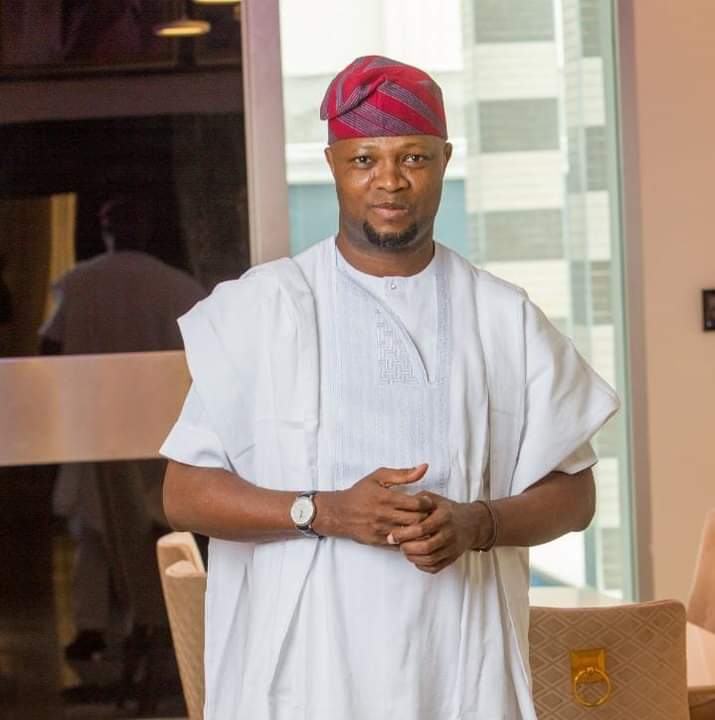
Dr Olajide Adediran, popularly known as Jandor, is the governorship candidate of the Peoples Democratic Party (PDP) in Lagos State.
In this interview with Anayo Ezugwu, he speaks on the chances of the presidential candidate of his party, Atiku Abubakar, in the February 25 election, why Atiku is most qualified to lead Nigeria presently and how he will defeat the All Progressives Congress (APC) in Lagos State, among others.
The election is fast approaching; why is it important for Nigeria to have a credible, free and fair election?
It is very important for us to get it right in 2023 because if you look at the state of our country as we speak, economically, it appears we are doomed. In terms of security, we are still battling with Boko Haram, bandits, kidnappers and other forms of insecurity.
Even the polity is on a daily basis being heated up, and it is about time we have a leader that understands the nitty-gritty of all of these. What we have currently is a northern president, but what we are presenting to Nigerians as we speak is a Nigerian president, a nationalist, who understands economics and how to tackle some of these challenges we are facing.
We need someone who has been there and who has a track record because when he was there, it was the time Nigeria opened up its space for people to come and play in the economy by ensuring that the country established what we called the Bureau of People Enterprises (BPE), which today gave birth to all these things we are using and created more employment. And if you look at what he has been speaking about, especially on the issue of women and youth empowerment, he said he is going to set aside $10 billion to assist them.
When they asked him where the money was going to come from, he said he was going to sell all the currently moribund refineries that we have in Nigeria that are not doing anything for anybody. And if you sell those assets for $10 billion, don’t forget he will use that money to drive women’s and youths’ empowerment.
What that will give you is that it will reduce the skyrocketing unemployment rate, because more youths and more women will have something to do. What that will also do, is that a refinery that is bought by an organised private sector for $10 billion would also lead to employment. They will also have an additional $5 billion or $10 billion that they would invest in it to resuscitate that refinery. And that money is also coming into the economy. Don’t forget that when it comes to the economy, there will be more people that will get jobs in between that resuscitation.
We are not even speaking about when the refinery comes in spring, which will also create employment. This is how to run an economy and this is an example of somebody who understands exactly what it is to jack up an economy. Yes, it is a very important election for us and we have a man who cut across and a nationalist per-excellence that can get this job done in Atiku Abubakar.
What you listed are some of the things Atiku did as a Vice President but the game is different now because he will be the face of the government if elected. What should Nigerians expect from Atiku’s presidency?
I just told you, and just like you put it, as somebody who, by the fact that he was just a Chairman of the Economic Council at that time and at that time, the role was advisory because the buck doesn’t stop at his desk, yet he did a lot to get our economy to where it was. And that is where we still have it up until now because, in the real sense of it, the APC government has added nothing to where we have been.
So, we now have such a person at the helm of affairs, it shows that he already understands the terrain and he knows what it is. This is the best time for Nigeria to get it right by having somebody who has the necessary experience in doing this. On his own, he has been a successful businessman. It will be difficult to put somebody who has never run his own business before to come and run a national economy.
He wouldn’t even understand how to go about it, but this man for decades; he has been running his own educational institution and manufacturing company. He knows that he needs to source funds to turn the business around, pay his salary, pay back the loan and still needs to do well in the business in a very difficult economy. That is somebody who can run the country and look at the economy holistically and say this is what we need to do to get it right, and I’m Atiku is qualified to do it.
Despite all you have said, the agitation in the South remains that the presidency should return to the South. Do you see that as an impediment to Atiku’s presidential ambition?
It won’t be an impediment because if you look at our story very well, especially from our party, where all these agitations for the southern presidency come from. When they brought it to the table and Atiku was there, he didn’t object to power shifting to the South, but his argument is if we have to zone, we have to micro-zone it to the South-East. If you are coming to the North, it also has to be micro-zoned to the North- East because that is another region that has never produced a President, and he qualified. But because of the selfishness of some people, who are also interested in being President of the country within the party, they decided to say let us open it up.
It was this open-it-up that gave him the ticket. He also proposed a micro-zoning arrangement to the South- East and it was when they were unable to do that that Mr Peter Obi left the party because he was expecting that it was going to be micro-zoned to the South-East. And those that didn’t support micro zoning to the South-East are probably the ones that are up and about today shouting and criticising the party.
For me, I think I don’t want a president of the southern extraction; I don’t want a president of the northern extraction, but I want a Nigerian president. What we have as we speak is a northern president, and if we make a mistake and install another southern president, he will come to power, and the same nepotism we accused President Muhammadu Buhari of is what we are going to have again. I want a Nigerian president, nationalist par excellence and that is what we have in Atiku Abubakar.
What do you think gives Atiku an edge over the other presidential candidates apart from being a nationalist?
Experience.
But the three other major presidential candidates have experience because they are governors for eight years in their different states…?
Can we analyse them one after the other, Atiku Abubakar has been Vice President of this country and was even elected governor of Adamawa State before he was appointed to be the Vice President. Outside that public office, Atiku Abubakar has been an employer of labour in this very difficult Nigerian economy for decades.
You can pinpoint and say, ‘this is Atiku Abubakar’s line of business.’ What about the other person no one can say this is his line of business except for the fact that he was in public office and he was installing his successors. What business can you say this is the business that he is doing that you can tie to his person?
There are a lot of things that come to play in determining who we need to put there as a President. So, this background gives Atiku an edge over every other person. And in this time and age, this is what we need for this country called Nigeria. We need somebody who has run his own business before and who can run an economy.
As a businessman, if I take a N20 loan from a bank within a space, I must pay back that money within that space. I must pay my staff’s salary. So, I must invest the money well to achieve all that, and if I have never done that before, it would be difficult for me to run an economy like Nigeria. If you are the type that waits for somebody to pay you after 30 days that is who you are. But if you are the type that receives money to build a business empire, something in your head is telling you to have to turn around that fund if not, you are going to lose everything. So, this is the difference between them and Atiku Abubakar, as we speak, is the one that fits into that frame.
Why should South-West vote for Atiku, considering the fact that their son, Bola Tinubu of APC, is in the race?
As I said, what we have now is beyond our own. What we have now in Nigeria is a problem that doesn’t know where you are from, that doesn’t understand what tribe you are, and in resolving this problem, you don’t need to go about asking who that person is. If I see that my brother doesn’t have the capacity to resolve this problem, why do I need to continue to wallow in that abject poverty because it has to be my brother?
We are talking about character, integrity, competence and experience because these are the things we are speaking to. I tell you, people sit somewhere and say Lagos is somebody’s stronghold; no, this election in 2023 will be the first popularity test of APC in Lagos State because it is an election like never before. It is not an election where you sit where and write results; it is an election that comes with technology.
I’m coming from APC, and I understand their method. So, I laugh when they say it, and they know it. In fact, you will see serious upsets in Lagos because APC may come a distant third in this election because every APC politician in Lagos is so lazy and believe that Baba will finish the job. Yes, Baba has been finishing the job, but unfortunately for Baba, this time, the job can’t be finished like it used to be, and he is also busy running after his own lifetime ambition. The numbers are here, and there is a lot of awareness, and the technology has come to stay. So, these are things that are going to come through in this election.
If you are to advise Atiku, what would be your advice on how to handle and resolve the G5 governors?
If you see how Atiku has been able to handle the situation up until this moment, you will see a man who is very presidential; you will see a man, even in the face of provocation, has remained so calm, and you will see a man who unlike some people, who have expressed some level of decorum that the office requires.
They go to rallies and call his name and speak ill of him, but he has remained focused. And there is nothing more to say to such a man because his eyes are on the ball. You can’t but have an internal crisis, and Atiku has no problem with whether anybody wants to resign because he believes it is that person’s call. He doesn’t think it is morally right for him to say the National Chairman of the party should resign because there is a position of the law on the matter. Why would you say it is my fault that Mr A has refused to resign? Why should Atiku be the one to tell him to go and resign? And what is the position of the law on the matter? We have had this situation before, but we have to distort facts because we just want them to favour us.
When Umaru Yar’Adua won the ticket of the party, Amodu Ali was the national chairman of the party, and he didn’t resign until Yar’Adua won the presidential election. Then the party had to do a mini-convention that had Vincent Ogbulafor coming in that time as the national chairman, and this is what we have been saying. So, are you now saying that if the guy decides to resign, we will now have a southerner as the national chairman, and we will still have a southern national secretary? It is a mini-convention that will resolve this issue after the election. Let’s assume he resigns, and you put a southerner as chairman and Atiku Abubakar, God forbid, didn’t win the election; what are you going to do? Are you going to tell him to come back as the national chairman, or what? He has taken an oath of office for four years, if we will the presidential election; the party will definitely call for a mini-convention to swap all the northern positions to the south and all the southern positions to the North.
As a participant in these coming elections, are you concerned that the exercise might be postponed?
I don’t think that the election will be postponed because I have listened to all the heads of formations in Nigeria, from the National Security Adviser (NSA) to the Inspector General of Police to the Chief of Defense Staff, saying they are ready for the election. And the Independent National Electoral Commission (INEC) has also said it is ready for the election.
So, if the umpire and every player are saying we are ready for the election, what will be your excuse for saying you are not ready again after being given 180 days to campaign? Except, there is more to it, and those that are calling for the shift of the election know what they are trying to do. We are not buying that because we believe the election should go on as scheduled. And if not for fear of defeat, why should you be asking them to postpone the election?
If you are ready, you are ready, and if you are not ready, just pull off the race. We believe the election should go ahead, and we have seen the formation expressing readiness to conduct the election, and that is enough for us. I believe that Mr President is ready to conduct the election. So, we don’t need to ask INEC whether they are ready again because they have given us enough time to prepare for the election. And there are sequences of events that we have been following up to this moment, so what is stopping us from going to poll?
You introduced a new dimension to campaigning in Lagos State by adopting a ward-to-ward campaign. What has been the feedback so far?
It’s been encouraging. And for us, it is mixed feelings about the total neglect of the state called Lagos. On the other side, it was excitement on the face of the people who have never seen somebody who wants to run for governor coming to their homes and sitting down with them aside from them seeing them on the papers. So, it gave them some rare hope that there is a better tomorrow for all of us. If this man can come here and see our problems, if he gets there, he needs nobody to tell him that this is the problem we are facing. And this has already spelt doom for the ruling party because those are the people that will vote.
What we are doing is a product of research to say how we disrupt this narrative. But the other mega campaigns you talked about are what they are doing, which is just getting a venue, pulling all party members there, getting Wasiu Ayinde to sing, everybody, dancing and returning home. And you say you have gone to Ikorodu to campaign after visiting a town hall and come back. But in our own case, we have to go to every nook and cranny of Ikorodu. It is by so doing that we see the true state of our state, we see how our people live, and we listen to them and get feedback from them.
When we get to the office, we know what to do from the places we have been to. So far, we have visited 193 wards in Lagos and out of these wards, 166 do not have primary health centres. On paper, the Lagos State government will tell you that they have 370 primary health centres in the state. How would you know as a sitting governor if you have not taken the time to visit those places? We went to a riverine community under Ibeju-Lekki local government; when you enter that place, on paper, they have a primary health centre, but when we got there, nothing. It was just blocks covered by weeds, but they have it on paper.
There was another community in Epe Local Government after the Dangote Refinery, for 16 years, there was no electricity in that community. So, you will not know if you are not there and they don’t have a hospital in that community as well. What will it take the governor of Lagos State to say, ‘Mr Dangote, you have this huge investment here; it is commonsensical for me to say give this community electricity. How much electricity would they use? Can you give them one hospital here because it makes sense for your own business as well?’
It is these people that will come up tomorrow and protest when they have electricity, and they are in darkness. So, if you don’t go to those places, you wouldn’t know. We have seen a whole lot from them, and that is the sort of thing we are going to do. We have to run a masses-friendly government.
Are you not concerned over the growing political violence in Lagos State, mostly against your campaigns going into the election?
I know it is their stock in trade, and the only thing they have now is to see if they can scare us away from the streets. But we have been able to tell them that this is our state. We have constitutional backing to run our campaign everywhere in the state, and that is why we have insisted that I will continue to go everywhere, and they already know it.
We are waiting for them, and we will defeat them. As I said, this is going to be their first popularity test. This election is for us to win, and we are going to win the election, and it is going to be a landslide. There is nothing they can do to stop us from winning this election, and they know it as well.


