Economy
FG to List Free Trade Zones on Nigeria’s Stock Exchange
By Adedapo Adesanya
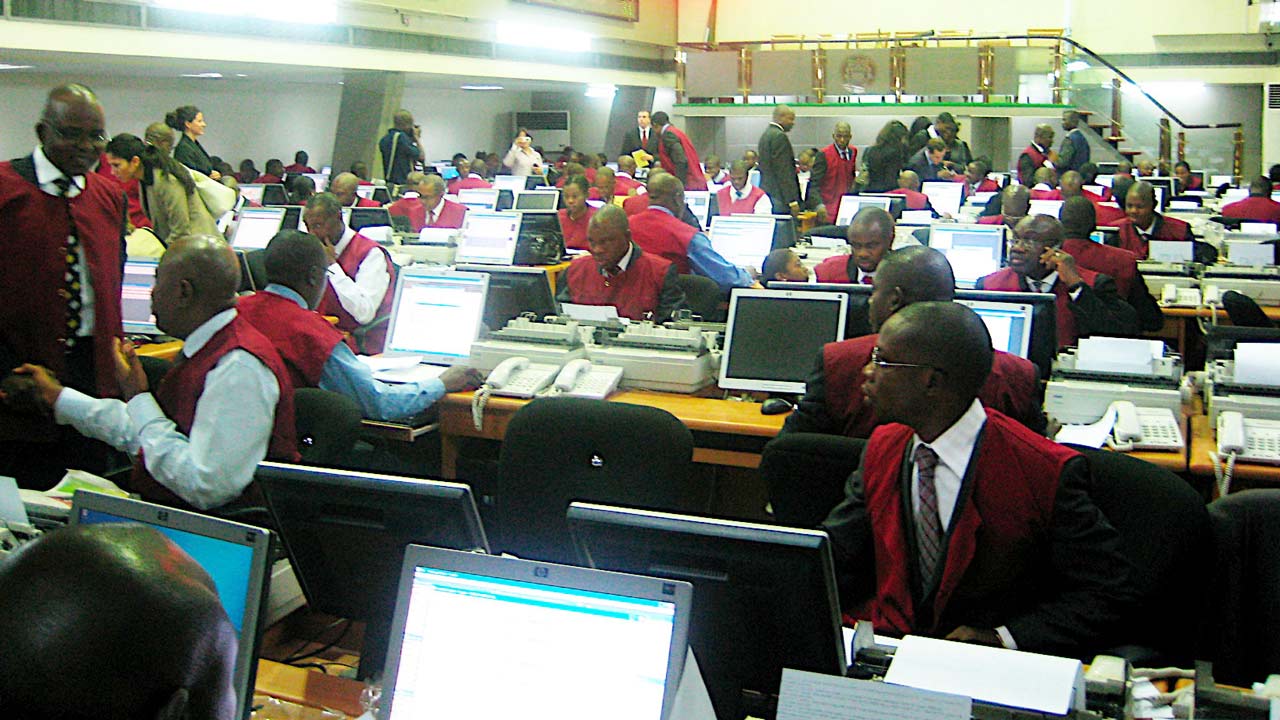
The federal government, through the Nigeria Export Processing Zones Authority (NEPZA), the Nigeria Economic Zones Association (NEZA), and the Security and Exchange Commission (SEC) has said it would make efforts to list its free trade zones, including the Lagos Free Zone (LFZ) on the stock market.
The Managing Director and Chief Executive Officer of NEPZA, Mr Adesoji Adesugba, stated this while speaking during a recent business interface meeting with the Director-General of SEC, Mr Lamido Yuguda, at the commission’s headquarters in Abuja.
He said that the prosperity and wealth of the free trade zones would be effectively extended to the investing public through the stock market.
Mr Adesugba explained that the law establishing NEPZA gave it substantial latitude to effect changes that ensured dimensional linkages between the free zone and the Nigerian public for mutual benefits.
In his words, “We are not in this alone; it is indeed a synergy between some key agencies of government with the Security and Exchange Commission driving the process in order to grant access to the free trade zone community to trade on the Nigeria stock market.
“The best governance structure and framework to drive this innovation is also being worked on. This initiative is a sign of greater things the authority and the commission can do together to position the country’s business environment and the stock market for global competitiveness.
“We are, therefore, about to unleash immeasurable wealth, technology, and prosperity into the country’s stock market. It is our desire to convert the country’s business space into a free trade zone as obtained in Dubai. This is like a first step towards that direction.”
The SEC DG also expressed delight in the initiative that aims to pull more players into Nigeria’s stock exchange, adding, however, that all grey areas that could act as impediments must be dealt with.
The SEC helmsman said the commission was interested in the governance structure of the free trade zones enterprises as that was fundamental to the declaration of profits and sharing of dividends.
“On the whole, the commission welcomes this innovation, and we must all work hard for it to come to fruition in the shortest possible time. Already, six weeks deadline has been agreed upon to submit the final draft of the framework, and we must work within this period to deliver this big gift to Nigerians,’’ Mr Yuguda said.
On his part, Mr Dinesh Rathi, Managing Director of the Lagos Free Zone, said it was gratifying that the Lagos Free Zone was among the team championing this development, adding that the move would allow shares of the Lagos Free Zone, Lekki Deep-Sea Port and the 24 enterprises under the zone’s supervision to be available to the public in the future.
“We are, therefore, happy that the Working Group drafting the framework has been given six weeks deadline within which to submit the final draft of the would-be operating framework.
“We need a document that will stand the test of time. This system of linking the free zone with the customs territory using the stock market is not new; we are currently sharing the experiences of Dubai, China and India that have been successful with this,’’ Mr Rathi said.
Economy
Oil Market Falls as Saudi-Led Red Sea Security Plan Calms Markets
By Adedapo Adesanya
The oil market settled lower by 1 per cent on Thursday as traders digested proposed plans for a Saudi Arabia-led maritime coalition to boost defence cooperation around the Red Sea.
Brent futures slipped by $1.71 or 1.88 per cent to $89.03 a barrel, while the US West Texas Intermediate (WTI) crude futures declined by 87 cents or 1.03 per cent to trade at $83.59 per barrel.
Saudi Arabia seeks to lead a coalition to boost defence cooperation in the Bab El-Mandeb Strait, the Red Sea and the Gulf of Aden.
The Saudi defence ministry said 14 states, including Turkey, Pakistan, Egypt, Sudan and Djibouti, have issued a joint statement in support of the proposed multinational maritime defence coalition.
This comes after Iran-aligned Houthi militants in Yemen declared a naval blockade last week on Saudi Arabia, threatening the Red Sea route for its oil exports, an alternative to the largely blockaded Strait of Hormuz. The strait, which normally handles around a fifth of global oil and liquefied natural gas flows, has remained a focal point for oil markets since the US and Israel launched the war on Iran on February 28.
Houthis had attacked Saudi Arabia this week from Iraqi territory in coordination with Iraqi armed groups, reflecting growing coordination among Iran-aligned militias, two officials in the region said. The attacks included strikes on oil facilities in Saudi Arabia’s eastern province, the kingdom’s main crude hub.
Iran and Oman also continued talks on the management of the Strait of Hormuz, after Iran previously ruled out Oman’s proposal for regional joint management of the waterway.
It also denied that it is negotiating with US officials and gave no sign that it was ready to make new concessions over its effective closure of the strait.
Meanwhile, the US military said it had hit dozens of Islamic Revolutionary Guard Corps (IRGC) targets in Iran in an operation launched after it fired ballistic missiles at U.S. forces in the Middle East.
Fresh supply worries also emerged after tankers loading at the Caspian Pipeline Consortium (CPC) terminal headed away from the Black Sea after a vessel was hit during loading at the terminal on Thursday.
A Ukrainian drone attack caused a fire at Lukoil’s Perm refinery that damaged and forced the shutdown of one of its crude distillation units.
Economy
Success of Domestic Investors Sends Positive Signals to Foreign Investors—Dangote
By Modupe Gbadeyanka
The federal government has been urged to give all the necessary support to indigenous investors, as they remain Nigeria’s most important drivers of employment, foreign exchange generation and long-term economic resilience.
This advice was given by foremost businessman, Mr Aliko Dangote, when he welcomed the Minister of State for Industry, Mr John Owan Enoh, to the Dangote Petroleum Refinery and Petrochemicals in Lagos recently.
The business mogul noted that efforts must be made to place industrialisation at the centre of the government’s economic strategy, insisting that no nation has attained prosperity without a strong manufacturing base.
“If Nigeria is to achieve sustainable growth and become a trillion-dollar economy, industrialisation must be the foundation. Indigenous investors remain the strongest catalysts for that transformation,” Mr Dangote stated.
He further stated that, “There is no way to create jobs and prosperity without industrialisation,” declaring that, “The greatest attraction for foreign investors is the success of domestic investors. When local investors thrive, they send a powerful signal that the environment is conducive for investment.”
In his remarks, the Minister promised deeper collaboration with the private sector to accelerate industrialisation, job creation and economic transformation.
He also pledged that the Ministry and its agencies would remain strong advocates of the refinery and the broader industrialisation agenda, adding that the government would continue to engage Dangote Industries Limited through the Industrial Revolution Work Group and ministerial roundtables to address challenges facing manufacturers, particularly access to affordable long-term financing.
Mr Enoh described the integrated industrial complex as one of the most significant investments in Africa and a model for the type of industrial development required to drive Nigeria’s economic growth aspirations.
“This facility matters because of what it represents for Nigerian industry, for our people and for the realisation of President Bola Tinubu’s vision of a one trillion-dollar economy,” he stated, noting that the refinery has emerged as a powerful symbol of value addition, industrial competitiveness and Nigeria’s growing manufacturing capability.
The Minister noted that the refinery has fundamentally changed global perceptions of Nigeria by helping to transform the country from a major importer of refined petroleum products into an exporter serving international markets.
“When global supply disruptions occurred, Nigeria was able to export petroleum products to markets in the Middle East and beyond. That is an extraordinary achievement and one that deserves recognition,” he added.
Economy
Customs Area I Command Hands Over Intercepted Expired Medicaments to NAFDAC
By Bon Peters
The Port Harcourt Area I Command of the Nigeria Customs Service (NCS) on Wednesday, July 29, 2026, handed over a consignment of intercepted expired medicaments to the National Agency for Food and Drug Administration and Control (NAFDAC) in Rivers State.
The command’s spokesperson, Barilule Aanee, an Assistant Superintendent of Customs I, said in a statement that the transfer of the items underscored the strong inter-agency collaboration in safeguarding public health.
The handover was witnessed by representatives of the National Drug Law Enforcement Agency (NDLEA), the Department of State Services (DSS), other security agencies, freight forwarding associations, stakeholders and members of the media.
The Customs Area Controller for the command, Comptroller Salamatu Atuluku, stated that the seizure was a clear demonstration of the agency’s commitment to preventing harmful and prohibited pharmaceutical products from finding their way into Nigerian markets, disclosing that the expired medicaments were intercepted during a joint examination conducted by officers of the command in collaboration with NAFDAC and other relevant agencies.
She added that the consignment contained several cartons of expired pharmaceutical products with a Combined Insurance and Freight (CIF) value of over N50 million.
Ms Atuluku emphasised that the interception prevented what could have resulted in serious public health consequences, as expired medicines posed significant health risks, including treatment failure, drug toxicity and antimicrobial resistance.
She reaffirmed that her organisation “would remain resolute in protecting the nation’s borders against the importation of expired, substandard, falsified and prohibited goods.”
Receiving the items, the Deputy Director of NAFDAC for Port Inspection Directorate, Mr Adepoju Bayo Raufu, commended the customs for its vigilance and sustained partnership in protecting Nigerians from harmful pharmaceutical products.
He assured that the agency would immediately commence the necessary regulatory procedures to ensure the safe disposal of the expired medicaments in accordance with established laws and guidelines.