Economy
Middle East Gaming At A Whole New Level
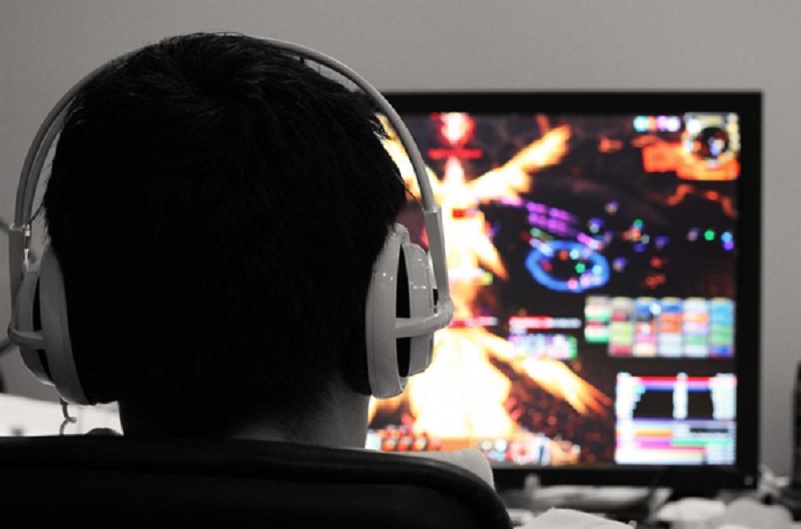
The gaming industry in the Middle East is rapidly evolving, putting the region on track to become the gaming industry’s epicenter. According to recent developments, Middle East and North Africa (MENA) countries are revolutionizing gaming and related technologies faster and more uniquely than most established hotspots, including the United States and Western Europe.
Gaming has become a popular pastime, a social activity, and a source of technology to other e-commerce sectors as a result of the multifaceted revolution. At the current rate of change, the Middle East is poised to become a major player in the global gaming industry.
The Shifting Status of Gambling in the Middle East
In the traditionally religious and conservative Arab world, one of the most notable changes in recent years is the increasing acceptance of gaming. What was once considered a mere leisure pursuit has now become a socially embraced activity, driven in part by the rise of online gaming. Particularly among the younger generation, gaming has become an integral part of daily life, fueling the rapid growth and expansion of the industry in the MENA region.
The COVID-19 pandemic also had an impact on this change. In the face of social restrictions, curfews, and lockdowns, people sought hobbies and means to socialize. Gaming provided a nearly ideal balance of entertainment and socialization. Despite riding this worldwide wave, as the rest of the world reduced their video gaming activities in the aftermath of the epidemic, the Middle East increased their engagement.
Boosting Governmental Assistance
The Middle East’s relatively new gaming culture is built on the support of supportive governments. Administrative authorities in the Middle East are rising to the challenge of supporting the gaming industry through consistent policy shifts. Government assistance is critical to the growth of the gaming industry. Through various initiatives, most administrations in the region encourage and support participation and spectatorship.
The governments of Saudi Arabia and the United Arab Emirates are particularly well-known for their accommodative policies, as they provide existing and aspiring players, gamers, and programmers with access to modern studios. Saudi Crown Prince Mohammed bin Salman announced plans in 2022 to produce more than 30 games domestically and create more than 39,000 eSports-related jobs.
Many governments in the Middle East have placed their bets on the gaming industry’s ability to spur economic growth and are working to expand it.
The Middle East is Changing into a Tech Incubator
Gaming technology has been altered throughout the Middle East, and more changes are on the way. The region quickly absorbs gaming technology and contributes to its widespread adoption through mass consumption. Residents in the region have easy access to games via the internet, which has boosted the number of people who play online on trusted sites such as Arabicbet.org. They also consume a significant amount of gaming content through various streaming platforms and social media.
The Middle East is also actively involved in the development and incorporation of new technologies into the gaming industry. Technologies and technological initiatives such as virtual reality and the metaverse are quickly gaining traction among the region’s large gaming population.
The region’s massive gaming demand is also attracting publishers and developers from all over the world. Gaming technology experts are relocating to fast-rising tech hubs like Dubai, and tech firms are establishing offices in the region to capitalize on its potential. With these trends, the Middle East is on track to attract a large number of talented professionals capable of developing better technologies and assisting in the creation and development of the gaming industry’s future.
The Investment Rush
The Middle East has proven a lucrative location for gaming investments. Unlike in other places, investors in this region show no signs of slowing down. For example, Abu Dhabi Gaming is working to attract game developers in order to create a self-sufficient gaming ecosystem in the region.
The situation is similar in other Middle Eastern countries. By 2022, gaming startups had raised more than $16 million through various deals, an increase from $15 million in 2021. Given the attractiveness of the Middle East’s gaming industry, investments are expected to grow further in 2023.
The gaming industry in the Middle East is thriving, as is the video game market in North Africa. Major corporations, including Tencent Games, are establishing operations in the region, and several other international investors are expected to follow suit in the near future. The Middle East’s gaming market is projected to be worth more than $5 billion by 2025.
Final Thoughts
From technology to consumption and investment, the Middle East’s gaming ecosystem is swiftly evolving toward greatness. This is due to a number of growth accelerators acting in the modern industry’s favor. If the growing trend continues, the region may even surpass the United States as the worldwide gaming leader by the end of the decade.
Economy
Nigerian Stocks Close 1.13% Higher to Remain in Bulls’ Territory
By Dipo Olowookere
The local stock market firmed up by 1.13 per cent on Friday as appetite for Nigerian stocks remained strong.
Investors reacted well to the 2026 budget presentation of President Bola Tinubu to the National Assembly yesterday, especially because of the more realistic crude oil benchmark of $64 per barrel compared with the ambitious $75 per barrel for 2025. This year, prices have been between $60 and $65 per barrel.
Business Post observed profit-taking in the commodity and energy sectors as they respectively shed 0.14 per cent and 0.03 per cent.
But, bargain-hunting in the others sustained the positive run, with the consumer goods index up by 3.82 per cent.
Further, the industrial goods space appreciated by 1.46 per cent, the banking counter improved by 0.08 per cent, and the insurance industry gained 0.04 per cent.
As a result, the All-Share Index (ASI) increased by 1,694.33 points to 152,057.38 points from 150,363.05 points and the market capitalisation chalked up N1.080 trillion to finish at N96.937 trillion compared with Thursday’s closing value of N95.857 trillion.
A total of 34 shares ended on the advancers’ chart, while 24 were on the laggards’ log, representing a positive market breadth index and bullish investor sentiment.
Austin Laz gained 10.00 per cent to close at N2.42, Union Dicon also jumped 10.00 per cent to N6.60, Tantalizers increased by 9.80 per cent to N2.69, Aluminium Extrusion improved by 9.78 per cent to N12.35, and Champion Breweries grew by 9.71 per cent to N16.95.
Conversely, Sovereign Trust Insurance dipped by 7.42 per cent to N3.87, Royal Exchange lost 6.84 per cent to trade at N1.77, Omatek slipped by 6.84 per cent to N1.09, Eunisell depreciated by 5.88 per cent to N80.00, and Eterna dropped 5.63 per cent to close at N28.50.
Yesterday, traders transacted 1.5 billion units worth N21.8 billion in 25,667 deals compared with the 839.8 million units sold for N32.8 billion in 23,211 deals in the preceding session, showing a surge in the trading volume by 76.61 per cent, an uptick in the number of deals by 10.58 per cent, and a shrink in the trading value by 33.54 per cent.
Economy
FrieslandCampina, Two Others Erase N26bn from NASD OTC Bourse
By Adedapo Adesanya
Three stocks stretched the bearish run of the NASD Over-the-Counter (OTC) Securities Exchange by 1.21 per cent on Friday, December 19, with the market capitalisation giving up N26.01 billion to close at N2.121 billion compared with the N2.147 trillion it ended a day earlier, and the NASD Unlisted Security Index (NSI) dropping 43.47 points to 3,546.41 points from 3,589.88 points.
The trio of FrieslandCampina Wamco Nigeria Plc, Central Securities Clearing System (CSCS) Plc, and NASD Plc overpowered the gains printed by four other securities.
FrieslandCampina Wamco Nigeria Plc lost N6.00 to sell at N54.00 per unit versus N60.00 per unit, NASD Plc shrank by N3.50 to N58.50 per share from N55.00 per share, and CSCS Plc depleted by N2.91 to N33.87 per unit from N36.78 per unit.
On the flip side, Air Liquide Plc gained N1.01 to close at N13.00 per share versus N11.99 per share, Golden Capital Plc appreciated by 70 Kobo to N7.68 per unit from N6.98 per unit, Geo-Fluids Plc added 39 Kobo to sell at N5.50 per share versus N5.11 per share, and IPWA Plc rose by 8 Kobo to 85 Kobo per unit from 77 Kobo per unit.
During the trading day, market participants traded 1.9 million securities versus the previous day’s 30.5 million securities showing a decline of 49.3 per cent. The value of trades went down by 64.3 per cent to N80.3 million from N225.1 million, but the number of deals jumped by 32.1 per cent to 37 deals from 28 deals.
Infrastructure Credit Guarantee Company (InfraCredit) Plc finished the session as the most active stock by value on a year-to-date basis with 5.8 billion units valued at N16.4 billion, followed by Okitipupa Plc with 178.9 million units transacted for N9.5 billion, and MRS Oil Plc with 36.1 million units traded for N4.9 billion.
The most active stock by volume on a year-to-date basis was still InfraCredit Plc with 5.8 billion units worth N16.4 billion, trailed by Industrial and General Insurance (IGI) Plc with 1.2 billion units sold for N420.7 million, and Impresit Bakolori Plc with 536.9 million units traded for N524.9 million.
Economy
Naira Crashes to N1,464/$1 at Official Market, N1,485/$1 at Black Market
By Adedapo Adesanya
It was not a good day for the Nigerian Naira at the two major foreign exchange (FX) market on Friday as it suffered a heavy loss against the United States Dollar at the close of transactions.
In the black market segment, the Naira weakened against its American counterpart yesterday by N10 to quote at N1,485/$1, in contrast to the N1,475/$1 it was traded a day earlier, and at the GTBank forex counter, it depreciated by N2 to settle at N1,467/$1 versus Thursday’s closing price of N1,465/$1.
In the Nigerian Autonomous Foreign Exchange Market (NAFEX) window, which is also the official market, the nation’s legal tender crashed against the greenback by N6.65 or 0.46 per cent to close at N1,464.49/$1 compared with the preceding session’s rate of N1,457.84/$1.
In the same vein, the local currency tumbled against the Euro in the spot market by N2.25 to sell for N1,714.63/€1 compared with the previous day’s N1,712.38/€1, but appreciated against the Pound Sterling by 73 Kobo to finish at N1,957.30/£1 compared with the N1,958.03/£1 it was traded in the preceding session.
The market continues to face seasonal pressure even as the Central Bank of Nigeria (CBN) is still conducting FX intervention sales, which have significantly reduced but not remove pressure from the Naira. Also, there seems to be reduced supply from exporters, foreign portfolio investors and non-bank corporate inflows.
President Bola Tinubu on Friday presented the government’s N58.47 trillion budget plan aimed at consolidating economic reforms and boosting growth.
The budget is based on a projected crude oil price of $64.85 a barrel and includes a target oil output of 1.84 million barrels a day. It also projects an exchange rate of N1,400 to the Dollar.
President Tinubu said inflation had plunged to an annual rate of 14.45 per cent in November from 24.23 per cent in March, while foreign reserves had surged to a seven-year high of $47 billion.
Meanwhile, the cryptocurrency market was dominated by the bulls but it continues to face increased pressure after million in liquidations in previous session over accelerating declines, with Dogecoin (DOGE) recovering 4.2 per cent to trade at $0.1309.
Further, Ripple (XRP) appreciated by 3.9 per cent to $1.90, Cardano (ADA) rose by 3.5 per cent to $0.3728, Solana (SOL) jumped by 3.4 per cent to $126.23, Ethereum (ETH) climbed by 2.9 per cent to $2,982.42, Binance Coin (BNB) gained 2.0 per cent to sell for $853.06, Bitcoin (BTC) improved by 1.7 per cent to $88,281.21, and Litecoin (LTC) soared by 1.2 per cent to $76.50, while the US Dollar Tether (USDT) and the US Dollar Coin (USDC) traded flat at $1.00 each.
-
Feature/OPED6 years agoDavos was Different this year
-
Travel/Tourism9 years ago
Lagos Seals Western Lodge Hotel In Ikorodu
-
Showbiz3 years agoEstranged Lover Releases Videos of Empress Njamah Bathing
-
Banking7 years agoSort Codes of GTBank Branches in Nigeria
-
Economy3 years agoSubsidy Removal: CNG at N130 Per Litre Cheaper Than Petrol—IPMAN
-
Banking3 years agoFirst Bank Announces Planned Downtime
-
Banking3 years agoSort Codes of UBA Branches in Nigeria
-
Sports3 years agoHighest Paid Nigerian Footballer – How Much Do Nigerian Footballers Earn