Connect with us

General

Sanwo-Olu Assures Lagos Residents Dividends of Democracy

Published

on

Sanwo-Olu VAT bill into law

By Adedapo Adesanya

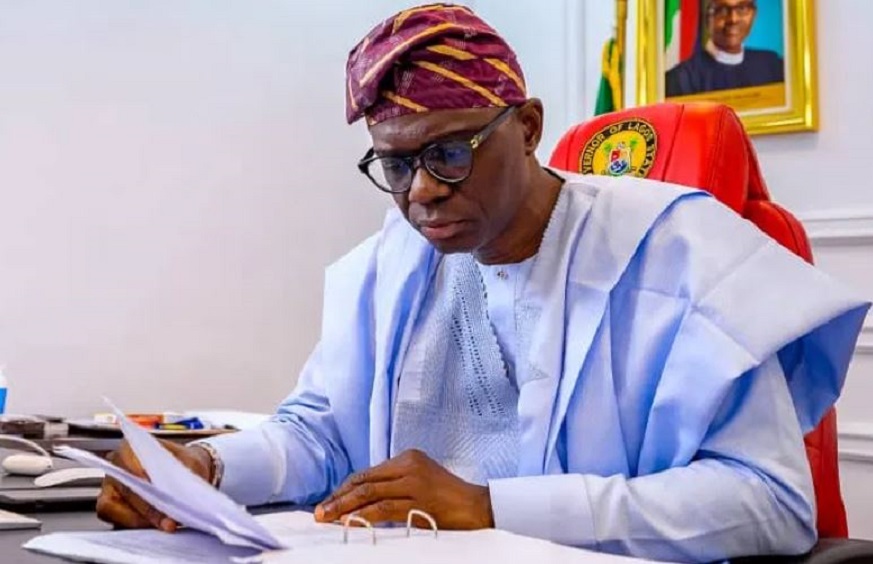
The Governor of Lagos State, Mr Babajide Sanwo-Olu, has promised to continue to deliver dividends of democracy to residents of the state after getting re-election.

On Monday morning, the Independent National Electoral Commission (INEC) declared Mr Sanwo-Olu of the All Progressives Congress (APC) as the winner of Saturday’s governorship elections in Lagos after it was announced that he polled a total of 762,134 votes to defeat his closest rival, Mr Gbadebo Rhodes-Vivour of the Labour Party, who scored 312,329 votes.

Professor Adenike Oladiji, Vice-Chancellor of the Federal University of Technology (FUTA) Akure, the Returning Officer, during the announcement, said the candidate of the Peoples Democratic Party (PDP), Mr Abdul-Azeez Adediran garnered 62,449 votes to come a distant third in the election.

She listed votes garnered by other political parties in the contest as A (800), AA (904), AAC(627), ADC (6,078), ADP(2833), APM (884), APP (259), BP (616), NNPP (1,583), NRM (340), SDP (1,746), YPP (461) and ZLP (1,635).

She put the total number of registered voters at 7,060,195; total accredited voters at 1,182620; total votes cast at 1,173,631, total valid votes at 1,155,678 and rejected votes at 17,953.

Prof. Oladiji said: “I declare that Sanwo-Olu Babajide Olusola of APC, having satisfied the requirements of the law by scoring 25 per cent in two-thirds of the local government areas in the state and also scoring the highest number of the vote cast, is hereby declared the winner and he is returned elected.”

The APC won in 19 Local Government Areas of the state; the LP won in one LGA, while the PDP did not win any.

In his remarks, the INEC Resident Electoral Commissioner, Mr Olusegun Agbaje, noted that some of the allegations of manipulation levelled against him were a fallacy.

Mr Agbaje, however, said that such allegations were not strange in a clime like ours and decried the poor turnout of voters.

Assessing the process, Mr Olusegun Mobolaji, Lagos state Chairman of the Inter-Party Advisory Council (IPAC), decried the pockets of violence experienced in some parts of the state as well as vote buying and apathy.

He urged the candidates to imbibe the spirit of sportsmanship and accept the outcome of the elections in good faith.

Mr Mobolaji urged INEC to improve on the shortcomings in future elections.

Regardless of this, Business Post spoke to voters over the weekend who were disenfranchised on account of their ethnicity by elements that were believed to be working for the ruling party, with tribal slurs and stereotypes hurled at them.

On his part, the re-elected governor on Monday said his re-election for a second term has reaffirmed that Lagos has chosen competence and experience on the march to true greatness.

Mr Sanwo-Olu said this at the Lagos House Marina while giving the victory speech for his re-election, following the official announcement by INEC.

He said that elections were over now, and governance must continue, and the dividends of democracy must continue to be delivered, as there must be no break and no time off.

According to him, his government will keep all the promises made to the people of Lagos state.

“Lagosians, you did not just vote for Babajide Sanwo-Olu. You voted for a greater Lagos. I promise that together we shall achieve this. This is a promise that shall not be broken. A greater Lagos shall be ours.

“Let me boldly and proudly say that we are already well on the way to that greater Lagos, and we now have four more years to join hands to advance in ways that will pleasantly surprise even the most sceptical amongst us,” he said.

“Lagos is what it is today because of each and every one of you, regardless of ethnicity, religion, political affiliation, gender, or age.

“We are a vibrant and thriving hub of commerce, finance, entrepreneurship, innovation, and culture because of the diversity that has come to define us over the decades and the centuries. Thank you,” he said.

He said that during the course of the campaign, sadly, there was a lot of divisive rhetoric used, as some tried to make the elections about ethnicity and religion when in fact, they should only have been about capacity, competence, and experience.

“We saw hateful and hurtful ethnic profiling by fellow citizens – which is totally out of place for us as Lagosians, the proud residents of West Africa’s pre-eminent melting pot.

“I want to recognise and salute all of the multitudes of residents who refused to succumb to those who sought and still seek to divide us with their unguarded and inciting comments.

“Unfortunately, there are reports of skirmishes in some local government areas wherein some citizens were reported to have been injured. We strongly condemn these reprehensible incidents – that is definitely not who we are as a people.

“The relevant law enforcement and security agencies have been directed to investigate these breaches of the law and to ensure that those found culpable face the full wrath of the law.


Adedapo Adesanya is a journalist, polymath, and connoisseur of everything art. When he is not writing, he has his nose buried in one of the many books or articles he has bookmarked or simply listening to good music with a bottle of beer or wine. He supports the greatest club in the world, Manchester United F.C.

Advertisement
Click to comment

Leave a Reply

Your email address will not be published. Required fields are marked *

General

INEC Shifts 2027 Presidential, N’Assembly Elections to January 16

Published

on

INEC

By Adedapo Adesanya

Nigeria will hold next year’s presidential and National Assembly elections a month earlier than planned, after the Independent National Electoral Commission (INEC) revised the polling schedule.

The elections will be held on January 16, instead of the previously announced date of February 20, INEC said in an X post, signed by Mr Mohammed Kudu Haruna, National Commissioner and Chairman, Information and Voter Education Committee.

There were also changes to the Governorship and State Houses of Assembly elections initially fixed for Saturday, March 6 2027, in line with the Electoral Act, 2022, have now been moved to Saturday, February 6, 2027.

The electoral commission said the changes were caused by the enactment of the Electoral Act, 2026 and the repeal of the Electoral Act, 2022, which introduced adjustments to statutory timelines governing pre-election and electoral activities.

“The Commission reviewed and realigned the schedule to ensure compliance with the new legal framework,” it said.

INEC said party primaries (including resolution of disputes) will commence on April 23, 2026 and end on May 30, 2026, after which Presidential and National Assembly campaigns will begin on August 19, 2026, while Governorship and State Houses of Assembly campaigns will begin on September 9, 2026.

It noted that campaigns will end 24 hours before Election Day, and political parties have been advised to strictly adhere to the timelines.

INEC also stated it will enforce compliance with the law.

The electoral body also rescheduled the Osun Governorship election which was earlier scheduled for Saturday, August 8 2026, by a week to Saturday, August 15, 2026.

INEC noted that some activities regarding the Ekiti and Osun governorship elections have already been conducted, and the remaining activities will be implemented in accordance with the Electoral Act, 2026.

Speaking at a news briefing in Abuja two weeks ago, the chairman of INEC, Mr Joash Amupitan, expressed the readiness of the commission to conduct the polls next year.

The timetable issued by the organisation for the polls at the time came when the federal parliament had yet to transmit the amended electoral bill to President Bola Tinubu for assent.

Later that week, the Senate passed the electoral bill, reducing the notice of elections from 360 days to 180 days, while the transmission of results was mandated with a proviso.

Continue Reading

General

NIMASA Rallies Stakeholders’ to Develop National Action Plan

Published

on

NIMASA revenue

By Adedapo Adesanya

The Nigerian Maritime Administration and Safety Agency (NIMASA) has pledged its commitment to provide the regulatory leadership, technical coordination, and stakeholder engagement required to successfully develop and implement a robust National Action Plan on maritime decarbonization in Nigeria.

The Director General of the agency, Mr Dayo Mobereola, made this known during the National Stakeholders’ workshop on the development of a National Maritime Decarbonization Action Plan, further describing the workshop as a critical step in actualising the Federal Government’s blue economy and climate objectives.

Represented by the Executive Director, Operations, Mr Fatai Taiye Adeyemi, the NIMASA DG underscored the significance of the IMO GreenVoyage2050 Project, a technical cooperation initiative /designed to support developing countries in implementing the IMO GHG Strategy.

According to him, the National Action Plan being developed will reflect national realities, leverage existing capacities, address identified gaps, and align with broader economic and environmental priorities of the federal government.

Mr Mobereola stressed that “this transition is not merely about compliance with international obligations, it is about safeguarding our marine environment, protecting public health, strengthening the blue economy, and ensuring that our maritime industry remains competitive and future-ready”, the DG said.

Also speaking at the event was the Technical Manager of the IMO GreenVoyage2050 Project, Ms Astrid Dispert, who highlighted that the overarching objective of the initiative is to advance a coherent and globally aligned regulatory framework to accelerate maritime decarbonization.

She also emphasised that NIMASA plays a pivotal role in driving the project at the national level.

The IMO GreenVoyage2050 Project provides technical expertise and institutional support to assist countries in developing and implementing National Action Plans that promote sustainable shipping practices, encourage investment in clean technologies, and strengthen capacity for long-term emissions reduction.

Through this collaboration, the federal government is advancing deliberate steps towards maritime decarbonization, reinforcing its commitment to global climate goals and ensuring a cleaner, greener, and more sustainable future for the sector.

Continue Reading

General

BPP Mandates Digital Submission for MDAs From March 1

Published

on

procurement standard BPP

By Adedapo Adesanya

The Bureau of Public Procurement (BPP) has directed all Ministries, Departments and Agencies (MDAs) to comply with its digital submission process effective March 1.

The directive was contained in a circular signed by the Director-General of the Bureau, Mr Adebowale Adedokun, noting that the move was part of the bureau’s commitment to digital transformation and paperless governance.

It explained that the transition followed an earlier circular of Aug. 4, 2025, which introduced electronic submission procedures.

According to the bureau, it has successfully moved from physical filings to a dedicated e-mail service for document submissions and is now advancing to a more robust and integrated system.

The circular announced the inauguration of the BPP Digital Submission Portal, a web-based platform designed to enable MDAs submit procurement-related documents directly to the Bureau.

It stated that the automated platform would streamline the submission process, enhance transparency and ensure accelerated tracking of procurement-related documents and petitions.

“With effect from March 1, all MDAs will be required to use the portal to submit requests for ‘No Objection’ Certificates, approvals for ‘No Objection’ for special procurements, clarifications and status updates on submissions,” the bureau said.

It added that the portal would be hosted on the Bureau’s official website and would become fully operational from the effective date.

The bureau warned that physical submissions or manual hand-deliveries would no longer be prioritised and would eventually be rejected following the full transition to the digital platform.

It urged accounting officers to brief their procurement departments and ICT units on the development to ensure seamless processing of procurement activities from March 1.

It further advised MDAs to contact the Bureau via its official email for information on the onboarding process and integration into the portal.

The bureau emphasised that full compliance by all MDAs was required to ensure a smooth transition and avoid delays in the implementation of the 2026 fiscal year procurement processes.

Continue Reading

Trending