Health
AXA Mansard Health Unveils New TV Commercial to Promote Health Insurance in Nigeria
By Modupe Gbadeyanka
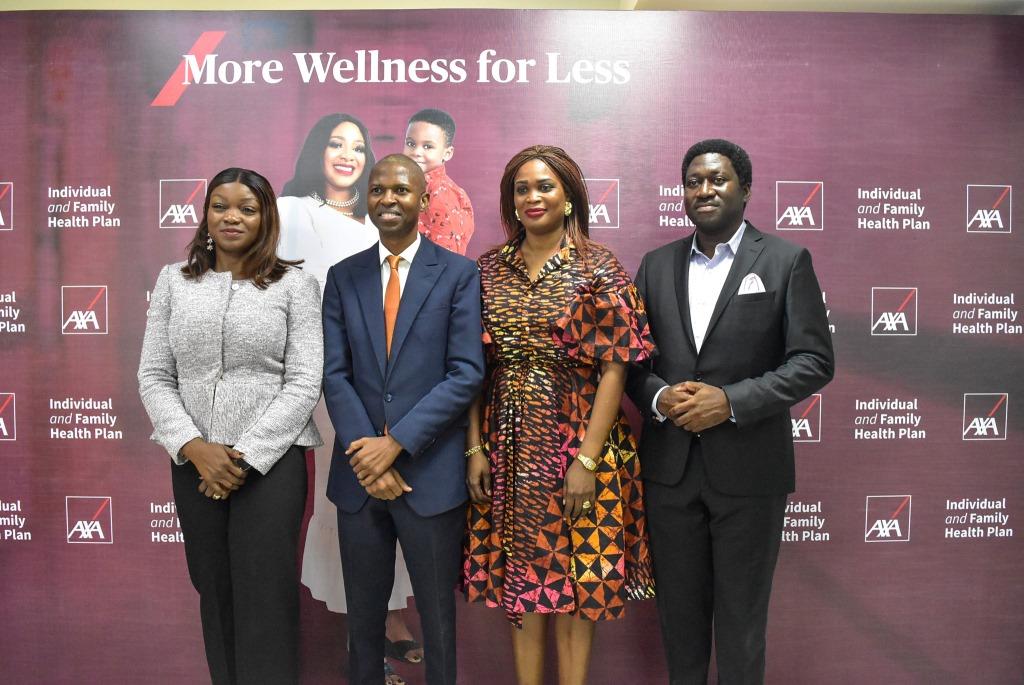
A new one-minute television commercial that highlights the importance of subscribing to a life insurance policy tagged More Wellness For Less has been unveiled by Axa Mansard Health.
The TVC seeks to enlighten the average Nigerian on the benefits they can derive from having a life insurance policy even while they are alive.
The chief executive of AXA Mansard Health, Mr Tope Adeniyi, while speaking at the launch of the commercial in Lagos, disclosed that for as low as N1,000, Nigerians could have access to AXA Mansard Health services.
“You also have products at N2,000 per month or easy care. There is a bronze plan that you can buy at about N60,000 per annum.
“So, we have a range from of simple products that enable you to have decent access to lifestyle products; you can configure them based on your lifestyle.
“Think about it, the value of your airtime is practically about three times the cost of buying access to more awareness or less. So, everyone can buy AXA,” Mr Adeniyi said.
At the event, the company gave an illustration of how crucial health insurance is.
A woman had an emergency with the child. Meanwhile, the husband wasn’t around, and she managed to rush the child to the hospital, where she was asked to deposit N30,000 before any form of treatment could be administered to the child.
This woman had N31,000 in her (bank) account. This is an emergency. Life is in the line. She had just that N30,000 paid for.
What if she were to pay N35,000? It could be N40,000! This is a woman who does not like begging people for money; probably, she could have resorted to just that. Imagine if the hospital had requested her to pay cash at this time of cash crunch; what a bad experience!
Well, this is where health insurance comes in, and there could not have been a better option than AXA Mansard Health. Yes, because there is another woman who has embraced AXA Mansard’s life health insurance policy and felt calmer in the face of a child’s ill health.
The second woman is calmer because she has MyAXA App.
MyAXA Mobile App is your one-stop non-banking financial service platform. The mobile services have been specifically designed to give users a more convenient way to purchase and manage health and other insurance plans. It is available for download for iPhone and Android users.
In the case of the woman who has the app, she was able to book an appointment, and on getting to the hospital the baby found herself in waiting hands. The woman is not bothered about cash.
The Chief Client Officer of AXA Mansard Insurance, Ms Rashidat Adebisi, remarked that, “It’s very important to us. Mental health is very topical. It has been for us for a long time. Those are some of the things that you can access under our retail products. There’s Wellness, there are genes, and there are so many things that are incorporated into it. We have telemedicine services incorporated into it. If a user prefers not to necessarily be at the hospital, you can access services through telemedicine, and the medication can be delivered to you.
“And we need to highlight that it’s also very affordable. I think a lot of people assume, oh, AXA, they are pricey, no. But in terms of value for money, I think that we are top of the list.
“In furtherance of the seamless service delivery to the users, AXA Mansard Health is working with Moove.”
Also, the Country Director for Moove, Taiwo Ajibola, speaking on the 1 minute TV Commercial video that we all saw, said the first lady had money. That money transfer wasn’t successful. That was the major issue there. We’ve all seen how the recent cash crunch impacted so many of us.
“Access to healthcare anywhere is a critical issue. With this kind of product (by AXA), you have so much access to hospitals. We encourage Nigerians to leverage on that, and we at Moove are here to make life even better for you.”
Continuing, Mr Adeniyi said they have mapped out a strategy on how people in the Diaspora can benefit from the products. “That means those who have ‘japa’ (emigrants) can buy for their family members; they can buy for their community, and they can adopt our products to impact life.
“So, you can reach out to [email protected], and we know more about the products and services.”


Health
GoMed Offers Nigerian Students Free Reproductive Health Services
By Modupe Gbadeyanka
An organisation known as GoMed Nigeria is offering free reproductive health services to Nigerian students through a digital self-care platform.
This is being delivered through a partnership with the United Nations Population Fund (UNFPA) and the Lagos State Government.
The pilot scheme will be available to students of the University of Lagos. They will enjoy easier and more private access to essential health products, accurate information, and professional support.
Young Nigerians face some of the highest rates of unintended pregnancy and unmet need for contraception in the world.
Cost, distance, stigma, misinformation, and fears about confidentiality routinely stop students from seeking the products and guidance they need, with consequences that include unintended pregnancy, unsafe abortion, sexually transmitted infections and interrupted education.
The self-care platform is designed to remove each of these barriers. Through the platform, students receive free contraceptives and other sexual and reproductive health commodities provided through the Lagos State Ministry of Health and UNFPA, exclusive discounts on health essentials, and fast, discreet delivery directly to campus and student hostels.
Students can also access trusted sexual and reproductive health information and services through UNFPA’s SoftLife 247 and U-Plan platforms. Through U-PLAN, they can chat directly with qualified Family Planning Service Providers to receive accurate information and address their concerns. They can also confidently engage with GoMed’s registered pharmacists for confidential, judgement-free guidance on medicines and other health products.
“Students should be able to get reliable health information and essential products without cost, distance or fear of judgement becoming barriers.
“This platform brings free sexual and reproductive health commodities, other affordable health products and professional guidance together, with discreet delivery directly to students on campus,” the chief executive of GoMed Nigeria, Mr Anthony Edeki, said.
Also speaking, UNFPA in Nigeria Resident Representative, Muriel Mafico, said, “As the UN agency mandated for “Sexual and Reproductive Health and Rights”, we are committed to reducing preventable maternal deaths and addressing the unmet need for family planning, including by providing and overseeing access to life-saving commodities worldwide.
“Working alongside our partners, we’re helping roll out the digital Self-Care Platform—so that vital, life-changing information can reach more people, more easily. Together, we want to empower Nigeria’s next generation to make informed health choices and achieve stronger health outcomes and a brighter future.”
Health
FG Approves Framework for 24-hour Electricity to Hospitals
By Modupe Gbadeyanka
A financing framework to accelerate the electrification of health facilities nationwide has been approved by the federal government.
The approval was announced at the third meeting of the Inter-Ministerial Steering Committee (IMSC) of the Nigeria Power for Health Initiative (NPHI), a presidential programme jointly coordinated by the Federal Ministries of Power and Health and Social Welfare.
The committee was constituted to ensure reliable electricity in at least 30 per cent of Nigeria’s health facilities by the end of 2027.
At the meeting, chaired by the Minister of State for Health and Social Welfare, Mr Isiaq Salako, and co-chaired by the Minister of Power, Mr Joseph Tegbe, members of the Inter-Agency Technical Committee (IATC) presented the recommendations under consideration.
Speaking at the meeting, Mr Salako said the Steering Committee approved a financing framework to mobilise investment for healthcare electrification, alongside a facility energy management framework requiring participating hospitals to build sustainable systems for managing their energy infrastructure.
He said the committee also cleared eight (8) private sector proposals for further engagement, drawn from about 70 submissions received during the National Healthcare Electrification Investor Matchmaking Week in Lagos.
The Health Minister added that Energy Management Teams are already in place at federal tertiary hospitals, with state governments being encouraged to set up similar structures. The initiative will now be institutionalised through dedicated budgetary provisions and a full-time Project Coordination Unit to oversee implementation.
On his part, Mr Tegbe declared that the initiative must now move from announcements to actual project delivery.
Describing the NPHI as one of the President Bola Tinubu administration’s flagship programmes, he said the emphasis should shift towards commissioning completed projects that Nigerians can see for themselves, rather than further groundbreaking ceremonies and public messaging.
He emphasised the need for teaching hospitals, state hospitals, and primary healthcare centres to be fully energised, noting that the Rural Electrification Agency has already energised 5 Federal Teaching Hospitals and several other health facilities nationwide.
He also tied the initiative directly to patient outcomes, arguing that dependable power would end hospitals’ reliance on emergency generators, and pledged that the Ministry would continue to prioritise the initiative’s funding needs while ensuring value for money.
Health
WHO Signals Alarm: DRC’s Ebola Spreading Across Central Africa
By Kestér Kenn Klomegâh
Health authorities in the Democratic Republic of Congo (DRC) and the Africa Centres for Disease Control and Prevention (Africa CDC) have bitterly complained over their inability to track down new cases of Ebola, which has spread into the Republic of Uganda. An estimated 1,635 Ebola cases have been confirmed, and 127 people have died from the dangerous infectious disease in the DRC.
The Ebola outbreak is increasingly impacting social interaction and people-to-people movements, as scepticism toward the disease appears to accelerate among the population, and cross-border movements are being controlled daily. Alarm was sounded last week as the virus moved into new areas of the DRC. In some instances, patient routinely escapes, and limited contact tracing undermines containment efforts. Contact tracing coverage has plummeted to 56.5 per cent, a sharp decline from the 95 per cent target, Health Ministry officials said.
“We remain committed to supporting affected countries until transmission is stopped. We call on partners and donors to urgently mobilise resources to strengthen the response and save lives,” Jean Kaseya, director general of the Africa Centres for Disease Control and Prevention, said on Sunday.
Shortage of Medical Kits
The World Health Organisation (WHO) reported that the three major laboratories, in South and North Kivu, have run out of Ebola testing kits, as infections continue to rise daily. Teams are working through a large backlog of samples from suspected Ebola patients, many of which were collected several weeks ago, to confirm or rule out the presence of the deadly virus.
In a situation report released earlier this week, the global health agency said the labs in major cities including Bukavu and Goma were awaiting the arrival of reagents–substances ​ required to run the tests–to resume work on the backlog of samples.
“Running out of Ebola testing reagents during an active outbreak is a serious setback,” Dr Krutika Kuppalli, associate professor in the division of infectious diseases at the University of Texas Southwestern and former WHO officer, told The Telegraph.
“Diagnostics are the foundation of outbreak control; if cases cannot be rapidly confirmed, this may lead to delays in isolation, treatment, and contact tracing, which can allow transmission to continue unchecked,” said Dr Kuppalli.
The Race for Vaccines
Vaccine candidates are racing to fill the gap. The Coalition for Epidemic Preparedness Innovations (CEPI)—a multinational nonprofit organisation that finances vaccine development for emerging infectious diseases—has so far prioritised several vaccine candidates for development.
Two are Ervebo-like prototypes aimed at recognising Bundibugyo’s specific blend of glycoproteins, a platform that showed experimental potential years ago. In 2013, an early version of the vaccine protected 100 per cent of monkeys infected with Bundibugyo. However, because most Ebola outbreaks didn’t involve this species, the vaccine didn’t get the investment needed to become licensed. That’s an outcome CEPI aims to remedy with its latest investment.
The International AIDS Vaccine Initiative and Public Health Vaccines are developing the vaccines, which, like Ervebo, also rely on the vesicular stomatitis virus. WHO called this technology the most promising of the candidates.
VSV-based vaccines are front-runners because the weakened version of the virus used to produce them is so good at replicating itself inside humans—including the small chunk of whatever germ it’s been hybridised with—without causing harm. As a result, a single dose typically leads to a strong immune response.
Another candidate, called ChAdOx1, operates using a similar concept: A virus shows the immune system part of a pathogen to generate a protective response. However, it uses an adenovirus that causes colds in chimpanzees—and is also harmless to humans—that University of Oxford scientists modified to keep it from replicating.
There’s also a vaccine candidate based on Moderna’s mRNA science, which was also used to produce the company’s COVID-19 vaccines. This vaccine employs tiny fat bubbles to deliver genetic instructions to cells on how to produce a small part of the Bundibugyo virus. The immune system generates a protective response, and the mRNA degrades quickly without causing lasting changes to cells’ genetic codes.
US-Backed Kenya’s Quarantine Centre
Health Cabinet Secretary Aden Duale has consistently defended the establishment of US-backed health centres in Kenya. The US says it will quarantine citizens exposed to the virus but not showing symptoms in a facility it is building in Kenya, and will not bring them home if they develop symptoms, instead sending them to a third country.
The CDC imposed temporary travel bans last month on people who have been in the DRC, Uganda, or South Sudan, including green card holders, who are typically exempt from such bans. It is also screening Americans travelling from those countries at three US airports. The strategy marks a sharp break from past practice as President Donald Trump’s administration seeks to keep all cases out of US territory.
There are 13 US treatment centres in a government-funded hospital network for severe infectious diseases ready to handle Ebola patients. Public health experts have, however, called on the government to bring any sick Americans home for treatment, and local protests at the Kenya site have led to at least two deaths. A Kenyan court has ordered a halt to the construction.
WHO Appeals for International Community Support
In a rapid and comprehensive response to WHO’s appeal to marshal resources for support of Ebola prevention, the United States has provided an additional $38 million. The additional funds brought the total amount committed by the U.S. to more than $200 million in direct funding, the State Department said in an official statement.
CDC model scenarios show that without strong public health interventions, the outbreak of the Bundibugyo strain of Ebola in the DRC could become as large as, or even larger than, the 2014-2016 West Africa outbreak, the agency said.
In modelled scenarios where the isolation of patients is limited, the outbreak could become one of the largest ever documented, said Jason Asher, director of the CDC’s Centre for Forecasting and Outbreak Analytics.
From Addis Ababa, the Africa Centres for Disease Control and Prevention (Africa CDC) also said it had received a €11.5 million renewed commitment from the European Union Commission (EU) to support a stronger preparedness and coordinated response to the Ebola outbreak. Dr Jean Kaseya, Director General, Africa CDC, described the partnership with the European Union as respectful and without any conditionality, a type of partnership the continent needs.
The package is aimed at reinforcing the EU Commission’s support through the Africa CDC emergency response to the Ebola crisis, within the long-standing and comprehensive AU-EU health partnership. This demonstrates the central role of Africa CDC in coordinating the continental response to health emergencies, as well as the EU’s action as the world’s largest humanitarian contributor.
This includes €6.5 million to strengthen the Africa Pathogen Genomics Initiative, to help equip frontline teams, train healthcare workers and improve surveillance through diagnostics and an in-kind contribution of €5 million worth of testing equipment, including rapid diagnostic devices and lab test kits, to be deployed quickly where they are needed most. The EU’s partnership with Africa CDC spanning technical expertise, capacity-building, and policy dialogue continues to play a key role in building resilient health systems.
Ebola epidemic at G7 summit
Amid the horror of the Ebola epidemic, world leaders gathered at the G7 summit in France were urged to find the “political will” to push through the final part of the Pandemic Agreement on Monday. In a joint letter, Brazil’s President Luiz Lula da Silva and WHO chief Dr Tedros Adhanom Ghebreyesus urged leaders gathered on the shores of Lake Geneva to get the “benefits sharing” annex of the deal signed with a “sense of urgency.”
The Pandemic Agreement, which seeks to ensure the world is better prepared for the next global outbreak, was agreed last year but a vital element of it was deferred because of arguments over its wording. It is unclear, and perhaps unlikely, that a truly global agreement on benefits sharing can be reached.
Nevertheless, an agreement between the remaining 192 member states of the WHO is possible and would represent a major step forward. “Every month this annex stays unfinished is a month the world is less ready than it could be, and people are less safe than they deserve to be,” say Mr Lula da Silva and Dr Tedros. “Finalising this Agreement, through a shared commitment to one another, is our collective promise to protect humanity.”
The epidemic, caused by the rare Bundibugyo strain of the virus, for which there is no approved vaccine or specific treatment, was declared on May 15. It has since spread across Ituri, North Kivu and South Kivu, regions marked by insecurity, displacement and cross-border movement.
The Democratic Republic of the Congo (DRC), also known as the DR Congo, is situated in the central African region. With a population of around 124 million people, it shares borders with the Republic of Congo and Angola to the south, the Atlantic Ocean, and the Central African Republic and South Sudan to the north, and also with Uganda, Rwanda, Burundi, and Tanzania (across Lake Tanganyika) to the east, and Zambia and Angola to the south.