Connect with us

Health

AXA Mansard Health Unveils New TV Commercial to Promote Health Insurance in Nigeria

Published

on

Axa Mansard Health2

By Modupe Gbadeyanka

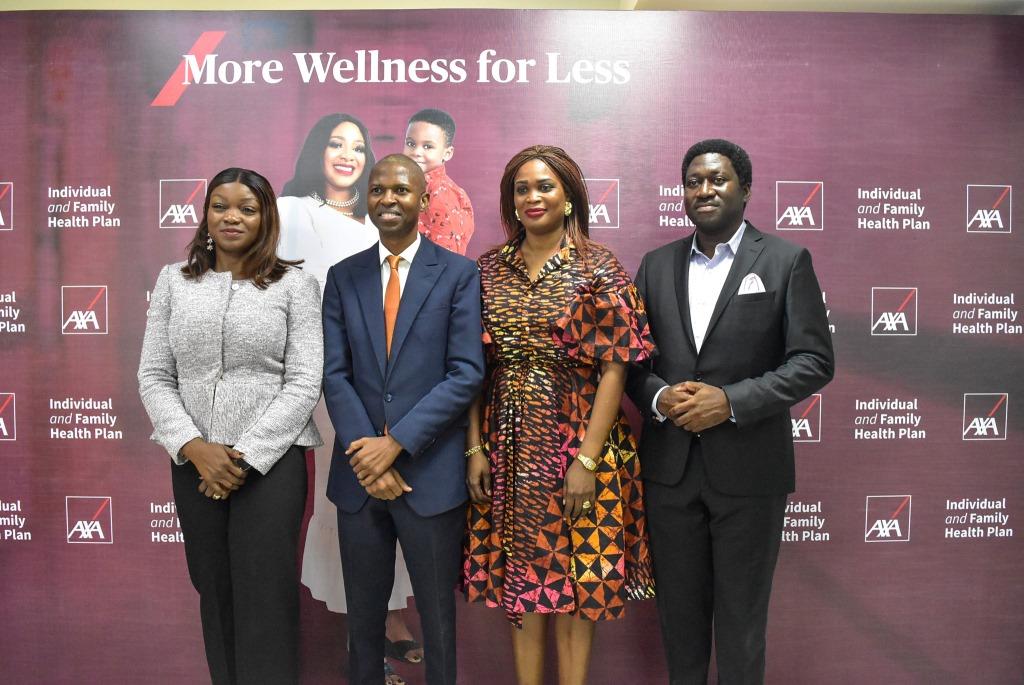
A new one-minute television commercial that highlights the importance of subscribing to a life insurance policy tagged More Wellness For Less has been unveiled by Axa Mansard Health.

The TVC seeks to enlighten the average Nigerian on the benefits they can derive from having a life insurance policy even while they are alive.

The chief executive of AXA Mansard Health, Mr Tope Adeniyi, while speaking at the launch of the commercial in Lagos, disclosed that for as low as N1,000, Nigerians could have access to AXA Mansard Health services.

“You also have products at N2,000 per month or easy care. There is a bronze plan that you can buy at about N60,000 per annum.

“So, we have a range from of simple products that enable you to have decent access to lifestyle products; you can configure them based on your lifestyle.

“Think about it, the value of your airtime is practically about three times the cost of buying access to more awareness or less. So, everyone can buy AXA,” Mr Adeniyi said.

At the event, the company gave an illustration of how crucial health insurance is.

A woman had an emergency with the child. Meanwhile, the husband wasn’t around, and she managed to rush the child to the hospital, where she was asked to deposit N30,000 before any form of treatment could be administered to the child.

This woman had N31,000 in her (bank) account. This is an emergency. Life is in the line. She had just that N30,000 paid for.

What if she were to pay N35,000? It could be N40,000! This is a woman who does not like begging people for money; probably, she could have resorted to just that. Imagine if the hospital had requested her to pay cash at this time of cash crunch; what a bad experience!

Well, this is where health insurance comes in, and there could not have been a better option than AXA Mansard Health. Yes, because there is another woman who has embraced AXA Mansard’s life health insurance policy and felt calmer in the face of a child’s ill health.

The second woman is calmer because she has MyAXA App.

MyAXA Mobile App is your one-stop non-banking financial service platform. The mobile services have been specifically designed to give users a more convenient way to purchase and manage health and other insurance plans. It is available for download for iPhone and Android users.

In the case of the woman who has the app, she was able to book an appointment, and on getting to the hospital the baby found herself in waiting hands. The woman is not bothered about cash.

The Chief Client Officer of AXA Mansard Insurance, Ms Rashidat Adebisi, remarked that, “It’s very important to us. Mental health is very topical. It has been for us for a long time. Those are some of the things that you can access under our retail products. There’s Wellness, there are genes, and there are so many things that are incorporated into it. We have telemedicine services incorporated into it. If a user prefers not to necessarily be at the hospital, you can access services through telemedicine, and the medication can be delivered to you.

“And we need to highlight that it’s also very affordable. I think a lot of people assume, oh, AXA, they are pricey, no. But in terms of value for money, I think that we are top of the list.

“In furtherance of the seamless service delivery to the users, AXA Mansard Health is working with Moove.”

Also, the Country Director for Moove, Taiwo Ajibola, speaking on the 1 minute TV Commercial video that we all saw, said the first lady had money. That money transfer wasn’t successful. That was the major issue there. We’ve all seen how the recent cash crunch impacted so many of us.

“Access to healthcare anywhere is a critical issue. With this kind of product (by AXA), you have so much access to hospitals. We encourage Nigerians to leverage on that, and we at Moove are here to make life even better for you.”

Continuing, Mr Adeniyi said they have mapped out a strategy on how people in the Diaspora can benefit from the products. “That means those who have ‘japa’ (emigrants) can buy for their family members; they can buy for their community, and they can adopt our products to impact life.

“So, you can reach out to [email protected], and we know more about the products and services.”

Modupe Gbadeyanka is a fast-rising journalist with Business Post Nigeria. Her passion for journalism is amazing. She is willing to learn more with a view to becoming one of the best pen-pushers in Nigeria. Her role models are the duo of CNN's Richard Quest and Christiane Amanpour.

Health

Nigeria on High Alert as WHO Declares Ebola Emergency of International Concern

Published

on

ebola dr congo

By Adedapo Adesanya

The Nigeria Centre for Disease Control and Prevention (NCDC) has said that although the country currently has no confirmed case of Ebola Virus Disease (EVD), it is, nevertheless, actively strengthening surveillance.

This comes as the World Health Organisation (WHO) declared the Ebola outbreak in Congo and Uganda a public health emergency of international concern, after 80 deaths were attributed to the disease.

The WHO, however, stopped short of declaring a pandemic, saying it did not meet the necessary criteria. The United Nations agency advised countries against closing borders or restricting trade.

Early symptoms include fever, muscle pain, fatigue, headache, and sore throat, and are followed by vomiting, diarrhoea, a rash, and bleeding.

In a statement by its Director General, Mr Jide Idris, on Sunday, the NCDC noted that it is also ramping up laboratory readiness, infection prevention, and public awareness efforts across the country.

He said the centre was closely monitoring the situation due to increasing regional movement across African countries and was working with relevant stakeholders, including the Port Health Services under the Federal Ministry of Health and Social Welfare, to strengthen preparedness within Nigeria’s public health system.

“NCDC is closely monitoring the situation and working with relevant stakeholders, including the Port Health Services, to ensure continued vigilance and preparedness within the public health system,” he stated.

The NCDC boss described Ebola virus disease as a severe viral illness transmitted through direct contact with the blood, bodily fluids, secretions, or contaminated materials of infected persons or animals.

He noted that the disease has an incubation period ranging from two to 21 days, while symptoms include fever, weakness, headache, muscle pain, sore throat, vomiting, diarrhoea, and, in severe cases, unexplained bleeding.

Recall that Nigeria gained international recognition for successfully containing an Ebola outbreak in 2014 after an infected traveller arrived in Lagos from Liberia.

Healthcare workers were advised to maintain a high index of suspicion for Ebola, especially in patients presenting symptoms compatible with the disease alongside relevant travel or exposure history.

Idris stressed the importance of strict adherence to infection prevention and control measures, including early identification and isolation of suspected cases, proper use of personal protective equipment, hand hygiene, and prompt reporting through established channels.

“NCDC will continue to monitor the situation closely and provide updates as necessary,” he added.

NCDC advised Nigerians to remain calm, maintain good hand hygiene, avoid misinformation, and report unusual illnesses promptly.

Continue Reading

Health

NNPC Donates MRI Machine, Others to Nnewi Teaching Hospital

Published

on

NNPC MRI Machine Nnewi teaching hospital

By Modupe Gbadeyanka

A 1.5 Tesla Magnetic Resonance Imaging (MRI) machine has been donated to the Nnamdi Azikiwe University Teaching Hospital (NAUTH), Nnewi, Anambra State, by the corporate social responsibility arm of the Nigerian National Petroleum Company (NNPC) Limited, NNPC Foundation.

In a statement on Sunday by its Chief Corporate Communications Officer, Mr Andy Odeh, the state-owned oil organisation said the medical item was given to the healthcare institution as part of its commitment to improving healthcare access and strengthening medical infrastructure across Nigeria.

The MRI system is expected to significantly improve access to advanced diagnostic imaging services for millions of Nigerians across the South-East (Anambra, Enugu, Imo, Abia and Ebonyi States) as well as neighbouring Delta State.

The foundation also provided critical supporting infrastructure, including RF shielding systems, chillers, backup UPS systems, electrical installations, specialised imaging accessories, ventilation systems, CCTV and oxygen monitoring systems, intercom communication facilities, and other patient comfort technologies designed to ensure optimal operation of the facility.

Before now, patients requiring advanced MRI diagnostic services often faced prolonged waiting periods, exorbitant costs, and the burden of travelling long distances in search of functional imaging centres.

But it is believed that the intervention of the NNPC Foundation would provide succour to patients.

At the presentation of the items to the institution over the weekend, the chief executive of the NNPC, Mr Bashir Bayo Ojulari, represented by the Managing Director of NNPC Foundation, Mrs Emmanuella Arukwe, described the intervention as a strategic investment in healthcare access, diagnostic precision, and improved patient outcomes, noting that the facility aligns with the company’s commitment to building sustainable systems and impactful national institutions.

“The installation of the MRI in NAUTH exemplifies our commitment, as our intent is to build enduring institutions, sustainable systems and legacies. This intervention aligns with our conviction that access to quality healthcare underpins human dignity, longevity and economic productivity,” Mr Ojulari stated.

‎He described the company’s social investments as viable currencies that strengthen the relationship between the Company’s core mandate of providing and managing energy for Nigerians and meeting stakeholders’ expectations.

‎In his remarks, the Governor of Anambra State, Mr Charles Soludo, who was represented by the Commissioner for Health, Dr Afam Obidike, said the intervention would enhance safe and precise diagnosis and treatment for patients across the South-East region.

He also commended NNPC Foundation for donating the MRI facility to the state, noting that the intervention would significantly improve access to quality healthcare services for the people.

The Chief Medical Director of NAUTH, Prof Joseph Ugboaja, thanked the donor for the items, saying NNPC Foundation has demonstrated that corporate social responsibility is not just a policy statement but a lifeline for institutions like ours.

“For too long, patients in our catchment area have had to travel long distances to access this level of diagnostic precision, often at prohibitive costs. With this installation, we will eliminate that burden,” he enthused.

Continue Reading

Health

Nigeria Launch €4.2m Initiative to Boost Capacity Against Outbreaks

Published

on

health financing fg

By Adedapo Adesanya

Nigeria has launched a €4.2 million programme supported by the European Union (EU) and implemented by the World Health Organisation (WHO) to strengthen the country’s capacity to detect and respond to disease outbreaks.

The initiative, known as the EU Support to Public Health Institutes in Nigeria (EU SPIN), will be carried out over four years in partnership with the Federal Ministry of Health and Social Welfare.

It is aimed at improving the performance of selected public health institutions through better coordination, faster information sharing and enhanced workforce capacity.

Speaking at the launch in Abuja on Monday, the Minister of State for Health and Social Welfare, Mr Iziaq Adekunle Salako, described the programme as a significant step towards strengthening Nigeria’s healthcare system.

“This initiative is designed to strengthen our health institutions, and it is truly a welcome development. It will improve the well-being of Nigerians, especially our vulnerable populations,” he said, noting that it aligns with the federal government’s broader health reform agenda.

Nigeria continues to face a dual health burden, with recurring infectious disease outbreaks alongside a growing prevalence of non-communicable diseases such as hypertension and diabetes.

According to the WHO, non-communicable diseases now account for 27 per cent of deaths in the country, while malaria alone contributes about 30 per cent of global malaria fatalities.

Recurrent outbreaks of cholera, diphtheria, Lassa fever, meningitis and Mpox also remain a major public health concern.

The EU SPIN programme is expected to address systemic gaps that slow outbreak response by strengthening collaboration among public health institutions and clarifying roles across federal, state and local levels.

It will also support real-time data systems to enable quicker and more informed decision-making during health emergencies.

A key component of the initiative is workforce development, with plans to train up to 75 per cent of public health staff in leadership, prevention and response strategies, as well as digital skills.

The European Union Ambassador to Nigeria, Mr Gautier Mignon, said the programme reflects a shared commitment to building resilient health systems.

“Through EU SPIN, the European Union is investing in strong, digitally enabled public health institutions in Nigeria. This partnership underscores our commitment to health security and sustainable systems strengthening,” he said.

Also speaking, the WHO Representative in Nigeria, Mr Pavel Ursu, noted that improved coordination and digital tools would enhance the country’s ability to protect lives.

“By improving coordination, skills and digital tools, the project will help protect lives and keep communities healthier,” he said.

Officials said the programme would ultimately strengthen links between public health systems and primary healthcare services, ensuring that communities benefit from faster and more effective responses to health threats.

By 2028, the initiative is expected to deliver more efficient inter-agency coordination, clearer institutional responsibilities and more reliable public health data nationwide, with progress tracked through national monitoring systems and periodic reviews involving government and development partners.

Continue Reading

Trending