Economy
Nigeria’s Crude Oil Output Falls to 1.517mbpd in March
By Adedapo Adesanya
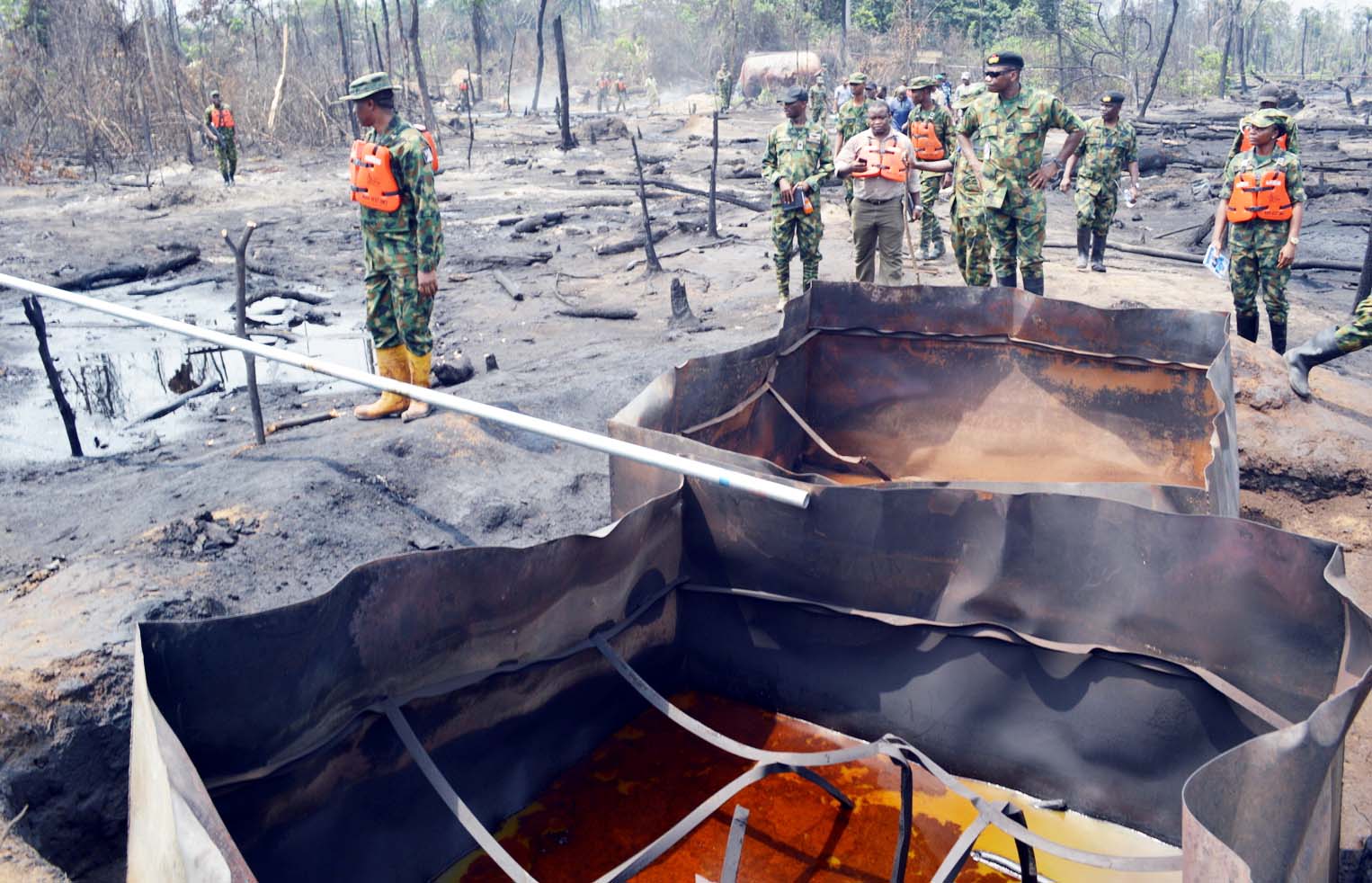
Nigeria’s crude oil output dropped month-on-month by 1.9 per cent to 1.517 million barrels per day in March 2023 from 1.547 million barrels per day recorded in February 2023.
This is according to the latest report by the Nigerian Upstream Petroleum Regulatory Commission (NUPRC), which indicated that the country’s crude output fell for the first time in three months.
The nation’s output had risen by 3.5 per cent in February 2023 to 1.54 million bpd, from 1.494 million barrels per day recorded in January, due to an improved battle against oil theft and other factors.
The Crude oil and Condensate Production 2023 noted that the output included 300,000 barrels per day – 400,000 barrels per day of condensate, which Nigeria had the capacity to produce.
This is slightly different from data from the Organisation of Petroleum Exporting Countries (OPEC) which showed that the country recorded 1.6 million barrels per day.
The survey established that the increased output level by Nigeria happened despite a 70,000 barrels per day drop in the OPEC oil output in March, which was attributed to oilfield maintenance in Angola and a halt in some of Iraq’s exports.
The largest drop of 100,000 barrels per day was in Angola and was due to a small export programme and field maintenance on the Dalia stream, resulting in exports hitting a multi-month low on some estimates.
The second-biggest drop came from Iraq, where companies have reduced output in the northern Kurdistan region following a halt to the export pipeline penultimate weekend.
Higher exports from southern Iraq limited the decline, the survey found, adding that OPEC’s output was significantly undershooting the targeted amount by 930,000 barrels per day because many producers – notably Nigeria and Angola – lack the capacity to pump at the agreed levels.
OPEC’s Gulf producers, Saudi Arabia, Kuwait and the United Arab Emirates, maintained high compliance with their targets under the OPEC+ agreement, the survey revealed.
Meanwhile, at the beginning of April, OPEC+ oil producers announced further oil output cuts of around 1.16 million barrels per day in a surprise move that caused an immediate rise in prices.
Other producers also made personal pledges led by Saudi Arabia – 500 thousand barrels per day; Iraq – 211 thousand barrels per day; United Arab Emirates – 144 thousand barrels per day; Kuwait – 128 thousand barrels per day; Kazakhstan – 78 thousand barrels per day; Algeria – 48 thousand barrels per day; Oman – 40 thousand barrels per day; and Gabon – 8 thousand barrels per day starting May until the end of 2023.
The pledges bring the total volume of cuts by OPEC+ to 3.66 million barrels per day or 3.7 per cent of global demand.
Economy
Brent Climbs to $71 on Fears of US Military Action Against Iran
By Adedapo Adesanya
The price of Brent crude oil grade went up by 0.14 per cent or 10 cents to $71.76 per barrel on Friday as investors worried about US military action against Iran, as President Donald Trump presses the Islamic Republic to halt nuclear weapon development.
However, the US West Texas Intermediate (WTI) crude oil grade finished at $66.39 a barrel after going down by 4 cents or 0.06 per cent.
The market awaited developments in the struggle between Iran and the US after President Trump said, “We have to make a meaningful deal, otherwise bad things happen,” referring to Iran.
The main concern for the crude oil market is that military activity will lead to a supply disruption if Iran decides to block shipping in the Strait of Hormuz. About 20 per cent of the world’s oil consumption passes through that waterway. Conflict in the area could limit oil entering the global market and push up prices.
There is the fear that a potential US military campaign in Iran could disrupt shipping in the Middle East are also adding upward pressure on supertanker rates.
Traders and investors ramped up purchases of call options on Brent crude in recent days, betting on higher prices.
Also supporting oil were reports of falling crude stocks and limited exports in the world’s biggest oil-producing and exporting countries. US crude inventories dropped by 9 million barrels as refining utilisation and exports climbed, an Energy Information Administration (EIA) report showed on Thursday.
Markets were also considering the impact of ample supply, with talks of the Organisation of the Petroleum Exporting Countries and its allies (OPEC+) leaning towards a resumption in oil output increases from April.
Eight OPEC+ producers – Saudi Arabia, Russia, the United Arab Emirates, Kazakhstan, Kuwait, Iraq, Algeria and Oman will meet on March 1. The eight members raised production quotas by about 2.9 million barrels per day from April to the end of December 2025, equating to about 3 per cent of global demand, and froze further planned increases for January through March 2026 because of seasonally weaker consumption.
Meanwhile, the oil market shrugged off a US Supreme Court decision ruling unconstitutional President Trump’s use of a law to levy tariffs in national emergencies.
Economy
PENGASSAN Kicks Against Tinubu’s Executive Order on Oil, Gas Revenues
By Adedapo Adesanya
The Petroleum and Natural Gas Senior Staff Association of Nigeria (PENGASSAN) has faulted the Executive Order signed by President Bola Tinubu on oil and gas revenues.
President Tinubu this week signed the Executive Order, titled The Upstream Petroleum Operations Cost Efficiency Incentives Order (2025), to safeguard and enhance oil and gas revenues for the Federation, curb wasteful spending, eliminate duplicative structures in the sector, and redirect resources for the benefit of the Nigerian people.
However, at a press conference in Abuja, PENGASSAN president, Mr Festus Osifo, argued that the tax incentives granted to oil companies by the President may not help in the reduction of cost if insecurity is not addressed.
“The Executive Order signed by the President yesterday is a direct attack on the provisions of the Petroleum Industry Act (PIA)—specifically Sections 8, 9, and 64,” Mr Osifo said.
“What the President has done is use an Executive Order to set aside a law of the Federal Republic of Nigeria. This is deeply troubling. What signal are we sending to investors and the international community?
“We are effectively telling them that the law of the land can be set aside by a simple executive decree. This is an aberration and should never have happened.”
According to a statement by the presidential spokesperson, Mr Bayo Onanuga, the President signed the EO in pursuance of Section 5 of the Constitution of the Federal Republic of Nigeria (as amended).
The Executive Order is anchored on Section 44(3) of the Constitution, which vests ownership, control, and derivative rights in all minerals, mineral oils, and natural gas in, under, and upon any land in Nigeria—including its territorial waters and Exclusive Economic Zone—in the Government of the Federation.
The directive seeks to restore the constitutional revenue entitlements of the federal, state, and local governments, which were removed in 2021 by the Petroleum Industry Act (PIA).
According to Mr Onanuga, the PIA created structural and legal channels through which substantial Federation revenues are lost via deductions, sundry charges, and fees.
Under the current PIA framework, NNPC Limited retains 30 per cent of the Federation’s oil revenues as a management fee on Profit Oil and Profit Gas derived from Production Sharing Contracts, Profit Sharing Contracts, and Risk Service Contracts. Additionally, the company retains 20 per cent of its profits for working capital and future investments.
The federal government considers the additional 30 per cent management fee unjustified, as the 20 per cent retained earnings are already sufficient to support NNPC Limited’s functions under these contracts.
Moreover, NNPC Limited also retains another 30 per cent of profit oil and profit gas under the Frontier Exploration Fund, as stipulated in sections 9(4) and (5) of the PIA.
Economy
Customs to Fast-Track Cargo Clearance at Lekki Deep Sea Port
By Adedapo Adesanya
The Comptroller-General of the Nigeria Customs Service (NCS), Mr Adewale Adeniyi, has unveiled a Green Channel initiative at the Lekki Deep Sea Port as part of efforts to simplify cargo clearance, reduce delays, and improve operational efficiency for port users.
The launch marks a major step in customs’ drive to enhance trade facilitation through technology and stakeholder collaboration.
Speaking at the event in Lagos, Mr Adeniyi said the initiative was introduced by the Lekki Deep Sea Port and approved by NCS management to address persistent challenges in container stacking and examination at major ports, which often slow cargo processing.
“This particular intervention helps to move containers right from the vessel into a dedicated place where customers can have access. And between the time the container moves from the vessel to this particular place, it is tracked,” he said.
The customs boss explained that the Green Channel is designed to ensure seamless cargo movement through a dedicated corridor with minimal bureaucratic obstacles, enabling faster turnaround time for importers and other stakeholders.
He described the initiative as a product of mutual trust between the agency and its stakeholders, stressing that compliance and cooperation are essential to its success.
“What we have done today is a product of the kind of trust that we have invested in our stakeholders and the confidence that we also have in them, that they would do this in the spirit of compliance and trade facilitation,” he said.
Mr Adeniyi added that beyond easing port operations, the Green Channel supports Nigeria’s broader economic objective of building a more competitive trade environment, noting that the initiative is expected to reduce the cost and time required to do business, ultimately boosting revenue generation for the service.
-
Feature/OPED6 years agoDavos was Different this year
-
Travel/Tourism10 years ago
Lagos Seals Western Lodge Hotel In Ikorodu
-
Showbiz3 years agoEstranged Lover Releases Videos of Empress Njamah Bathing
-
Banking8 years agoSort Codes of GTBank Branches in Nigeria
-
Economy3 years agoSubsidy Removal: CNG at N130 Per Litre Cheaper Than Petrol—IPMAN
-
Banking3 years agoSort Codes of UBA Branches in Nigeria
-
Banking3 years agoFirst Bank Announces Planned Downtime
-
Sports3 years agoHighest Paid Nigerian Footballer – How Much Do Nigerian Footballers Earn