Connect with us

Feature/OPED

Tasks Ahead of Sheriff Oborevwori, Delta State Governor-Elect

Published

on

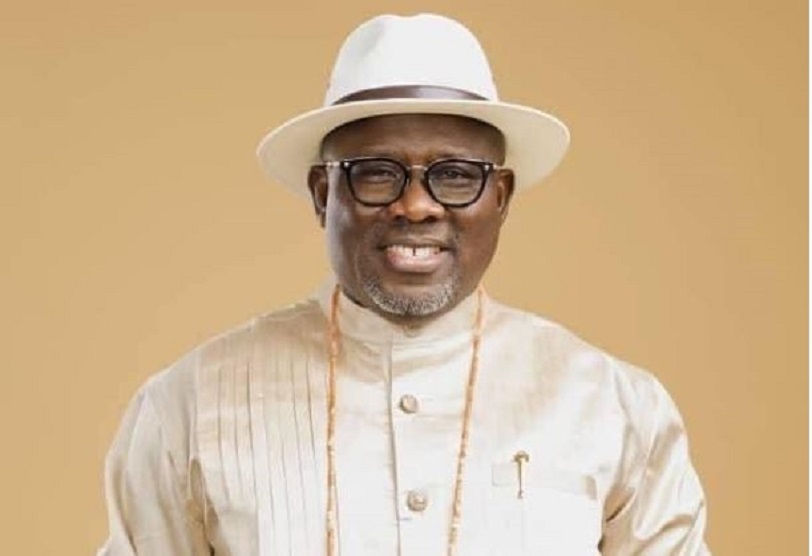
Sheriff Oborevwori

By Jerome-Mario Chijioke Utomi

It is pedestrian information that pursuant to the provisions of Section 72(1) of the Electoral Act 2022, the Independent National Electoral Commission (INEC) on Wednesday, March 29, 2023, issued a Certificate of Return to Chief Sheriff Oborevwori, the Delta State Governor-Elect.  The ‘ritual’ followed his electoral victory on Saturday, March 18, during the gubernatorial poll in the state as conducted by INEC.

With the victory, Sheriff, who is the current Speaker of the Delta State House of Assembly, has clearly shown that history does matter and demonstrated that ordinary calculation could be upturned by extraordinary personalities. Most importantly, with his victory, the ancient argument as to whether circumstance or personality shapes events is settled in favour of the latter.

Aside from torrents of accolades from Deltans of goodwill, with more expected for this unique achievement, there are flashes of reasons to believe that the Governor-Elect may be laced with good public leadership qualities. Out of many, the first that comes to mind is the awareness that as the current Speaker of the Delta State of Assembly (DTHA), he ran a rancour-free house for four years.

Despite this logical, rational and practical belief, I must, on the other hand, confess that since that announcement, each time I remember this feat, fears which leave me lost in a maze of high-voltage confusion come flooding. The reasons for this confusion stem from my concern as to where the Governor-Elect will find both will-power and political will to build a diversified and self-reliant economy that will withstand the shocks occasioned by the current physical, social and economic changes that have become a recurring decimal in the state.

However, evidence, in my view, also abounds and points to the fact that if Sheriff is ready to serve and save Deltans, he may face no confusion in this mandate as he is succeeding Dr Ifeanyi Okowa, the incumbent governor of the state reputed for infrastructural development and characterized by deep-seated sustainable visions, policies and programmes.

The above description of Okowa’s administration is a product of careful analysis of available public opinions and commentaries from Deltans and visibly signposted in areas such as values, fiscal discipline, robust and continuous community engagement, effective and efficient public communication, and excellent public service delivery for the benefit of this generation and the next.

His works in this direction consist essentially of the construction of good road networks, renovation/reconstruction/construction of over 5,000 classrooms in the state, rehabilitation of technical colleges in Agbor, Sapele, Ofagbe, Utagba-Ogbe, Ogor and Issele-Uku, incubation/establishment of three additional healthy universities to cater for the academic yearnings of the people of the state among other achievements.

The above feats notwithstanding, the incoming administration will obviously have more work to do and more reforms to make as the state’s economy is still distressed, unemployment high, the infrastructure deficit intimidating, the education sector hard pressed, and palpable despair in the land.

These are challenges in the state that will ‘’greet’ Sheriff led administration in the state upon assumption of office on the 29th of May 2023 and test his desire, resolve, and preparedness to translate to action and result in the ‘expect More mantra’ promised the good people of the state.

More specifically, it is worthy of note that as the incoming governor of the state, the hope of achieving rapid infrastructural development, engendering inclusive economic growth, reduce the worrisome high level of youth unemployment and pervasive poverty while improving the general well-being of all Deltans may be impossible if Oborevwori presents self as all-knowing, selfless, more intelligent or good looking than other stakeholders.

Governor Okowa and his administration made Delta State the Best in Human Capital Development in the 2017 States Peer Review by the National Competitiveness Council of Nigeria and in 2020, adjudged the Second Least Poor State, coming only after Lagos, by Nigeria’s business hub, Sheriff can as well win if he runs an all-inclusive government and execute people-focused projects.

It will be convenient to argue that the incoming governor is capped with the manifesto of his political party as well as laced with envisioned personal programmes to aid his day-to-day administration of the state. But the truth is that the time has come for you to make those codified documents less rigid in order to accommodate sincere suggestions from well-meaning Deltans.

Beginning with the education sector, the incoming administration must recognize that there are a large number of youths in the state that are knowledge/education hungry and daily project vividly and openly their potential, character, behaviour, performance skills and talent that need to be nurtured in a conducive environment and fairest fees.

Oborevwori needs to internalize the truth that any developmental plan in the state without youth education delivered in a well-structured learning environment and fair fees will amount to a mere waste of time and effort. Achieving this objective will be seamlessly made possible via progressive recognition of the right to education as a human right. In fact, it is one vital point the incoming administration in the state must not fail to remember. He must acknowledge and uphold the fact that Nigeria belongs to a number of international conventions, including the International Covenant on Economic, Social and Cultural Rights, where the right to education is paramount.

Very instructive; another reason why the incoming administration needs ample courage to fund the educational sector in the state is that without accessible and affordable education in the state, the children take to the streets where all forms of criminals and other social misfits who pose the actual threats in the forms of armed robbery thugs, drug abusers and other social ills that give bad names to the society are bred.

The plight of Deltans living in the coastal part of the state is another issue that will, in structure and context, demand urgent attention. A visit to that part of the state will reveal that they have not vanished physically but only exist in the frames.

In the riverine communities, many children, particularly the children of fishermen and women, are out of school not because they are not willing to be educated but because the cost of education is beyond the reach of their parents. For the majority of schools, no learning takes place as a greater number of public schools sited in the area are short of teachers and dotted with dilapidated buildings- On the other hand, the private schools where the environment is conducive for learning are not only far from those communities but also capital intensive.

To further support this position, I listened, a while ago, with rapt attention to King Monday Whiskey, Udurhie I, the Ovie of Iderhe Kingdom, speak on the challenges children of his kingdom need to confront to access education. King Whiskey, who spoke in Lagos, among other things, lamented that children in the Niger Delta must attain the age of 12 before starting from primary one because it is only at that age that children can be able to paddle their boat successfully to the other side of the community where their school is located.

From public affairs point of view, this piece believes that under this circumstance, the percentage of uneducated women will be very high since it is only at the age of 12 boys can be allowed to paddle boats to their schools. Readers of this piece can imagine what the fate of young girls in the community becomes. This further makes the global statistics feasible that just 39% of rural girls attend secondary school, and this is far fewer than that of rural boys, which is 45%, compared to urban girls, which is 59% and urban boys, 60%.

While this piece, therefore, calls on Oborevwori to design workable and efficient ways of bringing primary and secondary schools close to communities in the coastal/riverine communities in the state, it is equally important to add that the area is troubled but not despondent, a situation that makes it easy for them to be managed and contained.

Very key, even as the incoming administration in the state will definitely succeed in the assignment of leading the state by providing Deltans with a standard of living adequate for their health and well-being, job creation is vital as the large unemployed youth population is a threat to the security of the few that are employed.

Most importantly, the future of the state is full of promises as it is fraught with uncertainty. And the conventional leadership- the system is giving way to the one based on knowledge, and to build the Delta state of our dreams, the Oborevwori-led incoming administration must learn to be part of the knowledge-based world.

Jerome-Mario Chijioke Utomi is the Programme Coordinator (Media and Public Policy) at Social and Economic Justice Advocacy (SEJA), Lagos. He can be reached via je*********@***oo.com/08032725374

1 Comment

Leave a Reply

Your email address will not be published. Required fields are marked *

Feature/OPED

The Role of TV in Preserving African Stories and Identity

Published

on

Preserving African Stories

Scroll through social media today, and you will notice something interesting: everyone is either reacting to a series, quoting a movie line, or debating a character as though they personally know them. Beneath the memes and binge-watch culture, however, lies something deeper. Television remains one of the most powerful tools shaping how Africans see themselves, remember their history, and tell their own stories. In a continent as diverse and expressive as Africa, that matters more than ever.

TV as a Cultural Archive, Not Just Entertainment

Long before streaming algorithms began shaping our viewing habits, television was already preserving African identity. From Nollywood dramas that capture the rhythm of everyday Lagos life to documentaries exploring Maasai traditions and Ghanaian folklore, TV has served as a living archive of the continent’s stories.

It preserves more than entertainment; it preserves language, culture, humour, values, and shared experiences. Unlike fleeting social media content, television allows stories to unfold with depth, exploring the realities of family, tradition, ambition, and modern African life without reducing them to stereotypes. That is the power of TV: preserving not just stories, but perspective.

Why Representation on TV Still Matters

There is a subtle but important truth: if people do not see themselves on screen, they may begin to believe their stories are not worth telling. This is why African TV content is more than entertainment; it is affirmation.

Seeing a character who speaks like you, struggles like you, or celebrates like your community does something powerful. It validates identity and challenges outdated narratives that have historically defined Africa through external lenses.

This is where MultiChoice Group, through platforms such as DStv and GOtv, plays an important role. They do not simply broadcast content; they help distribute cultural memory at scale.

GOtv, DStv, and the Everyday African Viewer

Think about a typical evening in many African homes: the TV is on in the background, someone is laughing at a comedy show, another person is watching a local series, and someone else is catching up on the news. That shared viewing experience remains very real.

Through platforms such as DStv and GOtv, African households are exposed to a blend of local storytelling and global content. More importantly, they have helped amplify African-produced content by bringing Nollywood films, African reality shows, talk shows, and documentaries into mainstream rotation.

It is not just about access. It is about visibility.

A young filmmaker in Lagos today is more likely to believe their story matters because they have seen similar stories broadcast widely. A child in Accra grows up hearing familiar accents and seeing environments that look like their own on screen, not as exceptions, but as the norm.

TV Is Also Shaping Modern African Identity

African identity is not static; it is evolving. Television reflects that evolution in real time.

Today, audiences see:

  • Young Africans balancing tradition and modern dating culture

  • Stories tackling mental health in African households

  • Fashion and music influences spreading through TV series

  • Political satire shaping public conversation

Conversations that were once confined to homes are now being explored on screen, giving audiences the language to discuss issues that were previously unspoken.

In many ways, television is doing what oral tradition has always done: passing stories, values, humour, warnings, and history from one generation to the next. The difference is that today’s griots are writers, directors, and broadcasters.

The Future: From Watching to Owning Our Narratives

The next stage of African storytelling is not just about being seen; it is about ownership.

As more African creators produce content and platforms continue to invest in regional storytelling, television becomes more than a mirror. It becomes a tool for shaping how Africa is represented to itself and to the world.

While streaming continues to grow, television, particularly accessible platforms such as GOtv, remains one of the most effective ways to reach everyday audiences across different income levels and regions. After all, storytelling only matters if people can access it.

African stories are not new. They have always existed in families, on streets, in markets, in history books, and through oral traditions. What television has done, and continues to do, is give those stories a stage wide enough for millions to experience them at once.

The next time you watch a local series or documentary on DStv or GOtv, remember that you are not just being entertained. You are participating in the preservation of African identity itself.

Continue Reading

Feature/OPED

The Future of AI in Nigerian SMEs: Overcoming Barriers to Implementation

Published

on

Kehinde Ogundare 2025

By Kehinde Ogundare

Ask a tech entrepreneur in San Francisco what AI means for their business, and they are likely to talk about competitive advantage, product differentiation, and scale. Ask a small business owner in Kano or Onitsha the same question, and the conversation shifts entirely.

For many Nigerian SMEs, the priority is keeping the lights on, managing costs, and finding sustainable ways to grow in a challenging economic environment. This difference in perspective explains why the global AI conversation, often shaped by assumptions about stable infrastructure, deep capital, and abundant technical talent, frequently fails to address the realities facing Nigerian SMEs.

This matters because Nigerian SMEs are not a peripheral concern. In 2024 alone, MSMEs contributed 46.32% to Nigeria’s GDP, accounting for 96.9% of businesses and 87.9% of employment. These businesses are the backbone of the Nigerian economy, and if AI is going to mean anything for Nigeria’s development, it has to work for them in the daily conditions they actually operate in.

However, research drawing on empirical data from 144 Nigerian SMEs found that inadequate infrastructure, low digital literacy, skills shortages, and regulatory gaps are collectively preventing them from meaningfully engaging with AI. Awareness of AI is high and growing. What is missing is a clear and honest conversation about what adoption actually requires in this specific context. The barriers are real, but none of them are insurmountable. The question is whether the tools, pricing models, and support structures being offered to Nigerian SMEs are designed with those barriers in mind, or whether they have been built for another market entirely.

Subscription models making AI affordable for small businesses

When most small business owners hear “AI,” they imagine expensive software, specialist consultants, and a hefty upfront bill.

That assumption is not entirely wrong, but it describes a particular way of buying technology, not AI itself. The shift that makes AI genuinely accessible at the SME level is the move away from large, one-time capital purchases towards tools that charge a predictable monthly subscription. Businesses can pay for what they use, scale back when necessary, and avoid the debt that a major technology investment can create.

The deeper opportunity here is consolidation. Many SMEs are already spending money across multiple disconnected tools—one for invoicing, another for customer records, another for stock tracking—none of which talk to each other. An integrated platform that handles several of these functions together, with AI built in, can actually cost less than the sum of those separate subscriptions while giving business owners a clearer picture of their operations.

With margins already under pressure, any technology a business adopts needs to visibly show an increase in productivity or bottom line. Subscription-based, integrated platforms, priced transparently and honestly, are the model that best fits this reality.

Infrastructure challenges demand a mobile-first approach

No conversation about technology in Nigeria is complete without confronting the infrastructure problem, and AI is no exception. Nigeria continues to face major infrastructure barriers, including limited broadband access, unreliable power supply, and high data costs, all of which constrain deeper AI adoption. These are structural features of the operating environment that any sensible technology strategy must account for today.

The electricity situation alone is significant. The World Bank estimates that the lack of stable electricity costs Nigeria’s economy approximately $26.2 billion annually, equivalent to about 2% of GDP, forcing many businesses to run on expensive diesel generators. That cost ripples outward.

In practical terms, AI tools built for Nigeria cannot assume a stable broadband connection or a computer that is always powered on. The tools that will actually get used are the ones that work on a smartphone, consume minimal data, and can function offline when connectivity drops, syncing back up when it returns. The mobile phone is already how many Nigerian SME owners run their businesses. AI that meets them there, rather than demanding infrastructure they do not have, is AI that has a genuine future in this market.

The direction is clear: build capability from within, using tools that make that possible. Recent AI performance research reveals that 64% of African workers are already actively using AI at work, signalling massive grassroots readiness and driving forward-thinking organisations across Nigeria, Kenya, and South Africa to aggressively prioritise internal upskilling frameworks to bridge the talent gap.

As the policy groundwork is being laid, the commercial ecosystem is beginning to respond. What remains is a clear-eyed acceptance that AI tools built for this market need to look different from those built for markets with different realities. Low cost, low bandwidth, and usability for non-technical people are not modest ambitions; they are the actual requirements. Build for those realities, and AI has a real future in Nigeria’s SME economy.

Continue Reading

Feature/OPED

When Leaders THRIVE: Yetunde B. Oni’s Candid Counsel to Lateef Jakande Leadership Academy

Published

on

When Leaders THRIVE Yetunde B. Oni

Union Bank’s Managing Director and Chief Executive Officer sat with 30 of Nigeria’s most promising young leaders for a frank conversation on character, relationships and the discipline of growth.

Out of 25,000 applicants, only 30 earned a place. That single figure tells you how rare the room was when Yetunde B. Oni, Managing Director and Chief Executive Officer of Union Bank of Nigeria, recently sat down with a cohort of the Lateef Jakande Leadership Academy.

The Academy, a Lagos State Government initiative established in honour of Alhaji Lateef Kayode Jakande, the state’s first civilian governor, exists to raise a generation of ethical and capable young leaders. Its fellows are drawn from across professions, sectors and ethnicities, and shaped through a fellowship facilitated by the Africa Leadership Initiative, West Africa (ALI WA), whose work on values and principled leadership has become a quiet engine behind some of the country’s most thoughtful emerging talent.

It was into this gathering that Mrs Oni brought not a corporate address, but a conversation. Honest, personal and at times disarming, she spoke about the philosophies that have carried her through a career spanning more than three decades, the setbacks she has had to surmount, and the values that opened doors she never expected to walk through.

She gave them a framework to hold on to. She called it THRIVE.

The six principles

T — Take ownership of your relationships. Leadership, she argued, begins with the deliberate stewardship of the people around you. Relationships are not incidental to a career. They are infrastructure.

H — Honour God. She spoke openly about faith as a steadying force, an anchor that keeps ambition tethered to something larger than the self.

R — Recharge and refresh. Mental and physical health, she insisted, are not luxuries to be deferred until the work is done. Leaders who neglect their well-being eventually have less to give.

I — Invest in your growth. Continuous and heavy investment in personal development is, in her telling, the price of staying relevant. The learning never ends.

V — Value your work. She pressed the fellows on identity and brand. What do you stand for? Do you create value? Who, in truth, are you? The questions were not rhetorical.

E — Embrace setbacks. Failure, she said, is not the opposite of progress but a part of it. The leaders who endure are the ones who learn to metabolise disappointment rather than be defeated by it.

The people behind the leader

If one theme threaded the entire conversation, it was relationships. Mrs Oni was candid that she did not arrive at the top of Nigerian banking alone. She credited the steady support of family, her parents and her husband, alongside the mentors, friends, coaches and sponsors who shaped her at different stages.

She drew a sharp and useful distinction between a mentor and a coach, two roles often conflated and rarely understood, and she traced much of her progress back to a foundation of Nigerian cultural values: hard work, honesty and integrity, courtesy and respect. These, she told the fellows, are not relics. They are the very qualities that have earned her trust and opened doors throughout her journey.

“You need people,” was the message, delivered without sentiment. Relationships, she explained, must be managed and nurtured with the same seriousness one brings to any other discipline. Time must be managed with equal care.

On believing, and risking

Perhaps the most resonant moment came when Mrs Oni spoke about self-belief. She admitted that becoming the MD/CEO of Standard Chartered Bank, Sierra Leone, did not cross her mind – not because she was unqualified, but because she didn’t think she would get it. Encouraged by her husband, she applied anyway, and she got it!

That appointment would later see her make history as the first woman to lead a Standard Chartered Bank operation in her market.

The Union Bank of Nigeria appointment told a similar story. She had not even known the position existed after the CBN’s intervention. It came to her through relationships; through the quiet networks of people who knew her work and recommended her name while she was unaware in faraway Sierra Leone.

The lesson she left with the fellows was unambiguous. Believe in yourself. Take the risk. Put in for the thing you are not yet certain you deserve, because the opportunity you are waiting for may be one you cannot see, reaching you through someone you have not yet met.

Why this matters

Engagements of this kind are easy to underestimate. They produce no headlines about balance sheets and no immediate line on a financial statement. Yet they speak to something Union Bank has long understood: that institutions endure when they invest in people, and that leadership is built one honest conversation at a time.

Credit is due to the Africa Leadership Initiative, West Africa, whose facilitation of the Lateef Jakande Leadership Academy continues to shape young Nigerians of real promise, and to the Academy itself for the rigour of a process that turned 25,000 hopefuls into 30 fellows ready to lead.

For Yetunde B. Oni, the afternoon was less about what she had achieved than about what she was willing to give: her time, her story and her counsel, offered freely to those coming after her. It is, in the end, what the best leaders do. They light the path for the next generation, and they THRIVE.

Continue Reading

Trending