Connect with us

Economy

Fuel Subsidy Returns as Landing Cost Hits N145

Published

on

By Dipo Olowookere

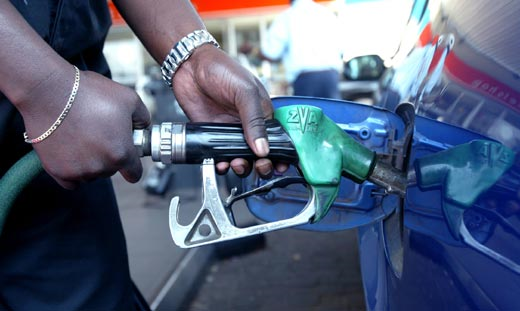
Following an increase in the landing cost of Premium Motor Spirit, also known as petrol, to N145 per litre, Federal Government has resorted to the subsidy regime to ensure consumers in the country get the commodity at the official N145 per litre.

This is coming about eight months after the President Muhammadu Buhari-led regime stopped the fuel subsidy, which was costing the government millions of Naira being paid monthly to oil marketers importing the product then.

Investigations by Punch on Friday showed that the Nigerian National Petroleum Corporation (NNPC), now responsible for about 90 percent of the importation of the product, is currently bearing the latest subsidy cost on behalf of the government.

The Federal Government had on May 11, 2016 announced a new petrol price band of N135 to N145 per litre, a move that signalled the end of fuel subsidy.

The Head of Energy, Ecobank Capital, Mr Dolapo Oni, said, “I believe there is a subsidy, but it is not the subsidy being paid to marketers. It is the NNPC taking a loss so that marketers can sell at N145. That’s a fair system right now because it is better than paying marketers at the same time.”

It would be recalled that the Petroleum Products Pricing Regulatory Agency (PPPRA) had then explained that the rise in crude oil price and prevailing high cost of importation had brought back subsidy.

The PPPRA, in its pricing template released following the introduction of a new price band, put the landing cost and total cost of petrol at N122.03 and N140.40 per litre, respectively.

The cost of the product and the freight rate, which are the elements mostly affected by crude oil price and exchange rate, were put at $534 per metric tonne of petrol or N111.30 per litre, using an exchange rate of N280/dollar.

Global oil benchmark, Brent crude, which was trading around $41 per barrel when the petrol price was increased, stood at $55.64 per barrel as of 5.15pm on Friday.

Crude oil price accounts for about 80 per cent of the final cost of fuel, the PPPRA said, in its framework for petroleum products supply, distribution and pricing.

Punch gathered that the cost of petrol stood at $560 per metric tonne or N127.36 per litre plus N7 per litre for freight as of Friday.

The addition of the cost of product with freight charge and other cost elements in the PPPRA template result in a landing cost of N145.09 per litre (using the official exchange rate of N305/dollar) or N222.33 per litre (using the parallel market rate of N490/dollar).

The NNPC, in its latest monthly report, said it remained the major importer of petroleum products, especially the PMS, in spite of liberalisation of petroleum products and government’s intervention meant to ease marketers’ access to foreign exchange.

In the past, marketers were importing 70 percent of the products while the NNPC was importing 30 per cent, being the supplier of last resort.

Most of the marketers have yet to resume importation of petrol and continued to rely on supply from the NNPC, which sells to them at N131 per litre.

An ex-top executive of the PPPRA, who spoke with Punch on condition of anonymity, said, “If the landing cost is more and somebody is bringing the product in and others are not, it means definitely that person, who is bringing it, is running at a loss somehow. So, if you now call that subsidy, it is okay.

“The NNPC is definitely subsidising the product; it is a loss to them also because they get the money from somewhere.”


Modupe Gbadeyanka is a fast-rising journalist with Business Post Nigeria. Her passion for journalism is amazing. She is willing to learn more with a view to becoming one of the best pen-pushers in Nigeria. Her role models are the duo of CNN's Richard Quest and Christiane Amanpour.

Economy

Investors Gain N333bn Trading Nigerian Equities

Published

on

attracted younger investors NGX

By Dipo Olowookere

A 0.31 per cent gain was recorded by the Nigerian Exchange (NGX) Limited on Tuesday, helped by renewed bargain-hunting by investors, with the year-to-date return extending to 6.61 per cent.

It was observed that the growth achieved by Customs Street yesterday was supported by the banking and the industrial goods indices, which went up by 1.32 per cent and 0.69 per cent apiece.

They offset the losses recorded by the three other sectors, with the insurance counter down by 1.32 per cent, the consumer goods segment down by 0.23 per cent, and the energy space down by 0.17 per cent.

At the close of business, the All-Share Index (ASI) increased by 516.94 points to 165,901.57 points from 165,384.63 points and the market capitalization appreciated by N333 billion to N106.495 trillion from N106.162 trillion.

The market breadth index was positive yesterday after the bourse ended with 35 price gainers and 34 price losers, representing bullish investor sentiment.

The quartet of Industrial and Medical Gases (IMG), Union Dicon, Zichis, and Austin Laz chalked up 10.00 per cent each to sell for N34.65, N9.90, N5.06, and N4.07, respectively, while RT Briscoe appreciated by 9.95 per cent to N9.50.

On the flip side, Omatek lost 10.00 per cent to trade at N2.43, Cutix also fell by 10.00 per cent to N3.15, Union Homes shrank by 9.95 per cent to N76.90, Sunu Assurances declined by 9.94 per cent to N4.62, and Deap Capital crashed by 9.93 per cent to N7.62.

During the trading day, 736.4 million stocks worth N24.7 billion exchanged hands in 46,026 deals compared with the 762.8 million stocks valued at N18.4 billion traded in 55,374 deals a day earlier, indicating a rise in the trading value by 34.24 per cent, and a slip in the trading volume and number of deals by 3.46 per cent and 16.88 per cent apiece.

The activity chart was led by volume on the second trading session of the week by GTCO with 65.9 million equities valued at N6.5 billion, Chams transacted 55.7 million shares worth N249.8 million, Custodian Investment traded 49.8 million stocks for N2.2 billion, Universal Insurance sold 36.1 million equities valued at N51.5 million, and Zenith Bank exchanged 35.4 million shares worth N2.6 billion.

Continue Reading

Economy

Oil Market Rises 2% on Fresh Iran-US Confrontation

Published

on

crude oil market

By Adedapo Adesanya

The oil market was up by nearly 2 per cent on Tuesday after the United States shot down an Iranian drone approaching an aircraft carrier and armed boats in the Strait of Hormuz, stoking concerns talks aimed at de-escalating US-Iran tensions could be disrupted.

This action caused the Brent futures to rise by $1.03 or 1.6 per cent to $67.33 per barrel, as the US West Texas Intermediate (WTI) futures jumped by $1.07 or 1.7 per cent to $63.21 a barrel.

Both crude benchmarks dropped more than 4 per cent on Monday after President Donald Trump said Iran was seriously talking with America.

However, the US military shot down an Iranian drone that “aggressively” approached the Abraham Lincoln aircraft carrier in the Arabian Sea on Tuesday.

In the Strait of Hormuz between the Persian Gulf and the Gulf of Oman, Iranian gunboats approached a US-flagged oil tanker in what US and British maritime security sources describe as a failed attempt to interfere with the vessel’s transit.

Members of the Organisation of the Petroleum Exporting Countries (OPEC) including Saudi Arabia, Iran, the United Arab Emirates, Kuwait and Iraq export most of their crude via the strait, mainly to Asia. The Strait of Hormuz, through which roughly a fifth of the world’s oil supply passes, remains Iran’s most obvious pressure point.

Despite the latest development, the UAE urged Iran and the US on Tuesday to use the resumption of nuclear talks this week to resolve a standoff that has led to mutual threats of air strikes. Iran, meanwhile, is demanding that talks be held in Oman not Turkey.

In Ukraine, President Volodymyr Zelenskiy accused Russia on Tuesday of exploiting a US-backed energy truce to stockpile munitions, and using them to attack Ukraine a day before peace talks. This boosted worries that Russia’s oil would remain sanctioned for longer.

On Monday, President Trump announced a trade deal with India, one of the world’s biggest economies and oil importers, on Monday to cut tariffs to 18 per cent from 50 per cent in exchange for the country halting Russian oil purchases and lowering trade barriers.

The American Petroleum Institute (API) estimated that crude oil inventories in the US decreased by 11.1 million barrels in the week ending January 30. Crude oil inventories decreased by 247,000 barrels in the week prior.

Official data from the US Energy Information Administration (EIA) will be published later on Wednesday.

Continue Reading

Economy

AFC Commits Support to Transformative Reforms in Nigeria’s Power Sector

Published

on

power sector liabilities

By Adedapo Adesanya

The Africa Finance Corporation (AFC), the continent’s leading infrastructure solutions provider, has reiterated its commitment to playing a pivotal role to support transformative reforms in Nigeria’s power sector.

This is as it act as co-Financial Adviser to the Nigerian government on the successful issuance of the recent N501 billion inaugural tranche under the Presidential Power Sector Financial Reforms Programme (PPSFRP), as part of the N4 trillion Power Sector Bond Programme, aimed at resolving over a decade of legacy debt obligations in Nigeria’s electricity supply industry and restoring financial stability across the sector.

AFC provided comprehensive financial advisory services to the federal government, including the design of the Programme’s negotiation strategy framework, support in negotiating and executing Settlement Agreements with Power Generation Companies (GenCos), and structuring the bond issuance. Working in partnership with CardinalStone Partners as co-Financial Advisers, AFC deployed its deep sector expertise and strong local market knowledge to deliver the landmark transaction.

The programme was overseen by the Presidential Power Sector Debt Reduction Committee (PPSDRC), with technical leadership from the Office of the Special Adviser to the President on Energy, and implemented through NBET Finance Company Plc, a special purpose vehicle of Nigerian Bulk Electricity Trading Plc (NBET). Proceeds from the issuance will be used to settle verified, overdue receivables owed to GenCos for electricity supplied between February 2015 and March 2025, injecting liquidity into the power sector and extinguishing long-standing claims.

Commenting on AFC’s involvement, Mr Banji Fehintola, Executive Board Member and Head, Financial Services at Africa Finance Corporation, said: “The successful issuance of the inaugural tranche under the Power Sector Bond Programme underscores AFC’s commitment to supporting transformative reforms in Nigeria’s power sector. By resolving long-standing liquidity challenges and restoring confidence among investors and operators, this transaction lays the foundation for sustainable growth and improved electricity supply across the country.”

When fully implemented, the programme is expected to impact approximately 5,398MW of electricity generation capacity by Nigerian GenCos and finalise settlement for 290,644.84GWh of electricity billed since 2015. It will also strengthen companies serving about 12 million active registered customers, creating a solid platform for new investments in capacity enhancement and expansion.

Continue Reading

Trending