Connect with us

General

Steps to Getting A US Visa in Lagos

Published

on

US visa in Lagos

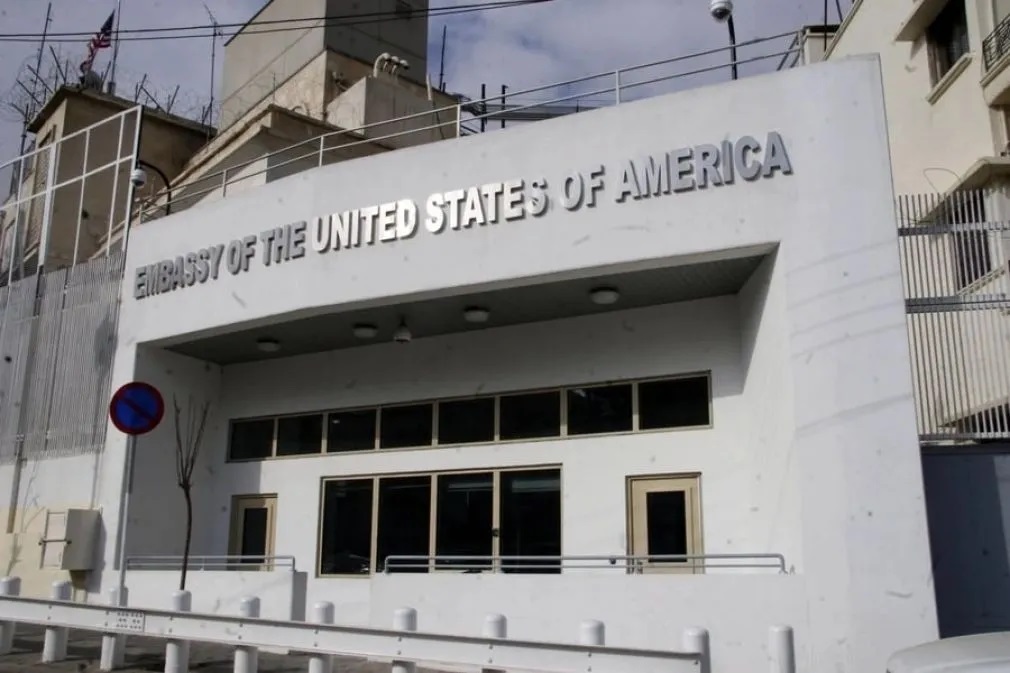
Obtaining a US visa can be daunting, especially for first-time applicants. For Nigerians seeking to travel to the United States, the visa application process requires patience, attention to detail, and adequate preparation. The US Consulate in Lagos handles visa applications for Nigerians in the country’s southern region.

This article will provide a step-by-step guide on obtaining a US visa in Lagos, Nigeria, highlighting the necessary documents, fees, and procedures involved.

Determine the type of visa you need

This is a crucial step as it determines the purpose of your travel and the visa category you will apply for. There are various types of visas available for Nigerians, such as tourist, business, student, and work visas.

Learn more about the U.S. options for Nigerian citizens in this article.

Tourist visas are for individuals who wish to travel to the United States for tourism, vacation, or to visit family and friends. Business visas are for individuals who wish to travel to the United States for business purposes, such as attending conferences, meetings, or negotiations. Student visas are for individuals who wish to study in the United States, while work visas are for individuals who wish to work or engage in employment-related activities in the United States.

It is essential to determine the appropriate visa category that aligns with your purpose of travel to avoid delays or denials in the visa application process.

Complete the online application form

The second step in obtaining a US visa in Lagos, Nigeria, is to complete the online application form, in most cases, the DS-160. The DS-160 is a mandatory form that all applicants must complete for a US nonimmigrant visa.

The form collects biographical information, including an identifying photo, travel details, and other relevant information about the applicant. It is essential to provide accurate and truthful information on the form as the US consulate uses it to determine the applicant’s eligibility for a visa.

The DS-160 is an electronic form that is completed and submitted online. After submitting the form, applicants will receive a confirmation page that must be printed and presented during the visa interview.

Pay the visa fee

The visa fee is a non-refundable fee that must be paid before the visa interview. The fee varies depending on the type of visa being applied for and can be paid online or at designated banks. In Nigeria’s case, the bank is GTBank. The fee for most nonimmigrant visas is $160.

It is important to keep the visa fee receipt as proof of payment, as it will be required during the visa interview.

In addition to the visa fee, there may be additional fees for certain visa categories, such as the SEVIS fee for F and M student visas or the petition-based visa fee for certain employment-based visas. These fees must also be paid before the visa interview.

It is important to note that payment of the visa fee does not guarantee the issuance of a visa.

Schedule and prepare yourself for the interview

After paying the visa fee, you must schedule an appointment for a visa interview at the US Consulate in Lagos.

2 Walter Carrington Crescent,

Victoria Island, Lagos

Telephone: (234)-1- 460-3400

Fax: (+234)-1-460-3717

Preparing for a US visa interview is essential in the visa application process. Here are some tips on how to prepare for a US visa interview:

  • Review the application and gather necessary documents: Before the interview, review your visa application and ensure that all the information provided is accurate and up-to-date;
  • Research the visa category and interview process. This will help you prepare adequately and be confident during the interview;
  • Practice answering interview questions. Common interview questions include your purpose of travel, your job or school, your ties to your home country, and your financial situation.

Attend your interview

Attending a US visa interview can be a nerve-wracking experience, but proper preparation can make a significant difference. Here are some tips to help you ace your US visa interview:

  • Be on time: Arrive at the consulate early to allow enough time for security checks and other formalities. Being punctual shows that you are responsible and take the interview process seriously;
  • Dress appropriately: Dress in business or business-casual attire to create a positive impression;
  • Be polite and respectful: During the interview, be polite and respectful to the consular officer. Use polite language and avoid interrupting or arguing with the officer. Remember that the officer is there to determine your eligibility for a visa, so it’s essential to maintain a positive attitude and be cooperative;
  • Be prepared to provide detailed information about your purpose of travel. If you’re traveling for business, be specific about your business’s nature and intended activities. If you’re traveling for tourism, explain your itinerary and the places you plan to visit. It’s crucial to show that you have a legitimate reason for traveling to the US;
  • Provide accurate and truthful information during the interview. If you provide false information, it may result in the denial of your visa application;
  • Be prepared for additional screening: In some cases, additional screening may be required after the interview. If this happens, be patient and provide all necessary information to the consulate.

Wait for decision

After the interview, you will be informed of the visa decision. If your visa application is approved, your passport with the visa will be returned to you within a few days. If your application is denied, you will receive a letter explaining the reason for the denial.

Obtaining a US visa can be a complex and challenging process, but with the right preparation and mindset, it can be a rewarding experience. Understanding the visa application requirements is essential, as researching your visa category and preparing adequately for the interview.

Following the tips outlined in this article can increase your chances of a successful visa application and have a stress-free interview experience. Remember to stay calm, be confident, and provide accurate and truthful information during the interview. With proper preparation, you can achieve your dream of traveling to the US.


Dipo Olowookere is a journalist based in Nigeria that has passion for reporting business news stories. At his leisure time, he watches football and supports 3SC of Ibadan. Mr Olowookere can be reached via [email protected]

Advertisement
1 Comment

1 Comment

Leave a Reply

Your email address will not be published. Required fields are marked *

General

Nigeria Risks Brain Drain in Energy Sector—PENGASSAN

Published

on

energy sector

By Adedapo Adesanya

The Petroleum and Natural Gas Senior Staff Association of Nigeria (PENGASSAN) has warned that Nigeria risks massive brain drain in the oil and gas sector due to poor remuneration.

The president of PENGASSAN, Mr Festus Osifo, said at the end of the National Executive Council (NEC) meeting of the union on Thursday in Abuja that the industry was facing challenges arising from Naira devaluation and inflation, noting that, oil and gas skills remained globally competitive.

Painting an example, he said, “A drilling engineer in Nigeria does the same job as one in the US or Abu Dhabi,” noting that the union must take steps to bridge the wage gap to prevent members from leaving the country for better opportunities abroad.

“If we don’t act, the brain drain seen in other sectors will be child’s play,” he said.

According to him, PENGASSAN has recorded significant gains through collective bargaining across oil and gas branches.

“We signed numerous agreements across government agencies, IOCs, service and marketing sectors,” he said.

He said the agreements brought relief to members facing rising costs of living, adding that, the association’s duty is to protect members’ jobs and enhance their pay.

Mr Osifo urged companies delaying salary reviews and those foot-dragging as a result of the prevailing economic realities, to do the needful.

He said the industry employed some of the nation’s best talents, making competitive pay critical to retaining skilled workers.

“This industry recruits the best. Companies must provide the best conditions,” he said.

On insecurity, Mr Osifo urged government to take decisive action against terrorism and kidnappings across the country.

“We are tired of condemnations. government must expose sponsors and protect citizens,” he said.

He urged government at all levels to prioritise tackling insecurity through better funding and equipment for security agencies.

Mr Osifo said PENGASSAN supported calls for state police to improve local security response, adding that decentralising policing will protect citizens better than rhetoric.

He also said economic indicators meant little, if food prices remained high and farmers could not return to farms due to insecurity.

“Nigerians want to see food on the table, not macroeconomic figures,” he said, urging the government to coordinate fiscal and monetary policies to ensure economic gains reach households.

Continue Reading

General

Bill Seeking Creation of Unified Emergency Number Passes Second Reading

Published

on

Unified Emergency Number

By Adedapo Adesanya

Nigeria’s crisis-response bill seeking to establish a single, toll-free, three-digit emergency number for nationwide use passed for second reading in the Senate this week.

Sponsored by Mr Abdulaziz Musa Yar’adua, the proposed legislation aims to replace the country’s chaotic patchwork of emergency lines with a unified code—112—that citizens can dial for police, fire, medical, rescue and other life-threatening situations.

Lawmakers said the reform is urgently needed to address delays, miscommunication and avoidable deaths linked to Nigeria’s fragmented response system amid rising insecurity.

Leading debate, Mr Yar’adua said Nigeria has outgrown the “operational disorder” caused by multiple emergency numbers in Lagos, Abuja, Ogun and other states for ambulance services, police intervention, fire incidents, domestic violence, child abuse and other crises.

He said, “This bill seeks to provide for a nationwide toll-free emergency number that will aid the implementation of a national system of reporting emergencies.

“The presence of multiple emergency numbers in Nigeria has been identified as an impediment to getting accelerated emergency response.”

Mr Yar’adua noted that the reform would bring Nigeria in line with global best practices, citing the United States, United Kingdom and India, countries where a single emergency line has improved coordination, enhanced location tracking and strengthened first responders’ efficiency.

With an estimated 90 per cent of Nigerians owning mobile phones, he said the unified number would significantly widen public access to emergency services.

Under the bill, all calls and text messages would be routed to the nearest public safety answering point or control room.

He urged the Senate to fast-track the bill’s passage, stressing the need for close collaboration with the Nigerian Communications Commission (NCC), relevant agencies and telecom operators to ensure nationwide coverage.

Senator Ali Ndume described the reform as “timely and very, very important,” warning that the absence of a reliable reporting channel has worsened Nigeria’s security vulnerabilities.

“One of the challenges we are having during this heightened insecurity is lack of proper or effective communication with the affected agencies,” Ndume said.

“If we do this, we are enhancing and contributing to solving the security challenges and other related criminalities we are facing,” he added.

Also speaking in support, Senator Mohammed Tahir Monguno said a centralised emergency number would remove barriers to citizen reporting and strengthen public involvement in security management.

He said, “Our security community is always calling on the general public to report what they see.

“There is a need for government to create an avenue where the public can report what they see without any hindrance. The bill would give strength and muscular expression to national calls for vigilance.”

The bill was referred to the Senate Committee on Communications for further legislative work and is expected to be returned for final consideration within four weeks.

Continue Reading

General

Tinubu Swears-in Ex-CDS Christopher Musa as Defence Minister

Published

on

ex-cds christopher musa

By Modupe Gbadeyanka

The former chief of defence staff (CDS), Mr Christopher Musa, has been sworn-in as the new Minister of Defence.

The retired General of the Nigerian Army took the oath of office for his new position on Thursday in Abuja.

The Special Adviser to the President on Information and Strategy, Mr Bayo Onanuga, confirmed this development in a post shared on X, formerly Twitter, today.

“General Christopher Musa takes oath of office as Nigeria’s new defence minister,” he wrote on the social media platform this afternoon.

Earlier, President Bola Tinubu thanked the Senate for confirming Mr Musa when he was screened for the post on Wednesday.

“Two days ago, I transmitted the name of General Christopher G. Musa, our immediate past Chief of Defence Staff and a fine gentleman, to the Nigerian Senate for confirmation as the Federal Minister of Defence.

“I want to commend the Nigerian Senate for its expedited confirmation of General Musa yesterday. His appointment comes at a critical juncture in our lives as a Nation,” he also posted on his personal page X on Thursday.

The former military officer is taking over from Mr Badaru Abubakar, who resigned on Sunday on health grounds.

Continue Reading

Trending