General
Ahmed Orders Prisons Controllers to Improve Media Relations

By Modupe Gbadeyanka
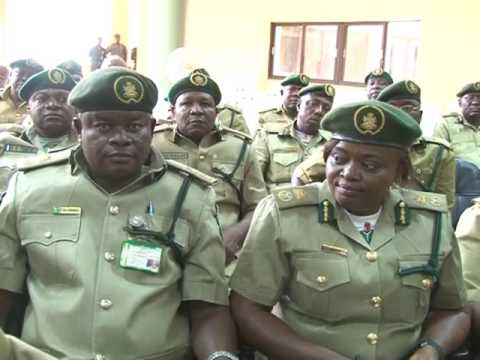
Controller General of Nigerian Prison Service (NPS) Mr Ja’afaru Ahmed has directed State Command Officers of the Service to establish and sustain a mutual relationship with the media if they must succeed in their assignments.
CGP Ahmed gave the directive at the end of a two-day seminar jointly organised by the NPS and the Centre for Crisis Communication (CCC) for Command Officers in Abuja.
He said that henceforth the Command Controllers and their respective public relations officers would be responsible for information dissemination and crisis management in their catchment areas.
“With the training programmes organised for Controllers and Information officers on Public Relations, you are now responsible for information and crisis management in your areas and you would be held accountable for any untoward behaviours in your states,” he said.
While lamenting that only negative stories about the Service were being reported in the media, the Prison boss said the achievements of the organisation were not making the news.
“Beyond working hard to meet the high demands of our core mandate which is primarily providing safe and humane custody, as well as behavioural change among offenders committed to our care, we also have a duty to actively engage the media as critical stakeholders in the discharge of our statutory responsibilities,” he noted.
CGP Ahmed who stressed that the intricacies of managing narratives reaching the public were issues not to be handled loosely, expressed optimism that the officers would have improved their skills in managing media issues at the end of the seminar. Speaking earlier, the Executive Secretary of CCC, Air Commodore Yusuf Anas (Rtd) said it was pertinent to continue building the capacity of command officers to be able to effectively engage the media.
“This is important because every officer in the state command must understand the need to at all times, utilize the instrumentality of the media to up-build and uphold the good image of the service…”
The Centre for Crisis Communication has trained over 170 personnel of the NPS including the Controllers and Public Relations Officers on various communication modules. The Centre has also trained over 200 other officers in the military, security, intelligence and response agencies in 2016.
General
FG, Honeywell Explore Sustainable Development Opportunities
By Modupe Gbadeyanka
The federal government and the Honeywell Group are strengthening a partnership aimed at achieving sustainable development in Nigeria.
The company on Thursday held a meeting with the Minister of Interior, Mr Olubunmi Tunji-Ojo, in Abuja. Both parties explored ways to promote economic development, reaffirming the importance of public-private sector cooperation in advancing Nigeria’s development agenda and improving service delivery for citizens.
The Senior Adviser to the Honeywell Group, Mrs Oduwaye Nsidi-Sakiri, reaffirmed the organisation’s commitment to supporting national development through constructive engagement and collaboration.
“We commend the remarkable progress that has been made. These achievements are a reflection not only of leadership but also of the dedication and hard work of the entire team within the Ministry,” she said.
She explained that the visit reflected Honeywell Group’s longstanding tradition of maintaining proactive and constructive relationships with government institutions, regulatory agencies, and other key public-sector stakeholders. She further expressed the group’s willingness to explore opportunities for collaboration in support of government initiatives and national development objectives.
Also speaking, Honeywell Group Chief Operating Officer, Mrs Tomi Ayo-Tugbo, commended the Ministry for reforms that are delivering tangible improvements in the lives of Nigerians, reiterating the firm’s commitment to supporting the country’s growth and prosperity.
On his part, Mr Tunji-Ojo praised the company for its longstanding contributions to Nigeria’s economy and acknowledged the critical role of the private sector in driving economic growth, creating jobs, and supporting national development.
He further assured the delegation of the Ministry’s readiness to engage with stakeholders and collaborate with responsible corporate organisations in advancing initiatives that promote economic development, innovation, and improved service delivery.
The Minister emphasised that the reforms being implemented across the Ministry and its agencies are designed not only to improve operational efficiency but also to strengthen national security and enhance public confidence in government institutions.
“Our goal is to build institutions that work efficiently for the people. We are committed to creating systems that are transparent, technology-driven, and capable of delivering services in a manner that reflects the aspirations of a modern Nigeria,” he stated.
“The government cannot achieve sustainable development alone. Strong partnerships between the public and private sectors are essential to building a prosperous nation. We value organisations such as Honeywell Group that have consistently invested in Nigeria and contributed to the country’s growth over several decades,” Mr Tunji-Ojo added.
General
FG Orders MDAs to Secure Funding Before Awarding Contracts
By Adedapo Adesanya
The federal government has directed that no new public contracts should be awarded without first getting the funds, as part of efforts to improve project delivery across the country.
Director-General of the Bureau of Public Procurement (BPP), Mr Adebowale Adedokun, disclosed this on the sidelines of the Inaugural Hosting of The Procurement Evolution in Abuja on Thursday.
Mr Adedokun said President Bola Tinubu had approved measures to raise resources needed to settle outstanding obligations to contractors, describing timely payment as critical to an efficient procurement system.
“Mr President has given a directive on when funds should be raised to address the concerns of contractors who are yet to be paid. With this, procurement processes will be much better because payment is now tied to procurement.
“Meaning that no award will be further issued without resources or funding available. So these are the things that the President has asked us to do.”
The BPP boss said the government was also implementing 23 procurement reforms aimed at improving transparency, efficiency and value for money in public spending.
According to him, committees to drive the reforms will soon be inaugurated by the Secretary to the Government of the Federation (SGF).
He said the reforms were designed to ensure that Nigerians benefit directly through improved infrastructure, healthcare, education and better living conditions.
“The president wants Nigerians to feel the effects of this transformation by having good roads, good hospitals, good educational institutions, and a good living wage for all workers.”
The Secretary to the Government of the Federation (SGF), Mr George Akume, said public procurement remained central to the Tinubu administration’s Renewed Hope Agenda.
Mr Akume noted that ongoing reforms, including proposed amendments to the Public Procurement Act 2007, the Nigeria First Policy, Nigeria e-Marketplace initiative, community-based procurement and affirmative procurement programmes, were intended to strengthen local industries and promote economic inclusion.
The SGF, represented by Mr Abubakar Kana, Permanent Secretary, General Services Office, Office of the SGF, added that the reforms would enhance transparency, simplify procurement processes and leverage technology to improve service delivery and national development.
“As we move forward, our collective responsibility is very clear.
“We must ensure that procurement processes are simplified. without compromising accountability, that technology is fully leveraged to eliminate inefficiencies and that all stakeholders work collaboratively to achieve shared national goals.
“The federal government remains fully committed to supporting the Bureau of Public Procurement in driving these reforms and ensuring that public procurement becomes a catalyst for economic growth, infrastructure development and improved quality of life for all our citizens.”
General
DisCos Collect N196bn in March, Miss N50bn of Billed Revenue
By Adedapo Adesanya
Nigeria’s electricity distribution companies (DisCos) generated N196.13 billion in revenue in March 2026, despite billing customers a total of N246.43 billion during the month, according to the latest commercial performance report released by the Nigerian Electricity Regulatory Commission (NERC).
The figure represents a slight decline from the N196.68 billion collected in February, highlighting persistent challenges in revenue recovery across the power distribution segment, even as energy supplied to the grid continued to improve.
NERC’s March 2026 fact sheet showed that electricity billing rose by 1.71 per cent from N242.29 billion recorded in February, reflecting increased energy deliveries and customer charges. However, collection efficiency declined to 79.59 per cent from 81.17 per cent in the previous month, indicating that a significant portion of billed revenue remained uncollected.
The regulator disclosed that DisCos received 293.76 million kilowatt-hours of electricity during the review period, representing a 6.02 per cent increase compared to February. The development suggests a modest improvement in power availability across the distribution network.
Despite the increase in energy supplied, revenue recovery remains uneven across the industry. NERC reported that the average approved tariff for March stood at N124.30 per kilowatt-hour, while actual collections averaged ₦100.75 per kilowatt-hour, resulting in an overall revenue recovery efficiency of 81.05 per cent.
Among the eleven DisCos, Ikeja Electric emerged as the strongest performer, posting a revenue recovery efficiency of 99.30 per cent. Eko Electricity Distribution Company followed with 95.73 per cent, while Benin DisCo recorded 85.18 per cent.
At the lower end of the performance table, Kaduna Electric recorded the weakest recovery rate at 35.65 per cent. Jos DisCo and Yola DisCo also struggled, achieving recovery efficiencies of 53.53 per cent and 58.58 per cent, respectively.
Ikeja Electric also led in collection efficiency with 96.38 per cent, ahead of Benin DisCo at 90.97 per cent and Eko DisCo at 87.68 per cent. Kaduna, Jos and Yola remained the poorest performers in this category, underlining the persistent commercial and operational challenges facing power distributors in parts of northern Nigeria.
In terms of billing efficiency, Eko DisCo ranked first with 92.30 per cent, followed by Port Harcourt DisCo at 90.36 per cent and Ikeja Electric at 87.76 per cent. Yola DisCo recorded the lowest billing efficiency at 58.68 per cent.
The latest figures underscore the mixed realities within Nigeria’s power sector. While electricity supply and customer billing continue to improve, revenue collection remains a major obstacle to the financial sustainability of the industry.
Analysts note that stronger metering penetration, improved customer confidence, reduction in energy theft and more efficient collection systems will be critical if DisCos are to close the widening gap between electricity supplied, billed revenue and actual collections.
The March performance report comes as regulators and industry stakeholders intensify efforts to strengthen the commercial viability of the electricity market, attract fresh investment and improve service delivery across the country.
-
Feature/OPED6 years agoDavos was Different this year
-
Travel/Tourism10 years ago
Lagos Seals Western Lodge Hotel In Ikorodu
-
Showbiz3 years agoEstranged Lover Releases Videos of Empress Njamah Bathing
-
Banking8 years agoSort Codes of GTBank Branches in Nigeria
-
Economy3 years agoSubsidy Removal: CNG at N130 Per Litre Cheaper Than Petrol—IPMAN
-
Banking3 years agoSort Codes of UBA Branches in Nigeria
-
Banking3 years agoFirst Bank Announces Planned Downtime
-
Sports3 years agoHighest Paid Nigerian Footballer – How Much Do Nigerian Footballers Earn