Banking
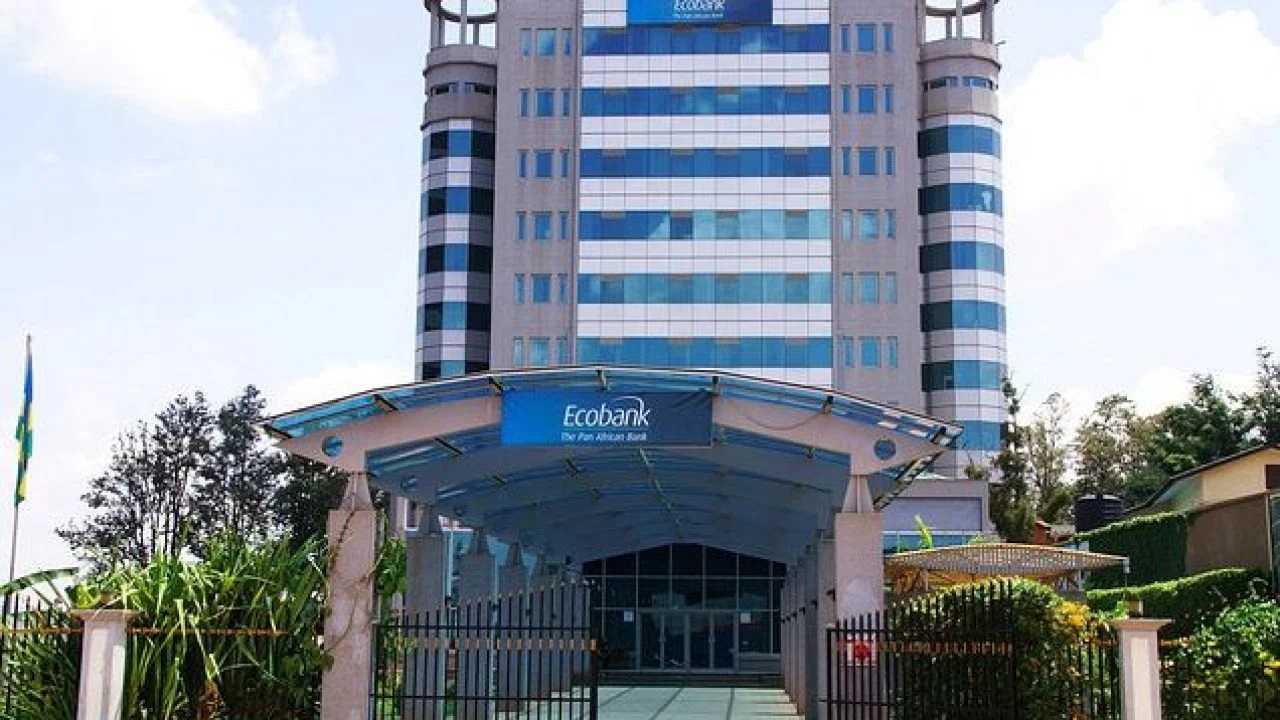
Fitch to Upgrade Ecobank Ratings if Exchange Rate Volatility Eases
By Aduragbemi Omiyale
There is every possibility for an upgrade in the ratings of Ecobank Transnational Incorporated (ETI) and Ecobank Nigeria Limited (ENG) if the exchange rate volatility in Nigeria eases.
This is the position of a global rating agency, Fitch, in its latest rating action.
The firm had placed the Viability Ratings (VRs) of ‘b-‘ and Long-Term Issuer Default Ratings (IDRs) of ‘B-‘ on Rating Watch Negative (RWN) on the lender following the sharp devaluation of the Nigerian Naira by the Central Bank of Nigeria (CBN) a few weeks ago.
Fitch, in a statement, indicated that the current RWN reflects the risk of ENG breaching its minimum capital requirements due to the direct effect of the devaluation.
“For ENG, it also reflects increased risks to capital from large foreign-currency (FC) problem loans (Stage 2 and Stage 3 under IFRS 9) that have been inflated by devaluation, which may necessitate greater prudential provisions and exert further pressure on the bank’s total capital adequacy ratio (CAR), in addition to broader loan quality risks stemming from the devaluation,” a part of the statement said.
However, it noted that there could be an upgrade in ENG’s National Ratings in the next six months if the bank’s creditworthiness is strengthened.
Fitch said the bank’s RWN should be resolved “within the next six months when exchange-rate volatility may recede, the impact on regulatory capital ratios and common equity double leverage is clear, and the scale of the second-order economic effects of the devaluation on loan quality becomes evident.”
It said factors that could, individually or collectively, lead to positive rating action and upgrade include Ecobank’s continued compliance with its minimum CAR requirement following the devaluation, with sufficient buffers to accommodate the increase in credit concentration and loan quality risks.
It noted that an upgrade of ENG’s VR and Long-Term IDR would require a sovereign upgrade and an improvement in operating conditions in conjunction with a strengthened financial profile.
Banking
WEMPCO Executives Risk Jail Over Contempt in N61.5bn UBA Debt Recovery Action
By Modupe Gbadeyanka
Nine persons linked to one of Nigeria’s biggest indigenous steel-and-manufacturing conglomerates, Western Metal Products Company (WEMPCO) Limited, could land in prison for allegedly defying an order of a Federal High Court protecting United Bank for Africa’s claim and disrupting the operations of a court-appointed receiver manager.
Justice Akintayo Aluko of the Federal High Court sitting in Lagos issued a stern Form 48 (Notice of Consequence of Disobedience to Order of Court), warning key directors and shareholders—including Lewis Shui Ngor Tung, Phillip Shui Che Tung, Robert Tung, Lawrence Tung, Taiwo Alli and others—that they face possible imprisonment for contempt of court after allegedly interfering with the Receiver/Manager appointed by UBA to take over key collateral assets.
The Form 48 notice, a formal warning under Nigerian civil procedure that precedes imprisonment for contempt, was published as a legal notice after personal service could evidently not be completed on the individuals, all listed at the same address: 18 Wempco Road, Ogba, Ikeja, Lagos (Federal High Court of Nigeria, Suit No. FHC/L/CS/555/26).
UBA is aggressively pursuing the recovery of syndicated and direct loan facilities amounting to about N61.5 billion (approximately $39 million) from WEMPCO and 16 related corporate entities.
Justice Aluko has already granted an Order of Mareva Injunctions freezing accounts belonging to the WEMPCO group across 27 commercial banks and fintechs.
According to MoneyCentral, UBA wants to recover the funds from 17 companies in the WEMPCO stable, from flagship Western Metal Products Company Limited down to Nigerian Enamelware Company Plc, Lagos Oriental Hotel Limited and Prime Nigeria Wood Products Co. Ltd. It disbursed the money to the firms under a Multicurrency Multiple Credit Facility Agreement dated September 30, 2019.
On April 2, 2026, the court granted UBA an interim Mareva injunction freezing up to N61.5 billion in WEMPCO-linked funds across 27 banks and fintech platforms, appointed a receiver-manager over WEMPCO’s unencumbered assets, and ordered the financial institutions to disclose any WEMPCO funds in their custody.
Anatomy of the Freeze
By the Order of April 2, 2026, Justice Aluko granted UBA ‘s Application filed on March 31, 2026. The Orders made were:
- Broad Asset Freeze (Mareva Injunction): The court restrained WEMPCO and 16 sister companies from operating accounts or transferring funds up to N61.5 billion. All 27 financial institution respondents—ranging from tier-1 banks to modern fintech processors like Moniepoint, OPay, and Kuda—must disclose and hold any balance standing to the credit of the defendants.
- Receiver/Manager Appointment: One Romeo Ese Michael, Esq., was appointed Receiver/Manager over WEMPCO’s assets not under the Multicurrency Multiple Credit Facility Agreement. This includes physical asset takeovers, such as two major Wärtsilä power generators.
Nine Names, One Address
The Form 48 lists nine individuals “to be committed” to prison for contempt, namely Lewis Shui Ngor Tung, Phillip Shui Che Tung, M.A. Ola Yusuf (Alh), Tung Lawrence Blake, Alli Aare Hadji Tokunbo, Paul Shui Po Tung, Tung Robert, Cl Ip, and Taiwo Alli.
Two names are independently identifiable in WEMPCO’s public corporate filings: Taiwo Alli is the sitting Managing Director/CEO of NGX-listed Nigerian Enamelware Company Plc — one of the 17 corporate defendants — while Robert Tung sits on that same board as a non-executive director and is one of the two brothers who built WEMPCO into its current scale.
That a sitting MD of a publicly listed Nigerian company now faces a documented risk of committal to prison over a corporate group’s unpaid debt underscores the reputational and governance stakes for WEMPCO’s listed arm, quite apart from the group’s privately held entities.
The Receiver and the 2019 Facility
The receiver-manager order points to the roots of the dispute: A Multicurrency Multiple Credit Facility Agreement dated 30 September 2019, under which UBA financed part of WEMPCO’s industrial build-out — the same period in which the group was completing major steel and power infrastructure investments.
The court’s specific mention of “two Wärtsilä engines (generators)… wherever they may be found” as receivership targets signals that WEMPCO’s captive power assets — critical to running energy-intensive steel and ceramics plants — are now squarely within the bank’s reach for recovery.
The Rise and Fall of WEMPCO Group
Few Nigerian conglomerates have as large a footprint with as little public profile as WEMPCO. The group was founded by the late Mr K.F. Tung, a Chinese-born entrepreneur who first visited Nigeria in 1967 and built an enamelware business before expanding into steel, ceramics, timber, agriculture and hospitality; he died in March 2019 at age 97, having led the group for more than five decades.
His sons, Lewis Tung and Robert Tung, subsequently took the business forward, growing it into one of Nigeria’s largest manufacturing employers, with more than 12,000-13,000 workers across 11-plus subsidiaries.
At its peak, WEMPCO was one of Nigeria’s largest diversified conglomerates, operating massive cold-rolled steel mills, enamelware plants, ceramic tile factories, nail production plants, and agricultural investments across Lagos and Ogun states.
The group owns high-profile real estate assets, including the 5-star Lagos Oriental Hotel on Victoria Island/Lekki, alongside industrial facilities spanning over 700,000 metric tonnes of steel capacity.
Over the past decade, however, severe foreign exchange shortages, cheap imported/smuggled alternatives, high energy overheads, tax defaults, and shifting government trade policies caused deep operational paralysis across WEMPCO’s 11+ subsidiaries.
As revenue collapsed, debt loads surged into hundreds of billions of Naira across the Nigerian financial sector, culminating in UBA’s enforcement actions to protect its balance sheet.
That scale is precisely why the case matters beyond the courtroom: WEMPCO is not a marginal borrower, but one of Nigeria’s largest indigenous industrial employers, and the outcome of this dispute carries direct implications for thousands of manufacturing jobs concentrated in Ogba and Ogun State.
Why This Matters: Depositor Money Is Not Free Money
The scale of UBA’s claim — N61.5 billion frozen pending trial, against a backdrop of a 2019 multicurrency facility likely running into the hundreds of billions of naira in total exposure across WEMPCO’s group structure — is a reminder of a basic truth in banking that is easy to lose sight of in a contentious court fight: the money banks lend to conglomerates like WEMPCO is not the bank’s own capital sitting idle.
It is depositors’ money — the savings of ordinary Nigerians, the working capital of small businesses, and the pension and insurance assets pooled through the banking system — recycled into loans that the bank is obligated to repay to its depositors whether or not the borrower repays the bank.
This is not an abstract concern in Nigeria’s current banking environment. The industry’s non-performing loans (NPL) ratio climbed to 8.03 per cent in January 2026 and to 9.85 per cent by February 2026, well above the Central Bank of Nigeria’s 5 per cent prudential threshold, after the CBN withdrew pandemic-era regulatory forbearance that had allowed banks to avoid classifying restructured loans as impaired.
Fitch Ratings has projected the ratio could fall back toward 5 per cent by year-end 2026, helped by fresh bank capital raised to meet the CBN’s new minimum capital requirements and by write-offs — but only if recoveries like UBA’s WEMPCO action succeed in converting non-performing exposures back into cash.
The CBN itself has warned that a stubborn rise in bad loans “could impair asset quality and weaken banks’ balance sheets,” posing systemic risk, and has pushed banks to deepen use of the Global Standing Instruction framework — precisely the kind of cross-bank fund-tracing mechanism reflected in UBA’s 27-institution Mareva order against WEMPCO — to improve recovery discipline.
Every naira UBA cannot recover from a defaulting borrower is a naira the bank must provision for out of its own capital and earnings — capital that could otherwise support new lending to other Nigerian businesses, or income that could otherwise be paid out as dividends to millions of Nigerian shareholders and pensioners with holdings in UBA stock.
Aggressive but lawful recovery action of the kind on display in the WEMPCO case is, in that sense, not simply a bank protecting its own balance sheet; it is a bank protecting the deposit base and credit capacity of the wider financial system.
Corporate Responsibility and the Nigerian Economy
Firms of WEMPCO’s scale carry an obligation that runs in both directions. On one hand, WEMPCO’s decades of investment in steel, enamelware, ceramics, wood products and hospitality have made it a genuine contributor to Nigeria’s industrial base and a major direct employer, with the group’s own account of its history stressing that it has “contributed immensely to the economy of Nigeria in particular and West Africa in general”.
On the other hand, that same scale means WEMPCO’s credit obligations were sized accordingly — a multicurrency, multi-billion-naira facility syndicated in 2019 — and the responsibility to service such facilities is inseparable from the privilege of accessing that scale of capital in the first place.
When large borrowers fall behind and resist enforcement, as UBA alleges is happening here, the costs are not confined to the bank’s shareholders.
Delayed recoveries constrain the credit banks can extend to other manufacturers, exporters and small businesses; they can pressure a bank’s capital adequacy ratios and, in aggregate across the industry, contribute to the kind of system-wide NPL pressure the CBN has flagged as a threat to financial stability.
Conversely, orderly and timely repayment — even when it requires restructuring or receivership rather than immediate cash settlement — protects the thousands of workers whose jobs depend on WEMPCO’s continued operation, preserves the bank’s capacity to keep lending into the real economy, and reinforces credit discipline across a banking sector the CBN is actively trying to strengthen after the post-forbearance clean-up.
It is worth noting that the reliefs UBA has obtained so far are interim measures granted pending a full hearing on the Motion on Notice, and that WEMPCO’s companies and the named individuals retain the right to contest the underlying claims in court.
The Bottom Line
UBA’s push to freeze N61.5 billion in WEMPCO-linked funds, install a receiver-manager over the group’s flagship steel unit, and now pursue contempt proceedings against nine individuals tied to the conglomerate marks one of the more aggressive corporate debt-recovery actions in Nigeria’s banking sector this year.
For a bank operating in an industry still working through the aftershocks of the CBN’s forbearance withdrawal and a near-10 per cent sector NPL ratio, recovering large legacy exposures is not optional housekeeping; it is central to protecting depositor funds, sustaining lending capacity and keeping Nigeria’s banking system stable.
The court’s enforcement action in UBA vs. WEMPCO marks a decisive moment for credit governance in Nigeria. With 27 financial institutions bound by court injunctions and corporate officers facing criminal contempt, UBA’s Receiver/Manager is positioned to realise underlying assets. Analysts say the outcome of this case will set a precedent for corporate debt resolution, financial system accountability, and the rule of law across Nigeria’s industrial landscape.
Banking
First Holdco Begins N1.4trn Share Offer After CBN Approval
By Adedapo Adesanya
First Holdco Plc has commenced a public offer to raise about N1.4 trillion (approximately $1 billion) after securing approval from the Central Bank of Nigeria (CBN).
The offer, which opened on Monday, involves the sale of 10.4 billion ordinary shares, according to the chief executive of its banking subsidiary, First Bank of Nigeria Limited, Mr Olusegun Alebiosu.
The capital raise follows the company’s earlier plan to transfer about a quarter of its shares to RC Investment Management Ltd., which served as a bridge holder after Barbican Capital Limited exited its investment in the lender amid a prolonged ownership and leadership dispute.
First Holdco had previously indicated that the shares would eventually be offered to the investing public once the necessary regulatory approvals were obtained.
Speaking in an interview with Bloomberg, Mr Alebiosu said proceeds from the offer would strengthen the capital base of First Bank and support the holding company’s expansion strategy.
According to him, the group intends to diversify beyond banking by establishing an insurance underwriting business and a fintech services company.
“The sale is starting today — the reality here is that I am not sure it will stay more than one week based on the pressure we are getting,” Mr Alebiosu said, expressing confidence in strong investor demand.
Investors appeared to respond positively to the announcement, with First HoldCo’s shares climbing as much as 5.9 per cent to a record high during trading on Monday before easing to a 3.1 per cent gain at N133.60 by early afternoon in Lagos.
The lender has been one of the best-performing banking stocks on the Nigerian Exchange (NGX) Limited over the past year, with its share price rising more than fourfold since July 2025, when Barbican Capital’s stake was transferred to RC Investment Management.
The fresh capital injection comes as its largest shareholder, Mr Femi Otedola, continues to strengthen his stake in Nigeria’s oldest bank. With the billionaire holding around a 26 per cent stake in the company, analysts say he has his eyes set on full control once his equity crosses the 30 per cent mark.
Banking
PalmPay Taps Ex-NIBSS Executive Samuel Oluyemi as Chief Operating Officer
By Adedapo Adesanya
One of Nigeria’s top digital banks, PalmPay, has appointed a former executive of the Nigeria Inter-Bank Settlement System (NIBSS), Mr Samuel Oluyemi, as its chief operating officer.
In his new role, Mr Oluyemi will oversee the financial technology company’s operations in Nigeria, where it offers a broad range of digital financial services to individuals and businesses.
Mr Oluyemi will also engage with regulators to ensure the company’s expansion aligns with Nigeria’s financial, digital and social inclusion objectives.
Prior to joining the company, Mr Oluyemi spent more than two decades at NIBSS, where he served as business development lead.
During his tenure, he drove the development of several critical payment infrastructure projects, including the digital validation of Nigerian international passports, e-Dividend Mandate Management System (e-DMMS), and the Electronic Pensions Contribution Collection System (EPCCOS).
Also, he played a key role in the introduction and early adoption of the NIBSS Instant Payment (NIP) platform, Nigeria’s first real-time interbank transfer system launched in 2011, and later supported its extension to other financial institutions.
Mr Oluyemi obtained a master’s degree in Monetary Economics from the University of Ibadan and has participated in several local and international professional training programmes.
Commenting on the appointment, Managing Director of PalmPay Nigeria, Mr Chika Nwosu, said that the company was strengthening its leadership team to support its longterm vision.