Connect with us

Sports

Victor Wembanyama Makes Investment in Barcode Fitness Drink

Published

on

Victor Wembanyama

By Adedapo Adesanya 

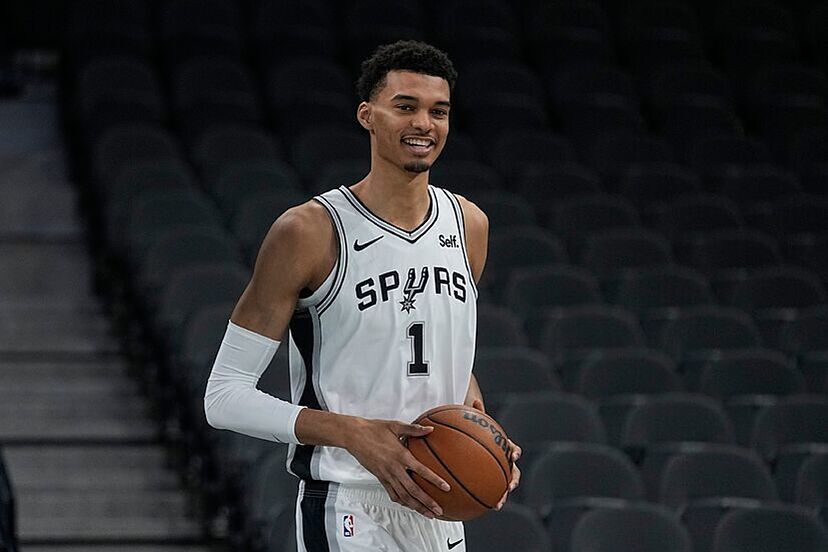
Barcode, a Los Angeles, California-based maker of a fitness drink for hydration, has received an undisclosed investment from Victor Wembanyama, the number 1 overall pick of the 2023 NBA Draft in the United States.

Barcode recently underwent a valuation of $30 million and has expanded its retail availability to include HEB, Krogers, Safeway/Albertsons, Buc-Cee’s and 7-Eleven, mainly in the Texas market.

Additional funding has been secured from co-founder Kyle Kuzma, 10-time NBA All-Star and entrepreneur Carmelo Anthony, who will join Barcode as a Board Advisor, world-renowned boxer Gervonta Davis, Derek Fisher, Jordan Clarkson, Chelsea Gray, Jae’sean Tate, Isaiah Hartenstein, Wayne Ellington and Lexie Brown.

Wembanyama, nicknamed Wemby, a 19-year-old French, 7′ 3 ½”, has taken an equity investment in the company.

Wembanyama will help share Barcode’s fundamental values, as well as participate in their philanthropic initiatives.

The French athlete will also be involved with research and development on future products and will appear as the face of the brand in digital, out-of-home and in-store advertising.

Born January 4, 2004, Wembanyama grew up in Le Chesnay, France and was raised by two professional athletes; his mother, Elodie, was a former professional basketball player in France and his father, Felix, was a triple jumper.

Wembanyama has won silver medals as a member of the French National U-16 Team at the European Championship as well as with the U-19 Team at the World Championships.

Last season, he played for the Levallois Metropolitans 92 and led his team to their first-ever appearance in the French League Finals.

Developed by Mubarak “Bar” Malik, former New York Knicks and Los Angeles Lakers Director of Performance and NBA Champion, philanthropist and entrepreneur Kyle Kuzma, Barcode offers a plant-based, all-natural performance drink with added benefits and ingredients, including Vitamin D, B6, B12, magnesium and ashwagandha and no added sugar.

The product is currently available at Amazon, Erewhon Market, ShopRite, Bristol Farms, Gelsons, and Central Market in the US.


Adedapo Adesanya is a journalist, polymath, and connoisseur of everything art. When he is not writing, he has his nose buried in one of the many books or articles he has bookmarked or simply listening to good music with a bottle of beer or wine. He supports the greatest club in the world, Manchester United F.C.

Click to comment

Leave a Reply

Your email address will not be published. Required fields are marked *

Sports

From Spectator to Participant: The Digital Shift in Nigeria’s Sports and Entertainment Economy

Published

on

1xbet free casino games

The landscape of leisure in Nigeria is undergoing a massive transformation, heavily driven by digitalization, shifting consumer habits, and a resilient appetite for interactive media. Looking at recent economic data, Nigeria’s capital importation numbers show robust growth, reflecting a broader trend of market adaptability and consumer resilience. While traditional sectors navigate structural reforms, the digital entertainment and sports economies are experiencing unprecedented engagement.

Historically, sports and media consumption in the country was a passive experience—families and friends gathered around television sets to watch global football tournaments, European leagues, or local fixtures. Today, however, sports viewing has quietly changed its personality. It is no longer just about sitting in front of a screen; it has become deeply social, interconnected, and participatory.

The Convergence of Sports, Finance, and Leisure

This evolution from passive spectating to active participation is deeply linked to the rise of smartphone accessibility and fintech innovation. With the Central Bank of Nigeria pushing for advanced digital payment visions and financial institutions tailoring services for seamless transactions, everyday consumers have found it easier than ever to engage with global digital platforms.

As a result, sports culture has naturally merged with digital entertainment. Fans are no longer satisfied with just watching a match; they want a stake in the action. This desire for active engagement has fueled the explosive popularity of fantasy leagues, predictive gaming, and online gaming applications.

For many adults looking to complement their sports viewing with quick, engaging leisure activities during half-time breaks or match intervals, the digital landscape offers a wealth of options. Platforms providing high-quality, zero-cost entertainment options—such as 1xbet free casino games—have seamlessly integrated into this ecosystem. They offer a casual, risk-free environment for fans to test their analytical skills, enjoy diverse gaming themes, and experience the thrill of the stadium from the comfort of their mobile devices.

Driving Economic Growth through Digital Ecosystems

This synergy between tech infrastructure and entertainment content is creating a powerful economic multiplier effect. The continuous demand for high-speed data, stable digital payment channels, and localized content keeps the local tech ecosystem vibrant. Major global brands are heavily investing in localized tournaments—such as regional football cups and digital gaming leagues—proving that the intersection of competitive passion and interactive entertainment is here to stay.

As Nigeria’s digital economy matures, the lines between traditional broadcasting, sports fandom, and online interactive leisure will continue to blur. For a young, tech-savvy population, entertainment is no longer a one-way street—it is an interactive space where every fan can be an active participant in the action.

Continue Reading

Sports

The Role of Live Sports in Modern Entertainment

Published

on

world cup

Not many forms of entertainment still require people to show up in real time. Movies can be watched days later. Series can be binged over a weekend. Social media ensures that almost every major moment is available on demand. But live sports remain one of the few experiences where being present at the moment still matters.

The ongoing FIFA World Cup is proving exactly why. Every tournament comes with its own stories. There are the favourites expected to dominate, the underdogs rewriting expectations, and the players who suddenly become household names overnight. But beyond football itself, the World Cup continues to highlight something bigger: live sports have become one of the most powerful forces in modern entertainment.

What makes live sports different is simple: nobody knows how it ends. Unlike scripted television or pre-recorded content, sports thrive on unpredictability. A match can change in seconds. A last-minute goal can alter a nation’s mood. One decision, one save, or one upset can become a moment fans talk about for years. That uncertainty is what keeps people watching live rather than catching up later.

In an era where audiences increasingly consume content on their own schedules, live sports create a rare shared experience. Millions of people are reacting to the same moment at the same time. Conversations happen instantly online, and debates continue long after the final whistle.

The World Cup has once again shown how sports have evolved beyond competition into full-scale entertainment. The experience no longer begins at kick-off or ends at full-time. Pre-match analysis, expert commentary, post-match discussions, and digital conversations have become part of how fans engage with the game.

Access also plays a major role in this experience. Across Africa, fans continue to rely on platforms that bring the tournament closer to them. Through SuperSport on DStv and GOtv, viewers can follow the action live as it unfolds, experiencing every goal, upset and defining moment in real time rather than through highlights or social media clips.

This immediacy is part of why live sports remain so valuable in today’s entertainment landscape. While streaming has changed viewing habits and audiences have more content choices than ever before, sports still command attention in a way few other formats can.

The World Cup serves as a reminder that in a world of endless content, people still crave moments they can experience together. Live sports deliver exactly that: unscripted drama, shared emotions and memories that last long after the final whistle.

As entertainment continues to evolve, live sports have not lost their relevance. If anything, they have become even more important because in an age where almost everything can wait, some moments are simply better experienced live.

To make football’s biggest moment even more accessible, MultiChoice has introduced special World Cup bundle offers across DStv and GOtv ahead of the 2026 FIFA World Cup in the US, Mexico, and Canada. From June 1, 2026, new customers can get a full decoder kit plus a one-month subscription for ₦15,000 on either platform. The offer is aimed at helping more Nigerians stay connected to the tournament, which will feature 48 teams and 104 matches. Through SuperSport, viewers will enjoy full live coverage of all games, dedicated 24-hour World Cup channels, expert analysis, highlights, multilingual commentary including pidgin, and flexible viewing options on TV and streaming, so fans don’t miss any moment of the action.

Continue Reading

Sports

2026 World Cup Opening Day Fixtures and Betting Market Overview

Published

on

Betting Market Overview

The largest World Cup in history begins on June 11, with 48 teams competing across 104 matches over 39 days. The opening day sets the tone for the whole group stage, and the first results carry more tactical and psychological weight than they might appear to at this stage. For fans following the tournament through platforms offering options like live betting on BizBet Africa, the opening fixtures provide the first look at how World Cup markets respond in real time. The first Group A fixtures give an early indication of how the opening section may develop. Two matches on the schedule give the first real indication of how the group stage will develop.

The Opening Fixtures and What They Mean

The tournament begins with Mexico in Group A, a repeat of the 2010 opener remembered for Siphiwe Tshabalala’s first goal of that tournament. The 2026 edition opens the competition on the same ground, with both teams having qualified from difficult groups and neither carrying the status of clear favourite to top their section.

The second listed Group A fixture is Korea Republic vs Czechia, giving the section two early results before most other groups begin. Two Group A matches on the first day mean the section develops earlier than most of the tournament, and those results can influence how teams approach the next round of fixtures.

The opening day of a World Cup under the new 48-team format carries more significance than previous editions because the third-place qualification system makes early goal difference relevant in ways it has not been before. A team that wins its opening match by a wide margin can improve its goal-difference position early, which may matter later if third-place ranking becomes relevant.

Here is a summary of the opening day fixtures and the group context around them:

Match Group Key storyline
Opening match A Repeat of 2010 opener, historical weight
Second match A Completes first set of Group A fixtures

Both matches in Group A mean the section has its first two results before any other group has begun, giving it a head start on the overall standings picture.

Key Narrative Threads Across the Opening Week

The first five days of the tournament run from June 11 to 15 and cover the opening matches of almost all 12 groups. By the end of that window, every team will have played at least once and the group standings will have their first shape.

These are the storylines most worth tracking across the opening week:

  • Which squads affected by pre-tournament injuries show the most visible impact in their opening match
  • Whether the new third-place qualification system produces tactical caution in any opening fixtures
  • How the tournament’s leading goalscorer candidates perform in their first appearances
  • Whether any significant upset results in the opening round reshape the pre-tournament favourite picture
  • How the co-host nations perform across their respective opening fixtures

The opening week will produce the clearest early information about which squads are genuinely prepared for deep tournament runs and which face more difficult paths than their seedings suggested.

Why Opening Round Betting Markets Are So Unpredictable

Opening-round markets can move quickly because there is no current tournament form yet. Before kick-off, prices rely mainly on squad news, qualification results, recent friendlies and historical data. Once the match starts, that picture changes fast. A favourite that struggles in the first 15 minutes may drift in live markets, while an underdog that presses well, creates chances or controls possession can shorten before the first goal is even scored.

The markets most likely to move early are match winner, over/under and goalscorer. Over/under lines can react to tempo, early shots and defensive caution, while goalscorer prices often shift after lineups are confirmed. That is why opening-round markets are difficult to read from pre-match odds alone: the first few minutes can reveal more than a week of previews.

Continue Reading

Trending