Connect with us

General

Subsidy Removal: Youths Hail Kyari’s Transparency Drive, Call for Patience

Published

on

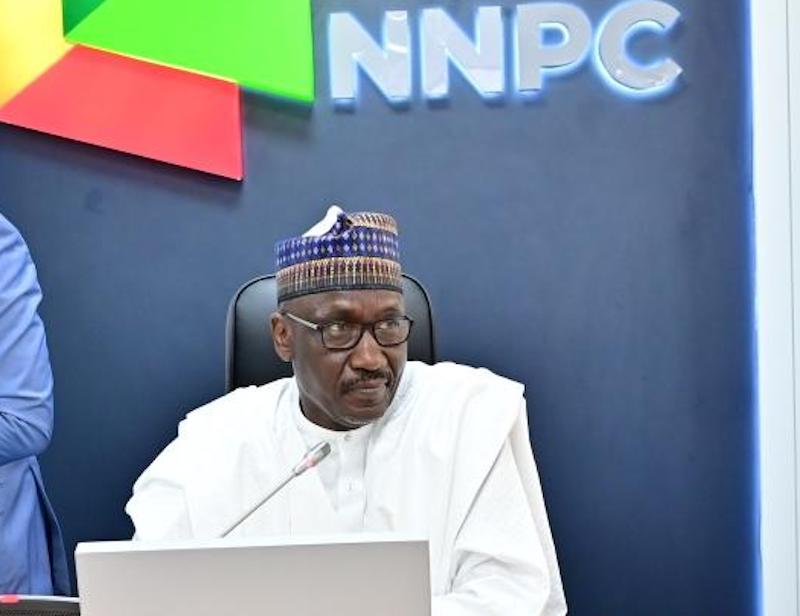
Mele Kyari NNPC ceo

By Modupe Gbadeyanka

The chief executive of the Nigerian National Petroleum Company (NNPC) Limited, Mr Mele Kyari, has been commended for promoting transparency, probity, accountability, and good governance in the Nigerian oil and gas industry vis-à-vis his handling of the recent fuel subsidy removal initiative.

This commendation came from Nigerian youths under the aegis of the Nigerian Youths Alliance (NYA) through a statement co-signed by their national president, Ifeanyi Ogbu, and secretary, Yemisi Oluwadamiro, in Abuja, on Wednesday.

They specifically praised Mr Kyari for his transparency in the company’s payment of an interim dividend of N123 billion to the Federation Account Allocation Committee (FAAC) for the month of June, barely two months after the federal government stopped subsidy payments.

While calling on Nigerians to be patient with the government over the temporary pains caused by the removal of the petrol subsidy, the young citizens urged the NNPCL chief to remain focused and avoid distraction sponsored by oppositions, anti-democratic elements and corrupt individuals who had fed fat by milking the country with the subsidy payment scheme.

According to the statement, “As Nigerian youths, even in these trying times, we must recognize, commend and encourage the efforts of our patriots who are having sleepless nights to ensure this nation works.

“Without mincing words, we know that at this time, fuel subsidy must go if this country must rise from its dying state and survive.

“Many oil marketers and corrupt individuals had become billionaires overnight at the expense of Nigerians with the continued payment of subsidies and these funds could have been channelled to better the lives of Nigerians and grow the economy.

“These individuals, by their sheer unconscionable criminality, subverted the noble idea behind the subsidy programme, which was for government to subsidize the cost of petrol to make it affordable to the masses.

“Rather than keep to the terms of the deal with the government, these marketers and their crooked allies repeatedly divert and smuggle petroleum products to neighbouring countries where they sell at higher rates and thus make more profit even after collecting subsidy money from the Nigerian government.

“Though it comes with sacrifices, Nigerians must know that there is no gain without pain.

“Therefore, we commend the bold and audacious initiatives of the President Bola Tinubu administration.

“The removal of the fuel subsidy is not about the president or the group chief executive officer of the NNPC Limited, but about the good and wellness of Nigerians.

“It’s however sad that oppositions and some corrupt elements who are angered that their ill source of wealth has been blocked with the removal of subsidy have continued to sponsor hatred and lies against the hardworking chief executive of the NNPCL, Mallam Mele Kyari.

“We are, however, not surprised because every genuine change for growth meets strong resistance and force, and someone must bear the brunt.

“In the history of the oil company, Mr Kyari has proven to be a man of selfless service, integrity, outstanding astute industry technocrat, and professional par excellence.

“Nigerians will attest to the fact that Kyari’s achievements have surpassed all his predecessors for the past 20 years.

“He has distinguished himself to be a visionary and professional manager with a towering repertoire of the inner workings of the industry, having served in various positions over the years.

“In barely two months since the government stopped payment of fuel subsidy payment, he delivered a whopping N123 billion to FAAC. This is commendable.

“Before his assumption of office as the GMD of the defunct NNPC, there were a lot of unresolved and knotty issues lingering and hampering the sector from achieving its potential. He stepped in and proffered solutions to them.

“Even before the passage of the Petroleum Industry Act 2021, which he promoted, Kyari convinced Nigerians of the new direction of the NNPC by making the financial books open transparently for public probity, which has changed the opacity in the system.

“NNPC financial books have never been opened transparently for public scrutiny over the years, but Kyari changed the narratives.

“He has effectively deployed his wealth of experience to spearhead giant innovations which have helped in repositioning the NNPC today.

“In his bid to put an end to the business of oil thieves, in 2022, Kyari introduced the “Crude Theft Monitoring Application” (CTMA) to check the theft of Nigeria’s oil. The CTMA, which has been helpful in preventing oil theft, has application options for reporting incidents, with prompt follow-up and responses and another one for crude sales documents validation.

“Not quite long after Kyari assumed office, the stifling Covid-19 pandemic hit the world economy, which adversely affected the petroleum industry real hard; the price of crude oil dropped sharply in the international market, which affected our revenue earnings drastically but with resilience and careful handling of its affairs, we were able to come out stronger.

“While we plead with Nigerians to be patient as the dividends for their current pains will come soon, we urge the new NNPCL and its management to remain focused and sustain their good works even as the country navigates through these trying moments.”


2 Comments

Leave a Reply

Your email address will not be published. Required fields are marked *

General

FG Seeks Public Input on National Policing Bill

Published

on

state police bill

By Modupe Gbadeyanka

Members of the public have been invited to submit memoranda and policy proposals on the proposed National Policing Bill.

The Chairman of the Working Group, Mr Femi Gbajabiamila, announced this on Monday after the team’s meeting at the State House in Abuja.

The group, headed by the Chief of Staff to President Bola Tinubu, is calling for input from Nigerians as part of efforts to establish a comprehensive legal and operational framework for state policing.

It is reviewing the Police Act 2020, the Police Service Commission framework, police regulations, and other relevant laws to support the development of an effective, modern policing system.

The proposed framework will set national minimum standards, define state readiness and grant certification, clarify jurisdictional responsibilities, ensure independent oversight, uphold human rights, and guarantee sustainable funding. It would also spell out an orderly transition to a dual-policing structure.

The call for memoranda will run for two weeks, allowing citizens, professionals, civil society, security agencies, state and local governments, academics, and other stakeholders to contribute. Submissions will be reviewed and integrated into the draft bill, which will then be subject to further national consultation before being finalised and sent to the National Assembly.

The Working Group has adopted a seven-week work programme running from July 27 to September 14, 2026. The draft Executive Bill is scheduled for presentation to President Bola Ahmed Tinubu on September 3, 2026, with national consultations to follow before the final approval.

The new National Policing Bill will set out requirements for recruitment, training, oversight, funding, and transition arrangements to ensure credible, effective, and accountable policing nationwide.

“A proposed State Police Service must demonstrate that it has credible arrangements for recruitment, vetting, training, pay, pensions, equipment, custody, complaints, discipline, data, firearms control, independent oversight and financial sustainability before it begins policing,” Mr Gbajabiamila said.

The representative of the Nigeria Governors’ Forum and Governor of Ogun State, Dapo Abiodun, who described State Police as a landmark reform, described the initiative as one of the defining reforms of President Tinubu’s administration.

Responding to concerns about federal overreach, he clarified that there is no Federal attempt to control State Police. He added that the proposed legislation is intended to provide an operational framework rather than centralise control.

Prince Lateef Fagbemi, the Attorney-General of the Federation and Minister of Justice, said the proposed National Policing Bill is designed to guarantee the security of lives and property while ensuring that the establishment of state police does not become a tool for political persecution.

The Attorney-General added that states not immediately ready to establish their own police services would continue to benefit from the presence of the Federal Police until they meet the required standards.

Other participants at the meeting included the Inspector General of Police, Tunji Disu; President of the Nigerian Bar Association, Afam Osigwe; Chairman, Policy Advisory Committee, Justice Abdullahi Liman (rtd); Professor Olu Ogunsakin, Head, Nigeria Police Reform Secretariat; Senior Special Assistant to the President on Planning and Research, Nnadubem Moghalu; and Brigadier General Olutayo Muyiwa Adesuyi, representing the National Security Adviser.

Continue Reading

General

NMDPRA Records 30% Drop in Gas Imbalance on Western Network

Published

on

NMDPRA fee regulations

By Adedapo Adesanya

The Nigerian Midstream and Downstream Petroleum Regulatory Authority (NMDPRA) says it recorded a 30 per cent reduction in gas imbalance on the country’s Western Network following the conclusion of its first-half 2026 Nigerian Gas Network Reconciliation (NGNR) Workshop.

The workshop brought together gas transporters, suppliers, shippers and off-takers to reconcile gas volumes traded between January and June 2026, while introducing a Network Entry/Exit Point Measurement Infrastructure Audit Template aimed at improving metering accuracy and accountability across the gas transmission network.

In a communiqué issued after the workshop, the authority said participants also reviewed the performance of the Nigerian Gas Transmission Network, assessed progress on major pipeline infrastructure projects, and received updates on the ELPS Gas Shrinkage Factor and Hydraulic Modelling Project.

Discussions focused on addressing metering gaps, improving network visibility through Supervisory Control and Data Acquisition (SCADA) integration, and enhancing system reliability ahead of the commissioning of the Ajaokuta-Kaduna-Kano (AKK) Pipeline System.

The workshop adopted key resolutions, including the execution of outstanding Network Exit Agreements, mandatory submission of measurement audit templates and closer collaboration among industry stakeholders to improve network pressure management.

Speaking at the closing session on behalf of the authority’s chief executive, Mr Rabiu A. Umar, the Director of Transportation Systems and Networks, Mr Joseph G. Musa, said the biannual reconciliation exercise had become critical to promoting equitable gas transactions, transparency, investor confidence and efficient network operations.

Mr Musa noted that since the NGNR process was introduced in 2023, it had significantly improved gas measurement, strengthened regulatory compliance through consequence management, reduced operational imbalances and contributed to a more reliable domestic gas supply.

The workshop concluded with participants adopting the reconciled H1 2026 gas volumes, reaffirming the authority’s commitment to a transparent, efficient and reliable domestic gas market.

Continue Reading

General

Swedfund Supports Climate Resilience in African Food Systems With $12m

Published

on

Agriculture in nigeria

By Modupe Gbadeyanka

An investment that supports growing food and agriculture companies across Africa that strengthen agricultural value chains has been made by Swedfund.

The organisation is putting down about $12 million to strengthen climate resilience in African food systems through the Acumen Resilient Agriculture Fund II (ARAF II).

By improving access to markets, finance and essential services, these companies help smallholder farmers become more resilient to climate and economic shocks.

Over 30 million smallholder farmers operate across Sub-Saharan Africa, accounting for 80 per cent of all farms and producing 70 per cent of the region’s food (IFAD). Yet many face limited access to finance, quality inputs, reliable buyers and market information. At the same time, they are among those most exposed to climate change and weather-related shocks, which threaten harvests, incomes and food security.

The investment has an ambition to reach around four million smallholder farmers through ARAF II’s portfolio companies. It also aims to meet the criteria of the 2X Challenge, which promotes investments that support women’s economic empowerment.

ARAF II invests in businesses that address key gaps in agricultural value chains, from improving market access and reducing post-harvest losses to expanding financial and digital services for farmers. By helping these businesses grow, the investment aims to improve productivity, strengthen local value chains and increase the resilience of food systems.

Swedfund invests alongside other development finance institutions and investors to help mobilise long-term capital for businesses that often struggle to access financing despite their potential to strengthen food security, climate resilience and economic development across Africa.

“Climate change is already affecting the livelihoods of millions of smallholder farmers across Africa. Investing in businesses that improve access to markets, finance and agricultural services helps farmers strengthen their resilience, increase productivity and build more stable incomes. That is essential for more resilient food systems,” the Investment Director of Food Systems and Strategic Investments at Swedfund, Ms Helen Hagos, said.

Continue Reading