Economy
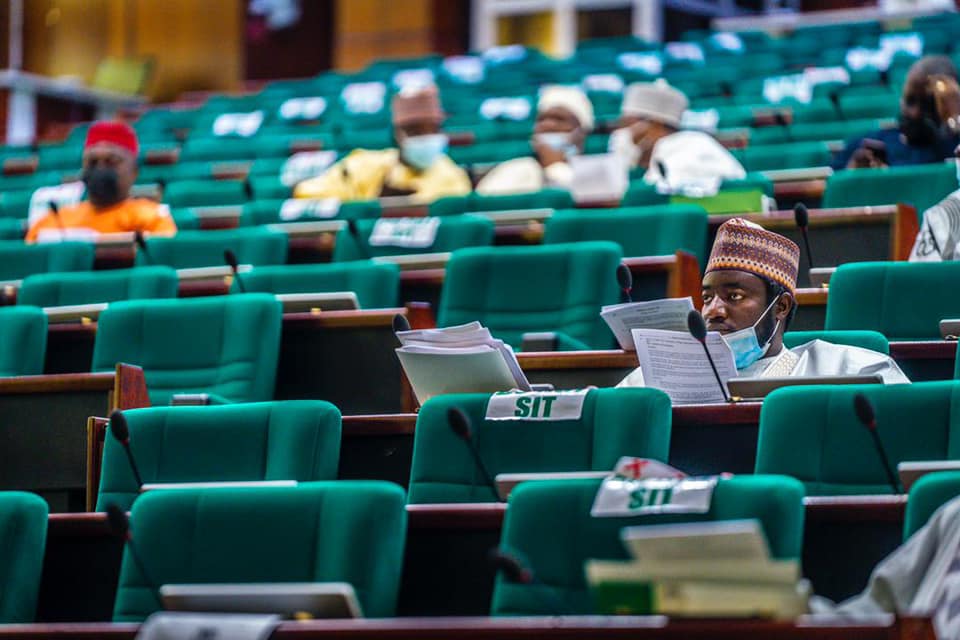
2026 Budget: Reps Threaten Zero Allocation for SON, NAICOM, CAC, Others
By Adedapo Adesanya
The House of Representatives Public Accounts Committee (PAC) has recommended zero allocation for the Standards Organisation of Nigeria (SON), the National Insurance Commission (NAICOM), and the Corporate Affairs Commission (CAC), among others, in the 2026 budget for allegedly failing to account for public funds appropriated to them.
The committee, at an investigative hearing, accused the affected ministries, departments and agencies (MDAs) of shunning invitations to respond to audit queries contained in the Auditor-General for the Federation’s annual reports for 2020, 2021 and 2022.
The affected MDAs include the Federal Housing Authority (FHA), the Federal Ministry of Housing and Urban Development, the Federal Ministry of Women Affairs and Social Development, the National Business and Technical Examinations Board (NABTEB), and the Nigerian Meteorological Agency (NiMet).
Others are Federal University of Gashua; Federal Polytechnic, Ede; Federal Polytechnic, Offa; Federal Medical Centre, Owerri; Federal Medical Centre, Makurdi; Federal Medical Centre, Bida; Federal Medical Centre, Birnin Kebbi; Federal Medical Centre, Katsina; Federal Government College, Kwali; Federal Government Boys’ College, Garki, Abuja; Federal Government College, Rubochi; Federal College of Land Resources Technology, Owerri; Council for the Regulation of Freight Forwarding in Nigeria; and the FCT Secondary Education Board.
The PAC chairman, Mr Bamidele Salam, while speaking on the decision of the committee to recommend a zero budget for the defaulting MDAs, stated that the National Assembly should not continue to appropriate public funds to institutions that disregard accountability mechanisms.
“Public funds are held in trust for the Nigerian people. Any agency that fails to account for previous allocations, refuses to submit audited accounts, or ignores legislative summons cannot, in good conscience, expect fresh budgetary provisions. Accountability is not optional; it is a constitutional obligation,” he said.
The panel maintained that its recommendation for a zero budget for the affected MDAs is aimed at restoring fiscal discipline and strengthening transparency across federal institutions and conforms with extant financial regulations and the oversight powers of the parliament.
Economy
Nigeria’s Stock Exchange Year-to-Date Gain Now 32.27% After 0.67% Rise
By Dipo Olowookere
The bulls consolidated their dominance on the Nigerian Exchange (NGX) Limited on Tuesday after closing higher by 0.67 per cent, stretching the year-to-date return to 32.27 per cent.
It was observed that the key sectors of Nigeria’s stock exchange witnessed buying pressure, with the energy space expanding by 4.35 per cent, the banking index growing by 1.97 per cent, the industrial goods counter rising by 0.71 per cent, the insurance segment increasing by 0.65 per cent, and the consumer goods landscape up by 0.14 per cent.
Consequently, the All-Share Index (ASI) advanced by 1,372.52 points to 205,831.38 points from 204,458.86 points, and the market capitalisation chalked up N883 billion to close at N132.492 trillion compared with Monday’s N131.609 trillion.
There were 40 price gainers and 20 price losers yesterday, indicating a positive market breadth index and bullish investor sentiment.
Stanbic IBTC appreciated by 10.00 per cent to N161.70, Ecobank gained 10.00 per cent to sell for N50.60, NGX Group improved by 9.97 per cent to N168.75, Cornerstone Insurance added 9.94 per cent to quote at N5.64, and Mecure soared by 9.92 per cent to N67.60.
On the flip side, Fortis Global Insurance lost 8.20 per cent to trade at N1.12, McNichols depreciated by 8.17 per cent to N6.52, Academy Press slipped by 6.96 per cent to N7.35, International Energy Insurance dipped by 6.88 per cent to N3.25, and Guinea Insurance contracted by 5.83 per cent to N1.13.
During the session, market participants transacted 569.3 million shares valued at N32.3 billion in 45,777 deals versus the 470.0 million shares worth N32.5 billion traded in 60,793 deals the previous session, implying a jump in the trading volume by 21.13 per cent, and a slip in the trading value and number of deals by 0.62 per cent and 24.70 per cent, respectively.
The most active stock for the day remained Access Holdings with 67.5 million units sold for N1.8 billion, Zenith Bank traded 39.7 million units worth N4.5 billion, VFD Group transacted 37.6 million units valued at N423.0 million, GTCO exchanged 30.6 million units for N3.8 billion, and Lasaco Assurance transacted 26.3 million units worth N52.6 million.
Economy
Brent, WTI Falls on Hopes of Advanced US, Iran Talks
By Adedapo Adesanya
Crude prices dropped on Tuesday on hopes Iran will resume talks with the US and Israel to end the conflict that has shut the Strait of Hormuz.
Brent crude futures settled at $94.79 a barrel after losing $4.57 or 4.6 per cent, and the US West Texas Intermediate crude finished at $91.20 per barrel after it shed $7.80 or 7.87 per cent.
Talk of a resumption in US-Iran discussions put downward pressure on prices, ignoring the loss of physical barrels of oil that are not moving.
Reuters reported that negotiating teams from the US and Iran could return to Islamabad, Pakistan, this week amid continued engagement on trying to achieve an agreement.
The International Energy Agency said in its monthly report that attacks on energy infrastructure in the Middle East and Iran’s effective closure of the Strait of Hormuz have led to the largest oil supply disruption in history. It said over 10 million barrels per day were lost in March.
The IEA said resuming flows through the Strait of Hormuz remains the single most important variable in easing the pressure on energy supplies, prices and the global economy. The waterway is used for transporting crude and refined products, largely to Asia.
The IEA sharply cut its forecasts for global oil supply and demand growth, with the demand growth forecast for 2026 trimmed by 80,000 barrels per day and supply now expected to decline by 1.5 million barrels per day.
The US military said on Monday that its blockade of the Strait of Hormuz would extend east to the Gulf of Oman and the Arabian Sea. With two ships reportedly turned around in the strait as the blockade started. However, three Iran-linked tankers entered the Gulf and were allowed to pass because their destinations were not Iranian ports.
Iran threatened to respond to the blockade by attacking ports in nations bordering the Gulf.
Before the outbreak of the US-Iran war in late February, around 130 vessels transited the Strait daily. Traffic has since slowed to a trickle, and ships must now navigate both US naval oversight and Iranian directives.
The American Petroleum Institute (API) estimated that crude oil inventories in the US rose 6.10 million barrels in the week ending April 10. In the week prior, US crude oil inventories rose by 3.719 million barrels. Official data from the Energy Information Administration (EIA) will be released later on Wednesday.
Economy
FG Targets Low-Carbon Growth in Blue Economy
By Adedapo Adesanya
The federal government has reaffirmed its commitment to climate-responsive and sustainable practices as core pillars for developing Nigeria’s marine and blue economy.
This is contained in a press statement on Tuesday by Mrs Anastasia Ogbonna, Director, Information and Public Relations, Federal Ministry of Marine and Blue Economy.
According to the statement, the Permanent Secretary, Federal Ministry of Marine and Blue Economy (FMMBE), Mrs Fatima Mahmood, made this known while receiving a delegation from Invest International, a Dutch state-owned development finance institution under the Netherlands Ministry of Finance, led by Ms Fenna Zoe Howkamp.
Mrs Mahmood disclosed that the Ministry was actively mainstreaming climate considerations into its policies and programmes, with a sharp focus on reducing carbon footprints, conserving marine ecosystems, and promoting environmentally responsible resource utilisation.
She noted that global attention is increasingly shifting to the sustainable exploration of marine resources, including emerging areas such as marine mining.
According to her, Nigeria is aligning with international best practices to ensure such activities proceed without adverse environmental impact, while safeguarding critical ecosystems such as coral reefs.
She further identified the fisheries subsector as a priority, stressing its critical role in boosting food and nutrition security and creating jobs. While acknowledging Nigeria’s vast marine and freshwater resources, she pointed to significant opportunities for investment and growth within the subsector.
The Permanent Secretary reiterated the Ministry’s openness to strategic partnerships, particularly in port services and marine infrastructure, to unlock the long-term investment required for sustainable development.
She assured the delegation of Nigeria’s readiness to collaborate with international partners to drive innovation, investment, and sustainability in the blue economy.
In her remarks, the Head of Public Finance for Invest International (Southern Africa Region, including Nigeria), Ms Fenna Howkamp, reaffirmed the Netherlands’ commitment to deepening collaboration with the Ministry.
She highlighted the organisation’s expertise in marine and water management and presented specific project proposals, including a coastal protection initiative with an accompanying feasibility study, and nature-based solutions for drainage and water supply systems.
Ms Howkamp underscored the shared interest in developing resilient public infrastructure within the blue economy and expressed readiness to align proposed initiatives with the Ministry’s priority areas.
She also outlined Invest International’s financing options, which include up to 35% funding support for public infrastructure projects valued between €100 million and €150 million.
According to her, such financing could be structured through co-financing arrangements with institutions like the World Bank and the European Investment Bank, or through direct lending to the Ministry.
She called for sustained engagement to formalise feasibility studies and identify partners to advance coastal protection and other blue economy initiatives that promote sustainable, nature-based solutions for Nigeria’s coastal communities.
-
Feature/OPED6 years agoDavos was Different this year
-
Travel/Tourism10 years ago
Lagos Seals Western Lodge Hotel In Ikorodu
-
Showbiz3 years agoEstranged Lover Releases Videos of Empress Njamah Bathing
-
Banking8 years agoSort Codes of GTBank Branches in Nigeria
-
Economy3 years agoSubsidy Removal: CNG at N130 Per Litre Cheaper Than Petrol—IPMAN
-
Banking3 years agoSort Codes of UBA Branches in Nigeria
-
Banking3 years agoFirst Bank Announces Planned Downtime
-
Sports3 years agoHighest Paid Nigerian Footballer – How Much Do Nigerian Footballers Earn