

Connect with us

Feature/OPED

Democracy and Problems; Made in Nigeria

Published

on

nigeria democracy

By Prince Charles Dickson (PhD), and Dorcas Bawa

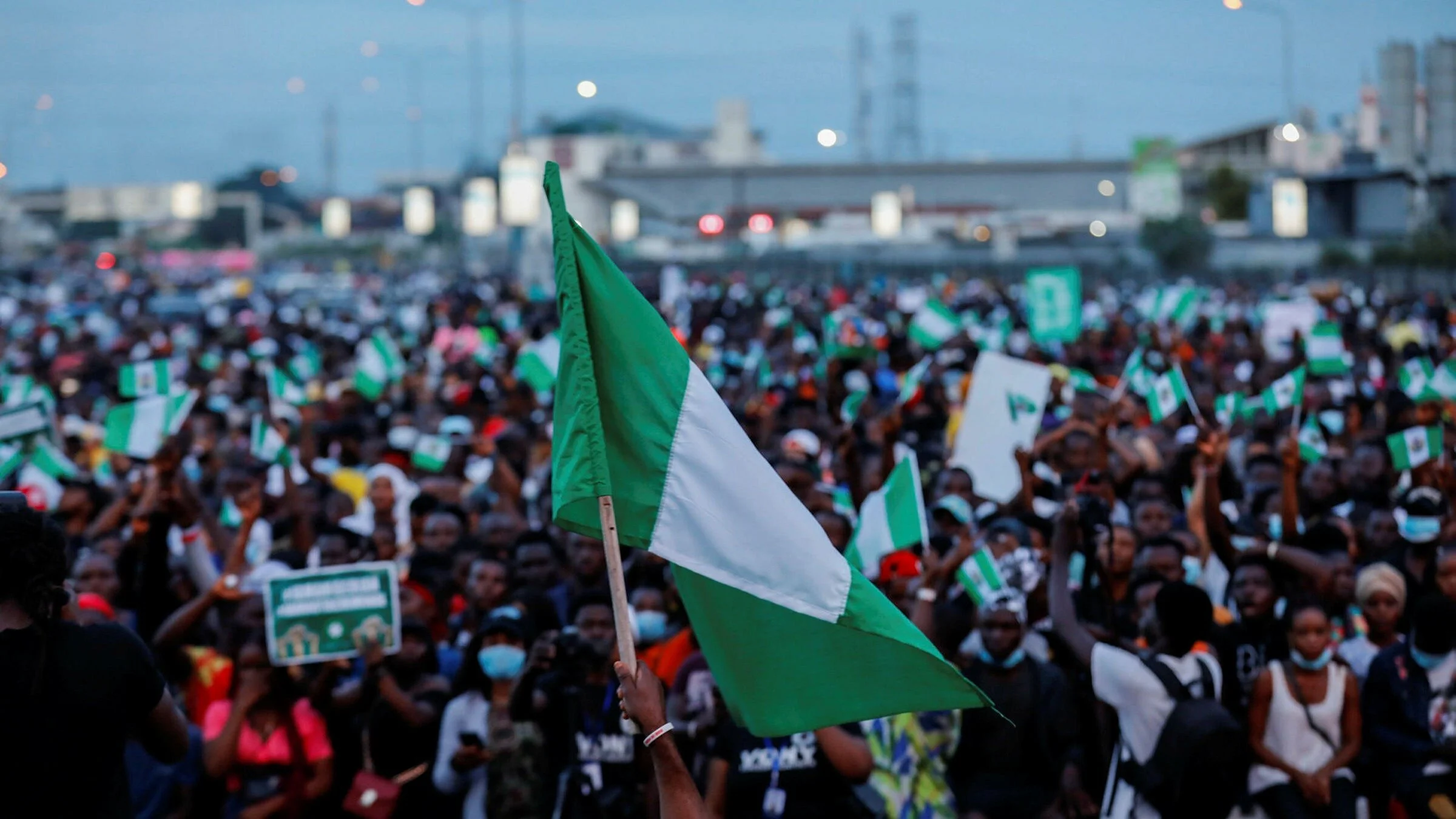
Nigeria’s democratic question is often wrongly framed as if democracy is a foreign garment that we must keep adjusting until it fits our body. We speak of Westminster, Washington, Athens, Paris and every borrowed vocabulary of governance, yet the wound before us is neither Greek nor British nor American. It is Nigerian. Our hunger is Nigerian. Our insecurity is Nigerian. Our broken families are Nigerian. Our abandoned children are Nigerian. Our vote-buying, ethno-religious suspicion, weak local institutions, elite impunity and democratic impatience are Nigerian. Therefore, any democracy that will heal us must be made in Nigeria.

This is not a call for isolation. It is a call for ownership. Democracy cannot survive as imported furniture placed in a burning house. It must grow from our values, culture, history and realities. It must be owned by the people, shaped by our communities, and driven by our collective aspirations for justice, equity and peace. It must answer the question of the farmer in Bassa, the displaced woman in Barkin Ladi, the market woman in Jos, the young person in Mangu, the traditional ruler trying to hold a fractured community together, the child who no longer trusts the home, and the citizen who has voted many times but has not yet felt government as care.

Since 1999, Nigeria has travelled a long and uneven democratic road. The return to civil rule after years of military dictatorship was not a small achievement. It restored constitutional government, reopened civic space, revived political parties, strengthened the press, expanded civil society engagement, and gave citizens the language with which to question power. We have had repeated elections, transitions between administrations, legislative contests, judicial interventions, public protests, investigative journalism and a growing generation of young Nigerians who no longer kneel before authority simply because it wears a title.

These are gains. They must not be dismissed.

But democracy is not merely the presence of elections. It is the presence of dignity. It is not only the counting of votes. It is the counting of lives. It is not complete because politicians campaign, courts sit, governors are sworn in, and budgets are read. Democracy becomes real when the weakest person in the community can say: “This country sees me. This system protects me. This government serves me.”

That is where our democratic journey remains painfully unfinished.

From 1999 to date, Nigeria has built the rituals of democracy faster than the culture of democracy. We have mastered rallies, slogans, posters, primaries, manifestoes, defections and inauguration ceremonies, but we have not sufficiently mastered accountability, inclusion, local ownership, civic discipline and justice. Too much power remains concentrated at the centre. Too many local governments exist more as salary points than as engines of grassroots development. Too many communities are remembered only during elections, condolences or conflict assessment visits. Too many citizens are mobilised as voters but abandoned as human beings.

Democracy made in Nigeria must therefore begin with the people at the centre. Government exists to serve the people, not the other way around. A system that treats citizens as spectators between election cycles is not a democracy. It is a political theatre with ballot boxes. A homegrown democracy insists that the woman, the youth, the person with disability, the displaced, the farmer, the trader, the child, the minority voice and the forgotten community are not footnotes in the national story. They are the story.

To be homegrown, democracy must also be rooted in culture, but not in the abusive misuse of culture. It must respect our languages, traditions, communal memory and ways of life, while refusing every cultural excuse for injustice. Culture should be a bridge, not a cage. It should protect the vulnerable, not silence them. It should teach respect for elders, but also responsibility by elders. It should honour family, but never hide violence inside family walls. It should value community, but never allow community loyalty to bury truth.

The crisis of Nigerian democracy is not only in Abuja. It is also in the home. It is in the family meeting where girls are denied inheritance. It is in the compound where abuse is covered because the offender is related. It is in marriage where responsibility is abandoned. It is in the neighbourhood where everyone knows a child is suffering but waits for the “government” to arrive. It is in the community where young people are recruited into dangerous labour because poverty has become an employer. It is in the silence that violence teaches how to grow teeth.

A recent week in the Plateau State Gender and Equal Opportunities Commission, particularly the Public Complaints and Mediation Department, tells a disturbing story. In one case, a sixteen-year-old schoolgirl became pregnant after alleged abuse within her own home. In another case, an eight-year-old girl from Tudun Wada was brought before the Commission after an alleged sexual assault by a neighbour. Her story was already layered with tragedy: displacement, loss of parents to violence, and dependence on an aged grandmother. Another ten-year-old child had to be reunited with her family in Enugu Agidi after two years of maltreatment while living with a distant relative in Jos. She required psychosocial support before returning home.

In the same week, an illegal commercial motor park around Anguldi in Jos South Local Government Area was reported. The Police were swiftly deployed, and arrests were made. Twelve young people, including three young women, were brought to the Commission. Early interrogation suggested a troubling pattern: the park operated weekly, moving young teenagers from Jos to Ibadan.

These are not isolated moral accidents. They are democratic alarms. But the entire team somehow collectively succeed because they understand the terrain.

Conflict does not end when gunfire stops. It enters homes. It alters parenting. It displaces children. It weakens supervision. It breaks livelihoods. It creates fear, dependency, resentment and desperation. A society that does not heal its conflict will eventually watch that conflict migrate into marriage, childhood, education, labour, politics and faith. The family becomes the first casualty, and later, the polling unit becomes only a mirror of the wounded home.

This is why democracy cannot be discussed only in constitutional language. It must be discussed in human language. When family values erode, democracy suffers. When parental responsibility collapses, democracy suffers. When the culture of respect for human dignity becomes almost non-existent, democracy suffers. When children are unsafe, women are overburdened, fathers disappear from responsibility, mothers are left unsupported, and communities outsource morality to government agencies, democracy becomes a tree without roots.

The problems holding us back are therefore clear. We continue to operate systems that often ignore local realities. We suffer from the concentration of power and the lack of accountability. Our local institutions are weak. Our democratic culture is poor. Tribalism, ethnicity and religious intolerance are too easily weaponised. Many citizens are apathetic because they have been disappointed too often. Others are active only when their group interest is touched. But a person who participates decides their destiny. A person who watches politics from the balcony should not be shocked when decisions are taken in rooms where they are absent.

Homegrown democracy must be community-driven. Decisions must be shaped at the local level through dialogue, consensus and trust. Nigeria cannot continue to pretend that Abuja can understand every stream, shrine, church, mosque, market, grazing route, school, boundary dispute and family wound better than the people who live with them daily. Local problems require local intelligence. But local intelligence must be connected to justice, not captured by local power brokers.

This is why traditional rulers, community heads, women leaders, youth groups, faith leaders, civil society organisations, government agencies, schools, security institutions and families must become democratic actors, not passive observers. Democracy is not INEC alone. It is not the National Assembly alone. It is not the courts alone. Democracy is the mother who protects her child, the father who carries responsibility with honour, the neighbour who reports abuse, the teacher who notices distress, the police officer who acts promptly, the mediator who listens carefully, the traditional ruler who refuses to hide wrongdoing, the pastor and imam who preach dignity, and the citizen who refuses to sell tomorrow for a small envelope today.

Finally, we must rebuild the moral architecture of the family. Mothers, fathers, guardians, relatives and neighbours must rise to nip these issues in the bud. The home is not outside democracy. The home is where citizenship first learns either care or cruelty. If the child learns silence in the face of abuse, she may become an adult who fears power. If the child learns dignity, he may become a citizen who demands justice.

Our country. Our democracy. Our future—May Nigeria win.

1 Comment

1 Comment

  1. Pingback: Democracy and Problems; Made in Nigeria – PRIMA NEWS
Leave a Reply

Your email address will not be published. Required fields are marked *

Feature/OPED

How Nigeria’s Banking Sector Can Maximise the Benefits of Recapitalisation

Published

on

Henry Obiekea FairMoney

By Henry Obiekea

Nigeria’s banking industry is entering one of the most significant transformation periods since the 2005 banking consolidation exercise. The Central Bank of Nigeria’s (CBN) ongoing recapitalisation programme is more than a regulatory requirement—it is a strategic investment in the country’s financial future. If implemented successfully, it has the potential to strengthen financial stability, deepen credit access, improve investor confidence, and support a more inclusive and resilient economy.

In March 2024, the CBN announced new minimum capital requirements for commercial, merchant and non-interest banks. Under the new framework, international commercial banks are required to maintain a minimum paid-up capital of ₦500 billion, national commercial banks ₦200 billion, and regional commercial banks ₦50 billion. Merchant banks are required to hold ₦50 billion, while national and regional non-interest banks are required to maintain ₦20 billion and ₦10 billion respectively. The policy reflects the realities of today’s economy, where inflation, currency depreciation and expanding financial demands have significantly altered the capital required to support sustainable banking operations.

Many institutions have responded through rights issues, public offers, private placements, mergers and acquisitions in pursuit of the revised capital requirements. Beyond regulatory compliance, the exercise is already encouraging stronger governance, better capital planning and increased investor participation within Nigeria’s financial markets.

The recapitalisation conversation, however, extends beyond deposit money banks. The CBN has also introduced revised capital requirements for microfinance banks, recognising the critical role they play in extending financial services to underserved individuals, nano businesses and small enterprises. As the financial landscape becomes increasingly digital, stronger capital bases will enable these institutions to invest in technology, cybersecurity, risk management and product innovation while maintaining public confidence.

For Nigeria’s rapidly growing fintech ecosystem, although they are subject to different licensing frameworks depending on their operations, the broader regulatory direction is equally clear. Institutions that facilitate payments, tech-enabled banking, lending and savings are expected to maintain governance, capital and consumer protection standards appropriate to their respective licensing frameworks. This evolution is essential as fintechs continue to account for a growing share of financial transactions and provide services to millions of previously underserved Nigerians. Collectively, these reforms present a unique opportunity to reshape Nigeria’s financial ecosystem.

A stronger banking sector creates stronger economic outcomes. Well-capitalised financial institutions are better positioned to finance infrastructure, manufacturing, agriculture, housing and technology. They possess greater capacity to absorb economic shocks, support long-term lending and withstand periods of market volatility. More importantly, they can extend larger volumes of prudently underwritten credit to businesses that create jobs and stimulate economic growth.

For small and medium-sized enterprises, which contribute significantly to Nigeria’s GDP and employment, improved access to financing remains one of the greatest growth enablers. Recapitalisation should not be assessed solely by stronger balance sheets, but also by the extent to which additional capital supports productive economic activity.

Despite remarkable progress over the last decade, millions of Nigerians remain underserved by formal financial institutions. Expanding financial inclusion requires complementary approaches across commercial banks, microfinance banks, fintechs and other regulated financial institutions. Achieving meaningful inclusion requires collaboration across commercial banks, microfinance banks, fintech companies and regulators. Each institution serves different customer segments, yet all contribute towards a common objective: bringing more Nigerians into the formal financial system.

At FairMoney Microfinance Bank, recapitalisation aligns with our continued investment in responsible lending, digital banking capabilities, sound risk management and financial inclusion. We believe technology can complement prudent credit assessment and help extend access to financial services for eligible individuals and businesses.

As the recapitalisation programme progresses, success should ultimately be measured by broader outcomes: stronger institutions, deeper financial inclusion, increased SME financing, enhanced consumer confidence and sustained economic growth. Capital itself does not transform economies; how that capital is deployed does.

The Federal Government and the Central Bank of Nigeria have introduced reforms aimed at strengthening the long-term resilience of the financial sector. Continued implementation of these reforms will be important in supporting financial stability and sustainable sector growth. These decisions require vision, consistency and regulatory discipline. While the adjustment process may present short-term challenges for some institutions, the long-term benefits for financial stability, investor confidence and economic development far outweigh the costs.

Nigeria possesses one of Africa’s most dynamic financial services sectors. With stronger capital foundations, responsible innovation and continued collaboration between regulators and financial institutions, the country is well positioned to build a banking ecosystem capable of supporting its development ambitions, empowering millions more individuals and businesses, and supporting inclusive economic development over the long term.

Henry Obiekea is the Managing Director of FairMoney Microfinance Bank

Continue Reading

Feature/OPED

The Choice Before Kaduna

Published

on

kaduna city

By Sani Abdulrazak, PhD

People go through watershed moments sometimes when the cacophony of politics attempts to drown the cadence of progress; it becomes more serious when chimaera masquerades as certainty, but it is a known fact after all that the loudest voices are most times not necessarily the wisest.

Kaduna seems to have arrived at one of those moments. The propagandist opposition within the state is trying very hard to burnish manifestoes and criticisms wrapped in hyperbole and rehearsed until it begins to mistake itself for truth.

Yet, history has always been an unforgiving arbiter. It has an uncanny habit of stripping rhetoric naked, leaving only the vestiges of deeds. It is against that backdrop that one is compelled to reflect, not on who shouts the loudest, especially on social media, but on who has quietly altered the landscape of the beautiful crocodile state. That, conceivably, is the choice before Kaduna State.

Education hewn the destiny of a society, long before it is announced in boardrooms. Governor Uba Sani of Kaduna State appears to appreciate this axiom. As if constructing hundreds of classrooms, renovating neglected schools, expanding access to education and reviving projects abandoned to bureaucratic torpor is not remarkably astral, his administration has gone further to make tertiary education more affordable through the reduction of tuition fees in state-owned institutions. That single decision has become a bulwark against hopelessness for thousands of families. Parents breathe easier, students remain in school instead of abandoning their dreams, enrolment has received fresh impetus, and human capital has become a little less hostage to economic adversity.

Even the reconstruction of roads within Ahmadu Bello University, despite its federal status, speaks of governance that refuses to hide behind jurisdictional caveats. Curiously, while lecture halls become fuller, some critics remain engrossed in composing jeremiads, as though hashtags now award degrees and social media threads have replaced convocation ceremonies. If this does not deserve another term, then perhaps Kaduna should entrust its classrooms to keyboard warriors instead?

A sector that defies drama, yet consequentially integral in Kaduna State is healthcare. Primary Healthcare Centres have continued to receive upgrades, sixteen general hospitals have witnessed rehabilitation, the once-abandoned 300-bed Specialist Hospital has emerged from years of limbo, health insurance coverage has expanded considerably, and investments in personnel and equipment continue with assiduity. Yet, one occasionally encounters the strange absurdity wrapped as opposition, that government should be judged not by functioning hospitals but by the virulence of online criticism. It is almost as though some believe ailments or surgeries retreat before social media posts. Should we now replace stethoscopes with microphones or social media posts and call it healthcare?

If there is any sector that more clearly illustrates the difference between governance and grandstanding in Kaduna State, it is agriculture. Mechanisation, dry-season farming, free fertiliser distribution, value addition, the Special Agro-Industrial Processing Zone and renewed support for farmers all point towards a carefully crafted paradigm rather than an accidental policy.

There is a metamorphosis taking place in rural communities indeed. While genuine farmers harvest maize, ginger and tomatoes, critics harvest conspiracy theories with astonishing alacrity. One group tills the soil and produces food; the other tills public resentment. Since when did viral posts become a substitute for fertile fields?

They wouldn’t want to take their ballyhoo to infrastructure for sure, because infrastructure refuses to remain invisible no matter how determined propaganda may be. Roads snake through communities once forgotten, bridges reconnect places long separated, water projects restore hope where scarcity once seemed ineluctable, and abandoned projects have gradually returned from institutional comatose. Yet there exists a peculiar group of disgruntled politicians that notices every pothole repaired only long enough to ask why another one still exists somewhere else. It is a curious predilection, almost quixotic, to dismiss completed projects because perfection has not yet arrived. Must development now apologise for not occurring overnight?

Security remains man’s most delicate labyrinth, and perhaps the easiest subject upon which to score political points. No responsible leader claims absolute victory against insecurity, yet few can deny that many communities once deserted have gradually witnessed the return of farming, commerce and social interaction. Such progress may not satisfy those addicted to political apoplexy, but it certainly matters to the farmer returning to his land after years of displacement. Or should insecurity be preserved simply because it offers better campaign material?

Economic governance, that complex yet rarely glamorous aspect of governance, is not left out. Increased internally generated revenue, prudent expenditure, strategic partnerships, capital investments and fiscal discipline have gradually strengthened Kaduna’s financial architecture. International partners investing in Kaduna State seldom do so because of slogans, but because of credibility. Sadly, the numbers don’t lie as data is a very stubborn thing. Are spreadsheets now expected to consult political parties before balancing their figures, or should economic data also join the opposition?

Youth empowerment deserves equal reflection. With a skills acquisition centre in each of the three senatorial zones of the state, entrepreneurship support, digital innovation and targeted interventions for small businesses, an attempt is being made to replace dependency with productivity. The apotheosis of governance is not the endless distribution of charity but the deliberate creation of opportunity. Young people increasingly seek tools and training against tokenism and expectancy. Still, some measure empowerment only by the number of campaign T-shirts distributed during election season. Have branded caps suddenly become the highest form of economic policy?

The choice before Kaduna State is simpler than it first appears. Shall we exchange reduced tuition fees for recycled promises? Shall rehabilitated hospitals be traded for rehearsed indignation? Shall roads surrender to rhetoric, farms to social media debates, security gains to sensationalism, and fiscal prudence to flamboyant bombast? Shall tangible progress bow before political charlatanry merely because criticism aims to be louder than construction?

For our democracy to grow further, we must come to a non-negotiable conclusion that the ballot is not an instrument for rewarding the most eloquent critic, but for judging the most effective steward. How promising can stewardship be when classrooms are expanding, hospitals are reopening, roads are stretching farther, farmers are receiving greater support, communities are gradually becoming safer, and opportunities are multiplying.

The evidence before us is not ephemerally ethereal, but enduringly concrete. And so, the lingering questions refuse to disappear: if this is not the direction Kaduna should continue, then what is? If these are not the footprints of purposeful leadership, whose are? If measurable progress has become insufficient, what miracle remains outstanding? And if the answer lies somewhere beyond Governor Uba Sani, then who, exactly, has presented Kaduna with a more convincing testament than the one already written across its schools, hospitals, farms, roads and communities?

Sani Abdulrazak, PhD, is a writer, researcher and a public affairs analyst based in Zaria, Kaduna State.

Continue Reading

Feature/OPED

Even Messi Needed Trophies. Nigerians Demand Results, not Dribbling

Published

on

Nigerians Demand Results

By Blaise Udunze

From a general observation, comparisons are powerful political tools. They simplify complex realities, inspire supporters and shape public perception. Another side of this is that they can also become misleading when symbolism replaces substance.

The latter appears to be the objective behind two recent interventions in defence of his excellency, President Bola Ahmed Tinubu. Respectfully, it was observed that veteran journalist Martin Oloja likened Tinubu’s political journey to that of football icon Lionel Messi. He portrayed him as a resilient strategist whose patience and tactical brilliance eventually produced victory. As this now appears to be a trend, Imo State Governor Hope Uzodimma further elevated the narrative, comparing Tinubu to Singapore’s founding Prime Minister, Lee Kuan Yew. He didn’t stop at that; rather further argued that today’s painful reforms would eventually transform Nigeria just as Lee transformed Singapore. They are compelling analogies.

Unfortunately, it was observed that both began to unravel once governance, not politics, was used as the standard of measurement.

It is a known fact to the world that Lionel Messi is celebrated not because he endured criticism or finally lifted the World Cup after years of disappointment. He is celebrated because his greatness is measurable. His goals are counted. His assists are recorded. His trophies are displayed, and not just that, his records speak louder than the opinions of his admirers, which may have taken a different turn now after the outcome of the 2026 FIFA World Cup.

The same is also true of Lee Kuan Yew. History has shown that he is not revered because he introduced difficult reforms or enjoyed the support of loyal political allies. Governor Hope should be reminded that Lee is remembered because he fundamentally transformed Singapore. Amongst his achievements were transforming a poor trading port into one of the world’s richest, cleanest, safest and most efficiently governed nations.

Lee’s records speak for him because under his leadership, Singapore built world-class infrastructure, an incorruptible public service, globally competitive education, affordable housing, investor confidence and one of the highest standards of living anywhere in the world.

Neither Messi nor Lee Kuan Yew became legends through carefully crafted narratives. Yes, they became legends because the evidence became impossible to dispute. That is precisely where comparisons with President Tinubu become difficult.

It is an error to assume that winning elections is the same as winning governance, and at the same time, political brilliance may secure power, but only effective leadership secures history’s approval.

For millions of Nigerians, governance is not measured by campaign strategy or political resilience. It is measured by the realities they confront every morning.

Can they afford food? Can they pay transport fares? Can they pay rent with the current landlords’ economy? Can they keep their businesses open? Can they sleep or travel freely without fear of kidnapping? Can they find jobs after graduation? Can they access reliable electricity and healthcare? These are the scoreboards by which governments are judged.

Supporters of the Tinubu administration frequently point to encouraging macroeconomic indicators. Foreign reserves have improved. Government revenues have risen. States now receive significantly larger allocations through the Federation Account Allocation Committee (FAAC). Well, these ‘achievements’ will be reviewed soon through the lens of news narratives. International financial institutions have welcomed several policy reforms. The removal of fuel subsidy and exchange-rate liberalisation are presented as courageous decisions that previous administrations avoided.

These developments deserve acknowledgement. Yet macroeconomic improvements are not the same as improvements in citizens’ welfare.

In reality, an economy cannot be declared successful merely because government revenues have increased while household purchasing power continues to deteriorate, as this would be a complete aberration.

Again, it is considered an anomaly that Nigeria reports stronger fiscal numbers, but millions of families continue to struggle with soaring food prices, rising transport costs, expensive housing, high electricity tariffs and shrinking disposable incomes.

Statistics may comfort policymakers. They rarely comfort hungry citizens. Messi never celebrated possession statistics after losing a match; rather, he cried and cried over losing the opportunity of winning the trophy at the concluded 2026 FIFA World Cup.  To him, results mattered.

The reality is that governments should be judged by the same principle. This is open to dispute, but of a truth, Governor Uzodimma’s comparison to Lee Kuan Yew deserves even closer scrutiny because it raises an important question, though it may appear hard to answer.

If Tinubu is Nigeria’s Lee Kuan Yew, where is Nigeria’s Singapore? What exactly made Lee Kuan Yew exceptional? Was it simply his willingness to implement painful reforms? Certainly not.

Many leaders across the developing world have introduced painful reforms. Very few transformed their countries.

One thing stands out here: Lee’s legacy rests on outcomes, not intentions. Judging from all indications, it is obvious that his reforms dramatically reduced corruption, attracted investment, strengthened institutions, expanded industrialisation, improved education, guaranteed affordable public housing and steadily raised incomes across generations. Unlike Nigeria’s ongoing experience, Singapore’s rise was not a promise repeatedly postponed to the future. Citizens experienced tangible improvements in their daily lives. That is why history celebrates Lee Kuan Yew. Nigeria’s present reality tells a different story.

It is glaring and ironic that despite improved fiscal revenues, many Nigerians continue to grapple with rising inflation, worsening poverty, declining purchasing power, youth unemployment, struggling businesses and persistent insecurity. If they must know, these are not merely economic statistics; they are the lived realities by which citizens judge any government.

The Lee Kuan Yew comparison also overlooks perhaps the most important ingredient behind Singapore’s success, which is primarily the institutions.

It is obvious and practically doubtful if Governor Uzodinma’s kind of Singapore is the same as the one on which its transformation was built upon an efficient bureaucracy, disciplined public institutions, predictable regulation, meritocracy, uncompromising anti-corruption enforcement and consistent long-term planning as championed by Lee Kuan Yew. An honest question here is, can the same be said of Nigeria today?

The truth is not far-fetched; Nigeria is nothing close to it because the realities and lived experiences of Nigerians are that the country continues to grapple with weak institutions, policy inconsistency, bureaucratic inefficiency, corruption concerns and widespread insecurity.

His impeccable achievements are built on the institutions; hence, without institutional transformation, every effort to invoke Lee Kuan Yew risks confusing aspiration with achievement.

One common trend witnessed lately is that the supporters of the administration often argue that Nigerians must be patient because meaningful reforms require time. That argument deserves consideration.

Let it also be made known that patience should never become an endless substitute for accountability. Citizens are also entitled to ask whether the sacrifices demanded today are producing measurable improvements tomorrow.

History remembers leaders not because they prescribed hardship, but because that hardship ultimately produced prosperity for those alive and not for the dead.

Another weakness in both comparisons is the tendency to confuse political mastery with administrative excellence. These are totally two different things, because when it comes to winning elections, it requires coalition building, negotiation and political calculation. Whilst running a nation demands competent institutions, sound economic management, transparency, public trust and measurable improvements in living standards.

Again, the two are not the same, and for this reason, many exceptional politicians have governed poorly. Many successful administrators never became political giants. Democracy ultimately rewards governance, not political mythology.

This is not to suggest that President Tinubu’s administration has achieved nothing. Tax reforms, infrastructure investments, fiscal restructuring and efforts to stabilise public finances represent important policy initiatives whose long-term impact remains to be seen. Well, acknowledging those initiatives is consistent with honest public discourse.

Equally important, however, is recognising that millions of Nigerians continue to judge the administration through the realities and their lived experiences rather than the promises they hear.

Football supporters judged Lionel Messi by the trophies in the cabinet.  In like manner, history judges Lee Kuan Yew by the Singapore he built. The same measure should be applied in this nation, as Nigerians will judge President Tinubu by the Nigeria he leaves behind.

The key metric here is that if inflation falls sustainably, poverty declines significantly, insecurity is substantially reduced, electricity becomes more reliable, industries expand, jobs multiply, and citizens regain confidence in the future, history will acknowledge those achievements without requiring comparisons to Messi or Lee Kuan Yew.

Neither Messi nor Lee Kuan Yew needed political allies to persuade the world of their greatness, and that distinguishes both as the greatest of all time (GOAT).

Their records spoke for themselves. Political endorsements may dominate today’s headlines. History, however, listens only to evidence. Even Messi needed trophies. Lee Kuan Yew needed results. Nigerian leaders should be judged by no lesser standard.

Blaise, a journalist and PR professional, writes from Lagos and can be reached via: bl***********@***il.com  

Continue Reading

