Feature/OPED
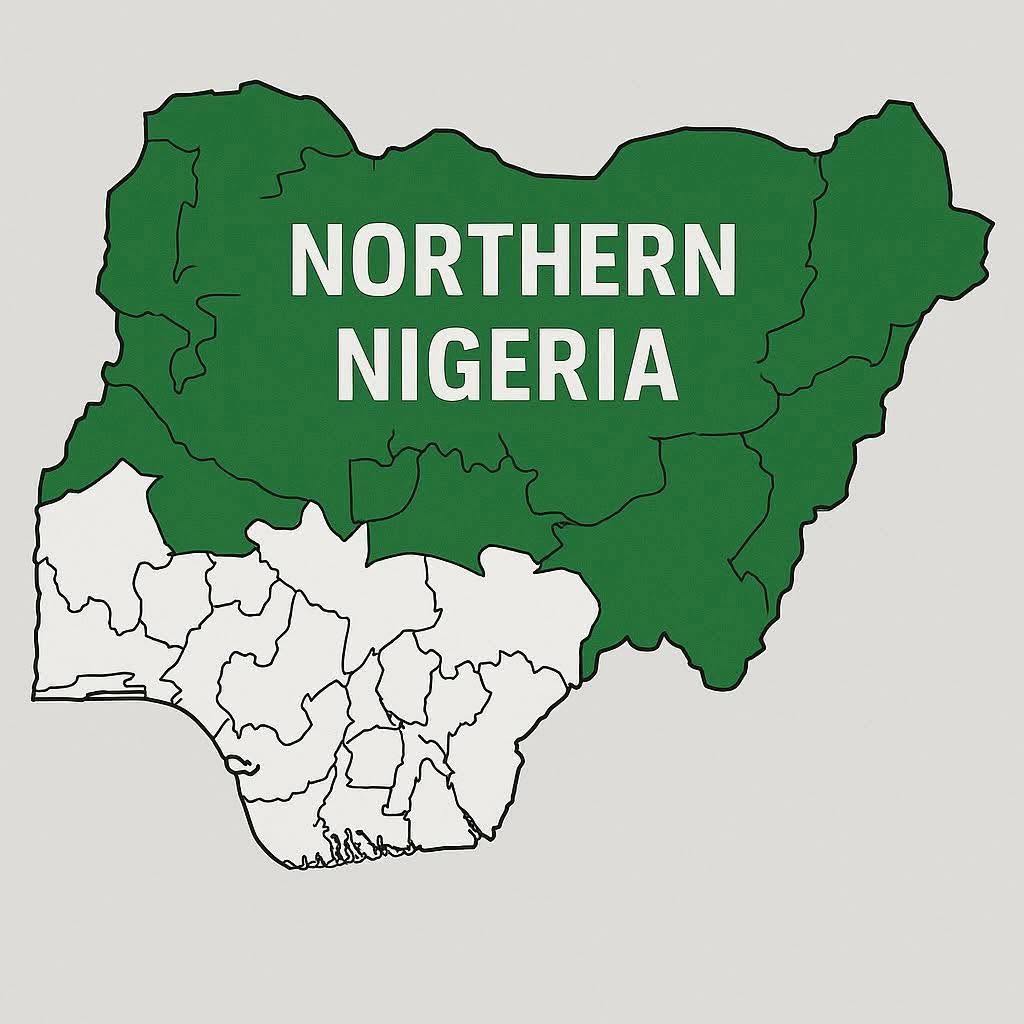
A Gallows Called Northern Nigeria
By Sani Abdulrazak, PhD
Believe whatever you want, but this government was not, is not, and sadly will not be serious about securing the lives and properties of Nigerians, which is its core and fundamental responsibility, unless citizens demand accountability and consequences for failure. Whatever they say is far from the reality on the ground. More troubling is the apparent complacency of many northern elites who seem to believe they are insulated from the insecurity consuming the region. Oh, how mistaken they are. It will surely reach their doorstep if they don’t do something about it; make no mistake about it.
Across Northern Nigeria, insecurity has evolved from a periodic challenge into a defining feature of daily life. Despite rising security expenditures and repeated assurances from those in authority, banditry, insurgency, kidnappings, cattle rustling, and communal conflicts continue to devastate communities. Thousands have lost their lives, countless others have been displaced, and many farming communities have either been abandoned or are operating under constant threat. While political and administrative centres often enjoy relative security, ordinary citizens in rural areas continue to bear the heaviest burden of the crisis. This growing disconnect has reinforced the perception that those in power are detached from the realities confronting the people they govern.
And then came the painful news of General Rabe Abubakar’s death; a tragedy that lays bare the helplessness consuming our region. For nearly two weeks, a retired General and his wife vanished into the shadows of Northern Nigeria, yet the vast security architecture of the state could neither locate nor rescue them. One cannot help but imagine the long, agonising days they endured: waiting, hoping, praying that help was on its way. But help never came. A man who once dedicated his life to defending this nation met his end in captivity, while his loved ones and an anxious public waited for a miracle that never arrived. If a General could disappear for days with no rescue in sight, what hope remains for the ordinary farmer, trader, teacher, or student whose name will never make the headlines? His death is not merely a personal tragedy; it is a haunting symbol of a North where even those who once stood at the pinnacle of the security establishment are no longer beyond the reach of the monster that has been allowed to grow unchecked.
The North has become a giant gallows; If you are residing in Northern Nigeria today, you are just waiting to be killed, somehow, someday…until we radically and collectively take this monster head-on by addressing the issue of out-of-school children, scrapping completely the almajiri system, reviving parental and societal values and responsibilities, enforcing birth control, and creating jobs for our teeming youths via agriculture and by reviving our comatose industries, we will not come out of this madness masked as insurgency, banditry, and kidnappings.
The roots of this crisis run much deeper than the activities of armed groups. Northern Nigeria carries the largest burden of out-of-school children in the country, leaving millions of young people without the education, skills, and opportunities necessary to build productive lives. The Almajiri system, once a respected institution for Islamic learning, has in many places deteriorated into a mechanism that exposes children to neglect, poverty, and exploitation. Thousands of young boys roam the streets without adequate parental care, formal education, or vocational training, making them vulnerable to recruitment by criminal and extremist networks.
Demographic pressure further compounds the problem. Many northern states continue to record high fertility rates while struggling to provide sufficient schools, healthcare services, and employment opportunities. The result is a rapidly expanding youth population confronted by limited prospects and widespread unemployment. In such circumstances, criminal gangs and insurgent groups find a steady pool of recruits. Breaking this cycle requires a comprehensive approach that combines educational expansion, meaningful almajiri reform, responsible family planning, youth empowerment, agricultural development, industrial revival, and targeted vocational training programmes. Security operations may suppress violence temporarily, but only social and economic transformation can remove the conditions that sustain it.
A Gallows Called Arewa
But just like the government, the masses are so not ready; they feign oblivion to the reality facing us. They instead channel their energy and time to ‘trending’ celebrity topics and await the next celebrity nude videos/pictures and chats to aimlessly talk about. The celebrities are only after immorality or waiting to endorse the politicians with the highest bid; the traditional rulers are either afraid or consumed by the menace.
This collective distraction has weakened society’s ability to confront its most pressing challenges. While communities suffer from poverty, violence, and underdevelopment, public discourse is often dominated by trivial controversies. Yet the North has repeatedly demonstrated that communities can mobilise when properly organised. Faith-based groups, youth associations, community leaders, and local organisations have played important roles in peacebuilding and conflict resolution in several areas. Reawakening civic consciousness and redirecting public attention toward education, security, and development must therefore become a priority.
The crisis also demands courage from those traditionally entrusted with providing moral, intellectual, and cultural leadership. At critical moments in our history, influential voices helped shape public opinion, challenge injustice, and mobilise communities toward collective action. Today, however, many of those voices appear either absent, intimidated, or resigned to the status quo, creating a leadership vacuum at a time when Northern Nigeria desperately needs guidance.
Our intellectuals have gone back to their shells, and rightly so. Our elders have done their part and are giving up on us. The most painful part is that our religious leaders, who spent time and energy convincing us that this government would usher in a golden age reminiscent of the Ottoman Empire, have disturbingly gone mute; no Al-Qunuts or warnings to the government anymore, since it is not the government of the fisherman from the creek. It makes one wonder if we are normal in Arewa. The northern elites despise their followers like the Israelis despise the Palestinians. Posterity will surely judge us all, and history will tell how we played our parts in the destruction of our beloved Northern Nigeria.
Religious leaders, elders and intellectuals historically provided mediation, moral authority and local governance where the state was weak. Their retreat may stem from fear, co-optation or the erosion of moral credibility. Re-engagement requires rebuilding trust and protecting civic space: establish formal consultative roles for elders and clerics in security and development planning, fund independent intellectual forums, and create interfaith platforms that can speak to social issues without intimidation. When clerics and scholars mobilise—on health, education or peace—public behaviour and policy often follow; restoring their voice is therefore strategic and urgent.
If you want to see all the ingredients of a doomed people, look no further than Northern Nigeria at the moment. Deepening poverty, educational failure, demographic pressure, weak governance, economic stagnation, and persistent insecurity have combined to create a dangerous reality for the region. Yet history shows that decline is not irreversible. Societies facing similar challenges have transformed themselves through long-term investments in education, economic opportunity, accountable governance, and community-led development. Northern Nigeria can do the same if its leaders and people are willing to confront uncomfortable truths and commit themselves to meaningful reform.
The time for lamentation alone has passed. Northern Nigeria requires a deliberate and measurable programme of recovery that places education, economic empowerment, and community security at its centre. Governments must become more transparent and accountable, traditional and religious leaders must reclaim their moral voice, intellectuals must re-enter public discourse, and citizens must demand better leadership. Only through a collective effort that addresses both the symptoms and the root causes of insecurity can the North begin to reverse its decline and build a future worthy of its people.
Sani Abdulrazak, PhD, is a researcher, writer, and public commentator based in Kaduna State
Feature/OPED
Second Home, Second Mother: Life Inside an Early Years Classroom
By Ohore Emmanuel Ufuoma
The Early Years classrooms have effectively become surrogate homes where educators now tie shoelaces, calm separation anxiety, supervise naps, enforce discipline, and provide comfort after minor injuries, which ought to be duties that should be performed by parents.
The extended work hours from 8 a.m. to 6 p.m. for six days a week, economic realities, and the proliferation of all-day, weekend-inclusive early learning programs have repositioned schools as the primary environment for early childhood development.
For a typical four-year-old, 9.5 hours in school account for about 75% of waking weekday time. With Saturday sessions added, the home is reduced to a space for meals, sleep, and brief routines.
The mandate of Early Years teachers has expanded far beyond academics. Current practice requires them to handle physical care, emotional regulation, and behavioural guidance concurrently.
Daily responsibilities include toileting assistance, feeding, conflict mediation, fatigue monitoring, and maintaining individual routines for 15–20 pupils.
The parent-child dynamic shifts when parents deliberately delegate care of the child, and even punishment, to educators. While parents set apart evenings and weekends for practical tasks, like food, homework, and bathing.
Psychologists term it “contact without connection.” Although parents are physically present, time is divided and focused on tasks.
Children are more obedient and organised in class than they are at home, according to teachers. Parents describe the contrary. The pattern shows an expected result: the parent becomes the outlet for exhaustion, while the educator becomes the authority figure.
The labour market triggered the transfer of responsibilities between parents and educators.
Dual-income households are now the norm in major cities, and flexible work remains limited outside tech and finance.
Child caregiver costs compound the issue. Full-time caregiver care often costs almost half of a salary. Parents opt for schools with extended hours in order to kill two birds with one stone.
For educational centres, extended-day programs create parent-like responsibilities, and staffing, training, and compensation should reflect that. In leading centres, professional development in attachment theory and stress management is becoming standard.
For parents, the emphasis should be on quality rather than quantity.
Policymakers are beginning to prioritise employment rules that permit parental presence during early childhood and accessible, flexible daycare. Strong early attachment is associated with higher scholastic success and fewer behavioural problems in later life.
The Early Years teacher and the parents have not replaced each other. Both parties are only responding to a system that demands more hours in the workplace with fewer hours at home.
There has been a paradigm shift in the upbringing of children. The teachers now perform functions once meant for the family unit.
Intentional parenting inside the small windows has been left in the hands of caregivers.
Instead of the classroom remaining a place of learning, it has become the only home children know.
Ohore Emmanuel Ufuoma is an MBA student at Tokat Gaziosmanpaşa University, Turkey
Feature/OPED
Preparing Bank Security Operations for Scale, Change, and Long-Term Resilience
By Quintin Roberts
When banks and financial institutions upgrade their physical security systems, they are making decisions that will affect operations for years. Branch formats are changing, cyber risks are increasing, and security teams are being asked to support more sites, more data, and more business functions. The challenge is keeping pace with change in a way that holds up over time.
A modern physical security strategy needs to go beyond protection. It needs to give teams a clearer view across branches, support consistent governance, and provide the flexibility to adapt as technology and operational needs change. The following considerations focus on foundational choices that help banks build security operations that are resilient and can grow with the business.
Choose open architecture to preserve long-term flexibility
Banks and financial institutions often manage a mix of legacy systems, newer technologies, and location-specific requirements. A proprietary system can limit scalability, options for devices, and which systems can connect across the organisation. Over time, this can increase costs and make it harder to modernise without replacing infrastructure that still has value.
Open architecture gives decision-makers more choice and preserves flexibility. It allows financial institutions to select the cameras, access control devices, sensors, analytics, and other technologies that best fit each location and adapt them as their needs change.
This allows teams to modernise in phases. For example, an institution may standardise video management across many sites while keeping existing cameras in place, then replace hardware over time.
Decide how to deploy your security system
Some banks want to keep core systems on-premises at major sites. Others prefer cloud-managed services for smaller branches, remote locations, or new sites that need faster deployment and less local infrastructure. Many need a mix of both. Deployment flexibility gives them the freedom to choose where systems run, how data is stored, and how services are managed.
This is especially important for institutions with different regulatory requirements, bandwidth limitations, and internal IT policies. A flexible deployment model helps banks modernise at their own pace while maintaining control over performance, cybersecurity, compliance, and cost.
Unify operations to improve visibility across branches
Managing video surveillance, access control, intrusion, and other systems separately slows down response time and makes investigations harder. Operators may need to sign into different applications, search through data in different ways, and manually piece together what happened. Across hundreds of branches, these inefficiencies can add up quickly.
A unified security platform gives teams one operating picture across systems and sites. A local team can respond faster to an incident at a single location, while a central security operations centre can monitor trends, support remote sites, and apply consistent procedures across the network.
A unified system that creates a shared context makes incorporating analytics or AI-driven capabilities more effective, further accelerating searches, identifying patterns, and reducing overall investigation time.
Put cybersecurity and governance at the forefront
Physical security systems are connected to the broader IT environment. Devices all need to be managed as part of the bank’s cyber risk profile. If systems are outdated or inconsistently configured across branches, they can create unnecessary exposure and make long-term management harder. When cybersecurity and governance are a foundational part of the system, encryption, authentication, user permissions, system updates, audit trails, retention policies, and privacy controls are applied consistently across locations.
A centralised approach makes this consistency sustainable. It provides accountability for banks, helping teams keep track of who accessed which systems, who changed permissions, how long video is retained, and how evidence is shared. This is important for meeting regulatory expectations and adapting security operations over time. Further, consistent policies make organisational risk management more effective by standardising how risk is handled across the organisation, adding to future resilience.
Automate workflows for better risk mitigation and investigations
Investigations often involve information from several systems and locations. A suspicious ATM transaction may need to be matched with video, or an access event may need to be reviewed alongside intrusion activity. If that information sits in separate systems, investigations take longer and are harder to document.
Unified systems connect the relevant context across video, access control, license plate recognition, and other systems. This supports faster investigations and helps teams share evidence internally or with law enforcement while maintaining the chain of custody.
Improve business operations using physical security data
Physical security systems collect valuable operational data every day, from occupancy levels to device health. A unified platform can turn this data into useful insights, helping security teams identify recurring issues and improve resource planning. Other departments can use the same information to improve customer experience, branch operations, and facility management.
For example, occupancy and queue data help banks understand when branches are busiest. Device health monitoring enables teams to identify maintenance needs before systems fail. And with centralised reporting, leadership can see patterns across the full branch network rather than relying on isolated site-level reports.
Making the right choices for the long term
As banks modernise their physical security infrastructure, long-term resilience will depend on foundational choices. Strategies based on open architecture, deployment flexibility, unification, cybersecurity, governance, and data all help financial institutions build systems that can adapt well into the future.
Quintin Roberts is the Regional Sales Manager for Genetec Africa
Feature/OPED
Strengthening Partnerships Through Dialogue: Okomu’s Engagement with Extension 1 Communities
Corporate organisations have been described as an Open Social System wherein the input of the organisations comes from the environment and the output goes back to the environment. In this equation, therefore, proactive and socially responsible organisations must constantly interface with its environment where the surrounding communities are significant stakeholders.
In line with this thought, Okomu Oil Palm Company constantly engages with all its neighbouring communities on a quarterly basis to discuss issues of mutual concern and to resolve any issues that may degenerate into grievances. Through regular stakeholder meetings, the company continues to foster open communication, address concerns, and strengthen relationships with communities within the company’s concessions. Recently, the company engaged communities around its Extension 1 plantation, including Okomu village, Udo, Madagbayo, Safarogbo, Gbelebu, Inikorogha, and Ofunama, Gbole-Uba.
These engagement meetings serve as an important platform for community leaders, youth representatives, women’s groups, and company representatives to discuss matters affecting the well-being and development of the communities. The sessions reflect Okomu’s commitment to maintaining a transparent and mutually beneficial relationship with its host communities.
During the meetings, representatives from the various communities highlighted issues of importance to residents, including infrastructure needs, educational support, employment opportunities, environmental concerns, and community welfare. Company representatives listened attentively to these concerns, provided updates on ongoing initiatives, and outlined measures being taken to address identified challenges.
A key feature of the engagements was the emphasis on collaboration. Community leaders acknowledged the importance of maintaining open channels of communication and working closely with the company to achieve shared development goals. Discussions focused not only on challenges but also on opportunities for greater partnership and community participation in development initiatives.
One of the key highlights of the meetings was the discussion surrounding Okomu’s collaboration with the Foundation for Partnership Initiatives in the Niger Delta (PIND) an NGO that is focused on human capital development Community members were briefed again on the objectives of the partnership, and the areas of PIND intervention and its potential to create meaningful opportunities for economic empowerment, skills development, and improved livelihoods within host communities.
Health, Safety and Environment (HSE) awareness sessions were also conducted during the meetings. Community members received valuable information on safety practices, environmental stewardship, and measures aimed at promoting healthier and safer communities. The sessions encouraged residents to play an active role in maintaining a safe environment while supporting sustainable practices within their communities.
The meetings also provided an opportunity for the company to share updates on ongoing projects and interventions designed to improve the quality of life within the host communities. Through these engagements, Okomu reaffirmed its dedication to responsible corporate citizenship and its long-standing commitment to supporting the growth and development of neighbouring communities.
As the discussions concluded, participants expressed appreciation for the opportunity to engage directly with company representatives and contribute to conversations that impact their communities. The meetings reinforced the value of dialogue, mutual respect, and partnership in building stronger and more resilient communities.
Okomu remains committed to sustaining these engagements and working alongside its neighbouring communities to create lasting social and economic value. By listening, responding, and collaborating, the company continues to strengthen the bonds that support shared progress and sustainable development across the Extension 1 communities.
-
Feature/OPED6 years agoDavos was Different this year
-
Travel/Tourism10 years ago
Lagos Seals Western Lodge Hotel In Ikorodu
-
Showbiz4 years agoEstranged Lover Releases Videos of Empress Njamah Bathing
-
Banking8 years agoSort Codes of GTBank Branches in Nigeria
-
Economy3 years agoSubsidy Removal: CNG at N130 Per Litre Cheaper Than Petrol—IPMAN
-
Banking4 years agoSort Codes of UBA Branches in Nigeria
-
Banking3 years agoFirst Bank Announces Planned Downtime
-
Sports3 years agoHighest Paid Nigerian Footballer – How Much Do Nigerian Footballers Earn