Connect with us

Feature/OPED

A Tale of Two Kidnappings

Published

on

kidnappings Nigeria

By Tony Ogunlowo

In the past few weeks, two high-profile kidnapping cases have captured the attention of the nation. One involved the kidnapping of more than 45 pupils and teachers from a school in Oyo state, and the other involved the relatives of an ex-minister.

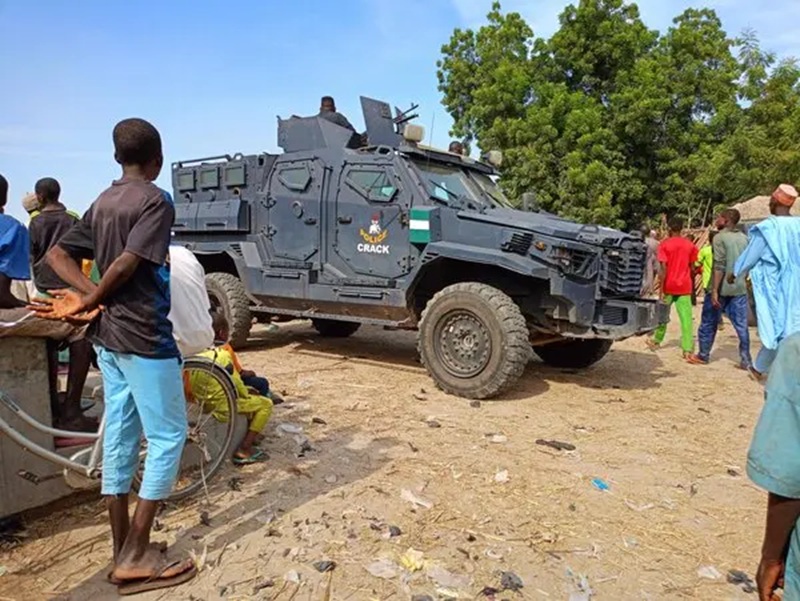
Whilst the relatives of the ex-minister, his sister and her two sons, were rescued in a highly publicised police operation, the fate of the missing school children and their teachers remains unclear. Already two teachers have been killed: one was shot and the other beheaded.

Nigeria is a hotbed for kidnapping, and in 2025 alone, there were more than 4,000 reported cases. But bear in mind that for every case recorded, two or three went unreported, leaving relatives to deal with ransom demands on their own. And for cases reported, the overstretched and understaffed police are not much help and often suggest relatives negotiate with kidnappers. As a result, what was once a small sore has now festered, becoming an even bigger wound and growing.

It has been more than twelve years since 276 girls were kidnapped from their school in Chibok. To date, not all of them have been recovered. Some have died whilst others, heavily traumatised, have been found bearing children of their captors: their lives destroyed and those of their families.

The swift rescue of the ex-ministers’ relatives in a short window of just a few days points to one thing – elitism! If you’re well-connected, the powers that be will pull out all the stops to do what they’re supposed to be doing in the first place. If you’re a mere ordinary citizen, they can’t be bothered.

Even though the Federal Government has a policy of not negotiating with kidnappers, which is understandable since they don’t want to encourage the practice, they should have the means to end the scourge. Every government from the Obasanjo regime up to the incumbent have promised to take a hard line on abductions and banditry. To date, all that hardline rhetoric has just been ‘audio’, leaving bandits and kidnappers to get up to all sorts of things. There have been calls to allow citizens to take up arms: not a good idea, as this might encourage extrajudicial killings rather than for self-defence. There have also been calls for stiffer penalties, but, yet again, you need to catch the perpetrators first and make sure they don’t bribe their way out of the judicial system. The Forest Guards program is taking off, and hundreds of them are being recruited, trained and deployed, but are they paramilitary trained to be able to fight kidnappers in the bush?

Just like when the Chibok girls went missing under President Goodluck’s watch, the government is taking a lukewarm approach to the matter. What should be classified as a top priority has been pushed to the bottom of the list as all politicians rush to get their nomination forms in for the 2027 elections: the only thing that matters to them. If this were America, Trump would have mobilised the Army, Navy, Air Force, CIA, and whatever else he could think of to find ALL kidnapped victims. In Nigeria, the only thing politicians are interested in, their top priority, is re-election.

Children’s Day has come and gone, and so also has Democracy Day, as we head towards Independence Day, and somebody’s child, uncle, aunt, husband is still being held against their will with the security services running around like headless chickens, clueless as to what to do next. What happened to their network of informers? Are their surveillance techniques so primitive that they can’t locate a large gathering of people in the bush? Surely contact has been made with all kidnappers so they can list their demands, and why haven’t these leads been tracked using basic cellular telephony technology? But if it’s an ex-minister’s relative, they know how to pull a rabbit out of a hat.

Until the government adopts a zero-tolerance policy towards kidnapping and banditry – and sticks to it, these unfortunate incidents will continue.

Perhaps it’s time to seek foreign assistance since we don’t know what to do: already, Trump has stationed US troops, up North, to help us fight Boko Haram and ISIS. They already have the technology and personnel that can find a fly hiding behind a dune in the Sahara. An ordinary Air Force surveillance plane, or drone, equipped with heat-seeking infra-red cameras, overflying the place at night can easily find anyone hiding out in the Old Oyo park within hours, not days. And please don’t involve the NAF, who seem to bomb more innocent people than bad guys! Alternatively, bring in Sheikh Gumi, who seems to know most of the bandits. He might be able to help.

There is no easy fix to ending insecurity in Nigeria other than to bring in a brutal state of emergency that will grant security services carte blanche to deal with situations as they see fit. Again, this can lead to abuse of power, as was the case with the disbanded SARS.

To truly eliminate all insecurity in the country, the government needs to think long-term and go back to the root cause of all these problems – hunger. A hungry man (or woman) faced with unemployment and a high cost of living, with nothing to lose, will be crazy enough to do any kind of crime to put food on the table and a roof above his head. Doubling the size of the security services and equipping them doesn’t solve the problem.


Click to comment

Leave a Reply

Your email address will not be published. Required fields are marked *

Feature/OPED

How Nigeria’s Financial Sector is Transitioning to Domestic Cloud

Published

on

January 2027 Data Localisation

Nigeria’s financial services industry stands at a decisive crossroads as technology leaders prepare for the January 1, 2027, data residency deadline set by the Central Bank of Nigeria. The regulatory mandate requiring all payment transaction records, customer personally identifiable information (PII), and account ledgers to reside within domestic data centres is forcing a structural re-evaluation of banking IT architectures. For executive teams across the country, navigating this transition without interrupting daily banking operations is becoming the ultimate test of leadership.

For years, the industry’s reliance on foreign hyperscale providers delivered quick elasticity and global tools. However, transferring entire production stacks – encompassing real-time transaction processing, API gateways, and fraud scoring engines – back to local infrastructure requires significant engineering effort. With the country handling billions of electronic transactions annually, CIOs are seeking to preserve system uptime while severing deep operational dependencies on foreign data centres.

Experts have opined that the core challenge confronting financial technology teams is the lack of empirical, vendor-neutral benchmarks for domestic cloud platforms. Evaluating whether local data centres can sustain mission-critical financial traffic requires rigorous stress testing rather than relying on theoretical SLAs. The risk of potential downtime during a live migration makes vendor vetting the most crucial phase of the compliance roadmap.

To mitigate these operational risks, infrastructure partners like MTN are mobilising domestic capacity and technical insights tailored for the financial sector. By offering sovereign cloud solutions and collaborative engineering frameworks, MTN is helping CIOs and startups navigate the migration path with minimal disruption. Their localised infrastructure serves as an operational bridge, providing the uptime and data sovereignty assurances that both institutions and regulators require.

Lynda Saint-Nwafor, the Chief Enterprise Business Officer for MTN Nigeria, put it succinctly when she explained the upside of hosting data locally: “Hosting locally means lower latency, faster response times, and compliance with Nigeria’s data regulations. More importantly, it gives Nigerian businesses control, keeping sensitive financial, health, and government data within national borders.”

As the January 2027 benchmark approaches, the metric for success will depend on technical execution and operational discipline across companies.

Continue Reading

Feature/OPED

Five Practical Holiday Saving Habits for Nigerian Households

Published

on

Osasikemwen Ighile FairMoney

By Osasikemwen Ighile

For many Nigerian families, the summer holiday is a season of fun, relaxation, and spending quality time together. But with the kids at home, more outings, higher electricity consumption, and extra entertainment costs, it’s also a period when expenses can quietly pile up.

The good news? You don’t have to choose between making memories and managing your finances. With a few smart habits, you can enjoy the holidays while keeping your savings goals on track.

Here are five practical ways to save smarter this summer.

1. Ditch Cash and Spend Smarter 

Ever noticed how cash disappears faster than you expected? Whether it’s buying snacks for the kids, paying for transport, or making quick market runs, spending cash can make it difficult to track where your money goes.

Using a debit card can make it easier to track transactions and monitor spending. FairMoney customers can use their debit card for eligible transactions, subject to applicable terms and conditions. You can make payments conveniently at stores, shop online, and easily monitor your transactions. Instead of carrying cash everywhere, you get a clearer picture of your expenses and can avoid unnecessary impulse purchases.

Small changes like this can make a big difference over the course of the holiday.

2. The Kids Are Home—Stay Ahead of Your Utility Bills  

School holidays often mean one thing: the TV is almost always on. From cartoons in the morning to football matches in the evening, your cable subscription becomes more important than ever. Add fans, air conditioners, gaming consoles, and other appliances, and it’s easy to see why electricity bills tend to increase during this period.

Rather than waiting until services are disconnected, planning and paying bills on time help households avoid unnecessary late-payment or reconnection charges. FairMoney customers can pay eligible bills and services through the platform, subject to applicable terms and service availability. You can conveniently pay for Cable TV subscriptions, Electricity bills, Internet subscriptions, Airtime and data for the entire family.

Paying bills on time can help reduce the risk of late payment consequences or applicable reconnection charges. Summer is filled with birthdays, outings, family visits, and spontaneous spending. While these moments are worth enjoying, your savings shouldn’t take a holiday.

3. Enjoy the Holidays—but Don’t Pause Your Savings 

A simple strategy is to save first before spending. FairMoney customers can also use eligible savings products, such as FairSave and FairTarget, to set aside money towards specific financial goals, subject to the applicable product terms, conditions and eligibility requirements, even if it’s in small amounts. Already planning for the next school term? FairMoney customers can also use eligible savings products, such as FairSave and FairTarget, to set aside money towards specific financial goals, subject to the applicable product terms, conditions and eligibility requirements. Already planning for the next school term? Consider setting aside money regularly towards your school-fee goal. FairTarget can be used to help you organise savings around specific financial goals, subject to the applicable product terms, conditions and eligibility requirements. By starting early and saving consistently, you can better prepare for school-related expenses when the new term begins.

4. Plan Weekly Family Activities Instead of Daily Spending

The holidays don’t have to be expensive to be memorable. Instead of spending money every day on outings, cinemas, or restaurants, create a simple weekly activity plan. One weekend could be a family movie night at home. Another could be a picnic in a nearby park, a cooking competition, indoor games, or a visit to relatives.

Planning activities ahead helps you control spending while still giving everyone something to look forward to. Sometimes, the best memories cost very little.

5. Buy Household Essentials in Bulk

With everyone at home, groceries seem to disappear twice as fast. Instead of making frequent trips to the store, which often lead to impulse purchases, consider buying regularly used items in bulk.

Depending on the retailer and quantity purchased, some household essentials may offer better value when purchased in bulk.. You’ll spend less on transportation, reduce unplanned shopping, and avoid running out of important items.

Summer should be about creating happy memories not financial headaches. By spending more intentionally, paying your bills on time, planning ahead, and staying committed to your savings goals, you can enjoy everything the season has to offer without putting unnecessary pressure on your finances.

A few smart habits today can make the months ahead much easier. And that’s a win for every household.

Osasikemwen Ighile is the Brand Manager for FairMoney Microfinance Bank

Continue Reading

Feature/OPED

Beyond the Screen: How Sports and Entertainment Keep Nigeria’s Economy Moving

When we talk about Nigeria’s economy, the conversation usually centres on oil and gas, banking, agriculture, manufacturing and technology. But there is another industry quietly creating jobs and driving economic activity: entertainment and sports. Most times, we only see the finished product. We watch the show, cheer during the match and move on to the […]

Published

on

Sports and Entertainment

When we talk about Nigeria’s economy, the conversation usually centres on oil and gas, banking, agriculture, manufacturing and technology. But there is another industry quietly creating jobs and driving economic activity: entertainment and sports. Most times, we only see the finished product. We watch the show, cheer during the match and move on to the next thing. What we do not always see is the amount of work that happens before those moments reach our screens.

Take Big Brother Naija

When viewers tune in and see the housemates moving around the Big Brother house, it is easy to forget that the house itself is a product of many people’s work. From the interior designers and set builders who create the spaces to the electricians, carpenters, painters and technicians who bring them to life, an entire team works behind the scenes before the first episode even begins.

Once the cameras start rolling, the list gets even longer. Producers, directors, camera operators, sound engineers, editors, stylists, makeup artists, caterers, production assistants and security personnel all have a role to play. Then there is everything that happens outside the house. Publicists, photographers, videographers, digital teams, content creators and media platforms all contribute to keeping the conversation going. The housemates may be the faces audiences remember, but they are only one part of a much bigger entertainment ecosystem.

Sports have a similar impact

When the Super Falcons play a major game, the focus is naturally on the players and what happens on the pitch. But outside the stadium, the game can mean business for viewing centres, food vendors, restaurants and bars. Sports analysts and commentators have more to cover, content creators have something new to create around and businesses selling jerseys and football merchandise get an opportunity to make sales.

A major sporting event can turn an ordinary evening into a busy one for businesses that have little to do with what happens on the pitch. That is the part of sports and entertainment that is easy to overlook. The value is not only in the stars we see or the content we consume. It is also in the network of people whose skills and businesses keep these industries moving.

And this is where DStv and GOtv become an important part of the picture. They do more than give audiences access to the shows, matches and moments they care about. They connect the people producing this content with millions of viewers who keep the industry going.

Every time someone tunes in to Big Brother Naija, follows the Super Falcons or settles in for a major sporting event, they are engaging with an industry that supports producers, creatives, technicians, businesses and other professionals.

The impact of sports and entertainment, therefore, goes beyond what happens on the screen. By bringing some of the biggest entertainment and sporting moments to Nigerian audiences, DStv and GOtv help keep this ecosystem active, visible and working. Because sometimes, when we sit down to watch, we are not just consuming entertainment. We are also supporting an industry that provides jobs.

Continue Reading