Economy
Understanding Contracts for Difference (CFDs) in Trading
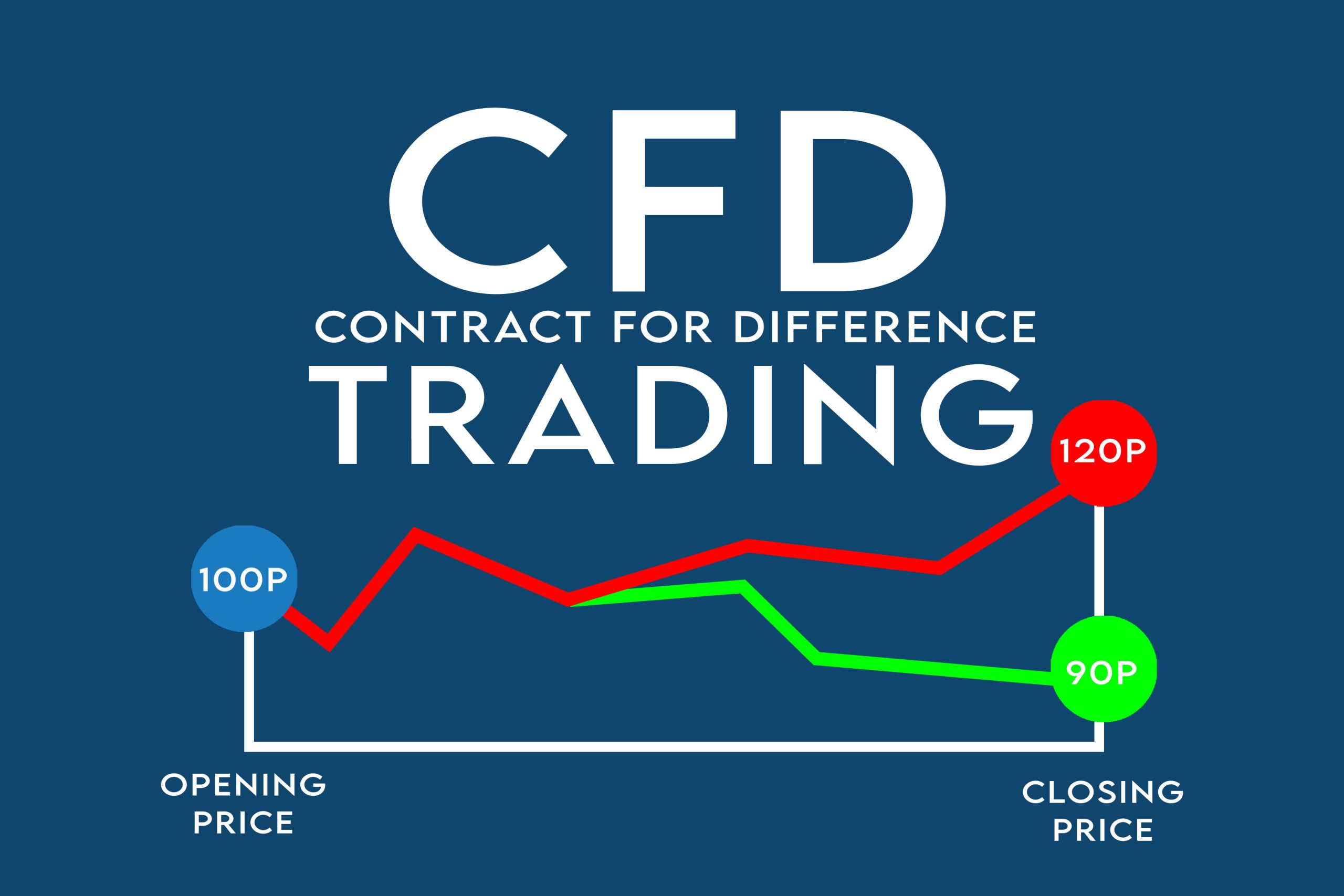
Contracts for Difference, commonly known as CFDs, represent a significant portion of the modern trading landscape. They are intricate financial instruments that provide traders with a host of opportunities, but they also come with their own unique set of challenges and risks. This article aims to shed light on what CFDs are, how they operate, and the implications they hold for traders.
A Deeper Dive into Contracts for Difference
CFDs are an attractive instrument for many traders due to their flexibility. They allow traders to speculate on a wide array of global markets without needing to invest in the physical asset. This can open up opportunities that might otherwise be inaccessible due to financial or logistical constraints. For example, international shares, commodities, or currencies might be out of reach for some traders, but CFDs on these assets are readily available on most trading platforms.
Another notable aspect of CFDs is their application in hedging strategies. If a trader has a physical portfolio and fears a short-term drop in the market, they can ‘go short’ with a CFD to potentially offset any losses in their actual portfolio. It’s important to note, however, that while this strategy can protect against losses, it can also limit profits if the market rises instead.
Moreover, CFDs are traded on margin, meaning traders only need to deposit a percentage of the full value of their position. This leverage can magnify profits if the market moves in the trader’s favor. However, it’s crucial to remember that leverage can also magnify losses, potentially even exceeding the initial deposit, making prudent risk management an absolute necessity.
Lastly, unlike traditional trading, CFD trading offers opportunities 24 hours a day, reflecting the global nature of the financial markets it encompasses. This can allow traders to take advantage of price movements at any time, providing a level of flexibility that traditional trading methods may not.
Trading CFDs on a CFD Trading Platform
Modern trading has been transformed by the advent of online trading platforms, and CFD trading is no exception. A CFD trading platform offers traders the ability to speculate on price movements without the need to own the underlying assets. These platforms provide a range of tools to assist traders in making informed decisions, such as advanced charting capabilities, market news feeds, and analytical tools.
Using these platforms, traders can quickly react to market fluctuations and capitalize on short-term price movements. Additionally, many of these platforms offer features such as stop-loss orders, which can help mitigate potential losses by automatically closing a trade if the market moves against the trader’s position by a specific amount.
Factors Influencing CFD Trading
A wide range of factors can influence the prices of the underlying assets in CFD trading, and as a result, the potential profits and losses for traders. These factors can range from company earnings reports and major news events to changes in economic indicators and shifts in market sentiment.
For example, let’s consider a recent financial update: the Central Bank of Nigeria increased the interest rate by 0.25% to 18.75%. Such a change could affect the value of Nigerian stocks and bonds, and thereby, the CFDs associated with those assets. Traders speculating on these CFDs would need to take this interest rate hike into account when making their trading decisions.
The Risks and Rewards of CFD Trading
CFD trading is not without its risks. The use of leverage means that both potential profits and potential losses are magnified, and there is a risk of losing more than your initial investment. Therefore, risk management is critical in CFD trading, and traders should use tools like stop-loss and take-profit orders to manage their risk exposure.
On the flip side, CFD trading offers a high degree of flexibility. Traders can go long or short with ease, making it possible to profit from both rising and falling markets. Furthermore, CFDs enable traders to gain exposure to a variety of markets and assets without needing to own them outright, which can be a major advantage in terms of both cost and convenience.
In conclusion, Contracts for Difference represent a complex yet potentially rewarding aspect of modern trading. They require an in-depth understanding of the market and a solid strategy, but for those willing to invest the time and effort, they offer a versatile and dynamic approach to trading.
Economy
Customs Street Chalks up 0.12% on Santa Claus Rally
By Dipo Olowookere
The Nigerian Exchange (NGX) Limited witnessed Santa Claus rally on Wednesday after it closed higher by 0.12 per cent.
Strong demand for Nigerian stocks lifted the All-Share Index (ASI) by 185.70 points during the pre-Christmas trading session to 153,539.83 points from 153,354.13 points.
In the same vein, the market capitalisation expanded at midweek by N118 billion to N97.890 trillion from the preceding day’s N97.772 trillion.
Investor sentiment on Customs Street remained bullish after closing with 36 appreciating equities and 22 depreciating equities, indicating a positive market breadth index.
Guinness Nigeria chalked up 9.98 per cent to trade at N318.60, Austin Laz improved by 9.97 per cent to N3.20, International Breweries expanded by 9.85 per cent to N14.50, Transcorp Hotels rose by 9.83 per cent to N170.90, and Aluminium Extrusion grew by 9.73 per cent to N16.35.
On the flip side, Legend Internet lost 9.26 per cent to close at N4.90, AXA Mansard shrank by 7.14 per cent to N13.00, Jaiz Bank declined by 5.45 per cent to N4.51, MTN Nigeria weakened by 5.21 per cent to N504.00, and NEM Insurance crashed by 4.74 per cent to N24.10.
Yesterday, a total of 1.8 billion shares valued at N30.1 billion exchanged hands in 19,372 deals versus the 677.4 billion shares worth N20.8 billion traded in 27,589 deals in the previous session, implying a slump in the number of deals by 29.78 per cent, and a surge in the trading volume and value by 165.72 per cent and 44.71 per cent apiece.
Abbey Mortgage Bank was the most active equity for the day after it sold 1.1 billion units worth N7.1 billion, Sterling Holdings traded 127.1 million units valued at N895.9 million, Custodian Investment exchanged 115.0 million units for N4.5 billion, First Holdco transacted 40.9 million units valued at N2.2 billion, and Access Holdings traded 38.2 million units worth N783.3 million.
Economy
Yuletide: Rite Foods Reiterates Commitment to Quality, Innovation
By Adedapo Adesanya
Nigerian food and beverage company, Rite Foods Limited, has extended warm Yuletide greetings to Nigerians as families and communities worldwide come together to celebrate the Christmas season and usher in a new year filled with hope and renewed possibilities.
In a statement, Rite Foods encouraged consumers to savour these special occasions with its wide range of quality brands, including the 13 variants of Bigi Carbonated Soft Drinks, premium Bigi Table Water, Sosa Fruit Drink in its refreshing flavours, the Fearless Energy Drink, and its tasty sausage rolls — all produced in a world-class facility with modern technology and global best practices.
Speaking on the season, the Managing Director of Rite Foods Limited, Mr Seleem Adegunwa, said the company remains deeply committed to enriching the lives of consumers beyond refreshment. According to him, the Yuletide period underscores the values of generosity, unity, and gratitude, which resonate strongly with the company’s philosophy.
“Christmas is a season that reminds us of the importance of giving, togetherness, and gratitude. At Rite Foods, we are thankful for the continued trust of Nigerians in our brands. This season strengthens our resolve to consistently deliver quality products that bring joy to everyday moments while contributing positively to society,” Mr Adegunwa stated.
He noted that the company’s steady progress in brand acceptance, operational excellence, and responsible business practices reflects a culture of continuous improvement, innovation, and responsiveness to consumer needs. These efforts, he said, have further strengthened Rite Foods’ position as a proudly Nigerian brand with growing relevance and impact across the country.
Mr Adegunwa reaffirmed that Rite Foods will continue to invest in research and development, efficient production processes, and initiatives that support communities, while maintaining quality standards across its product portfolio.
“As the year comes to a close, Rite Foods Limited wishes Nigerians a joyful Christmas celebration and a prosperous New Year filled with peace, progress, and shared success.”
Economy
Naira Appreciates to N1,443/$1 at Official FX Market
By Adedapo Adesanya
The Naira closed the pre-Christmas trading day positive after it gained N6.61 or 0.46 per cent against the US Dollar in the Nigerian Autonomous Foreign Exchange Market (NAFEM) on Wednesday, December 24, trading at N1,443.38/$1 compared with the previous day’s N1,449.99/$1.
Equally, the Naira appreciated against the Pound Sterling in the same market segment by N1.30 to close at N1,949.57/£1 versus Tuesday’s closing price of N1,956.03/£1 and gained N2.94 on the Euro to finish at N1,701.31/€1 compared with the preceding day’s N1,707.65/€1.
At the parallel market, the local currency maintained stability against the greenback yesterday at N1,485/$1 and also traded flat at the GTBank forex counter at N1,465/$1.
Further support came as the Central Bank of Nigeria (CBN) funded international payments with additional $150 million sales to banks and authorised dealers at the official window.
This helped eased pressure on the local currency, reflecting a steep increase in imports. Market participants saw a sequence of exchange rate swings amidst limited FX inflows.
Last week, the apex bank led the pack in terms of FX supply into the market as total inflows fell by about 50 per cent week on week from $1.46 billion in the previous week.
Foreign portfolio investors’ inflows ranked behind exporters and the CBN supply, but there was support from non-bank corporate Dollar volume.
As for the cryptocurrency market, it witnessed a slight recovery as tokens struggled to attract either risk-on enthusiasm or defensive flows.
The inertia follows a sharp reversal earlier in the quarter. A heavy selloff in October pulled Bitcoin and other coins down from record levels, leaving BTC roughly down by 30 per cent since that period and on track for its weakest quarterly performance since the second quarter of 2022. But on Wednesday, its value went up by 0.9 per cent to $87,727.35.
Further, Ripple (XRP) appreciated by 1.7 per cent to $1.87, Cardano (ADA) expanded by 1.2 per cent to $0.3602, Dogecoin (DOGE) grew by 1.1 per cent to $0.1282, Litecoin (LTC) also increased by 1.1 per cent to $76.57, Solana (SOL) soared by 1.0 per cent to $122.31, Binance Coin (BNB) rose by 0.6 per cent to $842.37, and Ethereum (ETH) added 0.3 per cent to finish at $2,938.83, while the US Dollar Tether (USDT) and the US Dollar Coin (USDC) remained unchanged at $1.00 each.
-
Feature/OPED6 years agoDavos was Different this year
-
Travel/Tourism9 years ago
Lagos Seals Western Lodge Hotel In Ikorodu
-
Showbiz3 years agoEstranged Lover Releases Videos of Empress Njamah Bathing
-
Banking8 years agoSort Codes of GTBank Branches in Nigeria
-
Economy3 years agoSubsidy Removal: CNG at N130 Per Litre Cheaper Than Petrol—IPMAN
-
Banking3 years agoFirst Bank Announces Planned Downtime
-
Banking3 years agoSort Codes of UBA Branches in Nigeria
-
Sports3 years agoHighest Paid Nigerian Footballer – How Much Do Nigerian Footballers Earn


Pingback: Understanding Contracts for Difference (CFDs) in Trading - Bank of Africa