Economy
Customs Street Rebounds by 0.24% as GDP Numbers Bring Cheer
By Dipo Olowookere
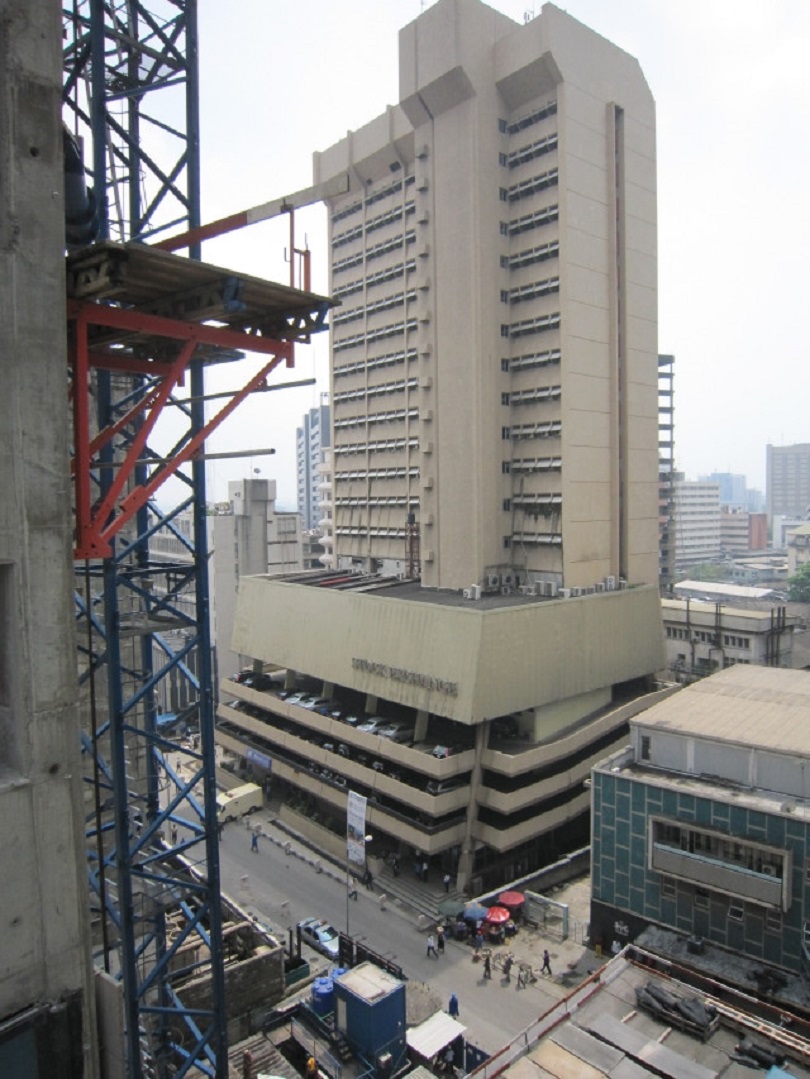
Traders at Customs Street had a reason to smile on Friday after the stock market rebounded by 0.24 per cent on the back of the gross domestic growth figures released by the National Bureau of Statistics (NBS).
On the previous day, the agency released the unemployment numbers and stirred controversies after it said the unemployment rate in Nigeria dropped to 4.1 per cent in the first quarter of 2023, a sharp contrast to the 33.3 per cent in the fourth quarter of 2020, the last time the numbers were made public.
While stock investors and others were still dissecting the report, the NBS released the GDP figures, and it was revealed that the country’s economy grew by 2.51 per cent in the second quarter of this year.
This brightened the mood of the investing community, raising the Nigerian Exchange (NGX) Limited higher to the green territory at the close of business.
As a result, the All-Share Index (ASI) moved up by 157.09 points to 65,558.91 points from 65,401.82 points, and the market capitalisation increased by N86 billion to N35.881 trillion from N35.795 trillion.
Business Post reports that all the key sectors of the bourse attracted the attention of investors yesterday, with the consumer goods, energy, banking, insurance, and industrial goods indices rising by 1.08 per cent, 0.26 per cent, 0.14 per cent, 0.12 per cent, and 0.02 per cent apiece.
Also, investor sentiment was strong during the trading session after the exchange ended, with 31 price gainers and 23 price losers, indicating a positive market breadth index.
SFS REIT was the biggest price gainer after it chalked up 9.97 per cent to quote at N83.80, NASCON rose by 9.95 per cent to N44.75, FTN Cocoa improved by 9.94 per cent to N1.99, NEM Insurance appreciated by 9.90 per cent to N5.66, and Red Star Express gained 9.89 per cent to sell for N2.89.
The heaviest price loser was Prestige Assurance after it dropped 9.43 per cent to 48 Kobo, Tantalizers had 9.38 per cent sliced from its price to 29 Kobo, Omatek lost 9.09 per cent to finish at 30 Kobo, Mutual Benefits declined by 8.89 per cent to 41 Kobo, and Guinea Insurance dwindled by 7.41 per cent to 25 Kobo.
It was observed that despite the growth recorded by the NGX yesterday, the activity level was low, as the trading volume, value, and the number of deals depreciated by 38.95 per cent, 67.44 per cent, and 5.73 per cent, respectively.
This was because a total of 356.0 million equities valued at N4.2 billion were transacted in 6,569 deals on Friday compared with the 583.1 million equities worth N12.9 billion traded in 6,968 deals on Thursday.
Transcorp refused to relinquish its position on top of the activity chart on the last trading session of the week after posting a turnover of 76.7 million stocks valued at N442.1 million.
Fidelity Bank sold 53.0 million shares worth N376.9 million, Universal Insurance exchanged 17.8 million equities for N3.7 million, FCMB traded 16.7 million stocks valued at N98.8 million, and Dangote Sugar transacted 16.6 million shares worth N773.9 million.
Economy
Nigeria to Overtake Algeria as Africa’s Third-Largest Economy in 2026—IMF
By Adedapo Adesanya
Nigeria is projected to move from being the become the third-largest economy in Africa in 2026 from the fourth position it clinched last year, according to data from the International Monetary Fund (IMF).
In the IMF’s World Economic Outlook (October 2025 edition), accessed via its datamapper, it was indicated that Nigeria’s gross domestic product (GDP) at current prices stood at about $285 billion in 2025, placing it behind South Africa, Egypt and Algeria.
South Africa topped the African ranking with a GDP of about $426 billion, followed by Egypt at $349 billion, and Algeria ranked third with $288 billion.
However, the IMF forecasts that Nigeria will overtake Algeria in 2026 as economic output rebounds, driven by higher oil production, improved foreign exchange liquidity and the impact of ongoing economic reforms.
According to the IMF’s projections, Nigeria’s GDP is expected to rise to $334 billion, putting it ahead of Algeria ($284 billion) and making it Africa’s third-largest economy, behind South Africa ($443 billion) and Egypt ($399 billion).
The lender’s outlook reflects expectations that recent reforms, including petrol subsidy removal, exchange-rate liberalisation and fiscal adjustments, will support medium-term growth, despite short-term inflationary pressures.
Africa’s largest economy’s position has shifted in recent years amid currency devaluations, rebasing exercises and macroeconomic headwinds across major economies on the continent. Nigeria in 2024 lost its status as Africa’s largest economy and dropped to fourth place after a series of Naira devaluations and wider reforms.
However, these appear to have brought about macro reliefs in the near term. On January 19, the IMF reviewed its forecast for Nigeria’s economic growth rate upward to 4.4 per cent in 2026. The Bretton Woods organisation revised the rate upward from its initial projection of 4.2 percent.
Prior to that, on January 13, the World Bank also increased its projection for Nigeria’s economic growth rate for 2026 to 4.4 percent from the 3.7 percent forecast in June 2025.
The federal government expects the Nigerian economy to grow by 4.68 per cent in 2026, supported by easing inflation, improved foreign exchange stability and continued fiscal reforms.
According to the Minister of Finance and Coordinating Minister of the Economy, Mr Wale Edun, the country’s inflation, which peaked above 33 per cent in 2024, declined to 15.15 per cent by December 2025, adding that foreign exchange volatility has eased, with the Naira trading below N1,500 to the Dollar, while external reserves rose to $46 billion.
He added that GDP growth averaged 3.78 per cent by the third quarter of 2025, with 27 sectors recording expansion.
Economy
Lafarge to Expand Sagamu, Ashaka Cement Plants to 5.5MT Per Annum
By Aduragbemi Omiyale
One of the leading cement firms, Lafarge Africa Plc, has confirmed plans to expand its plants in Gombe and Ogun States to about 5.5 million metric tonnes per annum.
In a notice to the Nigerian Exchange (NGX) on Wednesday, the company said it was strengthening local cement production with the expansion of its Sagamu Cement Plant in Ogun State and Ashaka Cement Plant in Gombe State.
It noted that the upon completion of the expansion projects, the production capacity of the Ashaka Cement in Gombe State would rise to 2 MT per annum, while the Sagamu facility would increase to 3.5 MT per annum.
The two new plants, the statement disclosed, would be dry plants with preheater kilns, vertical raw mills and roller presses for cement mills to make them energy efficient.
The disclosure signed by the company secretary, Adewunmi Alode, further revealed that the plants are expected to improve product availability and enhance Lafarge Africa’s ability to serve customers efficiently across key markets.
This expansion is coming after the announcement made last year that Huaxin Building Materials Group’s had acquired 83.81 per cent of Lafarge Africa and demonstrates their commitment to Nigeria’s infrastructural development.
The chief executive of Lafarge Africa, Mr Lolu Alade-Akinyemi, stated that the expansion projects reflect the company’s long-term confidence in Nigeria’s growth potential and are aimed at supporting Nigeria’s infrastructure and construction needs.
He explained that the project goes beyond capacity growth to deliver operational and sustainability benefits but also supports value creation for our customers and shareholders while contributing to economic activity and job creation across our host communities and the wider construction ecosystem.
“The expansion of our plants is a strategic investment that reinforces Lafarge Africa’s role in supporting national development. By increasing capacity at our flagship plants, we are strengthening our supply chain, improving our responsiveness to market demand, and positioning the business to better support critical sectors such as housing, commercial construction, and infrastructure.
“It enables us to integrate modern production technologies that enhance efficiency, reliability, and environmental performance, in line with our commitment to responsible operations,” Mr Alade-Akinyemi, stated.
Economy
Aradel Grows FY 2025 Profit by 55% on Higher Earnings Contribution
By Aduragbemi Omiyale
Improved tax efficiency and higher earnings contribution supported the 55 per cent growth in the post-tax profit of Aradel Holdings Plc in the 2025 fiscal year.
The financial statements of the energy firm showed that the profit after tax stood at N401.2 billion in the period under review compared with the N259.1 billion recorded in the 2024 accounting year.
Analysis of the results revealed that the company delivered strong top-line growth, with total revenue up by 20 per cent year-on-year to N697.3 billion from N581.2 billion, due to sustained momentum across all business segments.
It was observed that earnings from crude oil exports grew by 18 per cent to N440.1 billion from N373.7 billion, supported by higher production volumes and reliable evacuation through both the TNP and ACE system.
Also, crude sales rose to 4.1mmbbls from the 3.1mmbbls recorded in the previous fiscal year, accounting for 63 per cent of the total revenue despite decline in realised crude oil prices.
Further, refined products revenues increased by 18 per cent to N210.8 billion from N179.3 billion, representing 30 per cent of total revenue, driven by a 26 per cent rise in sales volume to 302.9 mmltrs versus 240.5 mmltrs in FY 2024, demonstrating the organisation’s expanding downstream footprint and strong market penetration.
In addition, gas revenues increased by 65 per cent to N46.4 billion from N28.2 billion, indicating 7 per cent of total revenue, buoyed by higher production volumes despite a decline in realised gas prices to $1.52/mscf compared to $1.66/mscf in FY 2024.
“Aradel delivered a strong and resilient performance in 2025, reflecting the quality of our asset base, disciplined execution, and the inherent resilience of our diversified energy portfolio.
“Despite operating in a dynamic environment, we achieved meaningful growth across our upstream, gas, and refining businesses,” the chief executive of Aradel Holdings, Mr Adegbite Falade, stated.
“During the year, we advanced our acquisition-led growth strategy with the completion of two landmark transactions: the acquisition of a 33.3 per cent effective equity interest (comprising 12.5 per cent directly by Aradel Energy; and 20.8 per cent indirectly through ND Western Limited) in Renaissance Africa Energy Company Limited, operator of the Renaissance Joint Venture (formerly known as the SPDC Joint Venture), and the purchase of an additional 40 per cent equity interest in ND Western Limited,” he added.
“The acquisition of the additional interest in ND Western Limited represents a significant milestone for the group. It is fully aligned with Aradel’s long-term strategy of disciplined portfolio consolidation, asset base expansion, and sustainable value creation, and it further strengthens our strategic position within Nigeria’s upstream oil and gas sector. The completion of the NDW transaction increases Aradel’s effective interest in ND Western Limited to 81.67 per cent and the Renaissance Africa Energy Company Limited to 53.33 per cent,” Mr Adegbite further stated.
“Looking ahead, our focus in 2026 is on consolidating our expanded portfolio to enhance operational scale, improve efficiency across our assets, increase production and further diversify our revenue base in support of long-term shareholder value,” he noted.
-
Feature/OPED6 years agoDavos was Different this year
-
Travel/Tourism9 years ago
Lagos Seals Western Lodge Hotel In Ikorodu
-
Showbiz3 years agoEstranged Lover Releases Videos of Empress Njamah Bathing
-
Banking8 years agoSort Codes of GTBank Branches in Nigeria
-
Economy3 years agoSubsidy Removal: CNG at N130 Per Litre Cheaper Than Petrol—IPMAN
-
Banking3 years agoSort Codes of UBA Branches in Nigeria
-
Banking3 years agoFirst Bank Announces Planned Downtime
-
Sports3 years agoHighest Paid Nigerian Footballer – How Much Do Nigerian Footballers Earn