Technology
Skills Gap Threatens Nigeria’s $75.6bn Telecoms Sector—Omobayo Azeez
By Aduragbemi Omiyale
If urgent steps are not taken, Nigeria’s telecommunications industry, believed to be worth about $75.6 billion, could be at risk because of the widening skills gap.
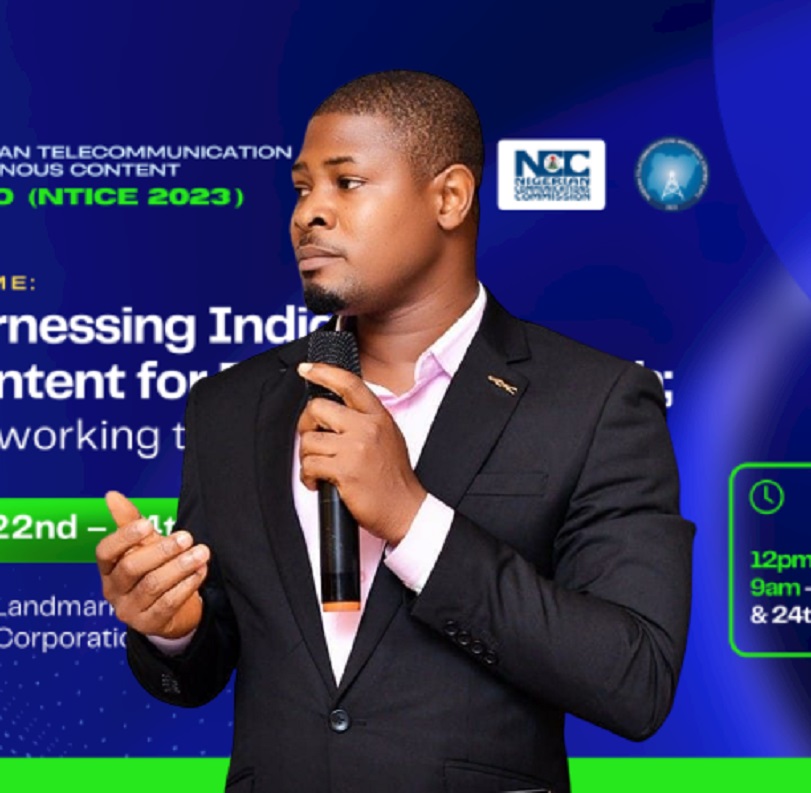
This was the submission of a renowned telecoms policy enthusiast, Mr Omobayo Azeez, at the just-concluded second edition of the Nigerian Telecommunications Indigenous Content Expo (NTICE 2023) organised in Lagos by the Nigerian Communications Commission (NCC).
In his keynote address on Bridging Skills Gap to Accelerate the Indigenous Telecoms Development, Mr Azeez argued that the rising skills gap in the country was becoming a challenge to the sector.
He posited that telecom companies require sufficient professionals with skills in cybersecurity, data analytics, wireless network engineering, software development, fibre optics engineering, IP networking skills, cloud computing, and VSAT engineering, among others, to grow the industry further.
“The current existence of the skills gaps puts a strain on telecom firms, limiting their ability to expand, innovate, improve customer services or develop new products,” Mr Azeez said.
According to the Convener of Policy Implementation Assisted Forum (PIAFo), while the sector is growing in geometric progression, the workforce is depleting, a development he described as a ticking time bomb.
“Available data show a high global demand for tech-skilled workers, particularly in the telecoms sector. This is why the situation is even scarier for a low-middle income country such as Nigeria because high-income economies that desire similar skilled labour will always have their way enticing away capable hands and talents from here,” he stated, noting that, “This is happening already.”
He added that in 2022, operators in the sector lamented losing over 2,000 trained telecoms personnel in Nigeria to other countries, stressing that operators are finding the gaps difficult to fill as prospective applicants often lack the required knowledge and skill set to deliver while trained workers are leaving.
“This has hampered the rate at which operators recruit. For instance, operators across the GSM, Internet Service Providers (ISPs), Value-Added Services (VAS), Fixed Services and other sub-segments of the sector have only employed an additional 679 workers in the last three years, which cannot serve licensees in the sector even at a one-to-one ratio.
“Whereas, the talks around 5G, edge infrastructure, internet of things (IoT) and smart city initiatives all demand more capable hands to innovate and undertake professional tasks to achieve the future aspiration of the sector,” he stated.
Speaking further, Mr Azeez, who doubles as Team Lead for Business Metrics Limited, highlighted the causes of the current skills gap in the sector.
According to him, they include defective educational systems, inadequate training programmes, poor remunerations, japa syndrome, global high demand for tech-skilled workers, government policies, and rapid technological advancements.
He encouraged industry stakeholders to leverage the National Policy for the Promotion of Indigenous Content in the Nigerian Telecommunications Sector (NPPIC), among other local content policies, to develop homegrown talents with skill capacities that are globally competitive.
“While effective collaboration is required between government, operators, and educational, research and training institutions to bridge the gaps, the process should begin with operators by putting in place training and internship programmes within their organisations to meet their immediate needs.
“Operators should also review employees’ remuneration and welfare packages to retain already groomed talents before they are enticed with better offers in foreign markets because labour follows the money. Expatriate quota requirements and succession plan should also be adhered to,” he added.
He further underscored investments in employees’ training and capacity building to maximise available talents, adding that investments in the workforce should be prioritised the same way as Capital Expenditure (CAPEX).
“It would be a gross injustice not to acknowledge young Nigerians for their ingenuity, skills and entrepreneurial spirit, but the current skills gap identified in the ICT and the telecoms sector must not be ignored and should be jointly tackled before it escalates from an operating threat to an existential one.
“Therefore, we should commit to grooming and retaining talents to attract more investments and secure the digital future of the country,” Mr Azeez concluded.
Technology
Interswitch Inducts New Interns into Developer Academy to Fortify Tech Talent Pipeline
By Aduragbemi Omiyale
A cohort of developer interns has been inducted into the Developer Academy of Interswitch as part of efforts to deepen Africa’s tech talent pipeline.
The new cohort emerged through a rigorous multi-stage process involving technical assessments and interviews. They were chosen from over 20,000 applications.
The talents were sourced from across key engineering tracks, including Backend Development, DevOps, Mobile Development, Frontend Engineering, and Quality Assurance.
Their induction highlights both the scale of interest in software engineering opportunities in Nigeria and Interswitch’s role in nurturing the next generation of highly skilled technology professionals.
During the 9-month programme, participants will benefit from mentorship by experienced professionals, exposure to enterprise-grade systems, and the development of workplace readiness skills essential for today’s dynamic work environment.
Designed as an intensive and structured learning experience, the Developer Academy combines theoretical instruction with real-world application, equipping participants with the skills required to thrive in an increasingly global and competitive technology landscape.
At the end of the programme, top-performing interns may be offered full-time roles within Interswitch, while others are well-positioned to pursue opportunities across the broader technology landscape.
“At Interswitch, we have always believed in the capacity to see beyond the immediate challenges and focus on long-term impact. While the migration of skilled talent remains a reality, our approach is to actively shape the outcomes by building a strong and sustainable pipeline of technology professionals,” the chief executive of Interswitch, Mr Mitchell Elegbe, said.
“We are therefore committed to equipping individuals with the capabilities to contribute meaningfully to the broader technology ecosystem, locally and globally, not just for our own needs at Interswitch. In doing so, we are not only strengthening the industry but also reinforcing Nigeria’s position as a source of globally competitive engineering talent,” he added.
Also commenting, the Human Resources Officer, Mr Franklin Ali, said, “The Developer Academy reflects our long-term commitment to building talent at scale. We are equipping these young professionals not just with technical skills, but with the mindset, discipline, and adaptability required to thrive in diverse environments.
“Whether they build their careers within Interswitch, contribute to the local ecosystem, or explore global opportunities, they represent the strength and potential of Nigerian talent and carry forward the standard of excellence we are committed to building.”
Beyond its immediate training objectives, Interswitch’s Developer Academy is anchored on a broader strategic vision, one that addresses the ongoing migration of skilled talent from Nigeria and other developing economies.
As global demand for software engineers continues to rise, many highly skilled professionals are increasingly recruited by international organisations.
Interswitch’s approach reframes this trend, positioning talent development both as a means of local capacity building and as an opportunity to strengthen Nigeria’s reputation as a global hub for technology expertise.
Technology
Flexmobile to Disrupt Nigeria’s Telecom Landscape
By Modupe Gbadeyanka
Nigeria’s telecom landscape is about to be abuzz, with the much-anticipated launch of Flexmobile from Hazon Technologies.
Feelers indicate that the company will soon make a commercial debut, as the regulatory approval is now in the final stage.
It was gathered that the commercial rollout for Flexmobile should be June 1, 2026, as this depends on the authorisation of the Nigerian Communications Commission (NCC), which regulates the sector. The telco will have the distinctive 081 number series.
Early signals suggest a product ecosystem engineered around flexibility, data-centricity, and user control—an approach aligned with the evolving expectations of Nigeria’s digitally connected population.
For seamless operations, Flexmobile has sealed commercial agreements with its MVNE, IMBIL, and Airtel Nigeria.
“What lies ahead is more than a launch—it is the beginning of a new way to experience telecoms in Nigeria,” the chief executive of Hazon Technologies, Mr Victor ‘Gbenga Afolabi, said at a recent media briefing.
“After years of building the right partnerships and infrastructure, we are approaching a defining milestone. Flexmobile is designed to challenge conventions and introduce a smarter, more flexible telecom experience for Nigerians,” he added.
While full details of its offering will be unveiled at launch, Flexmobile is expected to introduce a suite of value-added services designed to go beyond traditional connectivity—positioning the brand at the intersection of telecoms, lifestyle, and digital enablement.
Backed by strong institutional partnerships and a robust MVNE framework, Flexmobile enters the market not just as another operator, but as a platform with the potential to reshape how telecom services are consumed and experienced.
Technology
ipNX, NCC to Drive Inclusive Digital Growth Across Nigeria
By Aduragbemi Omiyale
A leading Information and Communications Technology (ICT) company, ipNX Nigeria, is joining forces with the Nigerian Communications Commission (NCC) to accelerate broadband penetration and drive inclusive digital growth across the country.
Recently, an executive delegation of the organisation paid a visit to the chairman of the regulatory agency, Mr Idris Olorunimbe.
“We are pleased to engage with the new chairman of the NCC and show our support as he takes on this important role.
“Strong leadership and a clear policy direction are essential to unlocking the full potential of Nigeria’s digital economy.
“At ipNX, we remain committed to working closely with the commission and other stakeholders to expand broadband access, enhance connectivity in educational institutions, and ultimately bridge the digital divide.
“This collaboration will empower millions of Nigerians and further position the country as a leader in Africa’s technological evolution,” the Managing Director of ipNX Nigeria, Mr Ejovi Aror, said at the visit.
In his remarks, Mr Olorunnimbe thanked the firm for the show of support, reiterating the commission’s commitment to fostering an enabling environment for private sector participation in achieving universal broadband access across Nigeria.
This collaboration is expected to advance Nigeria’s transformation agenda in technology and help boost the federal government’s broadband agenda for the country.
ipNX Nigeria has said it remains at the forefront of delivering cutting-edge broadband and ICT solutions, and this engagement underscores its unwavering dedication to supporting national development through technology-driven initiatives.
-
Feature/OPED6 years agoDavos was Different this year
-
Travel/Tourism10 years ago
Lagos Seals Western Lodge Hotel In Ikorodu
-
Showbiz3 years agoEstranged Lover Releases Videos of Empress Njamah Bathing
-
Banking8 years agoSort Codes of GTBank Branches in Nigeria
-
Economy3 years agoSubsidy Removal: CNG at N130 Per Litre Cheaper Than Petrol—IPMAN
-
Banking3 years agoSort Codes of UBA Branches in Nigeria
-
Banking3 years agoFirst Bank Announces Planned Downtime
-
Sports3 years agoHighest Paid Nigerian Footballer – How Much Do Nigerian Footballers Earn