Connect with us

Economy

Nigeria Must Shift From Stabilisation to Growth Acceleration—Wale Edun

Published

on

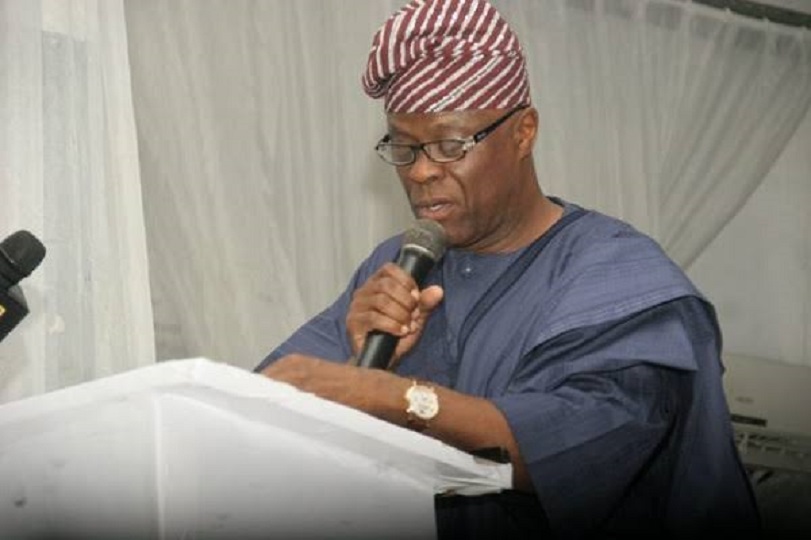
wale edun finance minister

Nigeria’s economy is entering a critical phase, moving from stabilisation into what the Federal Government describes as ‘growth acceleration’, according to the former Minister of Finance and Coordinating Minister of the Economy, Wale Edun, during his keynote delivery at the Nigeria Business Summit convened by Stanbic IBTC.

In his keynote address, Edun said recent macroeconomic reforms had begun to stabilise the economy but cautioned that current growth levels remain inadequate to deliver broad‑based prosperity.

“For nearly a decade, our GDP averaged around two per cent,” Edun said. “We have now moved into a new phase where growth is closer to four per cent, supported by macroeconomic reforms. This is an important improvement, but it is still below the level required to move Nigerians out of poverty in their millions.”

Reforms have strengthened resilience

Edun noted that Nigeria is navigating a renewed global economic shock at a sensitive point in its reform journey. However, he argued that the effects have been softened by reforms introduced since May 2023.

“These shocks would have been far more severe without the comprehensive reforms that have been put in place,” he said, citing stronger external reserves, improved non‑oil revenue performance, and returning investor confidence across domestic and foreign markets.

According to the former Minister, Nigeria is now better positioned to absorb shocks “through price adjustments, investment reallocation, and expanded trade opportunities across Africa and globally”, creating a more predictable environment for business planning and capital deployment.

Enterprises across the value chain must drive inclusive growth

The central theme of the address was the role of enterprises across the value chain in driving inclusive growth. While Edun described small and medium‑scale enterprises (SMEs) as the backbone of the economy, accounting for over 90 per cent of businesses and the majority of employment, he also highlighted the importance of large corporates in building productive and resilient ecosystems.

“Their growth is central to inclusive development,” he said of SMEs. “If we want growth that creates jobs and reduces poverty, then SMEs must be supported deliberately.”

He stressed that this support must translate into practical outcomes, including access to appropriate financing, improved processes, and stronger integration into value chains. For large organisations, he noted, scaling productive capacity and strengthening supplier networks is equally critical.

Productivity and trade as growth enablers

Edun highlighted the National Single Window Initiative as a reform focused on execution and productivity. “Government revenue will increase, not because of higher charges, but because of increased volumes through productivity,” he said.

He emphasised that Nigeria’s long‑term growth will depend on its ability to compete beyond its borders, noting that trade will remain a key driver of diversification and foreign exchange earnings.

“Our true potential does not lie only in our large domestic market,” Edun said. “It lies in becoming a leading exporting economy.”

Partnership and shared responsibility

The former Minister was clear that the government cannot deliver transformation alone.

“Government cannot drive transformation alone,” Edun said. “Its role is to maintain stability, implement predictable policies, and remove structural and bureaucratic constraints to investment.”

Achieving Nigeria’s ambition of building a one‑trillion‑Dollar economy, he added, will require collaboration between government, large corporates, financial institutions, and SMEs.

In closing, Edun delivered a clear signal to investors and businesses.

“Nigeria is open for business. Nigeria is ready for investment, and Nigeria is committed to building an economy that works for all and delivers shared prosperity.”

As discussions continue at the summit, the message is clear. The next phase of growth will favour businesses that are well‑structured, productive, and positioned to scale. Stanbic IBTC continues to support SMEs and large corporates across key sectors, providing financing, advisory, transaction banking, and trade solutions aligned to different stages of business growth.

Businesses seeking to scale operations, strengthen value chains, or expand into regional and global markets are encouraged to engage with Stanbic IBTC to explore solutions aligned with their growth ambitions.


Economy

Nigeria Records 3.89% GDP Growth in Q1 2026

Published

on

4.03% GDP Growth

By Adedapo Adesanya

Nigeria’s economic growth rate eased in the first quarter of 2026 to 3.89 per cent year-on-year, as a slowdown in the oil sector offset gains recorded in the non-oil sector.

The economy, measured by Gross Domestic Product (GDP), slowed in the first three months of this year from the 4.07 per cent recorded in the previous quarter (Q4 2025), according to data released by the National Bureau of Statistics (NBS) on Monday. However, it was higher than the 3.13 per cent recorded in the first quarter of 2025.

In the first quarter of 2026, Nigeria recorded an average daily oil production of 1.55 million barrels per day, lower than 1.62 million barrels per day in the same quarter of 2025 and lower than the 1.58 million barrels per day in the fourth quarter of 2025.

The real growth of the oil sector was 2.57 (year-on-year) in Q1 2026, indicating an increase of 0.70 per cent compared with the 1.87 per cent in the corresponding quarter of 2025.

However, growth decreased by 4.22 per cent compared to 6.79 per cent in Q4 2025, and on a quarter-on-quarter basis, the oil sector recorded a growth rate of 9.31 per cent.

For the non-oil sector, it contributed 96.08 per cent to the nation’s GDP between January and March 2026, versus 96.03 per cent in the same period of last year and lower than 97.13 per cent in the fourth quarter of last year.

During the quarter under review, agriculture grew by 3.15 per cent. The growth of the industry sector stood at 3.50 per cent versus 3.42 per cent in the first quarter of last year, while the services sector recorded a growth of 4.31 per cent, in contrast to 4.33 per cent in the same quarter of 2025.

In terms of share of the GDP, the services sector contributed 57.73 per cent compared to 57.50 per cent in the first quarter of 2025.

In the quarter under review, aggregate GDP at basic price stood at N110.79 trillion in nominal terms, higher than N94.1 trillion in the first quarter of 2025 by 17.79 per cent.

Continue Reading

Economy

CPPE Warns Against Rising Push for Petrol Importation

Published

on

CPPE Muda Yusuf Customs Duty Exchange Rate

By Adedapo Adesanya

The Centre for the Promotion of Private Enterprise (CPPE) has warned that Nigeria must not forgo its commitment to boosting domestic refining capacity amid growing advocacy for the importation of petroleum products.

In a statement, the centre explained that Nigeria must, therefore, avoid drifting into a policy regime that undermines domestic production in the name of competition or liberalisation.

The Chief Executive Officer (CEO) of the think tank, Mr Muda Yusuf, in a press release, warned that Nigeria is signalling to investors what happens if a multi-billion-dollar Dangote refinery investment of continental significance is confronted with regulatory uncertainty and policy headwinds.

The development comes as the management of the refinery has approached the court to battle against regulators, including the Nigerian National Petroleum Company (NNPC) and the Nigerian Midstream and Downstream Petroleum Regulatory Authority (NMDPRA), over their decision to allow importation.

The dispute stems from a lawsuit filed by Dangote Refinery against the Attorney-General of the Federation, Mr Lateef Fagbemi, over fuel import licences granted to six marketers and the state oil company. The case has since widened the debate around local refining, market competition and the future direction of Nigeria’s downstream petroleum industry.

According to the centre, the increased call speaks to the very architecture of Nigeria’s economic philosophy, the future of industrialisation, the resilience of the macroeconomy and, ultimately, the preservation of the country’s economic sovereignty.

“No nation has ever imported its way to industrial greatness. Prosperous economies are built on production, refining, manufacturing, value addition and the strengthening of domestic productive capacity.

“Countries that become excessively dependent on imports inevitably export jobs, weaken domestic industries, erode local investments and mortgage their economic sovereignty.

“Nigeria must therefore avoid drifting into a policy regime that undermines domestic production in the name of competition or liberalisation,“ Mr Yusuf noted.

Continue Reading

Economy

Airtel Africa Moves to Return Cash to Shareholders With $110m Buyback

Published

on

airtel africa

By Adedapo Adesanya

Airtel Africa has launched a share buyback programme worth up to $110 million, signalling confidence in its strong balance sheet and financial flexibility as the telco seeks to return value to shareholders.

The company disclosed in a notice filed on the portal of the Nigerian Exchange (NGX) Limited that the programme would involve the repurchase of up to 1 per cent of its issued share capital as part of its capital allocation policy.

The telco further stated that all shares repurchased under the programme would be cancelled as the sole purpose of the exercise is to reduce the company’s capital base.

“The sole purpose of the buyback programme is to reduce the capital of the company. As such, all shares purchased under the buyback programme will be cancelled,” the notice stated.

According to the organisation, the initiative reflects the board’s confidence in the group’s financial position and its ability to continue investing across its African operations while rewarding shareholders.

“The board’s decision reflects the continued strength of the Group’s balance sheet and its ability to preserve financial flexibility while supporting ongoing investment to capitalise on the compelling growth outlook across the Group’s footprint,” the notice stated.

Airtel Africa said it had entered into an agreement with Barclays Capital Securities Limited to execute the programme through on-market purchases of its ordinary shares, which would subsequently be acquired by the company. The agreement, according to the notice, consists of two parallel elements.

Under the non-discretionary arrangement, Barclays will independently purchase between $50 million and $60 million worth of ordinary shares without influence from the company.

The second component is a discretionary arrangement under which Airtel Africa may instruct Barclays to purchase up to an additional $50 million worth of shares, subject to the provisions of the Market Abuse Regulation.

The programme commenced on May 22, 2026, and is expected to run until no later than November 27, 2026, unless terminated earlier in line with the terms of the agreement.

Airtel Africa said further tranches of the programme could be announced later to enable it fulfil its objective of repurchasing up to one per cent of its issued share capital as at the date of the announcement.

The telecommunications company also explained that the purchases would be carried out in line with shareholder approvals, UK listing regulations and market abuse rules. It noted that shareholders had earlier granted the company authority at its annual general meeting held on July 9, 2025, to repurchase a maximum of 366.07 million ordinary shares.

Following the completion of an earlier buyback programme, Airtel Africa said the remaining authority available for repurchases currently stands at 357.04 million ordinary shares.

The company further disclosed that Barclays may continue executing the discretionary portion of the buyback autonomously during closed periods under irrevocable and non-discretionary instructions permitted by regulation.

The new buyback announcement comes weeks after Airtel Africa reported strong financial and operational performance for the year ended March 31, 2026 (Q1), supported by growth in data usage, mobile money services and improved profitability across its markets.

According to its audited financial statement, the group recorded a 29.5 per cent increase in revenue to $6.42 billion from $4.96 billion in the previous year, while profit after tax (PAT) rose by 147.4 per cent to $813 million from $328 million.

Continue Reading

Trending