

General
Borno Calls TheCable’s IDP Report “Cock and Bull Story”

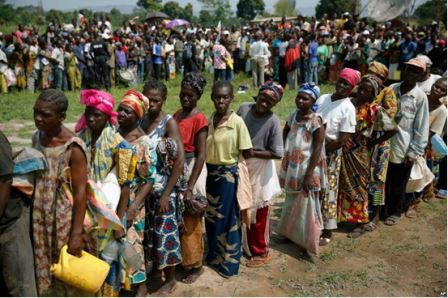
TheCable
Mohammed Bashir Shuwa, senior special assistant to Kashim Shettima, governor of Borno state, says TheCable’s undercover investigation on the sufferings of IDPs is a “misleading, vicious, malicious, cock and bull story”.
In November, ‘Fisayo Soyombo, multiple award-winning investigative journalist, spent eight days in Borno working undercover as a humanitarian agent, and succeeded in gaining access to public officials in charge of IDP-related matters — such as the State Emergence Management Agency (SEMA), the Civilian Joint Task Force, IDP camp officials, authentic humanitarian workers — and the IDPs themselves. TheCable published the findings on December 29, 2016.
But responding — 33 days after the story was published — Shuwa dismissed the investigation as a “hatchet assignment by a group or individuals who have rightly or wrongly an axe to grind with the state government”.
He accused TheCable of “doing anything Machiavellian not only to test the will of the administration, but undermine its integrity”, and of “going through unethical approach to cast aspersions or innuendos on the good intentions of Borno State government or any of its agencies thus bringing odium on the government, the agency or agencies concerned”.
“This is indeed the unholy mission or objective of the current story or so-called investigation of ‘The Cable’ in relation to the current happenings at the IDP camps in Borno State,” Shuwa added.
Shuwa also said it was “unfortunate that most of the pictures contained in his publication are cut and paste of over used pictures of victims who were already malnourished before their rescue by the military from the den of the insurgents and taken to IDP camps”.
However, only three of the 26 photos accompanying the story predated TheCable’s trip to the north-east.
THE FULL TEXT OF SHUWA’S REJOINDER
RE: IN BORNO CHILDREN ARE DYING IN IDP CAMPS, FOODSTUFFS ARE DISAPPEARING AT SEMA STORE BY A MOHAMMED BASHIR SHUWA, SENIOR SPECIAL ASSISTANT TO GOVERNOR KASHIM SHETTIMA, REPLIES TheCable
The above title or caption of a story or ‘investigation’ by The Cable, an on-line blog’s alleged happenings at the Internally Displaced Persons camps in Borno State is not only misleading in its entirety, but vicious, malicious, insinuating and indeed a sponsored or hatchet assignment by a group or individuals who have rightly or wrongly an axe to grind with the state governmenT.
With the assertion that a leopard does not change his colour, the concerned group or individuals having fallen from grace to grass with the state government would do anything Machiavellian not only to test the will of the administration, but undermine its integrity.
The concerned did or do through unethical approach to cast aspersions or innuendos on the good intentions of Borno State government or any of its agencies thus bringing odium on the government, the agency or agencies concerned. This is indeed the unholy mission or objective of the current story or so-called investigation of ‘The Cable’ in relation to the current happenings at the IDP camps in Borno State.
According to ‘The Cable’ investigation, the departure of Grema Terab, the immediate past Chairman of Borno State Emergency Management Agency (SEMA), the subsequent appointment of his predecessor in person of Engineer Satomi Ahmed spell down doom for the agency as the Satomi era was alleged of fraud, diversion of foodstuffs and other materials to other sources and outright stealing.
Writing under the sub-title “A TALE OF TWO SEMA CHAIRMEN” The Cable says …Grema Terab is the immediate past chairman of Borno’s SEMA… the former chairman was someone who helped everyone, whether you are IDP or not, he helped everyone but this one? He’s just hoarding all the food…”, a cock and bull story which also expose that Satomi was tried in absentia by ‘The Cable’ when it went on to state “…what manner of SEMA chairman refuses to meet potential donors, refuses to apologies for not being able to meet them, refuses to give another appointment, refuses to delegate one of his subordinates to meet them…” while they claimed being received by same SEMA officials and arranged for how they can help receive their donations when they posed as acting for some foreign donors through their Non-Governmental Organisation.
Fisayo Soyombo, the so-called Editor of ‘The Cable’ unveiled his true character as a sponsored agent with his essay or write up of contradictions, innuendos, conjectures, aspersions and outright falsehood.
It is unfortunate that most of the pictures contained in his publication are cut and paste of over used pictures of victims who were already malnourished before their rescue by the military from the den of the insurgents and taken to IDP camps. A professional and respected journalist must know that facts are sacred and comments superfluous.
Sometimes back, Governor Kashim Shettima while speaking in Abuja at a high-level Emergency Roundtable on the humanitarian crisis in the state, agreed with the submissions of the United Nations Humanitarian Co-ordinator for Nigeria, Mohammed El-Munir Safieldin who had earlier pointed out that most of the pictures of the critically malnourished infants, children and adults in circulation on social media were those of victims of recently rescued by the armed forces from Boko Haram abductors.
Governor Shettima deplored the statement by Medicines Sans Frontiers (MSF) otherwise known as Doctors Without Borders who claimed that there was acute malnutrition at IDP camp in Bama with hundreds of child deaths.
The Governor pointed out that the MSF completely ignored the fact that interventions were already being made to address the unfortunate cases of malnutrition.
While acknowledging that the situation in Borno at that time was overwhelming, Governor Shettima explained that the government with the support of a few refutable organisations was doing its best to improve the situation. Shettima argued that a situation of this nature was not peculiar to Nigeria, as displaced persons in developed nations were not without challenges.
He called for restraint and understanding as the government is doing all within its power to end the multi-dimensional problems plaguing the management of the humanitarian crisis in the region. Is the type of Fiyaso Soyombo listening?
Already the Borno State Government has deployed additional officials to various camps especially health officials to attend to the immediate and pressing needs of the internally displaced persons and report any critical situation to the ministry or department concerned.
Similarly, proactive steps are being taken to ensure that only authorised and genuine organisations with intentions favourable to the displaced persons can operate in the internally displaced camps. Besides, the state government has directed that the foodstuffs and condiments meant for internally displaced persons must never be diverted as culprits would be severely dealt with to forestall future occurrence.
In conclusion, it is advisable for the like of Fisayo Soyombo of ‘The Cable’ and his mentor or mentors that if they have nothing to say, they should not say it, here it is on record that Governor Shettima and the concerned agencies of government are doing what is humanly possible to alleviate the problems or sufferings of the internally displaced persons inspite of the limitations of the government.
We are not unaware that indeed genuine organisations and individuals are contributing in no small measure to assist the state government in this tasking assignment, just as some groups and individuals are trying to blackmail and run down the administration out of self-centredness or outright mischief.
Apart from taking several measures to minimise the hardships encountered by the displaced persons, Governor Shettima has gone ahead to relocate some to their home communities as well as relentlessly pursuing the reconstruction, rehabilitation and resettlement of the displaced persons.
Let it be known or stated that if at the end of the day, what Governor Kashim Shettima is doing is proved to be the right and just, ten thousand angels cannot hold a contrary view.


