Connect with us

Economy

Lagos to Sanitise Petroleum Product Depots

Published

on

By Modupe Gbadeyanka

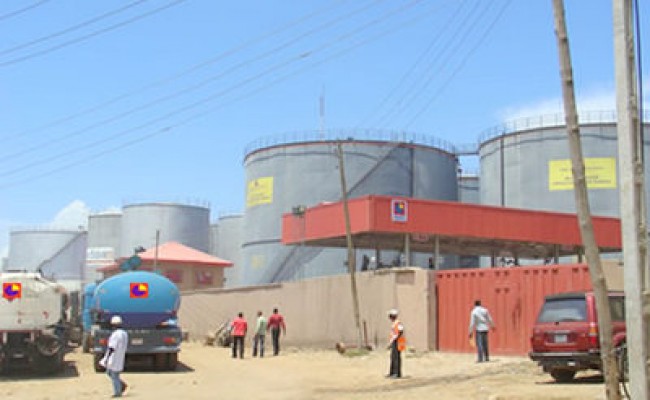
As part of efforts to ensure appropriate planning and energy security for economic and urban development, the Lagos State Government, through the Ministry of Energy and Mineral Resources, has commenced a comprehensive enumeration of petroleum product facilities and storage depots within the State.

A statement issued Wednesday by the Ministry urged all stakeholders to cooperate with the staff of the Ministry in carrying out the exercise, stressing that the enumeration exercise which is aimed at sanitizing the siting of petroleum product storage facilities, is being carried out with the consent of IPMAN, MOMAN, NALPGAM, NLPGA and other relevant stakeholders within the petroleum sector.

It noted that the data gathered from the exercise will be used for appropriate planning for economic and urban development as well as for energy security and future projections.

The statement urged owners of petroleum storage facilities and depots to make available the following documents, Valid Lagos State Ministry of Physical Planning approval to construct, valid Nigeria Police authorization to operate a filling station and valid Federal/ Lagos State Fire Service permit for the exercise.

Other documents required for the exercise are valid DPR Approval to construct and operate a filling station, valid license for storage of petroleum products, Environmental Impact Assessment report (EIA) and perimeter survey.

According to the statement, the enumeration exercise is to be carried out in all the 20 Local Government Areas and 37 Local Council Development Areas (LCDA) of the State.


Modupe Gbadeyanka is a fast-rising journalist with Business Post Nigeria. Her passion for journalism is amazing. She is willing to learn more with a view to becoming one of the best pen-pushers in Nigeria. Her role models are the duo of CNN's Richard Quest and Christiane Amanpour.

Advertisement
Click to comment

Leave a Reply

Your email address will not be published. Required fields are marked *

Economy

Nigeria’s Inflation Eases Further to 15.1% in January 2026

Published

on

Nigeria’s Headline Inflation

By Adedapo Adesanya

Nigeria’s headline inflation rate eased further to 15.10 per cent in January 2026, down from 15.15 per cent in December 2025, continuing moderation that started in the later months of 2025.

According to the National Bureau of Statistics (NBS), Consumer Price Index (CPI) declined to 127.4 points in January 2026, reflecting a 3.8-point decrease from the preceding month of December 2025, which came in as 131.2 points.

The data, which is the first of the year beat analysts expectations which had expected a 18 per cent growth. Instead, the January 2026 print showed a decrease of 0.05 per cent compared to the December 2025 Headline inflation rate.

On a year-on-year basis, the inflation rate was 12.51 per cent lower than the rate recorded in January, 2025 (27.61 per cent). This shows that the Headline inflation rate (year-on-year basis) decreased in January 2026 compared to the same month in the preceding year.

On a month-on-month basis, the Headline inflation rate in January 2026 was -2.88 per cent, which was 3.42 per cent lower than the rate recorded in December 2025 (0.54 per cent). This means that in the review month, the rate of increase in the average price level was lower than the rate of increase in the average price level in December last year.

The percentage change in the average CPI for the twelve months ending January 2026 over the average for the previous twelve-month period was 21.97 per cent, showing a 4.37 per cent increase compared to 17.59 per cent recorded in January 2025.

Nigeria’s food inflation rate in January 2026 was 8.89 per cent on a year-on-year basis. This was 20.73 per cent  points lower compared to the rate recorded in January 2025 (29.63 per cent).

On a month-on-month basis, the Food inflation rate in January 2026 was -6.02 per cent, down by 5.66 per cent compared to December 2025 (-0.36 per cent).

The decline can be attributed to the rate of decrease in the average prices of water yam, eggs, green peas, groundnut oil, soya beans, palm oil, maize (corn) grains, guinea corn, beans, beef meat, melon (egusi) unshelled, cassava tuber, and cow peas (white).

The NBS data showed that the average annual rate of food inflation for the twelve months ending January 2026 over the previous twelve-month average was 20.29 per cent, which was 18.18 per cent points lower compared with the average annual rate of change recorded in January 2025 (38.47 per cent).

Continue Reading

Economy

Terrahaptix Secures Additional $22m from Investors, Valuation Hits $100m

Published

on

Terrahaptix

By Adedapo Adesanya

Nigerian defence technology startup, Terra Industries, has extended its funding round to $34 million after securing an additional $22 million from investors, making it a $100 million company.

The new capital round was led by venture firm Lux Capital, with injections from the chief executive officer of Lagos-based unicorn Flutterwave, Mr Gbenga Agboola, as well as angel investors such as American actor Jared Leto and Jordan Nel.

The company said in a statement on Monday that the round was completed in under two weeks.

This comes weeks after it raised $11.75 million in January. That funding round was led by 8VC founded by the co-founder of Palantir Technologies Inc., Mr Joe Lonsdale. Other investors included Valor Equity Partners, Lux Capital, SV Angel, Leblon Capital GmbH, Silent Ventures LLC, Nova Global and angel investors, including Mr Meyer Malka — the managing partner of Ribbit Capital.

Some of the investors in the new round included 8VC, Nova Global, Silent Ventures, Belief Capital, Tofino Capital, and Resilience17 Capital, founded by Flutterwave CEO.

Terrahaptix, founded by Mr Nathan Nwachukwu and Mr Maxwell Maduka, will use the new funding to expand Terra’s manufacturing capacity as it expands into cross-border security and counter-terrorism.

The extension also comes amid growing international expansion. Earlier this month, Terra announced a partnership with Saudi industrial giant AIC Steel to launch a manufacturing hub in Saudi Arabia focused on producing infrastructure security systems.

In the coming weeks, the company also plans to unveil a mega factory, an indication of the company’s growth and importance, particularly as the need for security has risen in recent years, as groups such as Islamic State and al-Qaeda are gaining ground in Africa, converging along a swathe of territory that stretches from Mali to Nigeria.

According to Mr Nwachuku, the initial $11.75 million raise created significant momentum for the company, enabling it to close the additional $22 million in just under two weeks.

He added that beyond capital, the investors were selected for their experience building similar hard-tech and defence-focused companies.

Continue Reading

Economy

Analysts Predict 18% Inflation Rate for January 2026

Published

on

inflation food prices

By Adedapo Adesanya

Analysts have projected that Nigeria’s headline inflation could rise to about 18 per cent in January, defying the downward trend recorded in 2025.

The forecast comes ahead of the first Consumer Price Index (CPI) data release by the National Bureau of Statistics (NBS) of 2026 due on Monday.

Headline inflation closed December at 15.15 per cent year-on-year, while the annual average eased sharply to 23.33 per cent from 33.18 per cent in 2024.

According to analysts at Cowry Research, the recent CPI normalisation has created a lower base for January comparisons, making a temporary uptick in headline inflation likely in January and possibly February. It projects inflation to trend within the 17.8 per cent to 18.7 per cent range in 2026, driven by election-related spending pressures and fading base effects, even as structural reforms support a medium-term disinflation path.

Similarly, analysts at Quest Merchant Bank said the lower base effect could push January inflation to around 18 per cent to 19 per cent. They, however, expect inflation to resume a broadly disinflationary trajectory over the course of the year, supported by softer energy prices, stable exchange rate conditions and easing food costs.

Last year’s deceleration was driven largely by base effects after the stats office normalised its CPI computation methodology. Unlike previous rebasing exercises that used a single month as the base period, the agency calculated the base using the average of all months in 2024. The rebasing also involved reweighting several categories and expanding the inflation basket to 934 items from 740.

In December alone, the NBS published two separate inflation figures for December after the CPI methodology tweaking caused the headline rate to more than double.

Nigeria’s inflation data are closely monitored by the Central Bank of Nigeria (CBN) as it transitions toward an inflation-targeting monetary policy framework.

The CBN has already factored in the CPI rebasing and related computational issues in its three-year inflation forecast.

The apex bank is targeting a slowdown in inflation to around 13 per cent by next year, despite current price pressures and statistical adjustments.

The Monetary Policy Committee (MPC) will meet next week, and today’s inflation report will form the basis for whether there will be a cut or hold in the interest rates.

Continue Reading

Trending