Connect with us

World

FAO Food Price Index Remains Unchanged in November

Published

on

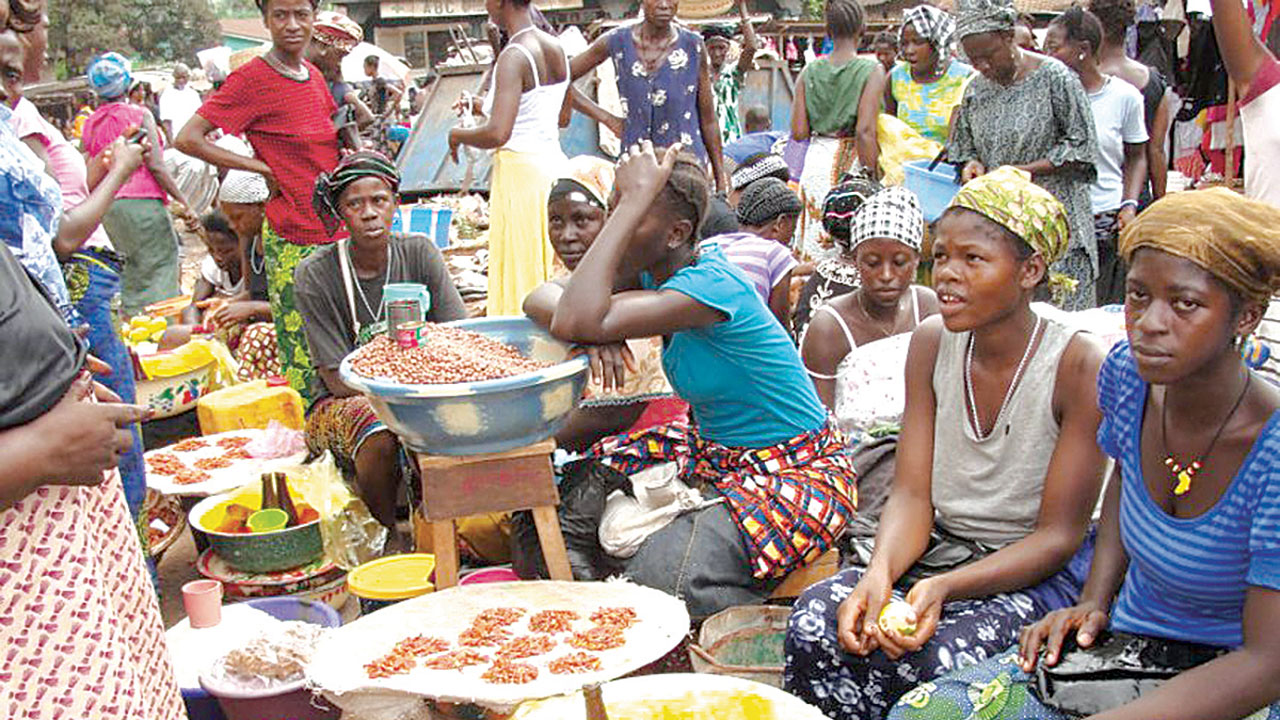
prices of food at market

By Adedapo Adesanya

The global prices of food remained flat, unchanged from its revised October level, as increases in the price indices for vegetable oils, dairy products, and sugar counterbalanced decreases in those of cereals and meat.

This is according to the latest Food and Agricultural Organisation (FAO) Food Price Index (FFPI) released on Friday.

The index showed that food prices averaged 120.4 points in November 2023 and stood 14.4 points (10.7 per cent) below the corresponding level one year ago.

The FAO Cereal Price Index averaged 121.0 points in November, down 3.7 points (3.0 per cent) from October and as much as 29.1 points (19.4 per cent) from its value a year ago. International prices of coarse grains fell the most, dropping by 5.6 per cent month-on-month.

The decline was dominated by a sharp fall in world maize prices, underpinned by an increase in farmers’ selling activity in Argentina and a downward pressure from seasonally higher supplies in the United States of America, where the production estimate was revised upwards.

Among other coarse grains, world prices of barley fell, while sorghum prices firmed slightly. International wheat prices also declined, by 2.4 per cent in November, mainly driven by increased seasonal supplies in Argentina and Australia, with the progress in the harvests and the continued strong competition from the Russian Federation.

Meanwhile, the FAO All Rice Price Index remained stable month-on-month in November amidst contrasting price movements across origins and market segments.

The FAO Vegetable Oil Price Index averaged 124.1 points in November, up 4.1 points (3.4 per cent) from October after declining for three consecutive months. The increase in the price index was driven by higher world palm and sunflower oil prices, more than offsetting lower soy and rapeseed oil quotations.

International palm oil prices rebounded by more than 6.0 per cent in November, chiefly underpinned by more active purchases by leading importing countries and seasonally lower outputs in major producing countries. World sunflower oil prices also rose moderately, mainly supported by a continued steady pace of import purchases.

By contrast, international soy oil prices dropped slightly on subdued global import demand, outweighing the impact of lower soybean production prospects in Brazil, while lingering abundant world supplies contributed to lower world rapeseed oil prices.

The FAO Dairy Price Index averaged 114.2 points in November, up 2.5 points (2.2 per cent) from October, marking the second consecutive monthly increase, but still down 23.2 points (16.9 per cent) from its value one year ago.

In November, international price quotations for butter and skim milk powder increased, reflecting high import demand from Northeast Asian buyers, limited inventories, and increased internal demand ahead of winter holidays in Western Europe. The same factors lifted whole milk powder prices, however, persistently subdued demand from Asian buyers, together with steady production activities in Oceania, capped the month-on-month increase.

The weakening of the United States Dollar against the Euro also contributed to the increase in world dairy prices. By contrast, world cheese prices continued to trend downward on high exportable availabilities, especially for cheddar cheese, despite seasonally tight milk deliveries in Western Europe.

The FAO Meat Price Index averaged 111.8 points in November, down marginally (0.4 per cent) from October, reflecting minor drops in the prices of poultry, pig, and bovine meats. At this level, the index value stood 2.8 points (2.4 per cent) below its corresponding value one year ago. The drop in international poultry meat prices reflected elevated supplies, mainly from Brazil, notwithstanding the challenges to production stemming from avian influenza outbreaks across many countries.

Pig meat prices were down due to persistent sluggishness in import demand in Asian markets and ample exportable availabilities in some exporters, despite a surge in internal sales in Europe ahead of the winter holidays.

Meanwhile, ample exportable supplies from Brazil and Oceania weighed on world bovine meat prices. By contrast, ovine meat prices rose slightly, mostly reflecting the impact of currency movements.

The FAO Sugar Price Index averaged 161.4 points in November, up 2.2 points (1.4 per cent) from October and as much as 47 points (41.1 per cent) from its level in the same month last year. The increase in prices in November was mostly related to heightened concerns over global export availabilities in the current season amid worsening production prospects in two leading exporters, Thailand and India, due to severe dry weather conditions associated with the El Niño event.

In addition, shipping delays from Brazil, coupled with the strengthening of the Brazilian Real against the United States Dollar, contributed to the overall increase in world sugar prices. Nevertheless, the strong pace of production in Brazil and lower international crude oil prices limited the month-on-month price increase.


Adedapo Adesanya is a journalist, polymath, and connoisseur of everything art. When he is not writing, he has his nose buried in one of the many books or articles he has bookmarked or simply listening to good music with a bottle of beer or wine. He supports the greatest club in the world, Manchester United F.C.

Click to comment

Leave a Reply

Your email address will not be published. Required fields are marked *

World

Olam Agri Acquires Asia Africa Rubber Industry in Cote d’Ivoire

Published

on

Asia Africa Rubber Industry

By Modupe Gbadeyanka

To serve rising global customer demand for responsibly sourced natural rubber, Olam Agri has acquired Asia Africa Rubber Industry SA (ASAF).

The acquisition is expected to unlock synergies across the company’s global logistics, supply chain, trading and marketing network, strengthening the supply of responsibly sourced rubber to key export markets. It also increases access to international rubber customers through ASAF’s existing strategic partnerships.

It was gathered that the takeover of ASAF helps Olam Agri to scale its rubber processing capabilities in Côte d’Ivoire, as the former adds about 176,000 metric tonnes (MT) to the latter’s annual rubber processing capacity in the country, giving the company greater scale in the country and geographic density that improves operational efficiency and supply reliability.

In addition, the acquisition advances Olam Agri’s commitment to sustainable, traceable natural rubber.

Additional processing capacity and greater oversight over origination in Côte d’Ivoire enable the organisation to extend plot-level traceability and responsible-sourcing standards. This will support its customers’ due-diligence and deforestation-free supply chain requirements as regulatory and buyer expectations continue to rise.

Global natural rubber consumption is driven by automotive and industrial applications, with annual demand of around 14–15 million MT.

Industry forecasts point to sustained long-term demand for technically specified natural rubber (TSR). Côte d’Ivoire has grown into the world’s third-largest producer of natural rubber and exporter of TSR, driven by a significant scale-up of rubber cultivation and local processing capacity.

“The acquisition of ASAF marks an important milestone for our rubber business. Over the past five years, we have expanded processing capacity in Côte d’Ivoire more than four-fold through sustained investment across the value chain.

“ASAF builds on that progress and reflects our long-term commitment to investing in the country.

“As demand for traceable and responsibly sourced natural rubber continues to climb, we are well-positioned to provide customers with the quality, consistency and service they require,” the chief executive of Fibre, Agri Industrials and Ag Services at Olam Agri, Ashok Hegde, stated.

Also commenting, the Global Head of Rubber at Olam Agri, Vijeth Shetty,  said, “ASAF is a strong strategic fit with our rubber operations in Côte d’Ivoire. Its processing operations, sourcing network and customer relationships complement our business, improving efficiency, deepening our capabilities across the value chain and broadening our reach in key markets.

“We are excited to welcome ASAF’s employees into Olam Agri and to build on the solid foundations they have established.”

Continue Reading

World

Echovane Gets $1m to Scale AI Market Research Platform

Published

on

echovane

By Modupe Gbadeyanka

A $1 million funding package has been secured by an Artificial Intelligence (AI) startup, Echovane, to expand its market research platform.

The fresh capital would be used by the company to build AI agents that execute market research end-to-end, used by Fortune-500 firms, including P&G, Haleon, and Kantar.

Echovane will utilise the funds, co-led by Titan Capital and Neon Fund, to make complex market research a done-for-you AI-native service.

The platform is built on the premise that AI should take on the machinery of research while researchers retain control over the judgment. The result should be faster execution without sacrificing rigour, traceability or trust.

Echovane was founded by former Amazon, Stripe, Gojek and Razorpay product leaders and graduates of the Indian Institute of Technology, Smriti Gupta, Vipul Nair and Himadri Roy.

They initially set out to build an AI moderator for consumer interviews. But the deeper they went, the clearer it became that the interview was only a fraction of the problem. Research teams were still spending weeks recruiting participants, coordinating fieldwork, analysing evidence and turning it into something the business could act on.

So, the founders expanded Echovane into the execution layer for the entire research process.

“We thought better AI interviews would unlock faster research. But that was only one step in the research operations, for one methodology of research.

“In reality, research is more complex, and can vary from interviews to unobtrusive observations and longitudinal studies. It has multi-level complexity including finding niche participants, getting the research completed on time with them and maintaining quality checks,” the chief executive of Echovane, Smriti Gupta, stated.

“This funding allows us to deepen the agent infrastructure behind Echovane, expand our multimodal capabilities, and strengthen the global participant network required to deliver increasingly complex studies with consistency,” the chief technical officer, Vipul Nair, noted.

Also commenting, the chief operating officer of Echovane, Himadri Roy, said, “Having done the research ourselves, we understand the operational pain researchers have to go through to conduct a good research that gives useful insights.”

“Echovane has made complex, multi-market studies feel simple. They find the right hard-to-reach participants, handle the nuances across markets and languages, and deliver actionable insights with remarkable speed and consistency,” the Consumer Science and Product Experience Lead for Haleon, Zee Alcasid, disclosed.

“Echovane turned a month of product research into two days. They reached exactly the right participants and let us test, learn and iterate continuously across multiple audiences, countries, product variants all within a single study that would be impossible to execute at speed and scale,” the chief product officer for Trustly, Adam D’arcy, stated.

A spokesperson for Titan Capital said, “We have backed Smriti, Vipul and Himadri because they have deeply understood why market research has stayed slow and expensive for decades.

“With Echovane, they are building an AI-native, end-to-end research platform focused on the quality of the final insight, encoding each client’s context into a system that gets sharper with every study.

“They are turning research from a recurring expense into compounding infrastructure — faster, cheaper and genuinely deeper. Their first-principles thinking and capital-efficient execution gave us confidence in Echovane’s long-term potential.”

Continue Reading

World

Russia Eyes African Students to Boost Strategic Influence

Published

on

Russia and Africa

By Kestér Kenn Klomegâh

Russia’s system of foreign students’ admission is currently experiencing a completely different shape, due to the rapidly shifting geopolitical reality. The emerging trends are closely connected with increasing the number of highly interested applicants rather than the quality of education. The geopolitical shift is pushing Russia to make education for young Africans an ultimate priority. The quota campaign has already begun as the figure compares favourably with previous benchmarks but, to some considerable extent, noticeable challenges are currently affecting enrollment from Africa, Asia, and Latin America.

Despite that, general interest in Russian education among foreign nationals is increasing; the quota campaign confirms this trend. Last year, for instance, there were about 144,000 registrations in Rossotrudnichestvo’s Education in Russian system. The number has exceeded 160,000 in 2026. What is important here is that Russia shows preparedness to get more students from developing countries, especially from Africa and uses it as a factor for influencing its foreign policy in the region.

Regarding educational initiatives, the Russian Ministry of Foreign Affairs, in conjunction with relevant agencies and organisations are active in Africa. Noticeably, Russia is developing and expanding the existing, successfully operating cooperation in the sphere of education. In fact, priority is given to projects in the field of education and training of professional personnel for African countries. Currently, over 37,000 students from Africa are studying at Russian universities. Reports say a gradual increase in the number of scholarships for African citizens and the expansion of the range of professional training programs will provide a strong incentive for further promoting education at Russian universities.

This will continue to actively strengthen inter-university ties with African partners, including through specialised umbrella organisations such as the Russian-African Network University, the Consortium of Technical Universities “Nadra Africa” ​​based at the Empress Catherine II St. Petersburg Mining University, the Russian-African Network Transport University, and the Consortium of Russian Universities Working in West Africa based at the NGO “Centre for Public Diplomacy.”

Reports further indicated that the Rossotrudnichestvo representative offices—the Russian Science and Culture Centres—operating in eight African countries, as well as the Open Education Centres operating under the auspices of the Russian Ministry of Education in 31 African countries, serve as a solid foundation for our humanitarian presence in Africa. They serve as conduits for the Russian language and culture on the continent. It is, however, hoped that their number would only increase in the subsequent years.

While addressing the staff and students at the Moscow State Institute of International Relations, Foreign Affairs Minister Sergey Lavrov reiterated Russia’s readiness to cooperate actively in the sustainable economic development and to strengthen efforts at training the needed specialists and professionals for Africa. After the collapse of the Soviet system in 1991, there were problems sustaining relations with Africa. Then, after more than a decade, Russia started to return to Africa. This process has been ongoing for the past 15 years, according to the top Russian diplomat.

According to Lavrov, these past few years have been characterised by frequent interactions between Russian and African Foreign Ministers, plethora of MoUs were signed that set out the broad parameters of cooperation. Russia’s Education Ministry and the Foreign Affairs Ministry have raised the quotas for many African countries, the highest given to Angola, Ethiopia, Namibia and Mozambique, and South Africa.

According to a report posted on the MFA website in August, for instance, some 1,120 Angolans have enrolled, on Russian scholarships or grants, at various institutes and universities throughout the Russian Federation. Figures for other African countries are available on the official information portal of the ministry.

Besides state-sponsored students, Russia’s Education Ministry has also launched a large-scale educational campaign targeting the recruitment of private foreign students into its educational institutions across the Russian Federation. The program is to be implemented until 2025, which has a website (studyinrussia) translated into different languages, seeks to boost the popularity and improve its image abroad.

Undoubtedly, Russia aims at strengthening the next generation of pro-Russian elites who will help promote its interests, including long-term ones in their home countries. With this in mind, the Ministry of Education and the Ministry of Foreign Affairs, ultimately, hope to improve the efficiency of “soft power” in Africa, though not to the levels during the Soviet era.

Understandably, Russia is now targeting Africa’s fast-growing population as a huge potential market for knowledge transfer and export education. Rossiyskaya Gazeta, a widely circulated Russian daily newspaper, reported that Russia has been focusing on the young population in developing countries of Asia, Africa and Latin America, targeting the elite and middle class in these markets for the export of education, which has great potential.

The newspaper reported on the advantages of multiculturalism and cross-cultural interactive activities paving the way for integration in Russian society. As far back as 2023, Russia’s Federation Council and State Duma (upper and lower houses of parliament) passed a bill. That bill was finally signed into law, allowing foreign students the right to employment, a replica of the work and study model in Western and European countries.

Professor Viktor Sadovnichy, Rector of Moscow State University and Chairman of the Russian Rectors’ Association, an organisation that unites more than 700 heads of higher education institutions, argued that education and demography are interconnected; developing countries of Asia, Africa and Latin America have growing middle classes. “This favours the export of our education; it has great potential cooperating in the education sphere, it could serve as a huge market – training young professionals that are in demand on the labour market,” Sadovnichy said, addressing a plenary meeting of the Russian Rectors’ Association at Peter the Great St Petersburg State Polytechnic University.

Professor Natalia Vlasova, Deputy Rector at the Department of International Relations and Cooperation of the Ural State University of Economics in Yekaterinburg, explained that many African countries are developing rapidly, and the African elites and the growing middle-class have great potential for sponsoring their children’s education abroad. “In the times of the Soviet Union, African countries were strategic partners, and now we should reactivate these relations because in the near future they will have big economic and political power. This could, indeed, be a huge market and has the business potential,” she noted assertively.

An educational survey released in September 2024, divided into five major groups, said Russia has made significant efforts at improving teaching (the learning environment), research, citations (research influence), knowledge transfer, and international outlook (staff, students, research) in the educational field, according to the Times Higher Education (THE) World University Rankings.

Continue Reading