Banking
First Bank to Deploy More Humanoid Robots to Branches
By Modupe Gbadeyanka
**Allays Fears of Employees
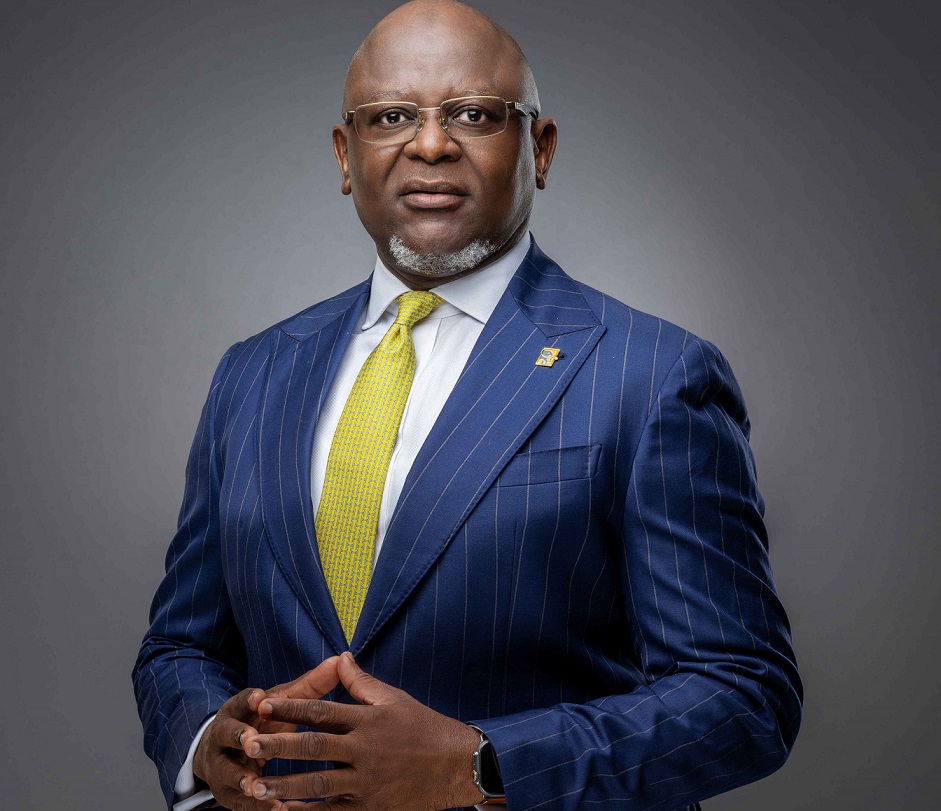
The chief executive of First Bank of Nigeria Limited, Mr Adesola Adeduntan, has said the management is planning to deploy more humanoid robots in branches across the country.
The bank currently has three branches in Lagos, Oyo, and Abuja that are equipped with the Digital Xperience Centre (DXC), operated by humanoid robots.
The deployment of these robots has raised fears over the employment status of its employees, but in an interview with ThisDay, Mr Adeduntan said workers have nothing to worry about because their jobs are still intact, noting that the DXC is not intended to replace employees but rather to enhance efficiency and productivity.
“The DXC is not a trade-off for our employees but an enabler to free up our staff’s productive time to take on more complex and rewarding tasks within the bank,” he stated.
According to him, “The DXC aims to revolutionise self-service banking operations for clients, adding that the introduction of humanoid robots aligns with the bank’s forward-looking approach to the future of financial services delivery.
He disclosed that First Bank remained dedicated to pushing the boundaries of technological innovation in the banking sector, revealing plans for additional rollouts of DXCs across all operating jurisdictions, underscoring the bank’s commitment to providing cutting-edge banking solutions while simultaneously fostering employee growth and development.
However, Mr Adeduntan further reassured the public by highlighting the bank’s ongoing commitment to employee empowerment, stating that, “Given our several laudable employee initiatives, we are well-equipped to empower our employees to take on any other role they may desire within the larger FirstBank Group.”
First Bank is among the pioneers in innovative banking solutions.
In 2021, it launched the DXC, a fully automated interactive digital branch, in Lagos, redefining customers’ banking experiences through digitised self-service.
Subsequent rollouts at the University of Ibadan, Oyo State, and the Wuse branch in Abuja have garnered positive feedback from customers, especially those in the retail segments.
Banking
Sterling Bank, AltBank Meet Full Recapitalisation After N153bn Injection
By Modupe Gbadeyanka
The banking subsidiaries of Sterling Financial Holdings Company Plc, Sterling Bank and The Alternative Bank (AltBank), have met the full recapitalisation requirements of the Central Bank of Nigeria (CBN).
The chief executive of Sterling Holdings, Mr Yemi Odubiyi, said the recapitalisation strengthens the group’s ability to support economic activity while maintaining financial resilience.
“This exercise goes beyond regulatory compliance. It positions us to expand credit responsibly, accelerate innovation, and provide sustained support to businesses and households, while maintaining the discipline required in a challenging operating environment,” he said.
Mr Odubiyi noted that fully capitalising both Sterling Bank and The Alternative Bank reinforces the organisation’s dual-bank structure and its ability to serve conventional and non-interest segments.
“Our structure enables efficient deployment of capital across complementary markets and positions us to respond with agility to evolving customer needs,” he said, adding that strong investor participation across the capital programmes reflects confidence in the group’s governance and long-term strategy.
He further pointed out that the strengthened balance sheet provides a platform for the company’s next phase of growth.
“We are entering this phase from a position of significant financial strength, with the capacity to scale non-banking businesses, deepen digital capabilities, and pursue disciplined expansion opportunities while delivering sustainable value for shareholders,” Mr Odubiyi said.
Sterling Holdings achieved this feat after raising fresh capital between December 2024 and October 2025, positioning itself well ahead of the 2026 industry deadline.
In December 2024, it completed a N75 billion private placement, raising N73.86 billion in net proceeds. Of this amount, N68.8 billion was allocated to Sterling Bank and N5 billion to The Alternative Bank, strengthening the capital base of both institutions.
This was followed by a N28.79 billion rights issue, which was oversubscribed by N10.29 billion. Regulatory approvals in May 2025 enabled the allotment of N26.639 billion under the rights issue, with the oversubscription restructured into a private placement, enabling AltBank to meet the capital requirement for non-interest banks with national licences.
Sterling HoldCo further strengthened its capital position through an N88 billion public offer in October 2025, which recorded an oversubscription. The CBN has cleared the full amount of N96.69 billion for recognition as additional capital, while the Securities and Exchange Commission (SEC) approved the allotment of 13,812,239,000 shares.
In total, the group injected N153 billion into Sterling Bank and The Alternative Bank, bringing both institutions into full compliance with the revised capital requirements.
Banking
SERAP Sues CBN Over Alleged Missing N3trn
By Adedapo Adesanya
The Socio-Economic Rights and Accountability Project (SERAP) has filed a lawsuit against the Central Bank of Nigeria (CBN) for failing to account for N3 trillion in public funds, alleged to be missing or diverted.
The lawsuit followed the grave allegations contained in the latest annual report by the Auditor-General of the Federation, published on September 9, 2025. It includes over N629 billion paid to ‘unknown beneficiaries’ as part of the Anchor Borrowers’ Programme.
In the suit number FHC/ABJ/CS/250/2026 filed last week at the Federal High Court in Abuja, SERAP is seeking: “an order of mandamus to direct and compel the CBN to account for and explain the whereabouts of the missing or diverted N3 trillion of public funds, including detailed reports of how exactly the funds were spent.”
In the suit, SERAP argued that, “These grim allegations by the Auditor-General suggest grave violations of the public trust, the provisions of the Nigerian Constitution 1999 [as amended], the CBN Act, and anticorruption standards.”
SERAP is arguing that, “These grave violations also reflect a failure of CBN accountability more generally and are directly linked to the institution’s persistent failure to comply with its Act and to uphold the principles of transparency and accountability.”
According to SERAP, “These violations have seriously undermined the ability of the CBN to effectively discharge its statutory functions and the public trust and confidence in the bank. The CBN ought to be committed to transparency and accountability in its operations.”
SERAP is also arguing that, “Nigerians have the right to know the whereabouts of the missing or diverted public funds. Granting the reliefs sought would advance the right of Nigerians to restitution, compensation and guarantee of non-repetition.”
The suit filed on behalf of SERAP by its lawyers: Ms Oluwakemi Agunbiade and Ms Valentina Adegoke, read in part: “According to the Auditor-General, the CBN in 2022 failed to remit over N1 trillion [N1,445,593,400,000.00] of ‘the Federal Government’s portion of operating surplus’ into the Consolidated Revenue Fund (CRF) account.”
“The Auditor-General fears that the money may have been ‘diverted.’ He wants the money recovered and remitted to the treasury.”
“The CBN also failed to recover over N629 billion [N629,040,000,000.00] paid to ‘unknown beneficiaries’ as part of the Anchor Borrowers’ Programme, a programme ‘meant to support farmers to ensure sustainable food production in the country,’” it said.
SERAP noted that the Auditor-General raised serious concerns over financial management at the apex bank, citing unaccounted intervention funds and unrecovered loans running into hundreds of billions of naira.
The report noted that the number of beneficiaries who collected certain disbursed funds remains unknown and that efforts to recover the money have been inadequate. Over N784.4 billion in unpaid and overdue loans issued between 2018 and May 2022 remain outstanding, with fears that diversion of funds may have worsened food security challenges. The Auditor-General has called for full recovery and remittance of the funds to the treasury.
Banking
We Now Pay Depositors of Failed Bank Within Days—NDIC
By Adedapo Adesanya
The Nigeria Deposit Insurance Corporation (NDIC) says depositors of failed banks in Nigeria can now access their insured funds within days.
The corporation said the development is a part of ongoing reforms aimed at strengthening confidence in the country’s financial system.
The chief executive of NDIC, Mr Thompson Sunday, disclosed this on Thursday at the NDIC Special Day of the 47th Kaduna International Trade Fair, noting that recent interventions had significantly improved the speed and efficiency of depositor compensation.
Represented by Mrs Regina Dimlong, the Assistant Director of Communications and Public Affairs, Mr Sunday said the corporation had successfully deployed the Bank Verification Number (BVN) system to facilitate prompt payments to customers of recently failed banks, including Heritage Bank Limited, Union Homes Plc and Aso Savings and Loans Plc.
“Depositors were paid within days of closure without the need to fill physical forms or visit NDIC offices.
“This is a part of our reform efforts to make depositor protection faster, simpler and more transparent,” he said.
According to him, the reforms were designed to restore public confidence in the banking system and prevent panic withdrawals, especially during periods of financial stress.
Mr Sunday explained that NDIC’s mandate spans deposit insurance, bank supervision, distress resolution and liquidation of failed banks, adding that the Corporation works closely with the Central Bank of Nigeria (CBN) to ensure early detection of risks in insured institutions.
He disclosed that in 2024, NDIC reviewed its deposit insurance framework, increasing coverage for depositors of Deposit Money Banks, Mobile Money Operators and Non-Interest Banks to N5 million, while customers of Microfinance Banks, Primary Mortgage Banks and Payment Service Banks are now covered up to N2 million.
He noted that the revised thresholds now guarantee full protection for about 99 per cent of depositors nationwide, particularly small savers and low-income earners.
The NDIC boss urged Nigerians to ensure their BVNs are properly linked to their bank accounts, stressing that this had become the primary channel for accessing insured deposits in the event of bank failure.
-
Feature/OPED6 years agoDavos was Different this year
-
Travel/Tourism10 years ago
Lagos Seals Western Lodge Hotel In Ikorodu
-
Showbiz3 years agoEstranged Lover Releases Videos of Empress Njamah Bathing
-
Banking8 years agoSort Codes of GTBank Branches in Nigeria
-
Economy3 years agoSubsidy Removal: CNG at N130 Per Litre Cheaper Than Petrol—IPMAN
-
Banking3 years agoSort Codes of UBA Branches in Nigeria
-
Banking3 years agoFirst Bank Announces Planned Downtime
-
Sports3 years agoHighest Paid Nigerian Footballer – How Much Do Nigerian Footballers Earn